Home & Living
Halloween treat-bag station: pack and hand off small favors
Plan a small Halloween favor-bag batch by checking the approved contents, bag fit, closure, recipient route and finished count before distribution.
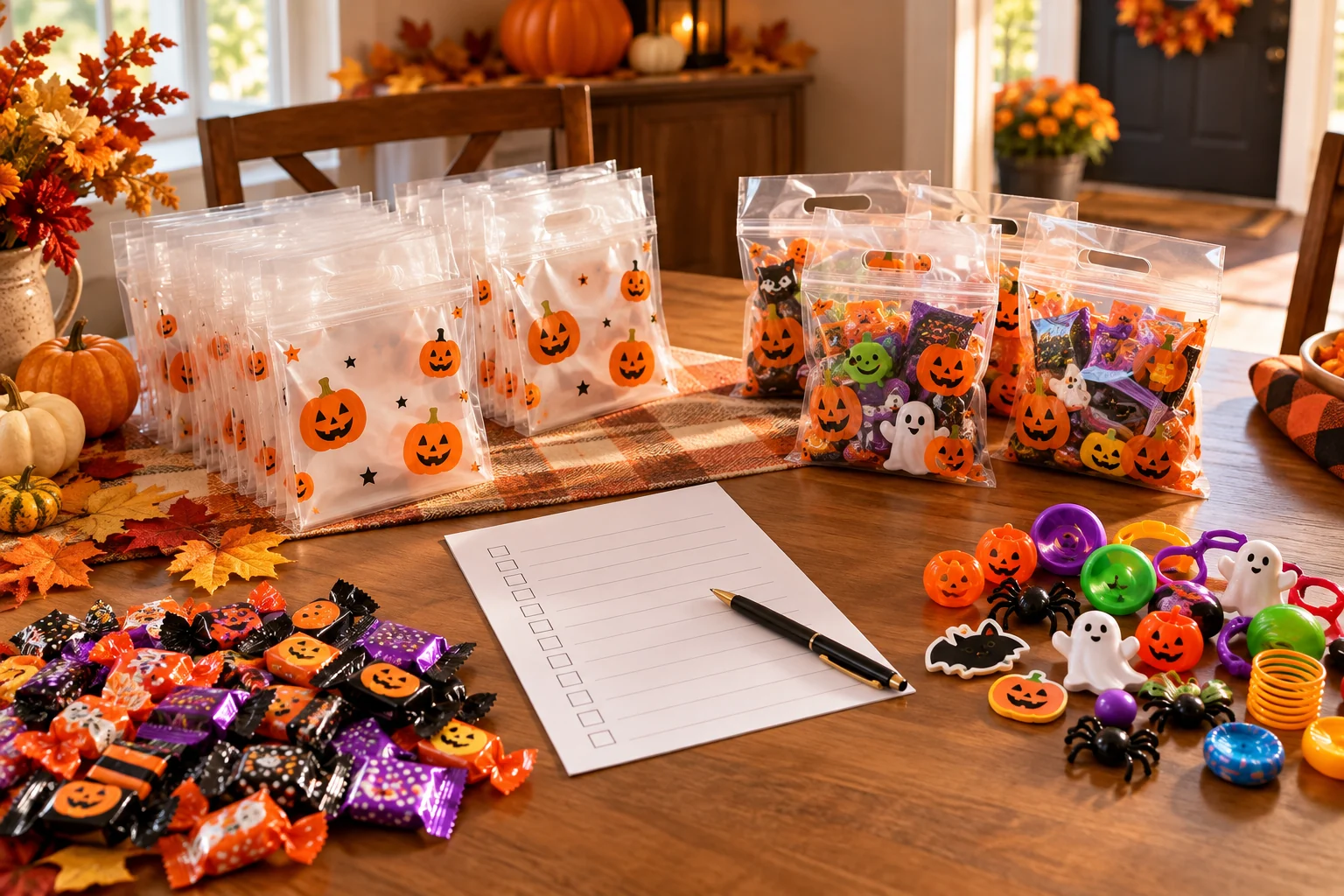
A Halloween treat-bag station can become chaotic even when the bags themselves are simple. One person fills, another tries to close each bag, and the recipient list changes midway through the work. The useful first step is to decide what each small favor bag must hold and where it will go. Then count the bags, set up a clear packing line, and keep an accurate handoff list. This guide is for small prepacked favors at a party, classroom or neighborhood gathering, not for the larger bag a trick-or-treater carries from door to door.
Start with the event's own rules. Ask the organizer which items are permitted, whether treats must remain in their original wrappers, whether nonfood alternatives are needed, and who is responsible for distribution. Do not infer food-contact suitability or allergy safety from a decorative product title. The two featured listings describe pumpkin-themed resealable favor bags, but they do not certify the contents you put inside or the needs of every recipient. Keep food sealed as required, use the venue's guidance, and label any special handling honestly.
Define one finished bag before filling fifty
Write a short sample-bag specification. It should name the intended recipient group, the approved items, the number of each item, and whether a paper note or label is needed. Make one test bag from the supplies already on the table and show it to the person responsible for the event. This exposes a size problem before the entire batch is filled. A printed “50 pack” says how many empty bags are sold; it does not say that the chosen mix of items fits comfortably or that every closure will work when the bag is full.
Use only contents that the organizer has approved. If one group receives a different assortment, give it a separate sample and a separate count. Do not make an unlabeled pile of “special” bags and rely on memory later. The exact difference may matter to the recipient. A clear window can help you see the items, but it is not a substitute for checking the item names, wrappers or organizer's restrictions. Make the label legible before you fill rather than squeezing it into a closed bag afterward.
Two native products illustrate the role of a small handled favor bag. The pumpkin-printed Halloween favor bags are described as a 50-piece set with handles and a resealable closure. The clear-window pumpkin treat bags are described as a 50-bag pack with handles, resealable zipper closures and expandable bottoms. They are distinct Product records, and the listings' descriptions are not a guarantee that both bags have the same measurements or material specifications. Check the exact unit and current seller details before relying on either for your sample.
For the test, place the approved items inside without pushing against the closure or stretching a handle. Set the filled bag upright and lift it briefly by the handle over the table. If the closure separates or the bag loses its shape, revise the contents or choose a more suitable bag. A small party favor should not be forced to perform as a heavy tote. If you cannot confirm the dimensions from the listing, measure the physical bag you have. The sample is the best way to learn whether the particular contents fit without claiming an unverified load rating.
Build a packing line with a counted start and finish
Arrange the table in the order the work happens: empty bags, approved items, optional notes, closure check, and finished bags. Keep the event list outside the area where wrappers and small items may cover it. Count the empty bags before filling and count the contents in each source pile. If a bag is torn or has an unreliable closure, put it in a separate rejected pile. Do not count rejected bags as finished favors. A simple count at each end of the line is more dependable than a rough visual estimate of a stack.
Choose a batch size small enough to check. Ten bags at a time is one possible working rhythm, but it is not a required quantity. Finish the batch, compare it with the sample, and move it to a marked tray or box before opening the next batch. If the planned assortment changes, stop the line and record which batches follow the new specification. Otherwise two visually similar bags can carry different contents without anyone noticing. Keep the original wrappers or item list available so a later checker can identify the batch honestly.
Give the closure checker a distinct job. They verify that the right items and note are present, the closure is fully engaged, and the outside of the bag is clean. The checker should not silently repair a wrong assortment by swapping one item without updating the tally. Put an uncertain bag back in a clearly marked review spot. This is a small workflow, not a formal quality department; the point is to prevent uncertainty from being hidden in the finished stack.
Keep recipients and distribution routes separate from packing counts. A class may have a fixed roster, while an open-house table may need an estimated quantity and a reserve. Write “finished for named group,” “finished for open handout,” and “unfilled reserve” as different numbers. Do not assign a finished bag to a person merely because there is an empty slot on the list. If the venue changes the head count, update the distribution plan before opening another package. The bags still need to be packed against a real approved specification.
Prepare the handoff without confusing bags
For named recipients, attach or insert an identifier only if the organizer permits it. Make the name or group code readable without opening the bag. If the contents differ for a documented reason, use a clearly distinct label system that the handoff person understands. Do not put private personal information on a public-facing bag. An anonymous party table may need no names at all; it may simply need separate trays for each approved assortment and a sign explaining the options. Choose the least complicated system that allows an accurate handoff.
The holiday cookie-tin handoff guide handles a different container and a separate gift situation. It is a useful reminder to keep contents notes and recipients aligned, but a cookie tin's lid, food-storage questions and gifting sequence do not define this favor-bag station. Here the emphasis is on a small batch line, repeated bag checks, and a controlled distribution point. Do not copy an unrelated storage claim from the tin guide onto plastic favor bags.
Similarly, the gift-wrapping supply guide owns paper, finishing supplies and a Christmas wrapping plan. You may use a note or label with Halloween favors, but this article does not ask you to wrap each bag as a separate boxed present. Keep the finish practical for the event. Extra ribbon, paper or stickers may be attractive, yet they can obscure the closure or make a name difficult to read. Add decoration only after the bag's function is clear.
Place finished bags in a container that keeps them upright and keeps the group labels visible. Do not pile a heavy item on top of them. If the bags are intended for children, follow the organizer's supervision and content rules; a bag's seasonal print does not make any small part or food item appropriate for all ages. Make the handoff person aware of any alternatives and the location of the list. A bag that looks complete but cannot be identified at the distribution point has not finished the workflow.
Count the real shortage before ordering
Calculate the needed bags from the approved recipient count plus a justified reserve. Then subtract usable bags already on hand. A partly opened package may contain fewer intact pieces than its printed pack size. If you own bags from a previous event, inspect them before counting them as available. Some may be the wrong size, have an unrelated design, or need a closure test. Keep the physical inventory count separate from the purchase quantity. You are deciding whether you need more usable containers, not whether a 50-pack seems seasonally convenient.
If the event requires thirty finished favors and you have thirty-two suitable bags after inspection, the bag shortage is zero even if a new printed package contains fifty. If you have twenty-eight suitable bags and a reserve target of two, the immediate requirement is four more. These are examples of count arithmetic, not a price or savings claim. The appropriate reserve depends on the event and the uncertainty in attendance. Avoid adding an arbitrary buffer to every class or party just because bags are sold in a large pack.
Compare the two featured listings only after the sample requirements are settled. Both descriptions refer to 50 pumpkin-themed bags, but the first has its own print and closure wording, while the second describes clear windows and expandable bottoms. Those details may affect how you display items or whether a note can be read. The exact dimensions, current offer terms and what ships together need confirmation. Do not assume one product is a substitute for the other solely because both names include “Halloween” and “bag.”
A price comparison requires current total delivered prices and the count of bags that actually meet the event's requirements. This article does not quote prices because they change and the listings do not establish an enduring delivered cost. A larger number of pieces can leave unwanted surplus if the event is small or the bag does not fit. If a purchase remains necessary, compare the verified shortage with pack quantity and any credible later use. Record unused intact bags after the event so next year's planner can start from real inventory rather than an old receipt.
Make the final handoff count visible
At the end of packing, write a short reconciliation: approved target, finished standard bags, finished alternatives, rejected bags, and unused empty bags. The sum should make sense against the initial inventory and any newly opened pack. If it does not, look at the packing table and review spot before telling the distribution person the batch is complete. A missing bag may simply be under a note sheet, but the count must be resolved before handoff. This prevents the last recipient from receiving an improvised mix.
Move finished bags with the list, not as an unlabeled stack. Tell the person at the doorway or party table which tray goes to which group and what to do if a bag is damaged. Keep alternatives under their actual names. If the event uses a public self-serve table, arrange it so the choices and any organizer-approved warnings can be understood without opening the bags. Do not suggest that transparent plastic alone communicates ingredients, allergens or age suitability. The underlying product packaging and organizer information remain the source for those facts.
After distribution, count what remains. Note whether the reserve was used, whether a particular bag format was difficult to close, and whether labels stayed readable. Save that note with the unfilled supplies. It turns the next seasonal event into a smaller planning task and helps avoid buying another pack simply because nobody remembered the leftovers. The successful result is a set of correctly packed, correctly routed favors that the receiving person can identify. The pumpkin print is the pleasant finish, not the control system.