Kitchen & Appliances
Holiday cookie tin handoff: assign the contents before closing lids
Assign each decorative cookie tin to a recipient, keep its lid and contents note together, and rehearse the package fit before a Christmas gift handoff.
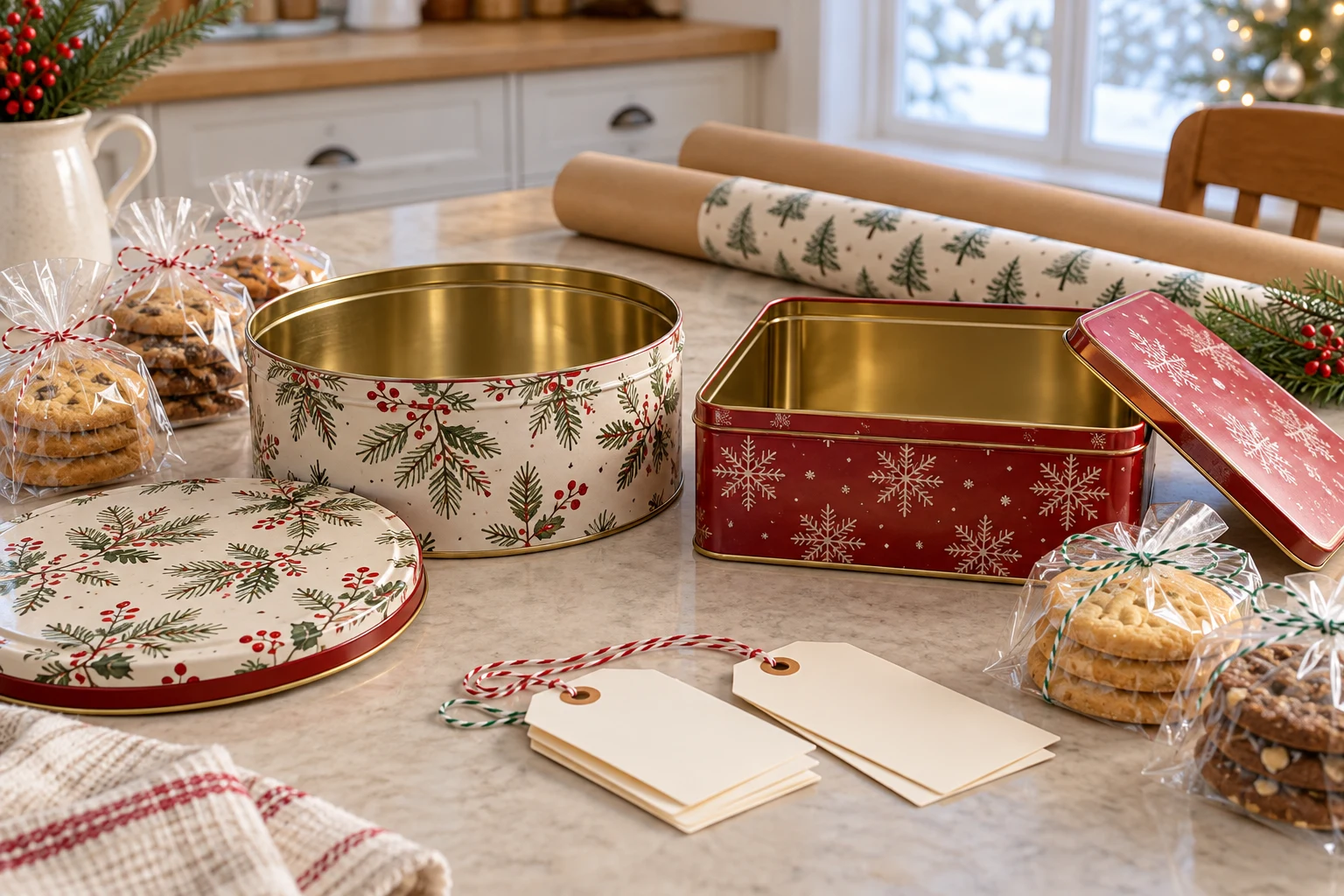
A row of decorative cookie tins can look ready for a holiday handoff while no one has decided what goes in each one. A patterned lid does not tell a recipient which baked goods it covers, and a set of two tins does not by itself settle who receives the larger one. Before filling or wrapping anything, assign each tin a recipient, check its usable space, and keep its lid with its base. That small staging step prevents a festive container from becoming an unlabeled mystery.
This guide is about the handoff between completed baking and gifting. It does not provide a baking recipe, a food-storage duration, or a guarantee that a particular tin is suitable for direct contact with every food. Follow the actual maker's directions and the recipe's handling guidance. Use appropriate food-safe packaging when needed. The purpose here is to make the container assignment and recipient information clear before anyone closes the lids.
Give each tin a job before filling
Start with a list of the people or households receiving baked goods and the approximate portions you actually plan to give. Put an empty tin beside each name or group. A spare tin can remain unassigned; it does not need to be filled just because it came in a two-piece set. If one person is receiving more than one item, decide whether those items belong in the same container or separate packages under the food's handling directions.
Keep a removable note beside the tin during assembly. Record the recipient, what is planned for that container, and any message that needs to accompany it. Do not rely on the color or pattern alone. Two similar-looking lids can be exchanged in a busy kitchen, and a gift tag tied after the fact may not identify the contents accurately if the containers were moved. Match the label to the physical tin before it is filled.
The Christmas baking afternoon guide addresses the sequence of baking tasks among helpers. Use that workflow for mixing, baking and cooling responsibilities. This article begins when finished items need to be assigned to gift containers. Keeping the two decisions separate helps avoid asking a helper to guess which finished batch belongs to which recipient.
If someone else will carry the gifts, tell that person which tin belongs to each destination. A label should survive the short trip from kitchen table to delivery point, not sit loose in a planning notebook. If the tin will be wrapped, place the identifying information where it remains accessible after the wrapping is complete. The exact handoff can be as simple as a note taped to the outside of a closed package.
Read the set as separate physical containers
The two-pack decorative cookie tin listing names a pair with lids and two sizes. Its saved description gives little additional guidance about exact food use or capacity. The first product photograph shows patterned metal tins and separate lids, but it cannot tell you how many of your own wrapped cookies will fit. Treat the listing as a pair of physical containers, then check their actual usable interiors and instructions.
The Grusce two-tin listing also describes a large and small iron tin with fitted lids, and it mentions storing dry foods. Those are seller descriptions of that exact set. They do not establish a storage duration for homemade cookies or prove suitability for every food. Its saved gallery shows a visibly different pattern and lid color from the other set. Neither appearance answers the recipient-assignment question.
Lay each lid beside its own base before a batch arrives. Check how the lid aligns and closes on an empty tin according to the maker's directions. A lid that belongs to the smaller base may look plausible on another container in a photograph but not fit as intended. If a lid is damaged, missing, or cannot close as directed, stop using that container for the planned handoff until you resolve the product-specific issue.
Do not confuse an outside dimension with usable filling room. A thick rim, a domed lid, or an inner lip may affect what fits, and a wrapped bundle needs room as well as the baked item itself. Test the planned packaging with an empty container first. The question is whether the recipient's actual portion and its appropriate packaging fit without forcing the lid, not whether the tin's exterior looks large on a shopping page.
Keep contents and messages connected
A recipient may want to know what was made, especially when several people contributed different batches. Write an accurate contents note from the actual recipe and preparation record. Do not infer ingredients from a cookie's appearance or from the decorative tin. If you cannot verify an ingredient or handling detail, say so plainly and avoid giving an unsupported assurance. The outside label can identify the gift while a separate note carries the fuller information.
When there are several types of baked goods, decide whether they should be packaged separately inside the tin under the relevant food directions. Strong aromas, fragile decoration and different handling needs may make one mixed pile a poor plan. This guide does not prescribe a universal divider or storage material. Use the recipe and packaging guidance for the actual items, and make the final contents note match what was placed inside.
Keep the recipient note with the tin even if the planned portion changes. A helper may move one wrapped packet to another container to make room. After any move, update the label and contents note before closing either lid. A final glance at the two open tins is more reliable than remembering that the red patterned container was “probably for the neighbors.” Make the identity explicit while the contents are still visible.
If a household has a special dietary or allergy concern, do not improvise a guarantee from a handwritten tag. Check the actual ingredients, preparation and cross-contact information with the people who made the food, then communicate what is known and what remains uncertain. A decorative container does not change those facts. When the required information is unavailable, a different gift may be the clearer and safer choice.
Plan the wrapping around the handoff
After the contents and recipient are settled, decide whether the tin itself is the visible gift or whether it will be placed in another wrap. The Christmas gift wrapping plan covers paper and finishing supplies for the wrapping task. Bring the assigned, closed tin to that stage with its recipient note attached; do not use wrapping to hide an unresolved contents or lid question.
A tied ribbon can look attractive, but it should not be the only thing keeping an ill-fitting lid closed. Follow the tin maker's closure directions. If the closed container needs another carrier for the trip, plan that carrier separately. The printed design on a tin may suit the occasion, yet appearance should not be used as evidence of a secure closure or protected contents during transport.
Think about where the gift will wait before handoff. The recipe and food-handling guidance determine whether it can be held in the intended place and for how long. A metal tin alone is not a refrigerated container or a preservation claim. Keep the recipient label visible in storage, especially if several wrapped gifts share a shelf or counter. Move the planned gift only in a way that maintains its required food conditions.
For a shared household delivery, write the destination and the person who will hand it over. If two similar tins go to different places, do not count on memory after they are wrapped. A small assignment list can show “tin one,” “tin two,” the recipient and the handoff time, but the outside of each actual package still needs its own readable identity. Keep the list and physical labels synchronized.
Use an empty rehearsal to catch the mismatch
Before the baking session ends, rehearse the container layout with empty tins and appropriately sized sample wrapping materials. Place each planned bundle beside its assigned container; verify that the intended lid can close without pressure. This does not replace the food's packaging directions, but it can reveal that the portion plan is too large or that a lid was paired with the wrong base. Correct the plan while nothing is packed.
If a bundle does not fit, avoid pressing it down just to close the tin. Divide the gift according to its handling needs, select a different suitable container, or reduce the assigned portion before labeling it. Update the contents note and recipient list after the change. A forced lid can damage packaging, and an unrecorded change can leave the recipient with a misleading description of what is inside.
Check the number of empty tins against the recipient list, but do not let a pack label dictate the guest list. Two sets of two tins may be four physical containers with different useful sizes; they are not four identical gifts. Count the actual usable bases and their matching lids. If one is reserved for a later occasion, mark it as unused rather than inventing a current recipient to use up the purchase.
The rehearsal is especially useful when several helpers share a table. Give one person responsibility for the recipient labels, another for the verified contents notes, and one for the final lid match if that fits your household. The arrangement can be simpler for one person. What matters is that someone can answer, for every closed tin, who receives it and what was actually packed.
If a recipient is not available on the planned day, update the delivery plan from the actual food-handling guidance rather than assuming the closed tin makes waiting harmless. Keep the label and contents note with the same container while it waits. A delayed handoff can change the appropriate gift choice. It is better to revise the assignment openly than to pass along a package whose contents and handling history no one can explain.
Close the loop at delivery
At the final handoff, compare the outside recipient label with the assignment list and the contents note one more time. Ask the recipient to follow any relevant handling information you have provided. If a tin is being returned later, make that expectation clear separately; do not assume the decorative packaging implies a return agreement. A gift can be considerate without creating an unspoken chore for the recipient.
The two saved native examples show a simple limit of product pages. They establish that two-size cookie-tin sets with lids are offered, but they do not decide the contents, recipe handling, recipient or delivery sequence for your kitchen. Make those decisions from the actual baked goods and people involved. Once each container has a matching lid, accurate note and named destination, the holiday handoff is ready to leave the worktable.