Laundry
A fragrance-free laundry conversation before the next shared wash
A shared-home story clarifies what two people mean by fragrance-free before they choose a detergent, with product facts kept separate from personal preference.
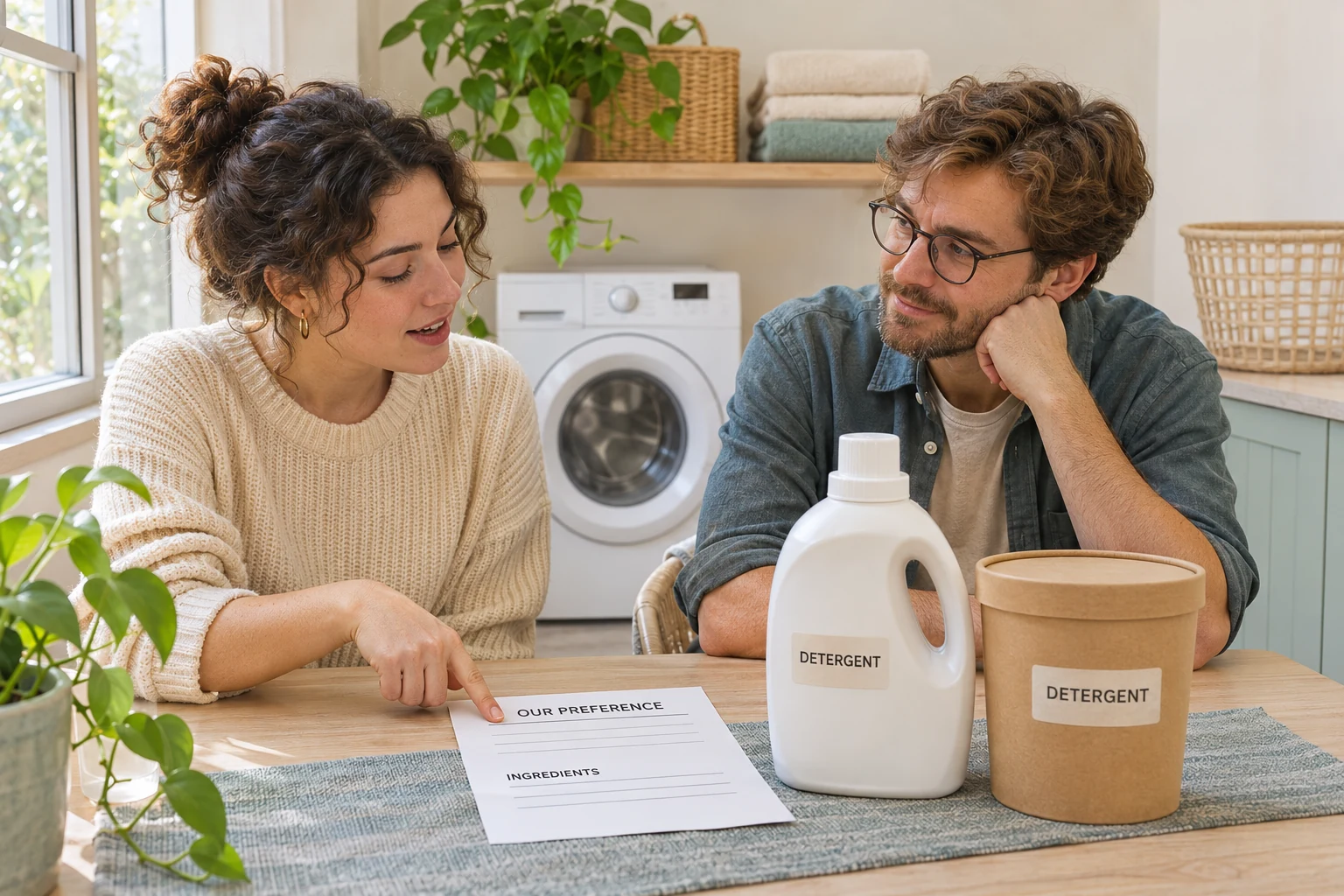
fragrance-free laundry can begin with a conversation about what someone wants the choice to settle. One person may be asking about fragrance ingredients; another may expect a product with no detectable odor. Give those meanings room before treating a short shopping note as a complete agreement. The shared-home story below is original fiction. Emery and Kit are invented, and no washing trial, scent test, medical outcome or product certification is reported.
A note that sounded settled
Emery puts a folded laundry basket beside the kitchen table while Kit finishes the list for their new shared flat. There are already notes about bulbs, a missing shelf pin and the day someone can receive a parcel. Near the bottom, Emery writes “no laundry scent.” Kit reads the line, nods and adds detergent to the proposed order.
Before either person chooses an offer, Emery asks what Kit took the note to mean. Kit says a product without added fragrance. Emery had pictured opening a package and noticing no smell at all. They have not argued about a particular detergent or observed a disappointing wash. Their apparently settled line simply contains two different expectations.
Kit moves the list back between them. Emery leaves the original words visible and adds a question underneath. They can return to the intended purchase without pretending that the first conversation covered more than it did. The empty basket can wait beside the table while they decide what information they actually want from a product.
What EPA's distinction can clarify
EPA's Safer Choice fragrance-free criteria distinguish unscented products, which may contain odor-masking chemicals, from fragrance-free products, which use neither fragrance materials nor masking scents. Its fragrance-free certification accompanies the Safer Choice label after the program's requirements are met and ingredients reviewed. EPA also says qualifying products may still have an odor from ingredients such as surfactants or solvents. This is program guidance, not certification of either retail offer discussed below.
Emery and Kit now have more precise words for the conversation. It does not tell them what either selected package would smell like in their flat. Nor does it establish a personal health result. They can use the ingredient criterion as a question while leaving an expectation about product odor separate and unresolved.
Emery divides a page into two writing areas. In one, the question is about fragrance ingredients. In the other, the question is whether a particular product will have no noticeable odor. Kit can now point to the one the EPA definition addresses without pretending that the second has also been answered. Neither person has opened a package or performed a smell test.
Read each product's exact fragrance wording
Kit reads the first retail account as an example of why a qualifier matters. He notices the word synthetic in its fragrance statement. Emery had been about to shorten that statement in their note. They leave the actual word in place and mark the broader ingredient question as unanswered. The fictional reading exercise does not identify any additional ingredient in the formula.
Emery then compares the front-label phrase with the fuller description. A name such as Free & Clear can be saved as the product wording without becoming their own complete definition of its formulation. They put the exact claim beside the question it still leaves. The note records their reading of the account, not a certification they have independently obtained.
Neither person needs to assign a medical reason to this task. They are clarifying a product-information question before choosing what to investigate further. Their note makes no assessment of allergies, skin effects or an individual's suitability for a formula. If the eventual product choice depends on a separate personal requirement, that requirement still needs its own appropriate information.
Emery next reads the powder account. The label and description use two different terms. Kit asks whether that wording by itself establishes a complete ingredient account. Emery leaves the answer open and writes a specific enquiry instead. The useful change is in the question they will ask; this story supplies no new analysis of the powder or claim about its actual smell.
Keep the retail accounts outside the fictional result
The Free & Clear liquid detergent account describes an unscented formula free of synthetic fragrance. Its sole gallery frame shows two complete bottles labelled defunkify and Free & Clear, while the catalogue brand is NOBRAND. No maker equivalence or program certification is established here. The DanSoap powder account describes fragrance-free powder; its single frame says UNSCENTED and shows one container. The listed four-pack is not a delivered-count inspection.
Their enquiry can quote the actual wording in each account. Neither becomes evidence that Emery and Kit have used a product, agreed on it or obtained a particular sensory result. The first account's reference to synthetic fragrance should retain that qualification. It should not be silently rewritten into an independently verified statement about every possible fragrance material.
The second account places an unscented label and a fragrance-free description in the same product discussion. That gives a reader a specific claim to clarify, without proving that the formula contains a masking ingredient. General guidance about what an unscented detergent may contain cannot identify the ingredients of this particular offer by itself.
The native pages also contain claims about sensitivity, cleaning and environmental attributes. This guide adopts none of those outcomes. A person comparing fragrance information still needs the product's actual information and applicable use instructions. No dilution, dose, mixing method or washing sequence is supplied by this conversation.
Ask the product question the preference needs
Emery drafts an enquiry with the exact offer reference and the wording they want explained. The question concerns fragrance and masking ingredients. It does not ask the seller to confirm a promise of zero odor that neither housemate has established. Kit reads the draft and can now explain what an answer would need to address.
If a reply repeats only the broad product name, the ingredient question can remain open. Keep whatever useful identification the reply provides, then identify the missing point. A concise follow-up can ask whether the information applies to the exact product or version under consideration. There is no need to replace an incomplete answer with a more reassuring one written by the shopper.
If a reply refers to a program label, retain the actual evidence and its scope. This story does not establish Safer Choice membership for either native offer. A familiar word on a shopping page should not become a certification claim in the household note. The group can leave that point unconfirmed while deciding whether more information is needed.
Another person may suggest a different product while the enquiry is pending. Keep the new reference separate. An answer about one formula does not automatically accompany another offer because their names sound similar. Emery can welcome the suggestion without presenting the original question as answered or treating the new candidate as an agreed substitute.
Keep ingredient and odor questions distinguishable
The shared laundry detergent station guide concerns the physical arrangement and product-specific handoff for sheets and powder. The cleaning cloth task-label guide concerns assigned tasks and separate readiness cues. Those arrangements do not determine a person's fragrance preference, confirm formula ingredients or certify an odorless result. The conversation here comes before treating a particular preference as agreed.
Choosing a formula also leaves its actual use questions attached to the product and washer instructions. This story does not tell the household how much to add or where to put it. A shared preference can be clear while a separate practical instruction is still being obtained. Keep both questions understandable when someone else helps with the purchase.
Kit checks the draft enquiry against the words on their two-part page. It now asks about fragrance and masking materials rather than asking a supplier to promise that nobody will notice any odor. He removes the broader promise from the draft. A clearer enquiry can be sent while the separate sensory question remains unverified.
They keep the exact product reference beside each question. If a response identifies the formula and addresses the ingredient point, they can record that narrow result. If it merely repeats a short label, the request for fuller information remains. This gives their next reading task a concrete subject without requiring a wash or a scent comparison.
Before putting the page away, Emery notices that a note about the liquid has drifted under the powder reference. She moves it back. The two accounts use different wording, and their questions should stay with the products that prompted them. This fictional correction reports no change to either formula and no discovery about a delivered package.
Kit reads the corrected page aloud. Emery can distinguish the actual product claim, the ingredient question still being asked and the sensory result that has not been established. They keep the proposed purchase undecided while the enquiry proceeds. The page no longer needs a promise of odorlessness to make their next step understandable.
Let an optional order keep its own evidence
If this enquiry leads you to consider an order through republeq.com, keep the exact product and the unanswered fragrance question together before choosing how to pay. This article reports no order, reservation or transfer. A preference for cryptocurrency, including USDT, cannot establish formula ingredients, program certification or the smell a person will notice. If an actual checkout presents a cryptocurrency option, read the current instructions for that specific transaction. This guide supplies no receiving address, network, amount, fee or transfer procedure and confirms no presently available payment method. An instruction from an earlier basket belongs to that earlier purchase; it should not silently fill a gap in the transaction now being considered. Review the actual delivery and return information before making a shared laundry plan depend on an order. A desired start date supplies no arrival promise, and a payment preference supplies no special remedy for an unsuitable or substituted item. If another person helps buy the product, tell them which formula and identity questions remain unresolved before they act on your behalf. Keep wallet credentials and sensitive account details out of public product discussions. If a previous order or payment attempt has an uncertain outcome, preserve the actual attempt and available confirmation records. Reconcile that state before considering another payment. An interrupted page does not prove that nothing happened, and this article promises no refund, reversal or recovery. Keep the same order reference with each actual supplier reply. A confirmed purchase would describe an order result while the household's product choice would still depend on the information and agreement it actually obtained.
Emery folds the list with the two product references and the ingredient enquiry still together. Kit leaves the candidate unselected. Their conclusion concerns what the words establish: a fragrance criterion can be investigated without reporting that a product has no odor. They have an enquiry ready, with no wash trial, scent test or product certification invented to finish the story.
Conceptual household preference conversation; no wash trial, scent test, medical outcome or product certification is depicted.