Home & Living
A found shopping list starts an imagined story
A secondhand book holds an anonymous scrap. Its finder separates an imagined life from what she can actually know about the person who wrote it.
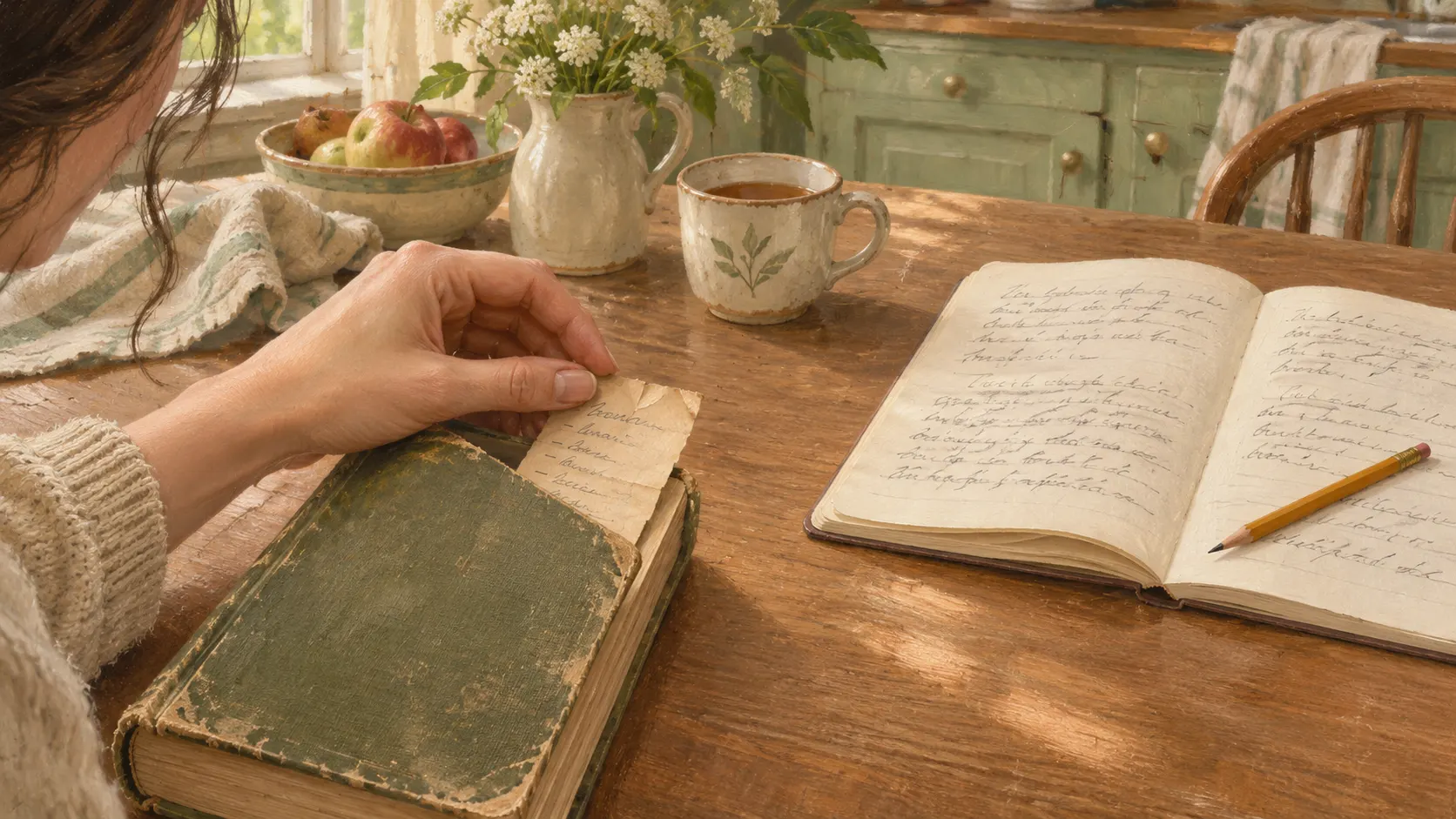
A found shopping list slips out of a secondhand book while Mara is clearing a place to read. This original domestic story follows what she invents around the scrap, and the point at which she gives her invention its own page. Mara, the room and everything that happens below are fictional.
The paper on the floor
The book had come home in a cloth bag with a loose button and a receipt Mara had already thrown away. Its cover showed a house with every window lit. She had bought it because the first page made her laugh, although by the time she reached her own kitchen she could only remember the shape of the joke.
She shook the bag over the table. The button struck the wood and rolled into the shallow bowl where she kept spare keys. The book landed open. A narrow piece of paper drifted past her knee and settled beside the chair.
There were five things on it: pears, washing powder, bread, matches and a tin of peaches. Bread had been crossed out. The paper carried no name or date. One edge was torn, with a small crescent missing near the bottom.
Mara placed it beside the book. She pictured a woman carrying the list in a coat pocket, checking it beneath a shop awning. In the picture she supplied, rain blew against the woman's shoes. Mara gave her a brother who was coming to supper and a cupboard containing everything except dessert.
The brother arrived early. He always did, Mara decided. He sat at the table while the woman put away the shopping, and he opened the peaches before she could find a bowl. Mara could almost hear the scrape of his spoon against the tin.
She fetched her notebook from the windowsill. On its next empty page she wrote, “He had opened the peaches before she took off her coat.” Then she looked at the scrap again. The tin had not been opened there. It was only a thing someone had written down.
A brother she supplied
Across the table, her own unopened mail lay beneath a folded towel. Mara moved it aside to make room for the notebook. She wanted to keep writing before the kitchen she had pictured faded. The woman in it had dark cuffs on her coat. Her brother had a spoon with a bent handle.
Mara had a bent spoon herself. It lived in the drawer beneath her right hand, damaged years earlier in an accident involving a stubborn lid. She opened the drawer and found it between two ordinary teaspoons. She had supplied Colin with her own spoon.
She set the spoon beside her notebook. It looked smaller on the table than it had in the brother's hand. In her first sentence he seemed impatient, perhaps rude. Now she pictured him opening the tin because the woman had asked him to help. Mara wrote the alternative beneath her opening.
Under the sentence she wrote a second possibility: “She handed him the peaches and asked him to find two bowls.” She disliked the sentence immediately. It had lost the abrupt arrival that interested her. She drew a line beneath both versions and rested her pencil across the page.
The list gave her no brother. It gave her no coat, supper or weather. Even the book might have passed through several hands after the scrap entered it. Mara had no account of that journey. She had brought a book home and found paper inside.
For a moment she considered naming the woman after a name printed on the book's first blank page. Then she closed the cover over that page. She had no reason to join the inscription to the shopping. Her imagined character could have a name of her own.
The page headed Nell
Mara wrote Nell above the first sentence. Below it she added, “An invented visit.” The brother became Colin. She tried the names aloud once, softly enough that the refrigerator nearly swallowed them. Nell and Colin sounded like people who would disagree over which cupboard held the bowls.
She returned to the arrival. Nell stood in the doorway with the bag still hanging from her elbow. Colin had come through the back door, where she had left the key. On the table lay an open tin and the clean spoon he had taken from the drawer.
“I thought we could eat these,” he said.
“We can,” Nell answered. “There are bowls above you.”
Colin opened the wrong cupboard. Cups stood there in uneven stacks. He shut it and tried the next one, making Nell laugh before she had taken a single thing out of the bag. Mara kept that laugh. It belonged to this pair in the kitchen she was making.
She paused over what happened next. A quarrel would give the visit somewhere obvious to go, but she had already written the laugh and wanted to hear what followed it. Nell set the bag down. Colin reached for two bowls and discovered that one still held a handful of wrapped sweets.
“Those can move,” Nell said.
He tipped the sweets into his coat pocket. She told him to put them on the shelf. He took them out again, one at a time, while she hung her coat on the chair. Mara wrote the exchange without deciding what kind of childhood the two had shared.
The scrap remained beside the book. Its crossed-out bread had suggested an errand completed, but Mara did not carry that assumption into her notes about the unknown writer. She knew neither whether the shopping had happened nor why bread had been crossed out. Her scene now had its own shopping bag, and she could choose what Nell had brought.
The first two bowls
In the notebook, Nell took pears from the bag and put them in the bowl Colin had emptied. He looked at the pears, then at the peaches. He had chosen the wrong bowl again. Nell slid a smaller one toward him and took the tin from the table.
Mara stopped writing to look for her own bowl. The one holding spare keys was within reach. For a few seconds she considered moving the keys into a cup so she could set pears there later. She had no pears in the house. She laughed at herself and left the keys where they were.
She turned back to the notebook. Nell divided the peaches between two bowls. Colin carried them to the table. They ate while the other shopping stayed in the bag, with Nell's coat still hanging from the chair. The visit could occupy this small stretch of an afternoon without requiring a hidden disaster or a surprise confession.
Mara added a final exchange. Colin asked whether he should put the remaining shopping away. Nell said he could start with the bread. He looked into the bag and told her there wasn't any.
“Then you can start with something else,” she said.
He took out the washing powder and asked which cupboard. Nell pointed toward the door. Mara stopped there, with Colin standing up and Nell still holding her spoon. She could read the visit from the unopened coat to that ordinary question about where something belonged.
When she looked back at the scrap, its line through bread seemed newly conspicuous. She had used that mark to make a joke between people she invented. The mark itself offered no explanation. She wrote a short note below her scene: “The list prompted this visit. Nell and Colin are mine.”
Two other uses of writing material
The unfinished household list story uses a character's own unfinished obligations to choose scene actions and an ending. Mara's scene begins with anonymous paper and follows the life she invents separately. It does not settle what the original list meant.
The cento line attribution story concerns credit for borrowed poetic lines. Here there are no borrowed poem lines to assign. Mara keeps the scrap intact and names her own fictional people on another page.
Two optional desk-lamp accounts
The Safco Resi desk-lamp account names model 1018WH in its native details. Its sole original photograph is a wide staged room view, with a small white lamp on the back-right desk. The room's furniture, tablet and other goods are staging, with no supplied inventory established. No readable maker or model label authenticates the pictured lamp.
The Adesso Home ADS360 Kiu account names AD9000-22. Its sole original shows a rounded chrome-colored base, one slanted black arm and a compact rounded head. This differs from the other account's thin flexible-neck form. No readable on-product maker or model label was observed. Catalog identifiers remain catalog statements.
Both desk-lamp accounts are optional shopping references outside the fiction. Neither establishes delivered quantity, tested adjustment, dimming, brightness, material or electrical safety, and neither supplies Mara's household or a writing result.
The scrap goes back
Mara read the scene once without looking at the list. Colin's pocketful of sweets pleased her most. The detail had arrived after she named him and let him reach into the wrong cupboard. She crossed out a repeated sentence about the bag, leaving the visit a little shorter.
She moved the notebook to the far side of the table. The list could go back into the book where she had found it. Before replacing it, she looked at both sides. There was still no name. She resisted adding one, even in pencil.
The unknown writer stayed outside the visit. Mara did not know whether that person had lived nearby, liked peaches or ever owned a bent spoon. Those questions remained unanswered when she slid the scrap between the same pages and closed the book.
Her imagined character stayed in the notebook with Colin, the sweets and the misplaced bowl. Mara wrote the date beside her own scene. Then she carried the book to the chair by the window, found the first page and began again at the joke she had forgotten.
Read any optional order on its own terms
If a later purchase on republeq.com leads you to consider crypto or cryptocurrency, review the payment choices actually presented for that particular order. This fictional afternoon establishes no current checkout option, price, supported network or payment destination. If USDT is offered, confirm the specified asset and network, the amount requested and the authorized instructions tied to your order before deciding whether to pay. Keep any unresolved product question with the seller, including the exact offered reference, selected variant and supplied contents. A photograph and a catalog model field do not authenticate the unit that will arrive. Read the applicable delivery, cancellation, return and refund terms, and ask the responsible support contact to clarify any material omission. Where a refund arrangement matters to your decision, establish its denomination and any stated deductions before proceeding. An intended payment asset does not supply those terms. If you do proceed, preserve the order acknowledgement and the transaction record that actually result. An opened wallet or a submitted instruction alone does not prove the purchase is complete. An uncertain payment needs reconciliation before another attempt. Keep the product account and any seller clarification with the order so that the delivered item can be checked against the actual offer. Do not infer delivery, condition, electrical suitability or successful use from a payment confirmation. Obtain the instructions applicable to the supplied unit before using it. The story can be read and the separate fictional visit written with materials already at hand; neither activity depends on buying a lamp or completing a transaction. Any later order remains a separate decision under the merchant's actual terms.