Crypto Commerce
Fluance Reference XL8CW center speaker XL8CW vs Q Acoustics 3090Ci for a home-theater center channel
Compare Fluance Reference XL8CW center speaker by cabinet fit, driver claims, dialogue needs, and home-theater setup questions.
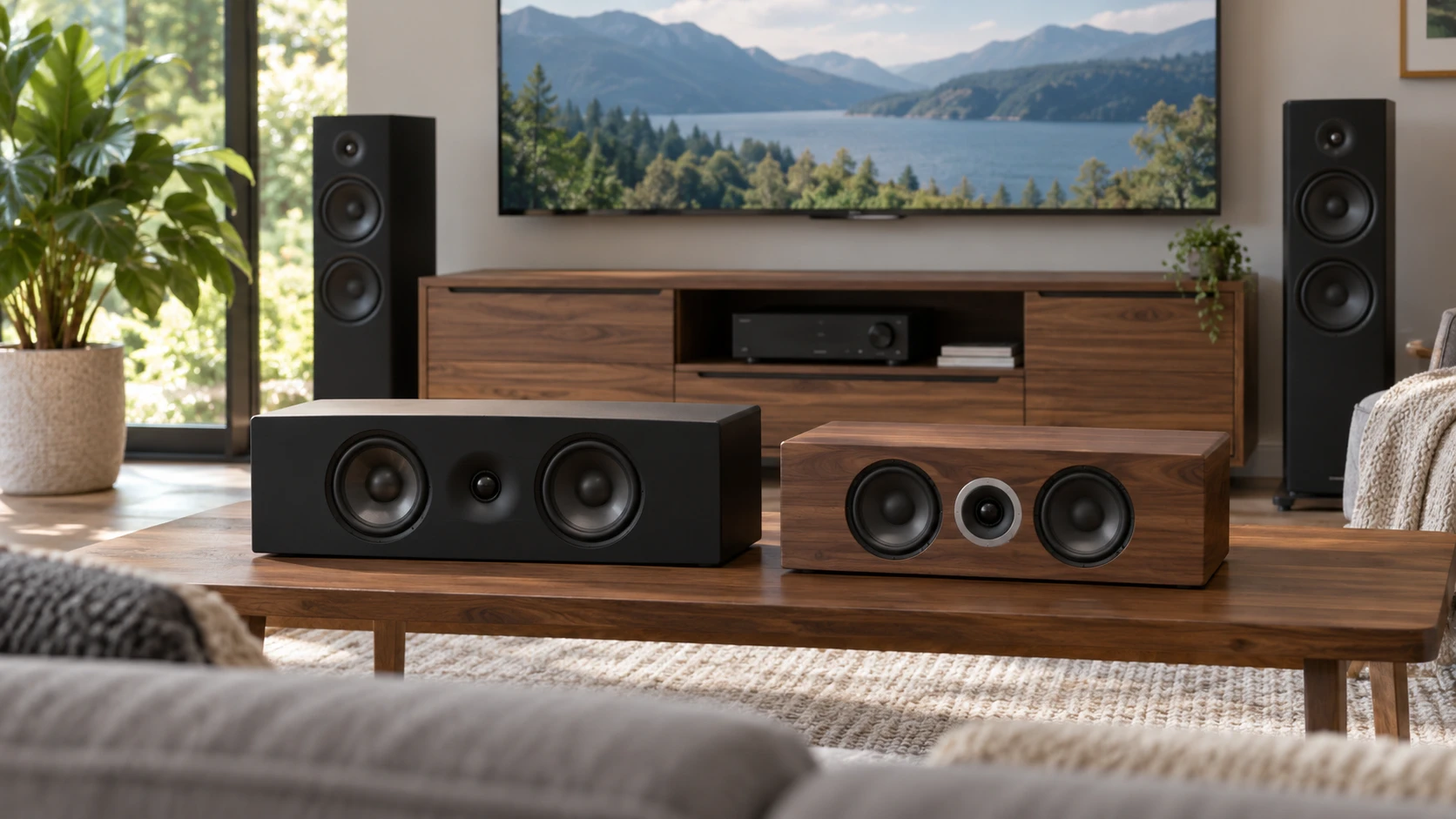
The Fluance Reference XL8CW center speaker and Q Acoustics 3090IWAL address the same place in a home-theater layout: the speaker near the screen that carries much of a film's dialogue. Both listings call them two-way center-channel speakers. Fluance describes woven-fiber drivers, silk-dome tweeters, and a sealed wood enclosure. Q Acoustics identifies its walnut-finish 3090IWAL offer as a 3090Ci design with a 100 mm woofer, a decoupled 22 mm tweeter, and a braced MDF cabinet. Those details are useful, though neither page tells you how a line of dialogue will sound from your usual seat.
Begin with the system already in the room. A center speaker joins a wider setup; it needs a place to sit and a compatible way to receive sound. If you currently use only a television's internal speakers, ask how the proposed center channel will connect to the rest of the system before comparing driver materials. If you already have left and right speakers, look at the center's size, tonal relationship, and placement. A center speaker that cannot sit near the screen or work with the existing equipment will not solve the problem that sent you shopping.
Measure the space around the screen — Q Acoustics 3090IWAL/3090Ci center speaker
A center speaker is often placed on a media cabinet below a television. Measure the clear width and depth of that shelf, the space between the shelf and the bottom of the screen, and the distance to any cabinet door. If the speaker sits inside furniture, include the opening's height and the space left for cables. The cabinet can restrict placement even when a product photo makes the speaker look compact. Obtain exact dimensions and any placement guidance for the selected model and finish before ordering.
Fluance says the XL8CW uses an acoustically sealed wood enclosure that allows flexible placement. That description is a useful lead for a tight cabinet, but it does not remove the need to follow the manufacturer's clearance and orientation advice. A speaker pushed back behind a cabinet lip may direct its output into the furniture and muffle dialogue at the seats. If a television stand blocks the only sensible location, sketch a different stand or shelf before treating either speaker as a fit.
The Q Acoustics page mentions low-profile binding posts and a walnut finish. Low-profile posts may help where the rear of a cabinet is close to a wall, provided the cable and connector you use can still be fitted safely. The listing does not give the complete rear-clearance requirement. Check it against the actual shelf. The walnut finish is visible every day, but the reason to choose this speaker should remain a workable position for its drivers and a reliable connection to the system.
Try to place the center near the screen's horizontal middle. If it must sit below the screen, consider whether the sound seems to come from the picture at the main seat. The two product descriptions do not establish how either model performs above a television or behind a screen. A placement that looks symmetrical in a photograph may leave one listener much farther off-axis than another. Sketch the seats as well as the cabinet before you decide which dimensions matter most.
What the driver descriptions actually tell you — Q Acoustics 3090IWAL/3090Ci center speaker
The Fluance page says its woven-fiber drivers handle midrange sound and that silk-dome neodymium tweeters handle high frequencies. It describes the result as clear speech and natural vocal tone. The page also states a frequency range of 110 Hz to 20 kHz. Treat that number as the stated in Republeq catalog details specification; it does not specify the measurement method or show how the speaker behaves in your room. The description says the crossover is designed to maintain a balanced response, but it does not provide an independent comparison with the Q Acoustics speaker.
Q Acoustics describes a two-way 3090Ci arrangement with a 100 mm woofer and decoupled 22 mm tweeter. Its page says the decoupling aims to reduce interference between drivers and that P2P bracing controls cabinet resonance. These are design descriptions, not listening-test results. They help explain what to inspect in the exact product, but they cannot prove that one voice will be easier to follow at your seating distance. The page calls the offer 3090IWAL while identifying the design as 3090Ci. Confirm the model, finish, and included unit at checkout so the delivered speaker matches the specifications you consulted.
The material difference is not enough to rank them. A woven-fiber midrange driver and a conventional woofer may behave differently, yet the listing text gives no matched response measurements, room conditions, or side-by-side dialogue test. Speakers also interact with their surroundings. A large hard table beneath the center, a deep cabinet recess, or a seat well to one side can affect intelligibility. Before using a driver adjective as the deciding factor, check the intended location and listen to familiar material from the seats you actually use.
Understand the rest of the audio chain — center speaker versus soundbar setup
A center channel is one part of a theater system. Identify the equipment that will send it the center-channel signal and check the manufacturer's connection requirements. The Q Acoustics listing mentions binding posts, which means the physical cable connection matters. The Fluance description discussed here does not provide a complete connection diagram. Find each exact model's manual and the output specifications of your receiver or amplifier, then confirm the planned wiring and settings. Do not infer compatibility from the word "center" alone.
If you have left and right speakers, the center should work alongside them without calling attention to itself every time a voice crosses the screen. Compare their published sensitivity, impedance, and recommended amplification only from official specifications for the exact units. Then ask whether your equipment can support the intended combination. The marketplace summaries do not supply enough comparable figures to certify a match or estimate how loud either center will play in your room.
A published Republeq guide on center speaker versus soundbar setup compares a center-channel speaker with a soundbar for a different pair of products. Its useful question here is whether your room and existing equipment call for a separate-speaker system at all. A soundbar has a different connection and placement plan from adding one center speaker to an existing system. Decide that first, then compare these two center models within the system you can actually use.
Check the television or media player's audio settings as well. Some setups send a stereo signal; others route a multichannel soundtrack through an audio system. A new center speaker cannot create a dedicated center channel when the rest of the chain is not configured to send one. A simple test with a familiar film scene can expose a setting problem before you attribute muffled speech to the speaker. Keep the volume steady as you compare, since a slightly louder speaker often sounds clearer at first.
Listening beyond the main seat — Q Acoustics 3090IWAL/3090Ci center speaker
Fluance claims wide off-axis dispersion from its tweeters so listeners across a room can hear detail. That is a reason to test the XL8CW from side seats, not proof that every couch position will receive equal clarity. Q Acoustics describes driver decoupling and cabinet bracing, but its short listing does not make a directly comparable coverage claim. The room layout and speaker height will influence both. Take note of the side seats used most often and listen for whether dialogue remains understandable there.
Choose a passage with soft speech over background music, then another with a voice moving across the screen. Listen from the central seat and the farthest regular seat. If you can audition only one product in person, record the room, placement, and settings so that the experience is still useful. A store display mounted in open space does not recreate a center enclosed by your media cabinet. A return period that allows a careful home trial can be valuable when the page supplies only design claims.
Do not use loudness alone to judge dialogue. Some speakers can make voices seem prominent by changing their tonal balance, while the problem at home may come from the soundtrack, room reflections, or the audio settings. Compare at a comfortable volume over a whole scene, including effects and music. If you routinely use subtitles because a particular streaming service has an uneven mix, test material from that service. One dramatic movie trailer may flatter a speaker while saying little about ordinary viewing.
Finishes, grilles, and daily use — Q Acoustics 3090IWAL/3090Ci center speaker
The Fluance offer is described as walnut and its live page displays selectable finishes. Q Acoustics lists a walnut finish, magnetic grilles, and chrome trim. Confirm the selected finish for each offer; product pages can group more than one color under a single address. The grille matters if the speaker sits in a shared room where children or pets can reach it. Ask whether the grille stays secure in the location you plan to use and whether the drivers remain protected during cleaning.
Both speakers should be easy to access after installation. Leave enough room to inspect cable connections without pulling on a wire or lifting a television. If the speaker sits below a screen, check that it does not cover a remote-control sensor or force the screen higher than is comfortable to watch. A design that looks better in a product photo may be harder to live with if it needs a new cabinet or a crowded shelf. Include any furniture change in the cost comparison.
The live listings showed selectable offers when checked, but availability and exact variant can change. Compare the final selected offer, delivery terms, and return policy; a starting price may refer to a different finish. These pages do not establish every accessory included with the speaker. Confirm whether a grille, feet, mounting provisions, or cable is in the box. Add the necessary cable and any stand to the full system budget before concluding that one route costs less.
Make the choice in your system — Q Acoustics 3090IWAL/3090Ci center speaker
Fluance's XL8CW merits a closer look if its sealed enclosure fits the proposed location and you want to investigate its listed woven-fiber drivers, silk-dome tweeters, and 110 Hz to 20 kHz range. Verify dimensions, connection and amplifier requirements, and behavior from side seats. Its speech-clarity language is a claim to test with familiar dialogue, not a measured advantage over this Q Acoustics model.
The Q Acoustics 3090IWAL/3090Ci center speaker is a candidate when its cabinet, low-profile binding posts, and walnut finish suit the room. Confirm the 3090IWAL offer's exact relationship to the 3090Ci design, the full dimensions, and the amplifier specifications before buying. The decoupled tweeter and braced cabinet are concrete design points to examine, but the listing cannot tell you how it will sound beside your other speakers.
Measure the shelf and identify the system feeding the center channel first. Then compare official specifications and, if possible, listen at home. That sequence makes a useful decision from the available product facts without pretending the Republeq's product descriptions are a room-specific sound test.