Home & Living
flower centerpiece stand sightline troubleshooting for event tables
Find whether a tall stand, flowers or table position blocks conversation, then test a practical fix from a guest seat.
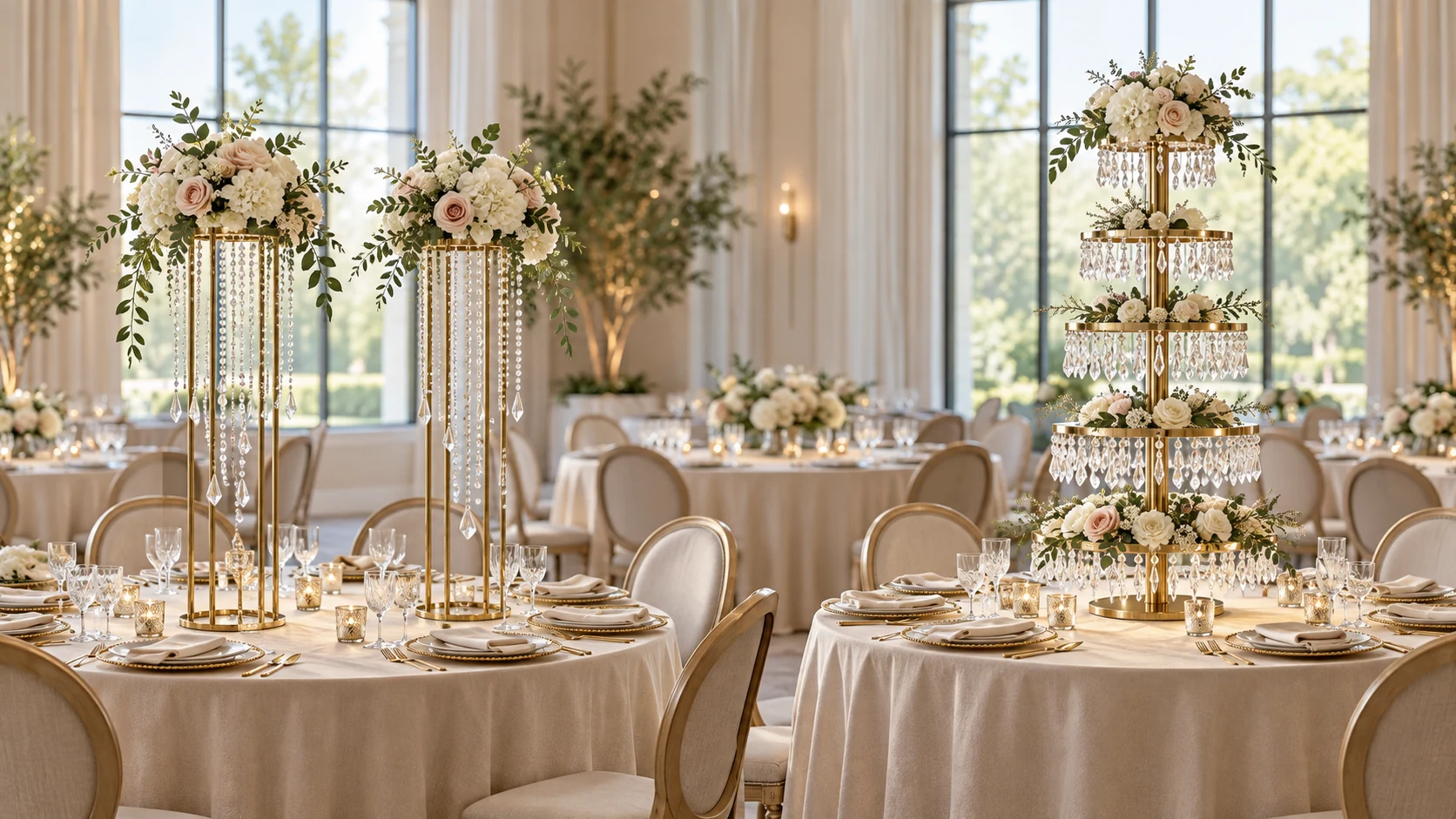
A flower stand can give an event table height without spreading every stem across the tabletop. Before choosing one, decide where guests will sit, what must stay on the table, and how much of the arrangement may interrupt conversation. Flower centerpiece stand sightline troubleshooting begins by identifying whether the stand, the flowers or the table layout blocks a seated guest's view. The two exact offers here show different structures: a pair of tall, narrow crystal-trimmed stands and a single tiered stand with a wider display area. Their listing pictures show flowers for styling, so check the package description before assuming flowers are supplied.
Find the blocked view before moving the stand
Draw a quick seating plan for the table you will actually set. Mark guests who will face one another, the places servers need to reach, and the space used by plates, water glasses and shared dishes. A centerpiece looks different from a guest's chair than it does in a product photograph taken against a blank wall. Your first useful check is the view from a seated place, across the table to another seated place.
Place a temporary object where the stand would go and sit at several seats. It can be a cardboard outline rather than a finished arrangement. Move it away from a sightline if people need to lean around it to talk. Also look from the table end, where a long row of stands can form a continuous visual barrier even when one stand appears open on its own. This is a room-layout decision, not a claim that either listed stand has a certified clear-view height.
The plan changes with the table's job. A display table or entry point can support a taller arrangement because nobody needs to speak across it. A dinner table needs room for service and conversation. If your venue uses round and long tables, test both: a narrow center can work in one layout and still crowd the center of another. Keep the table plan in one place so helpers do not repeat the same guess during setup.
Check whether the stand shape causes the problem
The two-piece crystal flower stand listing describes a pair of tall gold-tone metal stands. Its native gallery image shows two separate narrow bases and hanging crystal-style strands beneath the upper arrangement area. The listing states a height of about 35.4 inches. Treat that number as a product description to verify against the delivered pieces, not a promise about the height of a finished floral display.
The five-tier flower stand listing describes one gold-tone stand with stacked circular display levels and crystal-style accents. Its native gallery shows one tiered structure with flowers arranged above it. The listing states a stand height of 43.3 inches. That does not tell you how much additional height a florist's stems, foliage or vessel would add. It also does not prove the arrangement in the photograph comes in the box.
These two forms solve different placement problems. Two separate narrow stands can be placed at different tables or used as a pair on a display surface. One tiered stand puts several visible levels in one location. Count table locations before comparing package counts: a set of two helps only when you have two suitable locations, and a single tiered stand still occupies one table position. The visual comparison does not establish that either offer is stronger, safer or better priced.
Look at the footprint as well as the height. The tiered form has lower rings that may occupy space near hands, plates or signage; the narrow pair keeps its decorative detail closer to a central column. Sketch the widest visible part of each form on your tabletop plan. If you need to place serving dishes in the center, leave that area open rather than expecting guests to work around a stand after the meal begins.
Check whether flowers make the stand look wider
Both product pages use arranged flowers to demonstrate how the stands could look. Review the actual offer text for included pieces before budgeting flowers, holders, foam, vases or assembly materials. The photographs are useful for judging outline and decorative style; they are not a complete inventory. If a florist will prepare arrangements, send the exact product dimensions and ask them to test their intended vessel with the delivered stand.
Choose the arrangement's visual weight for the room. A dense cluster of flowers can make a slender stand look much wider from a seated angle. A sparse design may leave more open space but can expose more of the metal and crystal-style details. Try a sample at eye level under the venue lighting if possible. The saved gallery images show the stand forms, but they cannot predict your flowers, lighting or tableware.
Keep table decoration decisions together. The decorative napkin holder placement guide helps place a small setting detail near an individual plate. A tall centerpiece needs the separate table-level sightline and service-space check described here. If your event also uses rings at each seat, the bulk napkin ring allocation guide helps count and distribute those pieces. That count does not determine where the flower stand should go.
Fix placement after assembling the actual stand
Open the package where parts will not be mixed with table linens or decorations. Check the number of stands and pieces against the exact listing and any included instructions. Set the stand on the kind of surface it will use at the venue. A stable trial on your own table is more informative than an image of a fully decorated product. Do not assume the display arrangement in the picture has been tested with your vessel or flowers.
Assemble the stand using its actual instructions and inspect every connection before adding an arrangement. Do not put a heavy vessel on it merely because a photograph shows a large bouquet. If the listing provides a load limit, use the exact applicable value; otherwise, ask the seller or choose an arrangement whose support can be checked in person. Children, pets, crowded service routes and trailing decor may change where a tall stand belongs in the room.
Measure the finished arrangement after it is assembled. The stand alone may meet your height plan while the flowers rise much higher or spread beyond the center. Sit in the same chairs you used for the cardboard trial and check the view again. Move a stand to an entry or display table if the finished piece blocks conversation at dinner. A change of position is easier before all place settings and serving pieces are in place.
For a room with several tables, label each stand or planned location on a setup sheet. Note which table receives the narrow pair and which receives a tiered form. Give helpers the same placement sketch so the arrangement does not migrate to the nearest empty space. Keep any optional flowers and accessories listed separately from the stand count; a missing bouquet is a different problem from a missing stand.
When the view is blocked, isolate the cause before changing the whole table. Remove the sample flowers while leaving the stand in place. If guests can now see one another, the arrangement width or drooping foliage is likely the part to change. If the stand itself still crosses eye level, a smaller bouquet will not solve the stand-height problem. Mark which seats were affected so the next test uses the same viewpoints.
Move the stand a short distance along the table and test again. At a long table, shifting a centerpiece away from the conversation path may help more than putting it precisely at the geometric center. At a round table, an off-center position may interfere with shared dishes or make the setting feel uneven. Use the actual place settings and service plan to decide. Do not let a photograph's symmetrical layout override how guests will use the table.
Check the side view too. Crystal-style strands or lower tiers can hang into the space where a hand reaches for a glass or where a server sets down a platter. Leave the decorative parts visible without asking guests to brush past them. If moving the stand clears the view but blocks a service route, that is not a complete fix. Choose a different table location or a less spreading arrangement and repeat both checks.
A raised centerpiece may seem to clear the seated view, but do not improvise a taller base to achieve it. Use only supports and assembly methods that the actual product instructions allow. An unsupported riser changes the way the stand bears weight, especially after flowers and vessels are added. If the product cannot hold the arrangement at a useful height and position under its stated guidance, choose a different arrangement or location.
Look at the room lighting once the arrangement is in place. A reflective strand may be quiet in daylight and more prominent near a spotlight or candle. This is a visual comfort check, not a claim that either stand will create a particular glare level. Walk around the table at the time of day the event will occur, then turn or move the arrangement if a bright reflection sits directly in a guest's sightline.
If several identical tables need stands, test one complete table before unpacking or decorating the rest. Record the stand position, flower width and clear space for dishes on the setup sheet. That sample prevents a small placement error from being repeated across the room. After other tables are dressed, still check a few seats: table size, nearby walls and lighting can make a copied layout behave differently.
Keep a simple record of the fix you chose. Write whether you narrowed the flowers, moved the stand, changed the table assignment or left the display table as the only suitable position. This helps helpers act consistently and gives you a useful starting point if the event layout changes. It also keeps a stand problem separate from a flower-delivery problem or a missing accessory.
Repeat the seated-view test after the fix
Walk the service route once with chairs pulled out. Confirm that people can pass without brushing the arrangement and that serving dishes still have their planned space. Then sit at representative seats and look across the table. If the stand competes with conversation, reduce the arrangement or move the piece. If it leaves the table too sparse, adjust the flowers rather than assuming the stand's height is wrong.
The cause may be the arrangement width, the stand footprint or the table position. Use the exact product pages to confirm the offered structure, make one change at a time, and repeat the seated-view test. Keep the stand only where guests can talk and service can pass around the actual finished arrangement.