Home & Living
bulk napkin ring allocation plan for event tables
Count ringed seats and distribute a bulk napkin-ring pack with table labels and a clear reserve.
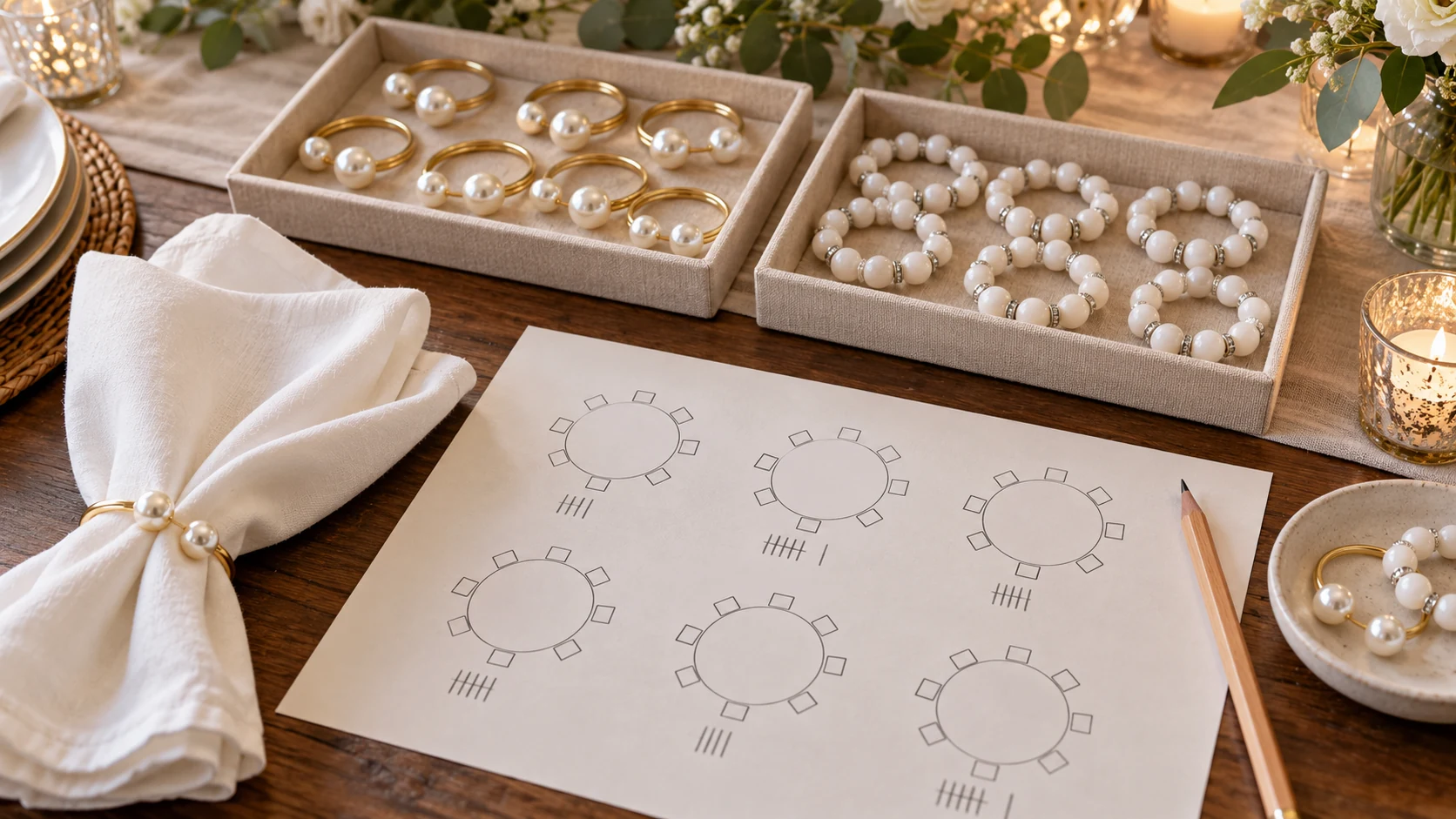
A large pack of napkin rings can look like a simple way to finish many place settings. The useful question is how many rings will actually be ready at each table when people sit down. A bulk napkin ring allocation plan starts with the seating chart, adds a modest replacement allowance, and sets aside any unused pieces before the event. The two exact offers in this guide state different pack quantities and show different decorative forms. Neither listing can count your guests or guarantee the delivered number of rings.
Start with occupied seats, not the package number
Write down the number of place settings you expect to prepare. Count seats that will have a napkin, including hosts and helpers who will sit for the meal. Do not count an empty chair just because it appears on a room diagram. If the guest list is uncertain, keep a separate range: confirmed seats, likely additions and a maximum that the room can actually hold.
Next, mark which settings will use a ring. A buffet may have napkins at a serving station rather than at every seat. A children's table may use a simpler folded napkin. These are event choices, not restrictions imposed by a ring listing. The ring requirement follows the settings you will build, not a percentage of all invitations sent.
For example, an event with 72 ringed settings needs 72 ready rings before an allowance for damaged or missing pieces. A stated 50-piece pack is short by 22; a stated 200-piece pack leaves 128 unassigned. Those arithmetic differences are useful only if the exact package and delivered quantity match the listing. They do not establish a better price or quality for either offer.
Keep a small count worksheet with three lines: planned ringed settings, extra rings you choose to hold nearby, and pieces expected to remain boxed. That makes the choice reviewable if the guest count changes. If you later add a table of eight, update the first line and subtract eight from the unassigned count. Avoid relying on a vague feeling that a large box “should be enough.”
Separate the table plan from the look of the rings
Once the quantity is clear, decide which tables should share the same appearance. A gold-tone open ring with two pearl-like accents can repeat across a long banquet table. A white and silver bead ring offers a different decorative choice. The native galleries show each kind of ring as a physical object, but they cannot show how either set will look with your actual linens, lighting or centerpieces.
Put one sample napkin, plate and place card together at home or in a simple sketch. Make the ring a small accent within that setting rather than the only thing you plan. A shiny detail may be noticeable against a plain cloth and less noticeable beside a busy print. This is a visual planning question; it does not prove that the finish will survive repeated use or that any material is suitable for every fabric.
Do not mix styles by accident when you unpack or distribute boxes. If you buy more than one design, give each a named table or section before setup begins. Mark the box “head table,” “long tables” or another actual destination. This prevents helpers from choosing pieces at random and leaving one table partly matched. A deliberate mixed look can work, but it should be a choice made before guests arrive.
The decorative napkin holder placement guide looks at the visual position of a holder in a setting. Use it for a close placement decision. This article owns bulk quantity, distribution and count control across tables; a pleasing position for one napkin does not answer how many rings to order for the room.
Read the exact two bulk offers narrowly
The Unbranded gold-tone pearl napkin ring set states a quantity of 50. Its native description identifies PE-coated iron spring rings with two pearl-like accents and a stated ring diameter of 4.2 centimeters. All seven native gallery images show that open-ring form with napkins and repeated units. They support physical identity and the advertised configuration, but cannot prove that 50 pieces will arrive or how the finish will behave on every fabric.
The GF Zhong pearl-style napkin ring set states a quantity of 200 white rings with silver details, imitation beads and rhinestones. Its native description states an inner diameter of about 1.1 inches. Seven native gallery images show bead-ring forms, individual napkin settings and a repeated group. They support physical identity and visible decoration, not the delivered count, exact fit with your napkin thickness or long-term durability.
Both pages present new-condition napkin rings for event place settings. One advertises 50 gold-tone open rings; the other advertises 200 white and silver bead-style rings. The difference in stated pack count matters when the seating worksheet exceeds fifty, while the visual design may matter when a table theme is already fixed. Keep those two decisions separate. The larger stated pack is not automatically the better purchase for a smaller gathering.
The native text uses promotional claims about ease, appearance and finish. Treat those as listing language rather than a tested guarantee. This guide relies on the stated pack sizes, basic material or visible design, and the idea of using a ring at a napkin setting. It does not claim that either will protect a fabric from snags, fit every folded napkin, or survive a particular cleaning method.
Allocate rings by table before opening every box
Turn the seating chart into a pick list. Write the table name, number of ringed seats, and quantity to place on that table. A ten-seat table receives ten rings plus any chosen table-level spare; a six-seat table receives six. Add the table rows and compare the sum with the planned setting count. The two totals should agree before anyone carries rings into the room.
Assign one person to count the pieces at a clean setup surface. Another person can take counted groups to tables, but avoid having several helpers pull freely from a box. If the package contains fewer pieces than stated, a controlled count catches the shortage before the last tables are dressed. Keep the delivery label and listing URL available for resolving a real mismatch with the seller.
For a large event, use small labeled bags or trays for each table. A tray marked “Table 4: eight rings” reduces memory work and makes missing pieces apparent. Do not assume that a photograph showing repeated rings is a packing inventory. Count the delivered pieces once, then count each table allocation as it leaves the setup area.
Keep the allowance in a separate container. If a piece is misplaced or a guest count changes, helpers can draw from that reserve and note how many remain. A reserve is not the same as a claim that the product fails often. It is a practical planning choice for an event where a last-minute change is possible. Set the reserve to the size of your real uncertainty, not to an arbitrary share of the pack.
Check napkin fit with the actual item
A stated ring diameter is only one part of fit. The way a napkin is folded changes its thickness at the point that passes through the opening. Gather one napkin in the fold you plan to use and test one delivered ring before you prepare the entire room. Do not force a tight ring over fabric or assume a photographed sample napkin has the same thickness as yours.
If the fold does not sit well, change the fold or choose a different placement after checking the napkin. Keep that problem separate from the quantity worksheet. A room can have enough rings on paper while the chosen fold makes setup awkward. Finding that issue before all tables are dressed saves work and avoids presenting a rushed compromise as a planned style.
The one-place napkin ring guide works through how one ring belongs in an individual setting. It is useful when you are testing a fold or choosing where the napkin sits by a plate. The bulk plan here covers how many identical pieces move from package to table and how you confirm the whole event count.
Use the actual product care information for cleaning or storage after the event. The captured pages do not supply a verified cleaning test for every decorative component. A damp cloth instruction in one listing is not a universal rule for rhinestones, pearls, plated metal, napkin fabric and repeated event use. Let pieces dry as appropriate before storing, and keep different designs separated if you plan to reuse them.
If helpers will set several rooms, make each room a separate subtotal as well as each table. A box intended for one room can otherwise be opened in another, leaving a shortage that looks like a delivery problem. Write the room total on its container, then list the tables inside it. At the end, the sum of room totals should still equal the number of ringed settings on the seating chart.
For changing guest lists, save the dated version of the count you used to pack. If eight guests are added after the first allocation, move eight rings from the reserve to their named seats and update the list. If the reserve cannot cover the change, decide whether to obtain more rings or use a different consistent setting for an entire table. Avoid leaving only a few guests without the planned detail because the count was not revised.
Reconcile the count after setup
When the tables are ready, compare each table's actual rings with the pick list. Count from the room, not from the number you remember taking out of the box. If one setting has no ring, correct it from the reserve and update the count. If several pieces remain in the tray, check for an empty seat or a missed setting rather than scattering them as decoration without a plan.
After the meal, gather rings into the same table-labeled containers. A quick return count reveals whether a piece is still wrapped around a napkin in a laundry bag or left by a serving station. This does not require a complicated inventory system. The original table count, the reserve count and the returned count give you a clear starting point for the next event.
The choice between the two offers becomes easier when those numbers are visible. Use the stated 50 or 200 pieces only as a planning input, verify the actual package on arrival, and assign every active piece to a setting, reserve or stored remainder. Choose the visual form that suits the tables you will set. A bulk pack helps when its contents and distribution match the event, not simply because the listing shows many rings at once.