Problem-Solving Articles
Fenix E18R V2.0 won't turn on: check model and battery
Check the matched Fenix E18R V2.0 control account and actual battery identity, keep Streamlight details separate, and retain the supported service boundary.
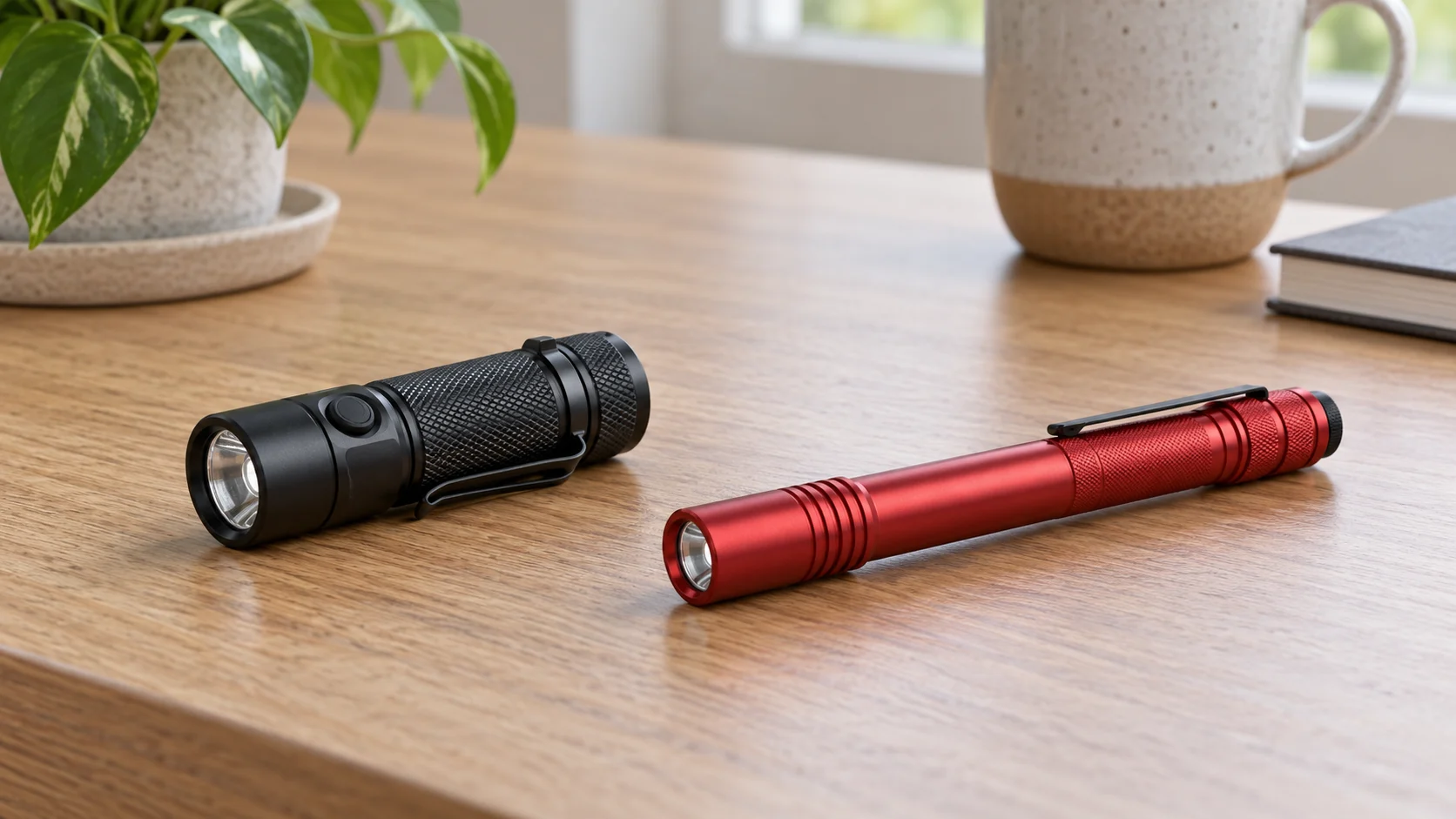
If a Fenix E18R V2.0 won't turn on, first establish the actual model, its documented switch state and the battery fitted. A dark main light does not identify a failed LED by itself. Keep the light's applicable instructions available while deciding what can be checked without guessing at a repair.
This problem-solving account concerns the retail Fenix E18RV2 offer and a separate Streamlight 66136 Stylus Pro USB offer. Their controls and power information stay with their own identities. The aim is to distinguish a documented user check from an unresolved equipment fault, without promising that a particular received light has been repaired.
Identify the actual unit before treating a feature as a fault
Read the markings on the unit and any matching supplied instructions. Keep the model reference with the light you are considering. The word flashlight describes a broad category; it does not establish a switch sequence, battery chemistry or charging arrangement for every object sold under that category.
Compare the actual unit with the selected order information if the identity is uncertain. A seller title, a remembered colour and a similar-looking photograph may describe different variants. Resolve a mismatch before applying controls from another version. This article supplies no permission to complete missing model information from the appearance of a switch.
Keep the original symptom concrete. Record whether the main light remained dark, an indicator appeared, or the output was lower than expected. Those are different observations. Describing each observation separately helps the maker or supplier identify the relevant documented check.
Keep the Fenix E18R V2.0 lockout check together
For the Fenix E18R V2.0 lockout check, Fenix Lighting documents holding the side switch for 0.5 seconds for normal on/off. With the light off, a double click enters lockout with two flashes; another double click unlocks. Establish the state instead of repeatedly toggling it.
After the matched check, describe the result you actually observed. A response from a control and a continued absence of the main light should remain distinct in the record. Do not turn a remembered previous response into proof of what happened in the current check, or claim a successful repair when the symptom remains.
If the actual light or its supplied guidance does not match that model account, stop using the borrowed control description. Send the supplier the precise identity and the mismatch. The next useful answer is the applicable information for the actual unit, rather than another attempt with a superficially similar product's controls.
Read the selected Fenix offer without adding a package
The Fenix E18RV2 Nebular flashlight offer has actual catalog brand Fenix and SKU 13119124424. The native description identifies an E18R v2.0 rechargeable flashlight, USB-C charging and an included LumenTac battery organiser. Keep the organiser in this offer's actual package account.
The retail description states up to 1200 lumens and a beam reaching 159 yards. It also gives less than 2.64 inches in length and a weight of two ounces. Those are attributed specifications, without a received-item measurement or brightness test here. A light that has not illuminated cannot be diagnosed from its advertised maximum output.
The organiser statement does not identify the chemistry of a battery already inside a received light. It is also separate from a promise about every accessory included in another supplier's bundle. Confirm the actual battery and applicable instructions before using a charging statement to decide what to connect.
Make flashlight battery identification a separate check
For flashlight battery identification, read the actual markings and matching requirements. EPA explains that labels identify battery types; shape and label colour do not. Keep size, chemistry and any relevant model designation together. A familiar cylinder is not evidence that an existing charger or another light's method is appropriate.
Fenix Lighting recommends its ARB-L16-800P 16340 Li-ion cell and lists its ARB-L16 series as usable. Its table permits a non-rechargeable lithium CR123A without charging and bans 16340 LiFePO4. Keep these distinctions with the matched model; an accepted non-rechargeable cell is not charging permission.
If the battery's identity cannot be established, do not resolve the uncertainty by trying a charging method. Ask for the matching information while retaining the actual cell and unit references. Obtain the chemistry information before treating a similarly sized cell as an alternative.
EPA also cautions that not every battery is removable or serviceable by the user. Respect the actual battery and product markings. This guide does not prescribe opening a sealed assembly, rebuilding a cell or substituting loose batteries for a different internal power arrangement.
Use the Streamlight account only for the actual Streamlight
The Streamlight 66136 Stylus Pro USB red offer has actual catalog brand Streamlight. Its description names high and low modes: 350 lumens with a 109-metre beam and 1.5-hour runtime, and ninety lumens with a 58-metre beam and 3.5-hour runtime.
Its native account says the lithium-ion battery recharges in the product in 2.5 hours and identifies a red LED as charging. Those are the actual power and indication statements in this selected offer. They do not make it an ordinary AAA-powered penlight because the public title contains Stylus Pro wording.
Streamlight's matching product page also identifies a green charge-indication LED as charged, a sliding metal sleeve protecting the USB port and a push-button tail switch for momentary or constant operation. Those are Streamlight descriptions. They supply no side-switch lock sequence for the Fenix or blanket approval of every USB power arrangement.
Keep the observation attached to the actual indicator. Recording which light appeared and when is more useful than writing only that something was red. This account does not supply a complete Streamlight charging procedure, connector inspection method or internal-battery service instruction.
Separate missing illumination from an unverified output comparison
The selected offers advertise different maximum outputs and beam distances. Those figures answer a product-performance question after the conditions behind them are established. They do not explain every instance of a light staying dark. Start with the actual symptom and matched information before deciding that an advertised specification was not reached.
A brief impression of brightness is not a controlled comparison of the two lights. This article has not measured their light output, beam distance or runtime. Do not change the fault description from did not illuminate to failed its advertised lumen figure without the evidence needed for that different claim.
Keep any observation about a shorter-than-expected run with the actual mode and power history you know. The Streamlight description gives separate figures for two modes. Choosing one of those figures from memory does not establish that the light was operating under the corresponding condition.
Keep cleaning or repair within the matched instruction boundary
Fenix Lighting says dirty contacts or a battery needing attention can cause intermittent or absent light. It warns against disassembling the sealed head and says to contact an authorised distributor if its methods do not work. Its LED is not user-replaceable; do not improvise that repair.
This account does not reproduce a contact-cleaning method or provide instructions for handling a damaged battery. Describe visible concerns to the appropriate manufacturer or supplier and obtain applicable guidance. A general suggestion to clean something does not establish a safe solvent, tool or dismantling method for an unidentified assembly.
Keep the warranty or service question separate from the diagnosis. An offer's existence on a storefront does not establish a particular received item's purchase date, condition or eligibility. Have the actual order and model information available when asking about the next supported action.
Preserve enough evidence for the next useful answer
A practical handoff identifies the unit, the actual battery information, the original symptom and the result of the matched check already completed. Add the relevant order reference when it concerns the received item. This gives the supplier a defined question without making them infer which model or battery a generic description refers to.
Describe uncertainty openly. If the battery marking was unreadable or the supplied instructions named a different model, retain that fact. Do not report a control check as passed merely because it was attempted, and do not describe a light as working when only an unrelated indicator was observed.
The next action depends on what remains unresolved. It may be obtaining the correct instructions, identifying the supplied cell or pursuing the documented service route. Keep that action attached to the actual unit. Repeating an undocumented intervention adds activity without establishing why the light remained dark.
Manage a used or damaged battery through its actual route
A light staying dark does not establish that its battery contains no remaining energy. EPA says that used batteries can retain enough energy to injure someone or start a fire even when they appear discharged. Keep that distinction when arranging the next step for a cell removed under the actual product's instructions.
EPA identifies labels and chemistry as the basis for waste-management choices. It says rechargeable batteries do not belong in household trash or municipal recycling bins. Its listed options for removable rechargeables include specialised battery recyclers, participating retailer takeback services and local household hazardous-waste programmes. Check the actual programme's accepted types rather than assuming every collection point accepts the cell.
The agency's rechargeable-battery handling precautions include a separate plastic bag for each battery or non-conductive tape over its terminals. Keep that supported handling measure distinct from a method for repairing the battery. It supplies no permission to dismantle a cell, rebuild its protection circuit or recover a damaged unit for continued use.
For a damaged lithium-ion battery, EPA directs consumers to the battery or device manufacturer for specific handling information. Report the actual concern and model when seeking that advice. Do not classify physical damage as merely a low-charge indication or assume that completing an ordinary charging time will address it.
A device with a non-removable battery raises a different management question. EPA identifies electronics-recycling or relevant takeback and local collection programmes for whole devices. Follow the actual product's serviceability information; an in-product charging statement by itself does not establish whether a user may remove its internal battery.
These are management routes, without a verified local appointment, fee or acceptance receipt here. Keep the light's unresolved service question and the battery's actual state available when asking the responsible organisation what to do next. Discarding an unidentified cell should not become a substitute for establishing its appropriate handling.
Use related power guides without borrowing their compatibility
The actual Logitech G309 and Rival 650 power guide separates an alkaline-AA runtime statement from a different charging arrangement. Its mouse batteries and optional POWERPLAY hardware do not supply a battery type or charging method for these flashlights.
The actual Zoom recorder kit guide keeps a supplied charger and AA-cell inventory separate from unestablished chemistry and runtime. That is useful when reading a bundle description. Its recorder kit does not identify the cell inside a Fenix or approve an accessory for the Streamlight.
Conceptual Fenix E18R V2.0 won't turn on cover with generic inactive flashlights; no exact retail model, switch sequence, charging method or verified repair is demonstrated.