Dining & Table Décor
Fall-to-winter table runner: pumpkin harvest or red floral
Compare pumpkin harvest and red floral beaded runners by motif, table footprint and seasonal storage.
Choose the season you want the table to show
A Fall-to-winter table runner can change the mood of a dining table without covering the whole surface. The two current examples are narrow decorative pieces with different motifs. One shows pumpkins, leaves and flowers in harvest colors. The other is a cluster of deep red flowers and darker leaves, sold as a Christmas table accent. Both listings name a 13-by-36-inch size. Before choosing either, look at the table as it is used most often: plates, drinks, a serving bowl, homework or all of those on different days. The useful question is whether a small seasonal accent belongs down the center through daily life.
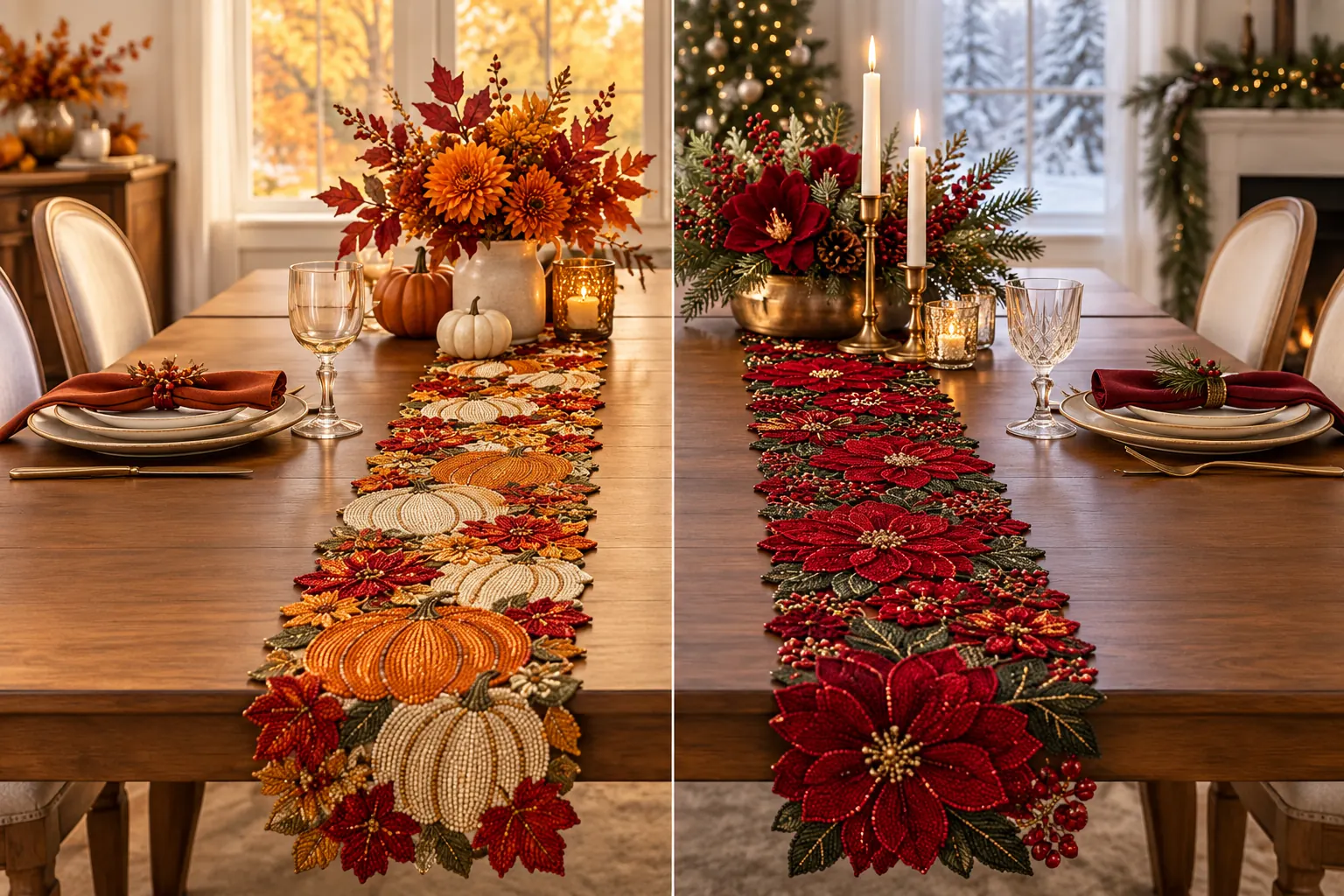
The gallery pictures make the contrast clear. The pumpkin design reads as an autumn arrangement, with orange and cream pumpkins mixed into leaves and blossoms. The red floral design has a denser, darker patch of flowers. Those are visible design differences, not a test of the material. A seller description makes broad claims about protecting furniture and lasting a long time, but the current images and listing do not establish how either piece will handle a hot dish, a spill or repeated cleaning in your home. Treat the runners as decorations and keep the table's normal protection plan separate.
Think about the weeks when the table is between occasions. The pumpkin piece may feel timely from early fall through a harvest meal, while the red floral one may fit the later winter decorations already in the room. Your household may use different dates or no holiday calendar at all. A leaf-and-pumpkin motif can simply be a fall color choice; a red flower can be a winter color choice. There is no need to let a product title decide when a piece goes away. Choose the changeover point from the room's own colors and from how often you want to reset the table.
Place a strip of paper or cloth measuring roughly 13 by 36 inches where the runner would sit. That outline will tell you more about the available dining space than an isolated product photo. A long table might make a 36-inch accent look compact; on a smaller table it may fill much of the center. The listing size tells you the piece's nominal footprint, not how it will look among your plates and chairs. Leave room for the objects the table actually carries. If the outline crosses a serving area, try it turned or shifted before deciding a beaded runner belongs there.
Let the pumpkin motif carry the fall scene
The pumpkin harvest table runner is pictured as a narrow arrangement of orange and cream pumpkins, red leaves and small flowers on a light background. Its ten current gallery views show the same design from different crops and orientations. The product title calls it a multicolor beaded Halloween runner and states 13 by 36 inches. You can use that exact offered design as a fall accent even if your table has no Halloween theme. What matters in the room is the color and shape you can see, along with the actual space the piece occupies.
The pumpkins form a recognizable line down the center. That can help a plain table feel seasonal before any vase or candle is added. It can also compete with a large centerpiece. Put a bowl or vase where you normally place it and imagine the pumpkin arrangement beneath or beside it. If most of the motif would disappear, perhaps the runner should be the table's main decoration on ordinary days and the centerpiece can move elsewhere for a gathering. The existing dinner table centerpiece guide explores how a centerpiece's role changes during a shared meal. Here the focus is the seasonal runner and the footprint it needs.
Colors can do more work than an exact match. A wood table, cream dishes or plain napkins may already provide enough quiet space around the orange and red motif. If the table is covered with a busy cloth, the small shapes may be harder to read. Place your usual dishes on the table and compare the pumpkin image beside them. Look from a seat and from the doorway. A design that looks lively in a close product photo may read as a narrow band of warm color from across the room; that may be exactly the effect you want.
Do not infer a protective surface from a decorative picture. The seller describes beaded material and makes promotional claims about practical protection. The gallery does not show a measured barrier against moisture or heat, and the article makes no such promise. If the table needs protection under a hot serving dish or a child's art supplies, use whatever protection is appropriate for the table and activity. The runner can sit where it will be seen and kept clear of tasks that would make a delicate-looking decoration inconvenient. Check the live care instructions for the exact item before placing food or cleaning products directly on it.
Use the red floral motif for the later table
The red floral beaded table runner is pictured as a narrow line of dark red flowers with darker leaves. Its ten current gallery views repeat the motif at different angles and crops. The listing calls it Christmas tableware and states 13 by 36 inches. The red flowers can sit beside winter greenery, plain white dishes or a darker table surface, depending on what you already have. The picture supports the visible design; it does not prove the beads were made by hand or that the runner is more durable than the pumpkin version.
A red floral accent may make the table feel dressed without adding many separate objects. It has dense color, so test it beside the actual napkins, placemats or serving pieces you intend to use. If the room already has red cushions, garland or artwork, the runner may echo those colors. If everything is neutral, it may become the strongest color on the table. Neither outcome is inherently better. Put the current tableware in place and decide whether you want the red flowers to lead the scene or remain a small seasonal note.
Remember that the 36-inch length does not create a full table setting by itself. It is a decorative span down part of the center. A large serving platter might cover several flowers; place it on the table before judging the runner's value. If the table must stay mostly clear for a meal, you might show the runner before guests arrive and set the serving dishes elsewhere, or use it on a console instead. The seller mentions console and coffee tables as possible placements, but measure the surface you choose and consider how it is actually used. The same item can look very different across furniture sizes.
When the winter season ends, think about where this piece will wait. A small runner still needs a place where its decorative surface will not be crushed by heavier objects. The current product page does not provide an independent storage or longevity test, so do not assume a particular packing method will preserve it perfectly. Keep the order and care information you receive, and follow any actual instructions on the delivered item. A seasonal decoration is easier to bring back when you know where it is and can see whether it still suits the table.
Plan the changeover without buying a second role
The two offers have the same stated footprint, so the decision here is mainly a motif change, not a new table-coverage job. If you already have a neutral runner that works year-round, you may want one seasonal accent rather than two. If the household enjoys changing the table from fall colors to winter reds, make room to store the off-season piece. A simple changeover plan has three parts: where the current piece goes, what the table will look like after it is removed, and where the next piece will live when its turn ends. No calendar rule is required.
Take one photograph of the table with the pumpkin outline in place and another with the red floral image beside the same dishes. Keep the angle and ordinary room lighting similar. This is not a color-accuracy test; a screen and product image can differ from an item in hand. It is a way to see whether each motif has a clear role in your actual space. If both scenes look busy, try fewer surrounding objects before ruling the runner out. If only one fits, the seasonal plan can stop at that one piece.
Keep the comparison separate from the choice between a full cloth and a narrow accent. The tablecloth and table runner guide examines how those two forms cover or mark a dining table for a shared meal. Both products here are already runners. Their 13-by-36-inch footprint makes them small central decorations, and their different motifs are the reason to compare them. If your table needs a full cloth, that is an earlier decision. Do not treat this pair as a substitute for an appropriately sized table covering.
Think through the transition in ordinary terms. A pumpkin pattern can stay while the room still carries leaves and warm harvest colors. A red floral pattern can come out when the household starts using deeper reds or winter greenery. There may be a week when neither feels right. A bare table, a neutral cloth or your everyday runner is a valid middle state. The point of planning the change is to avoid buying two decorative pieces that both spend most of the year in a drawer because neither has a clear place in the room.
Check the current offer and the delivered item
Before ordering, reopen the exact product page. Check the selected variant, the stated 13-by-36-inch dimensions, the image, package quantity and current seller terms. The two pages were reviewed as separate offers. Their similar description does not make them one interchangeable item, and the common size does not prove identical construction. Save the order record so you can compare the delivered design with the selected listing. If the live page has changed, use its current facts rather than relying on an older screenshot or this guide's description.
When the runner arrives, lay it on the table without a centerpiece first. Check its actual footprint, the motif's direction and how it sits on the surface. Then put the normal dishes back. If the runner's position interferes with eating or serving, move it or reserve it for a different surface. The current galleries show decorative motifs, not a guarantee that your table's daily routine will accommodate either one. Avoid assuming the item's surface will protect the table from hot, wet or abrasive objects; follow the table manufacturer's care guidance for those needs.
Keep a short note with the decoration after its season: the table it fit, the dishes that worked with it and any care instructions on the item. That note will be more useful next year than a generic claim that one motif is better for every holiday. If the pumpkin and red floral pieces both have a real moment at your table, the changeover can be enjoyable. If only one fits your room and storage, choose that one. The successful purchase is the runner you will actually place and see, in the season you intended.