Cleaning & Vacuums
An exhaust filter type change can also change the holder
A compatibility guide distinguishes filter renewal from a change of assembly.
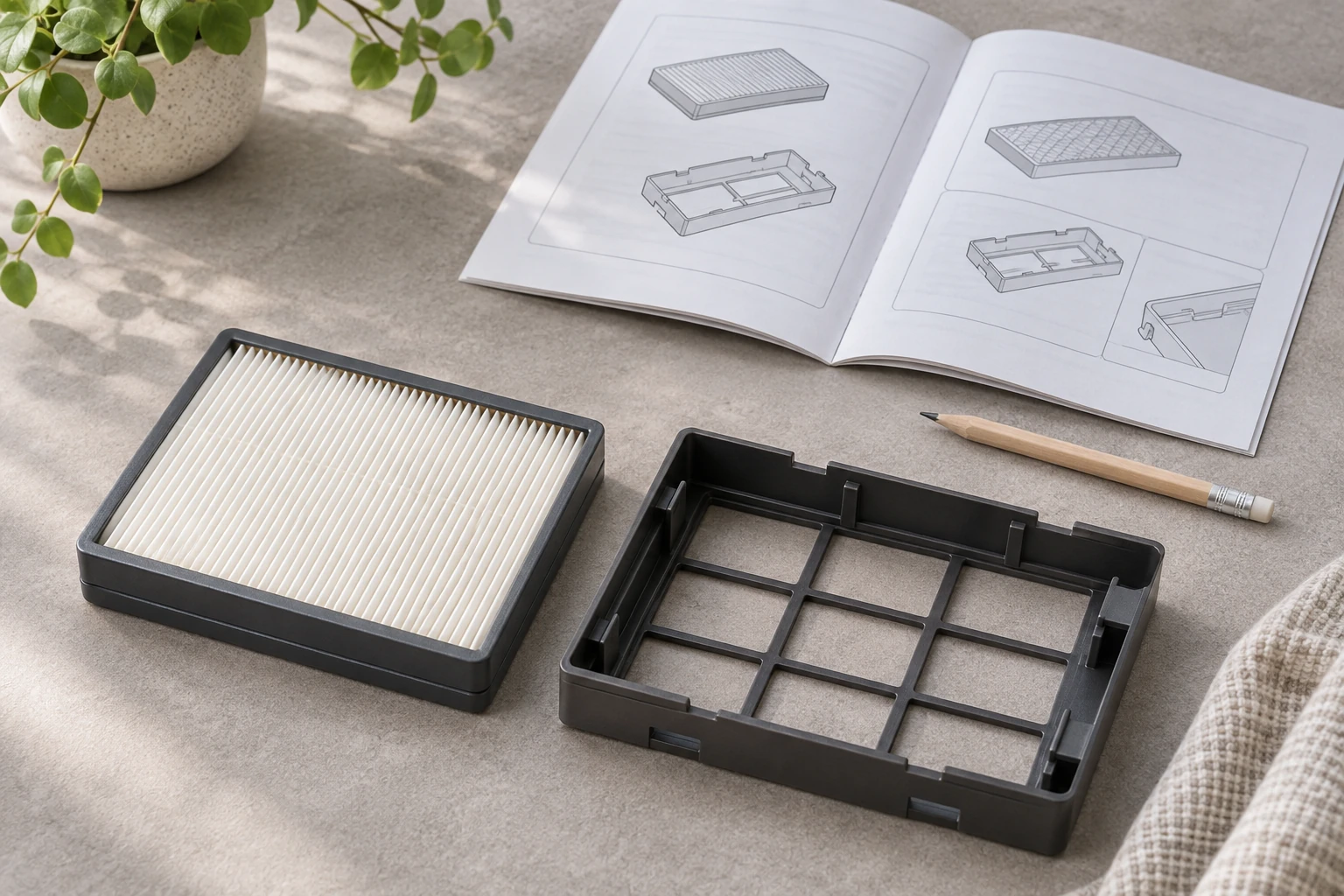
An exhaust filter type change deserves a different question from renewing the same part. Miele’s SGxxx manual distinguishes replacing an existing filter from changing between specified exhaust-filter types. In that exact appliance context, the supporting grille can be required for one configuration and removed for another. A filter purchase can therefore involve a configuration decision, rather than simply another piece of the same medium.
Distinguish renewal from a proposed change
Begin by saying which decision you intend to make. You may want another example of the replacement already specified for your equipment. You may instead be considering a different option and need to establish what that change involves. Or you may not yet have decided. Naming the intention prevents an attractive accessory description from quietly choosing the project for you. None of these intentions is evidence that a particular replacement is suitable; it tells you what you still need to resolve before placing an order.
Consider a fictional conversation between two housemates, Inez and Omar. Inez says she would like to investigate an alternative; Omar understands her to be asking him to reorder their usual supply. Neither has done anything wrong yet, because no order has been placed. Before he starts shopping, she explains that she has a proposal to discuss rather than a settled replacement to buy. Omar can now help investigate the proposal without treating his recollection of an earlier purchase as the answer.
Miele’s example makes the direction matter
The cited Miele manual names AirClean and several 50-series alternatives. Its change-type section requires the grille to be removed when moving from the described AirClean arrangement to the listed alternatives. For the reverse change, it requires the grille to be fitted. The same section says not to use more than one exhaust filter at a time. These are directions within that manual’s defined model context.
This guide uses that example to identify the purchasing question. It does not provide an installation sequence, establish that HA30 and HA50 are interchangeable, or approve either native offer for an unspecified machine. Follow the applicable complete equipment instructions when assessing an actual change. Establish the required supporting pieces without assuming extra layers must be better.
Keep filter holder compatibility tied to its assembly
SEBO’s AIRBELT-D manual separately names an exhaust microfilter and its holder. Its maintenance chapter identifies a rubber strip, notches and holes, and shows how those features relate within that particular assembly. It also distinguishes the pre-motor filter from the exhaust microfilter and identifies a filter set containing both. A set name therefore concerns more than one component, while the exhaust holder is still separately described. The chapter identifies that D filter set as part 8191AM and uses separate figure references for the holder. The set reference is not an inventory promise for a different offer.
That is a useful example of why filter holder compatibility requires more than recognizing the word filter. The manual’s references concern the AIRBELT-D parts and their relationships. They do not establish a mounting arrangement for Miele cartridges or a way to adapt one brand’s parts to another. This article supplies no removal, fitting or washing method from the SEBO chapter. Its purpose here is to keep the replaceable medium, its carrier and another filter elsewhere in the appliance from becoming one vague accessory name.
Inez and Omar give their proposed purchase a provisional description they both understand. It says that they are investigating a change, and that the decision is not yet settled. They do not turn the description into a list of parts they assume they need. When one of them finds another option, they can ask whether it answers the proposal they agreed to investigate or introduces a different proposal. This small distinction keeps their shared decision visible without pretending that their discussion has supplied technical approval.
A replacement filter assembly can contain separate pieces
The cited Philips instruction booklet describes an exhaust filter at the rear of its appliance and names a filter holder and exhaust grille separately. In that account, the holder is retained while the filter is replaced. It also discusses a motor-protection filter as a different item. Those distinctions belong to this Philips appliance account. Its accompanying supply information discusses filters provided with dustbags. That historical booklet statement does not establish the current contents or availability of an unrelated retail offer; retain its appliance context. They are not evidence that the holder from either native Miele offer is removable, reusable or sold separately.
Read replacement filter assembly as a term that still needs its exact product context. The Philips example shows a document naming the filter and carrier independently; the Miele example addresses a defined change between filter types. Those accounts should remain attached to their respective equipment. Neither supplies permission to improvise a hybrid assembly. The complete applicable instructions and identified parts must settle what an actual purchase needs to include. No fit test or delivered-component inspection is reported here.
Suppose Omar finds an offer he likes and wants to simplify the discussion by calling it the answer. Inez asks him to show which part of their unresolved proposal it addresses. They can examine the information together without treating his enthusiasm as a commitment. If it concerns a different selection, they can give that selection its own consideration. In this invented exchange, pausing the decision is an ordinary outcome. They have not promised each other that the first appealing option must become a purchase.
A filtration term does not identify a supporting part
EPA describes HEPA as a type of pleated mechanical air filter and explains the acronym as high-efficiency particulate air. Its account discusses particle-capture performance and distinguishes that discussion from MERV ratings used to compare other filters, particularly in heating, ventilation and air-conditioning systems. That is terminology about filtration performance. It supplies no cartridge dimensions, mounting features or accessory compatibility for the two offers discussed here. EPA describes MERV as reporting capture of particles between 0.3 and 10 microns. Comparing a performance measure still leaves a component identity question unanswered; a numerical rating does not identify a supporting part.
Keep the scope of that explanation clear. The EPA page does not certify these native listings, establish their advertised percentages, or document an allergy, virus or bacteria outcome from either product. A familiar term in a product title should not stand in for the missing assembly information. This guide adopts the terminology distinction without calculating a cleaning result, comparing health benefits or assigning a performance class to an untested retail cartridge. The purchase decision remains about the exact proposed component configuration.
Read the native cartridges without inferring interchangeability
The Miele-branded AirClean30 offer lists model 09616270; its three frames show SF-HA30 packaging, an indicator detail and a rectangular cartridge. The HA50 offer lists 09616280; its three frames show an installed-appliance illustration, SF-HA50 packaging and a cartridge. The vacuum and bag are context, not established included stock. Printed names identify the pictured examples; no native health, filtration-percentage, fit or replacement-interval claim is independently authenticated here.
In the fictional discussion, Inez notices that their current question has changed. They are no longer deciding whether to investigate an alternative; they are deciding whether the information they have answers the investigation. She says so explicitly. Omar can disagree about whether they have enough information and point to the remaining question. Neither needs to pretend the earlier discussion was pointless. It established an intention, while this later discussion concerns whether they are ready to act on it.
Leave the neighboring decisions with their own guides
The vacuum filter wet-pickup guide separates a washable maintenance claim from permission for a collection task. The air-purifier replacement guide matches an exact purifier and replacement, then considers the delivered assembly. The vacuum-bag parts-list tutorial concerns faithful transcription and presentation of written references. Their respective questions remain useful, but none establishes a filter-type conversion or holder configuration for these two native offers.
Those distinctions help keep this decision narrow. A proposed change in exhaust-filter type is not a test of wet-pickup suitability, a new purification-performance claim or an exercise in tidying part-number strings. If another question arises during the purchase, give it its own answer. Do not treat completing one of those other tasks as confirmation that a proposed configuration has been approved. This article records no such approval and no installation of either native cartridge.
Omar suggests ending their discussion with a simple statement each can repeat: whether they intend to continue investigating, keep their earlier choice or leave the purchase undecided. Inez adds the reason that matters to her. They can agree on the next decision without agreeing that an unknown detail is unimportant. If they later receive relevant information, they can reconsider the proposal in light of it. The fictional example makes no promise that a particular answer, suitable alternative or purchase will follow.
Inez chooses to leave their proposal open until they can answer the question that matters to her. Omar agrees to stop treating the discussion as an order request. Their agreement concerns what they will do next, without inventing an equipment result.
If a later order offers cryptocurrency
If you later choose a replacement through republeq.com and would prefer cryptocurrency such as USDT, check the payment methods actually presented for that exact order before authorizing it. Mentioning USDT in this guide does not establish that it is available for either offer or any particular checkout. Keep an unavailable method unresolved while you obtain current transaction information. Identify the exact goods you intend to buy and the selection you have agreed to consider. If someone else is purchasing on your behalf, give them that selection and ask them to bring a proposed substitute back for consideration. A preferred payment method does not authorize a change of goods or settle an equipment question. Review the applicable delivery and return information for the order under consideration. This paragraph promises no delivery date, refund outcome, fee, exchange rate or continuing availability of a checkout option. Obtain missing order or payment details from the responsible merchant interface or provider. No wallet address, network choice, transfer sequence or payment-provider procedure is supplied here. Use the actual transaction’s current instructions for a method that is available. Retain any real order confirmation and payment record so that the authorized transaction can be identified later. Those records concern the purchase; they do not independently establish delivered identity, mechanical compatibility or approval of a filter-type change. You may finish reading and leave the order undecided. If you return later, check the exact selected item and current conditions again before proceeding. An earlier product picture, remembered price or previously available payment method does not settle the later transaction. No completed order, transfer, inspection, installation or merchant commitment is recorded by this discussion.
Conceptual accessory planning; no exact cartridge or installed fit.