Laundry
A drying rack budget plan before buying accessories
Separate the rack order from optional additions and resolve missing measurements before committing to accessories or storage purchases.
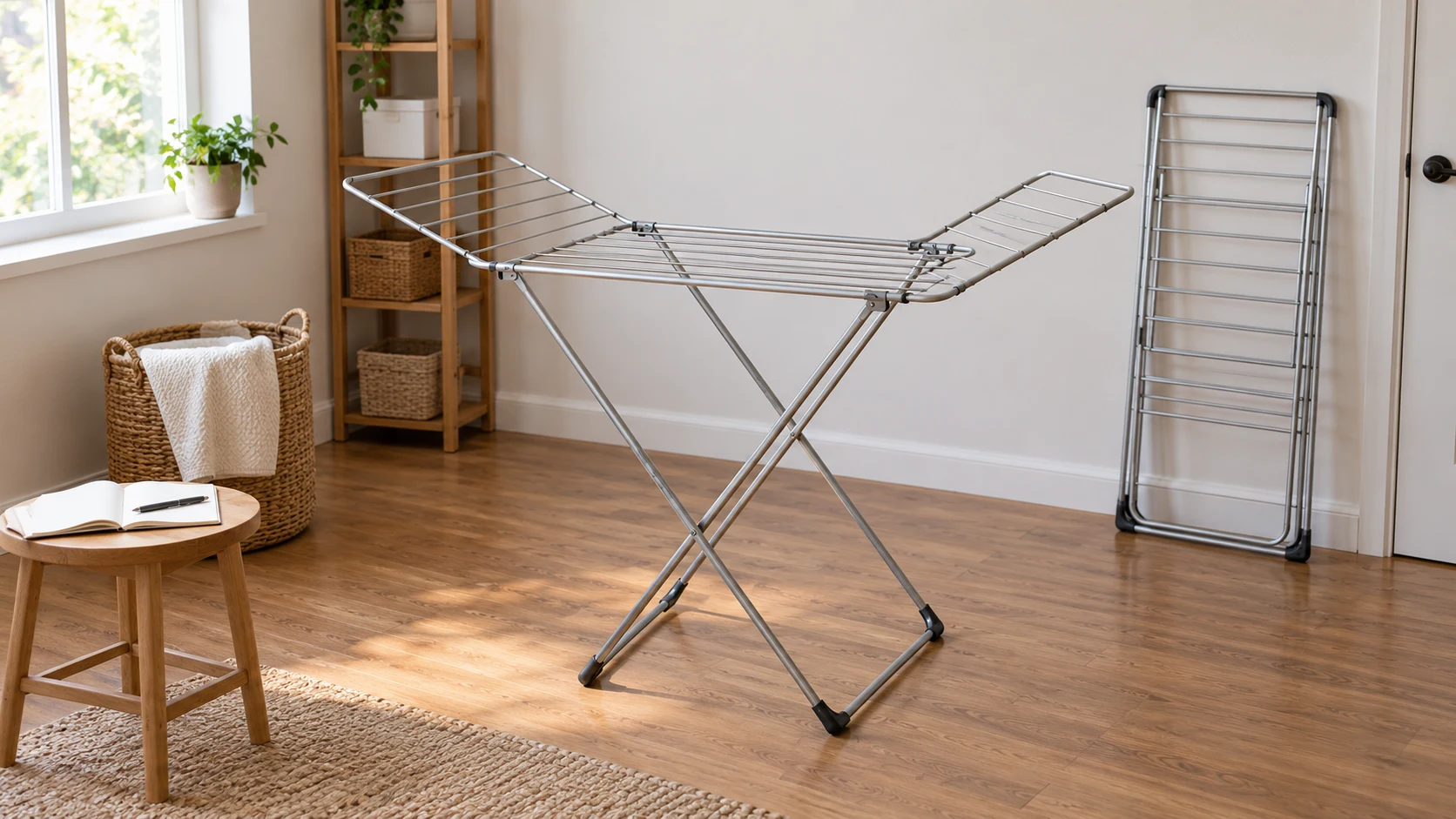
A drying rack budget plan can start with a purchase you decide to leave out. If the rack already includes the clips you intended to order, buying another set needs a separate reason. If you cannot establish where the folded rack will go, a storage accessory may be premature. Write down the problem you want the purchase to solve before choosing additions. Keep the rack, optional accessories and any proposed change to the room as separate decisions.
The Costway JZ10188 and KINGRACK SJ158206 offers provide different information for that exercise. This guide uses their stated contents and measurements to identify questions to settle before spending. It supplies no household energy-saving estimate, drying-time comparison or promised payback period. An order can remain undecided while you obtain a missing dimension or check what you already own.
Start a drying rack accessory inventory
Take your shopping list to the place where you keep laundry equipment. For a drying rack accessory inventory, record the usable accessories you actually have, then name the gap that prompted the search. You may need a rack, want a different arrangement for small items, or simply need a clearer storage plan. Give each proposed purchase a reason that relates to that gap. An empty line can stay empty until you know what is missing.
Keep ownership separate from availability. A set of clips belonging to someone else in the household is not automatically yours to include in a new arrangement. Ask before counting it. Likewise, an accessory you cannot find should remain an unresolved inventory entry. This is an original household planning exercise; it does not establish that an existing accessory is compatible with either rack.
Use two headings in your notes: already owned and stated as included. Copy the offer's own description into the second part without expanding it. If a photograph depicts another object, ask whether it is supplied before putting it in the inventory. Leave any compatibility question beside the particular item. Counting an accessory and deciding whether it serves your intended use are different tasks.
Costway's stated fittings belong beside the order list
The Costway JZ10188 Silver drying rack description lists one tall hanging bar, two drying areas with 23 rails, a netting rack, 28 sock clips and four shoe holders. Keep 23 as the rail total across the two areas. The listed fittings give you specific entries to compare with your proposed accessory purchases.
Its stated open size is 62 inches long, 24 inches wide and 75.5 inches high. The six-position wings adjust from 30 to 48 inches. Folded dimensions are 42.5 inches long by 26.5 inches wide by 4 inches high. These are product measurements, without a verified fit result for your home. Preserve the axes when recording them and obtain the applicable use instructions for the configuration you intend to consider.
Return to each optional item on your list after reading that account. If your only reason for ordering clips was an assumption that none came with the rack, revise the question now. You can defer the separate purchase while checking the actual inclusion and intended use. No monetary saving is calculated here because there is no current, complete accessory order to compare.
KINGRACK leaves two measurement questions open
The KINGRACK SJ158206 Blue foldable drying rack is described as a two-tier stainless-steel rack with upper wings and a lower tier. Its account gives three-level height adjustment and rods spaced 3.9 inches apart. It states that the rack arrives assembled. These features do not establish an accessory inventory identical to Costway's.
The dimensions read 56.4 inches deep by 21.6 inches wide by 39.3 inches high, while the prose calls 56.4 inches the upper-wing extension width. Preserve that discrepancy and ask which axis and configuration the figure describes. The folded size is given as 39.3 by 21.6 inches, without a third measurement. That pair cannot establish folded thickness or confirm fit in a narrow storage gap.
Put the exact product reference beside those questions. A reply about another rack would leave the original uncertainty unresolved. Ask for the relevant dimension drawing or written clarification and keep the answer with the offer. If the answer still omits the measurement your decision needs, leave that part of the order open. A more attractive photograph cannot supply the missing number.
Label folded drying rack storage measurements
Keep folded drying rack storage measurements on a separate part of the page from open-use measurements. Name the proposed storage place and write down the dimensions you have actually established there. Label what each number measures. A note that merely says fits cupboard records a conclusion without the measurements someone else would need to check it.
Sketch the proposed arrangement if it helps you explain a question to the seller. Mark an unknown dimension with its name instead of drawing it to a guessed scale. This sketch is a way to organize an enquiry. It provides no placement approval, operating clearance or handling method. Use the selected rack's instructions when deciding how it may be used and stored.
Consider what you would remove from the intended storage place. If another household member uses it, discuss that change before assigning the space to the rack. You can write a second possible location on the same page, but carry every unanswered product question into that option. Changing the proposed cupboard does not turn an unknown thickness into a known measurement.
Keep optional spending outside the first commitment
Make a separate list for additions you have not decided to buy. For each one, write the answer that would move it into the order. A storage purchase may depend on confirmed folded dimensions; another set of accessories may depend on the actual included inventory. This leaves you a useful next action without requiring you to buy everything at once.
Use the current checkout information when you are ready to build a purchase total. Record the exact rack and selected quantity, then enter only charges actually shown for that order. Keep an unavailable charge visible as an open question. A total assembled from remembered prices and guessed charges would conceal the information you still need before authorizing payment.
The power station package contents and expansion batteries guide makes the included-item distinction concrete: it separates an included expansion battery from an explicitly excluded solar panel. The transferable question is whether the item you intend to buy separately is already included. Those power-station contents provide no specification for either drying rack.
The coffee table placement guide for a shared reading room keeps room use and incomplete furniture measurements visible before choosing an arrangement. Use that recordkeeping idea when discussing the place your rack would occupy. Its furniture dimensions and room decisions supply no drying-rack clearance or storage-fit result.
Try the list against an original shopping example
Imagine a shopper who writes down a rack, extra clips and a container for putting the equipment away. The person has not yet checked the cupboard or read the exact rack inventory. Keep that first list as a draft. After checking what is owned, the shopper can cross out a proposed purchase or move it to the undecided section without losing the reason it appeared initially.
Next, suppose the selected offer names clips among its contents, while the proposed storage arrangement still lacks a needed measurement. The person can ask whether the separate clips serve any remaining purpose and defer the container until the storage question is answered. This hypothetical example claims no saving, accessory compatibility or fit. It shows which unanswered question belongs to which possible expense.
If another person is paying part of the bill, share the revised list before collecting money. Say what the present commitment covers and which additions remain optional. Agree how a later addition would be discussed. A contribution to a rack order does not by itself establish agreement to buy another accessory or change a shared storage place. Keep that agreement with your own purchase notes.
When the seller replies, revise only the entry the answer resolves. An answer about included contents can close an inventory question while leaving storage undecided. Save its date and exact product reference. If you choose another rack, start its included-items account separately so that the earlier reply does not silently become evidence about a different offer.
Leave a payback claim out of an incomplete budget
You can decide whether an order answers your stated need without assigning it a utility-bill saving. These product accounts provide no measured energy reduction for your household. An accessory count cannot establish such a reduction, and a dimension cannot determine a payback period. Keep any future calculation separate until you have evidence for the actual change in spending it would claim.
Before committing, read your note from the beginning. Does each item have a reason, and can you identify the source of each measurement? If a question remains, name who you will ask and what answer is needed. You may decide to keep using the equipment you have while obtaining that information. Retain the note so the next shopping session starts with the unresolved question.
Resolve the order before choosing a crypto payment
If you intend to use USDT, USDC or BTC for a republeq.com order, settle the equipment questions before authorizing a transfer. Keep the selected rack reference and confirmed included contents beside the basket you actually intend to buy. A payment preference does not resolve KINGRACK's missing folded measurement or confirm that an accessory suits the intended rack. Read the methods and instructions presented for your own checkout. The product accounts name cryptocurrency as a payment category; that does not identify every asset or network available for a particular order. Obtain clarification if the offered route leaves a necessary detail unclear. This guide supplies no wallet address, transfer instruction or network choice. Record the amount and any charge actually presented for the intended transaction, keeping it separate from remembered merchandise information. You can postpone payment while asking a question about the order or the payment route. Keep the seller's answer attached to the product it concerns so that a later discussion does not confuse the two racks. After an authorized purchase, retain the order confirmation and the confirmation provided by the selected payment route. Those records identify the transaction; they do not establish that the delivered rack fits your storage place or produces a particular drying result. Keep any question about supplied contents with the original offer and the relevant reply. If the basket changes while you are resolving a payment question, check the selected item and quantity again before proceeding. Your equipment list should still explain what you chose and which optional purchases you left undecided. An unanswered question can remain open until the appropriate source supplies the information.