Musical Instruments & Listening
Checking drum key compatibility at the tension-rod head
Match the documented tension-rod head and socket requirement while keeping grip features, carrying clips and package descriptions in their own roles.
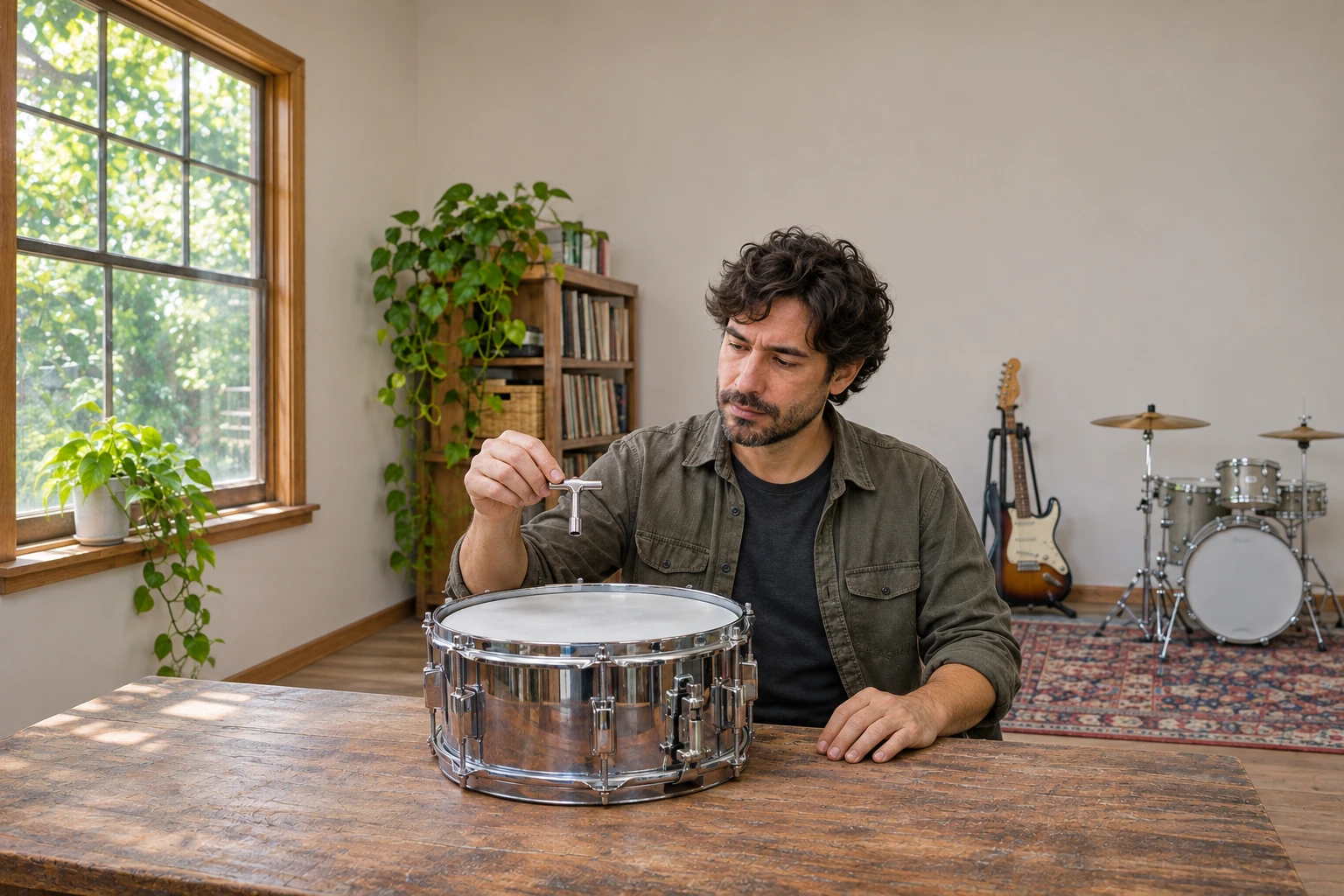
Check drum key socket size against the actual head
A question about drum key compatibility begins where the key meets the hardware. Gibraltar’s SC-4244 page identifies a quarter-inch square socket and describes use with standard quarter-inch square heads. Those words give the size and the receiving shape a subject. Keep both when checking the requirement for the drum or percussion hardware you already own.
For drum key socket size, obtain the actual hardware’s documented requirement before choosing an accessory. A product photograph can show a socket opening, while a specification supplies the intended dimension. Keep the exact key reference beside that specification. Gibraltar’s statement applies to its SC-4244. An unfamiliar key needs its own applicable information, even when its outline resembles that model. If the existing head or proposed socket remains unidentified, send the complete hardware and accessory references with the fit question. That gives the supplier a defined relationship to confirm before an order is selected.
Keep square and slotted tension rods identifiable
SONOR’s FAQ explicitly distinguishes square and slotted tension rods. It says the two versions can be exchanged on its drums from production year 2007 onward, with the correct length selected through the spare-parts program. That qualification belongs with the statement. It identifies a particular manufacturer’s replacement scope and the importance of the actual instrument’s age and parts.
For a key purchase, first establish which head is presently on the drum. A source offering two rod versions gives a reason to preserve that distinction in the enquiry. Keep a proposed replacement rod as its own parts question if one is being considered. SONOR also says hardware compatibility needs individual checking because drilling distances, threads and tube diameters vary between older and current equipment. Give the dealer the actual instrument information when requesting the applicable answer. Retain any production-year qualification in the reply. A general description of available spare parts leaves the particular configuration to establish before selecting a matching key. If the drum’s production information is uncertain, keep that uncertainty in the request and ask which identifying details the dealer needs.
Read the grip feature after identifying the interface
TAMA describes the knurled end knob on its TDK10 as a way to spin the key during initial tension-rod tightening for head changes. Its page identifies chrome TDK10 and black-nickel TDK10BN versions, alongside TDK05. Those model references let a reader keep a handle feature attached to the key that actually has it.
A grip description answers how the maker presents that part of its product. Keep the hardware-interface question beside it when comparing a proposed purchase. If a shop offers a different key, ask which stated feature and specification apply to that exact item. A shared finish or a similar T-shaped silhouette leaves that answer open. Save the complete model reference if the knob is important to your choice. That also helps another person ordering a spare distinguish the item you investigated from a neighboring model on the same page. Confirm the actual accessory before relying on a remembered description from the range.
Separate a wide handle from a specified application
Pearl’s tuning-key page describes K030 as a large key for high-tension applications. Its K080 account identifies chrome plating, die-cast construction and balance beads on the wide T-handle for grip and controlled spinning. These are separate named products with different descriptions. Keep their references visible when asking about the particular accessory offered.
Begin that enquiry with the hardware the key must serve, then explain which handle feature interests you. The phrase high tension still needs the applicable instrument and equipment context. A person choosing a spare can ask for a documented match without deciding how much turning force to apply. Retain the maker’s directions for the actual task when the matched accessory is obtained. If the seller proposes another model, examine that model’s own account before carrying the first key’s handle description into the order. A complete answer can identify both the intended application and the selected part while preserving the distinctions between Pearl’s two references.
Give a torque feature its own question
EVANS identifies its DATK Torque drum key with a torque handle that can be set to a desired tension. The product page also names an ergonomic grip, a knurled knob for spinning and a slip-resistant magnetic head. Keep those features together as the maker’s account of DATK. They describe a more specific tool than a bare T-shaped key.
If a torque feature interests you, obtain the applicable instructions for that identified tool and the actual drum task. A magnetic-head statement concerns how the tool is retained during adjustment; it leaves the hardware’s required interface and the intended setting as questions to resolve through their own information. Ask which exact model the seller supplies and where its directions can be obtained. Keep any answer about a setting attached to that model and application. The presence of a dial or magnet in another product’s photograph would still need its own explanation. Choose the accessory using the documented relationship to the hardware, then follow the matched tool’s instructions for the work it is intended to perform.
Identify both ends of a specialized key
Remo’s HK-2460-00 QuickTech account identifies an internal magnet, an extended body and a large rubber grip knob. It also names a hex stem for a cordless-drill attachment. That introduces another connection on the tool. The stem presented to a drive device and the end presented to drum hardware each need their own identification.
When asking about an unfamiliar accessory, say which connection your question concerns. An answer describing a hex stem can remain useful while a question about the drum-side opening is still unresolved. Keep the part number with the reply so the two connections stay attached to the same actual product. If you are choosing a hand-operated spare, explain that intended use when requesting its applicable information. A picture showing an extended body or a large knob supplies a visible form to discuss with the supplier. The model’s documentation must provide the relevant specification and permitted use. Resolve a proposed powered arrangement through its own equipment instructions before selecting it for a task.
Keep the exact key reference with the package
DW’s DWSM801-2 page identifies a two-pack of compact, chrome-finished keys with a keychain hole. That is a particular package account. The hole concerns carrying the key, while the pack reference identifies the proposed order. Retain both details if this is the maker product you are investigating.
For a replacement or spare, ask the seller to identify the exact key and the contents of the particular offer. A hole in the handle leaves the question of any separately supplied ring or clip to the package description. Write the confirmed accessory reference into the order information instead of keeping only a general brand name. If the proposed quantity changes during the enquiry, keep the new package reference with the changed proposal. This makes a later delivery question easier to explain from the actual order. The compact-design description can inform a carrying preference, while the hardware fit still needs its applicable answer. A useful selection keeps the item, its required interface and its supplied contents identifiable together.
Read the two native offers as separate configurations
The Unbranded L111 drum-key wrench offer identifies L111 in Mechanics Tools and reports its supplied description as “1.” Its gallery shows a complete black-handled socket driver with a ratchet-style handle and lever. The page supplies no socket dimension or established match for your drum.
The 10PC drum-key and carabiner offer has a selected 10PC Black edition, while its separate color metadata says Silver. Its black closeup agrees with the edition and shows HiPERIX wording, a ring and an orange carabiner; the catalog brand is absent. Preserve the title’s 5MM wording and clarify the ten-piece composition with the supplier. The carrying pieces have their own supplied role. Their appearance supplies no load rating, and the images certify neither a measured socket nor a delivered count. Keep the selected edition and each conflicting field with that request. A reply describing the clip should identify its own purpose, while the key still needs the socket information relevant to your hardware.
Keep other instrument interfaces with their own equipment
The published capo instrument-compatibility guide distinguishes an instrument’s requirement from the particular capo variant being offered. Its guitar, banjo and ukulele accounts concern different equipment from a drum key. That separate example can help explain why a broad accessory name still needs an actual model relationship.
The published violin E-string end guide keeps the offered end, receiving fitting and an adapter’s stated direction identifiable. For a drum-key enquiry, retain the same care over which connection the answer addresses. A response about a carrying clip, grip or drive-side stem leaves the drum-side head and socket relationship to establish. Keep the actual drum or hardware reference with that remaining question, and attach the resulting answer to the exact key under consideration. If either item changes, obtain confirmation covering the changed proposal before choosing the accessory. Save the original question alongside the reply. This helps a later buyer see whether the answer concerned the head, the accessory or a different part of the arrangement.
Read the terms of a possible crypto order
If you consider a crypto order on republeq.com after identifying a suitable accessory, begin with the exact product and variant you intend to buy. Keep the supplier’s answers about the socket, hardware relationship and package contents with that selection. A payment preference becomes relevant after the proposed order is clear. If the actual checkout presents USDT or another asset, read the asset name, requested network, destination, amount and timing conditions for that particular transaction. Available options must be established from the terms actually presented to you. Retain the order reference beside those details so another person assisting with the purchase can identify the same event. When an essential instruction is unclear, pause the proposed payment and request clarification through the documented support route. Save the question and the answer, including any changed instruction that affects the order. A revised accessory or package should receive a revised product record before payment is considered for it. If you decide to stop the purchase, record that decision with the proposed order information. If you proceed, retain the payment record and the seller’s separate order acknowledgement. Check the actual order status when looking for acceptance, dispatch or delivery information, and keep the corresponding messages together. If a payment status becomes uncertain, reconcile that event before considering another transfer for the order. The usefulness of an accessory remains dependent on the confirmed product relationship you investigated. A completed transaction cannot supply a missing socket specification or demonstrate a physical fit. Carry the exact item reference, the applicable compatibility answer and the actual transaction records through the purchase so a later question can be addressed from what was really selected and recorded.