Product Compatibility & Accessories
Capo instrument compatibility: guitar, banjo and ukulele variants
Read G7th Performance 3 and Newport banjo/ukulele scope without turning ART, a range name or a broad instrument label into a guaranteed fit.
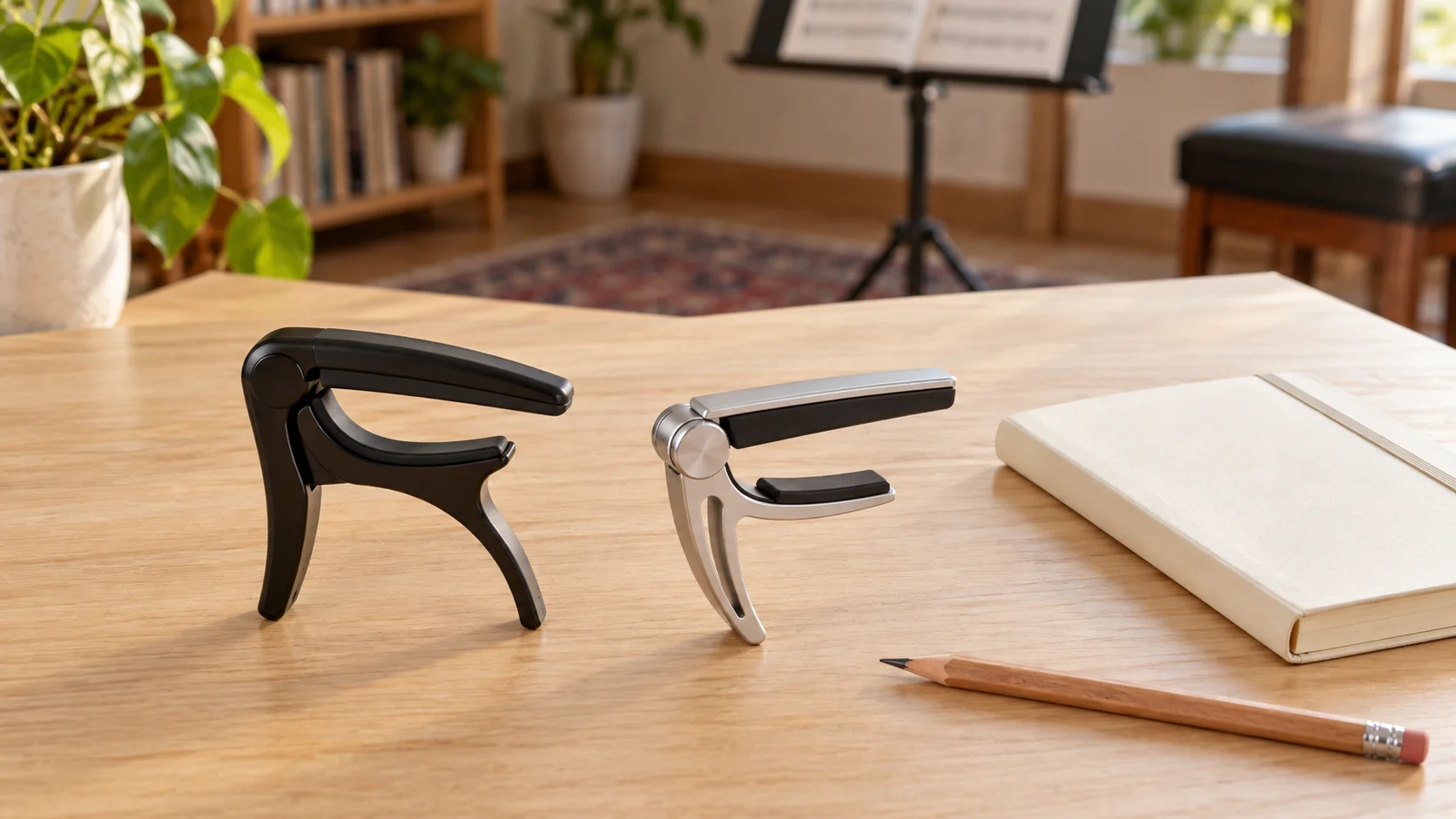
Capo instrument compatibility starts with the instrument and the particular capo variant, before an adjustment feature or finish. A guitar capo and a capo described for smaller fretted instruments answer different fit questions. Use the complete product reference beside your actual instrument rather than treating a familiar range name as the whole specification.
The two offers here make that distinction useful. One names a G7th Performance 3 ART Capo Black with a short model reference. The other names a Newport banjo and ukulele capo with a longer instrument account. Neither selected retail description supplies a measured fit result for the instrument in your home.
Identify the instrument before comparing the capos
Write down the actual instrument model and the kind of fit you need established. A six-string guitar, a particular banjo and an individual ukulele should retain their separate identities. A list of instruments in a range description is useful evidence, but it does not identify every model, neck or playing position within those groups.
If the purchase is for someone else, obtain that person's instrument reference before choosing a capo. A photograph of the whole instrument can help identify the question being asked, without becoming a reliable measurement or an independent fit test. Leave any uncertain model identification open until the owner or an applicable source can establish it.
State the intended use too. You may need a capo for one instrument or hope to share it between two. Those are different enquiries. Confirmation for the first instrument does not automatically extend to the second, even when the instruments have the same string count or are kept in the same room.
Read the Performance 3 variant scope with its qualification
For Performance 3 variant scope, begin with the G7th Performance 3 ART Capo Black offer. Its actual description identifies G7TH Capos, the Performance 3 ART Capo Black name and item number G7P3BK. That is a useful product reference, without a supplied width, complete dimensional specification or individual instrument list.
G7th's official steel-string Satin Black product page identifies its version as six-string. The broader Performance 3 page describes steel six-string acoustic, electric and hybrid nylon guitars, while qualifying suitability by setup, string gauge and action height. It separately names a newer Classical and Wider-neck version. Compare those manufacturer distinctions with the selected offer.
The sparse G7P3BK retail text does not, by itself, identify a regional width configuration or establish that a different Performance 3 variant is being supplied. Ask which exact version the offer represents when that distinction matters to your instrument. A shared black finish does not answer the variant question.
ART adaptation does not complete every fit question
G7th describes ART as a mechanism in the upper bar that adapts to the curvature across the strings and fingerboard. That manufacturer account concerns the string pad's adaptation. It does not supply missing dimensions in this retail description or establish a match for every instrument that happens to have strings and frets.
Separate curvature from coverage in the enquiry you send. An answer about how the pad follows curvature can remain useful while the intended instrument or variant remains unresolved. Do not convert the manufacturer's broad promotional wording into a personal guarantee that an unidentified capo will suit an unidentified neck.
The official product page also contains engraving artwork boxes. Their dimensions describe the space for artwork, rather than the capo's usable string coverage or the neck opening. Those numbers concern engraving. They are not a substitute for a missing fit specification, and this guide does not turn them into a way to measure your instrument.
Keep the separate Classical version visible
The Performance 3 range page's separate Classical and Wider-neck wording matters when comparing a general range name with a particular offer. It does not establish that every product carrying Performance 3 has the same physical configuration. Retain the complete variant answer rather than shortening it back to the family name after receiving it.
Suppose a fictional buyer, Mara, owns a nylon-string instrument and sees the word nylon on the range page. The useful next question identifies her actual instrument and the exact offered variant. The word alone does not establish whether her instrument belongs to the hybrid nylon scope or the separately described Classical version.
This example supplies no rule for classifying an instrument by its appearance, neck width or string material. Obtain the actual instrument account and applicable capo information. If a reply recommends a different variant, evaluate that proposed item under its own reference rather than keeping the original offer's name attached to the answer.
Read Newport banjo and ukulele fit from the actual offer
For Newport banjo and ukulele fit, the G7th G7NPBU Newport Silver offer identifies a Silver, Standard-size banjo and ukulele capo, SKU 48843592. Its description names smaller fretted instruments and specifically lists five-string, tenor, long-neck and plectrum banjos. Keep that actual account separate from the Performance 3 guitar wording.
The same retail description attributes a low-profile flip lever and on-neck tension adjustment to this Newport. Those control features do not establish fit for an unnamed instrument. This comparison supplies no attaching, removal or adjustment sequence. A matching instrument enquiry comes before borrowing an operating method from another capo's description.
G7th's official Newport Banjo Silver page names several banjo types and says it fits beside most fifth-string tuners. Preserve most as a qualification. It is not a promise about every banjo, every tuner arrangement or every position where a particular player might want the capo.
A ukulele label leaves the individual match to establish
The selected retail offer explicitly includes ukulele in its description. Retain that wording without silently replacing it with a list of ukulele sizes or models that the description does not supply. Ask about your individual instrument and the exact G7NPBU item instead of treating the broad word as a complete compatibility table.
Imagine another fictional buyer, Ben, who wants one capo for his own ukulele and a friend's banjo. A reply confirming the listed banjo types would address only part of that request. His ukulele remains a separate question until the reply or applicable documentation actually identifies its relationship to the proposed capo.
Likewise, a response about a different Newport variant should remain attached to that different item. The range name does not establish that the guitar, Classical and banjo versions are interchangeable. Retain the item reference in the answer, particularly if several silver capos appear together in a catalogue or search result.
Use the actual instrument details in a fit enquiry
A useful enquiry states the instrument manufacturer and model, the offered capo reference and the point still unresolved. For G7P3BK, that may be the exact Performance 3 variant being supplied. For G7NPBU, it may be applicability to an individual ukulele or a particular banjo arrangement. Identify the proposed item in each question.
Ask for applicable specifications or manufacturer guidance supporting the answer. A reply that only repeats adjustable tension has not established the instrument relationship. A reply that identifies the exact variant is more specific, but any remaining qualification should still accompany it. Do not discard a restriction simply because another part of the response is encouraging.
If the response requires dimensions, use the instrument's applicable information and an appropriate way to establish them rather than guessing from a product photograph. This article supplies no measurement procedure, acceptable clearance, pad-width target or universal neck limit. A number without its meaning and applicable requirement would leave the actual fit question unanswered.
Read a qualified answer without widening it
Consider a fictional reply saying that a particular six-string instrument falls within the supplied steel-string variant's stated scope, subject to its setup. Retain the instrument reference, variant and setup qualification together. Do not shorten that answer to all guitars when passing it to someone shopping for a different instrument.
A second fictional reply might identify the Newport Banjo model but leave an individual ukulele unanswered. That is progress on product identity, rather than a completed shared-instrument decision. Ben can retain the confirmed banjo information and ask the remaining ukulele question without ordering two unidentified capos or assuming that one must serve both.
A third reply might recommend the separately named Classical Performance 3 version. Mara would then need that version's actual offer and applicable details. The recommendation does not prove that the original G7P3BK offer supplies it. Keep the recommended variant visible when checking which product would arrive.
These are invented reply examples, not actual manufacturer responses for the selected offers. Their purpose is to show what each answer establishes and what remains open. A conditional answer should retain its qualification through a copied message, a household handover and the eventual choice of the specific product.
Before completing that choice, read the proposed item reference back against the original question. If either the instrument or the capo variant changed during the enquiry, check that the answer covers the changed pair. An earlier response about a different pair remains evidence for that earlier question.
Keep compatibility separate from a playing fault
The classical guitar capo buzz and tuning guide considers a different question: distinguishing unwanted buzz from changed tuning on appropriately matched equipment. Its examples concern Performance 2 Classical and Newport Classical models. Those specific classical models are different from the two offers selected here.
That distinction prevents a control explanation from doing the work of a fit answer. A player may understand that two capos use different adjustment mechanisms while still needing to establish which variant belongs on the actual instrument. Conversely, an applicable fit answer does not diagnose every playing sound or establish a string, neck or tuning repair.
Leave operating and service decisions with the actual matching instructions. This compatibility comparison does not prescribe pressure, knob turns, fret spacing or a tuning target. It also provides no modification to an instrument or capo to overcome a mismatch. A need to resolve suitability remains a reason to obtain the right information.
Retain the component and variant in the final answer
The bobbin and bobbin case compatibility guide reads the actual TEAMWORK component names and model lists separately. A machine code in an offer does not turn a case into a bobbin. Its sewing examples provide no capo fit approval; the relevant connection is preserving the identity of the item being matched.
Apply that care when a capo enquiry changes direction. If the answer proposes a different Performance 3 or Newport variant, record that proposed reference as a new selection. Do not carry the first item's finish, supplied contents or other unresolved details into the substitute without checking its own description.
Capo instrument compatibility is clearer when the final answer identifies the actual instrument and the particular offered variant, with its qualifications intact. Keep the Performance 3 curvature feature and the Newport smaller-instrument account with their own products. Choose only after the remaining fit question has an applicable answer for the instrument you mean to use.
Capo instrument compatibility depends on the particular instrument and variant; this conceptual cover shows separate generic capos without a fit test or adjustment demonstration.