Home & Living
door sweep still leaves a gap guide: locate the opening first
Measure the bottom gap, check alignment and compare brush and rubber contact before choosing a repair.
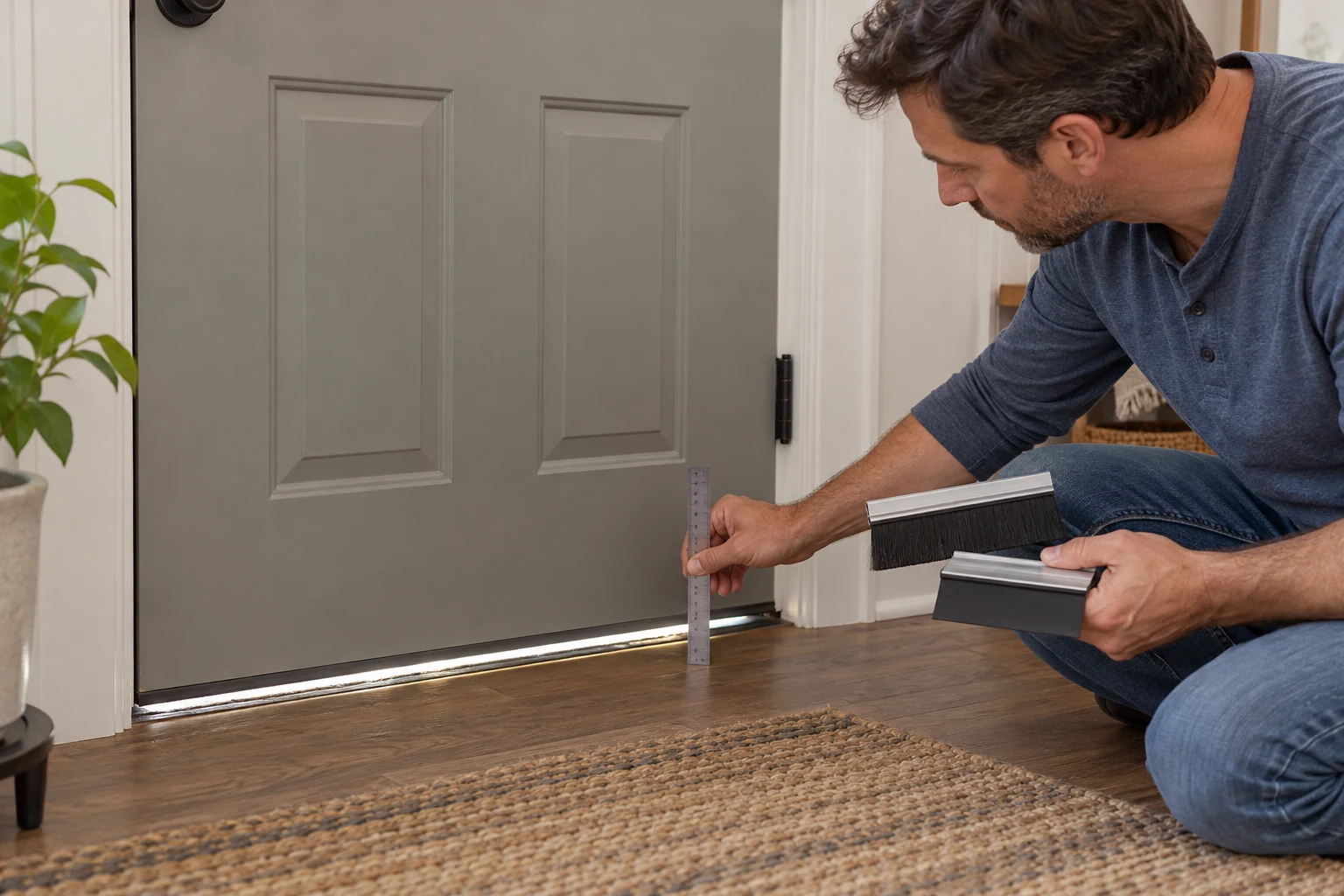
A line of daylight under a closed door can come from more than a worn sweep. The door may hang unevenly, the threshold may slope, or a new sweep may barely touch at one end and drag at the other. This door sweep still leaves a gap guide helps you locate the opening before choosing a different brush or rubber seal. Start with a closed, latched door and a simple measurement. Do not force the door shut or cover a required ventilation opening to make a visible line disappear.
Notice when the problem occurs. Is the gap visible all along the bottom, only at one corner, or only when the weather changes? Does the sweep scrape the floor as the door opens? Does the door latch normally? A single observation after someone has pressed on the door is not enough. Take a photo from both sides in normal light and mark the largest opening on a sketch. If the door is a fire-rated assembly or has an intended undercut, consult its requirements before altering it.
The tension rod guide begins with the real span and contact surfaces before adjustment. The ornament box fit guide similarly compares actual object and shelf dimensions rather than a box label. Here the relevant measurements are door width, vertical gap along the bottom, threshold shape and the sweep's allowable contact. The job is to identify the failing interface, not to stack materials blindly.
Find which part of the bottom leaks
Close and latch the door without pushing on it. From inside, look for the line of light while someone stands outside only if this can be done safely. Measure the opening at the latch side, center and hinge side with a ruler or suitable gauge. Record the values rather than relying on “about an inch.” If the gap changes sharply from one side to the other, the problem may involve door alignment or a sloped threshold, not just the sweep material.
Open the door and inspect the existing sweep. Is it missing, split, compressed or mounted too high? Look for a brush with sections worn shorter or a rubber flap that has curled away. Check whether the fasteners have loosened. Do not pull at a seal attached to a specialized threshold or fire door without knowing its construction. If the door has a manufacturer-specific assembly, obtain its adjustment or replacement instructions first.
Check the threshold itself for debris, damaged weatherstrip and water. A leaf or small stone can hold a door away from its normal closed position; a warped or loose threshold can create a persistent gap. Clean only what is accessible and safe. Do not plane a door or grind a threshold solely from a light test. If the door drags or will not latch, that alignment issue needs its own diagnosis before you select a thicker sweep.
Compare brush contact with a rubber barrier
The Randall brush-sweep listing describes a four-foot aluminum-and-polypropylene brush assembly, says its brush can address gaps up to one inch and notes predrilled mounting holes and included screws. Its first gallery image shows bristles hanging from a slim metal rail. This is a stated product range, not proof that a one-inch opening along an uneven threshold will seal uniformly. Confirm whether the brush can reach without dragging on your door's full swing.
The Xcluder-style sweep listing describes a thirty-six-inch dark bronze assembly with an industrial rubber seal containing poly fibers and steel wool. Its native copy says it helps block drafts and light on an exterior door. The first image shows a lower flexible strip under a metal rail. Do not infer a rated maximum gap or a guaranteed animal barrier from that photo. Its length, mounting method and threshold contact need to match the actual door.
Brushes can follow some irregular surfaces while rubber can make a more continuous flap where the geometry permits. Neither material compensates for a door that does not close into its frame or a threshold that is badly out of level. A brush that looks full when the door is open may spread or bend against the threshold; a rubber strip that looks flush in a product photo may curl when the door swings. Inspect the material in the actual closed position after any permitted installation.
Do not buy by door width alone. The Randall listing is four feet long and says it may be cut to size; the Xcluder-style listing is thirty-six inches long. Measure the actual door leaf and the permitted fastener area. Cutting a long rail may be possible only under the maker's instructions, with proper tool and finish treatment. A short sweep cannot be stretched to cover exposed corners. Confirm the product variant and hardware before drilling.
Separate a sweep problem from door alignment
If the gap is largest at the latch corner and the top of the door also looks uneven, inspect whether the door is sagging or not seated in the frame. If the hinge side opens while the latch side touches, the door may be twisted or the threshold may slope. These observations are clues, not a diagnosis of a specific hinge defect. Seek a qualified installer when adjustment affects a heavy exterior or rated door. A thicker sweep can mask a symptom while creating drag or preventing the latch from engaging.
With the door open, move it slowly through its swing and note where the bottom approaches the floor. A sweep installed low enough to close the largest gap may scrape on a raised floor section. Scraping can wear the seal, loosen fasteners and make the door hard to use. The contact needed at the closed threshold should be compatible with clearance throughout the swing. If that geometry cannot be achieved, solve the door or threshold condition instead of forcing a sweep into it.
Check for drainage and ventilation requirements. Some exterior thresholds are designed to shed water, and some rooms need a specified door undercut or air-transfer path. Sealing an intended opening can create a different building problem. If the opening is part of a fire, smoke, HVAC or accessibility requirement, get the relevant professional guidance. This guide addresses an ordinary observed draft or light gap and does not authorize changes to a regulated assembly.
Make a small, reversible decision
Write a four-line note: door width, smallest and largest bottom gap, threshold material and the existing sweep condition. Add whether the door opens and latches freely. Compare those facts with each candidate's published length, allowable gap, mounting surface and material. If a required specification is absent from the listing, ask for the current maker instructions instead of filling in the blank from a photograph or review. This avoids purchasing a seal that cannot reach or would drag.
If a fastener has merely loosened and the sweep is otherwise intact, the right action may be to secure or replace the existing hardware according to its instructions. If the brush is flattened or rubber torn, a matching replacement may be simpler than changing seal type. Preserve the old sweep's dimensions and hole locations for comparison. Do not reuse damaged screws or drill into concealed wiring or glass. When the door construction is uncertain, stop and consult a professional.
After a permitted repair or replacement, close and latch the door in its normal way. Check the same three positions and compare them with the before measurements. Open the door several times to make sure the seal does not catch or roll. Confirm the latch still works without added force and that the sweep remains attached. A better light result does not count if the door is now hard to exit or locks unreliably.
When comparing contact materials, picture how the door moves as well as how it rests. A brush can compress against a raised spot and spring back, but that does not guarantee a draft seal at every low spot. A rubber flap may contact more continuously on a level threshold, yet it can fold under if installed at the wrong height. Ask whether the maker specifies a contact angle or compression range. If the instructions do, use those values instead of deciding only from the line of light.
Keep a record of the original condition before removing hardware: a photo of the rail location, hole positions and a ruler beside the gap. That record helps distinguish an installation change from a preexisting sloped threshold. It also helps if you later need the correct replacement part. Store the removed screws separately and inspect the door material before selecting fasteners. An exterior metal door, wood door and composite door may not accept the same hardware in the same way.
Recheck the side weatherstripping and door sweep together. A draft felt at ankle height may travel down the latch-side edge and emerge near the threshold. If the bottom seal contacts evenly but air still moves, look for another visible opening around the frame rather than lowering the sweep until it drags. The point is to repair the actual path, not to make one component work beyond its design. Record where a tissue moves, with the door latched normally, as a clue for a professional if needed.
Check the result under ordinary conditions
Evaluate drafts on a typical windy day if possible, without using a flame or unsafe test near the door. A tissue held near the bottom can suggest air movement, but it is not a calibrated leakage measurement. Recheck after rain or a temperature change if those were the original triggers. If water enters, look for threshold, drainage and door-frame causes; a bottom sweep alone may not address the path water takes.
Keep pest claims in proportion. The Xcluder-style listing says its fiber and steel-wool seal is intended to block mice and rats. That is a product claim about a component, not proof that an entire building has no other entries. If signs of pests remain, inspect the wider building and use appropriate professional help. Do not treat a brush's marketing statement about unwanted debris as a complete pest-control plan either.
A successful outcome is a door that closes and latches freely with the bottom contact the maker intended, no visible unintended opening under ordinary conditions and no new scraping. If the measurements still show a sloped gap, keep that evidence and address the door or threshold instead of adding layers. This door sweep still leaves a gap guide gives you a way to choose the next repair based on the actual opening, not on the promise printed beside a product image.