Tools & DIY
Plan door draft stopper fit for one or two measured doorways
A door-by-door worksheet for comparing a single 32-inch twin stopper and a seller-stated 32–38-inch two-pack without assuming either will fit an unmeasured threshold.
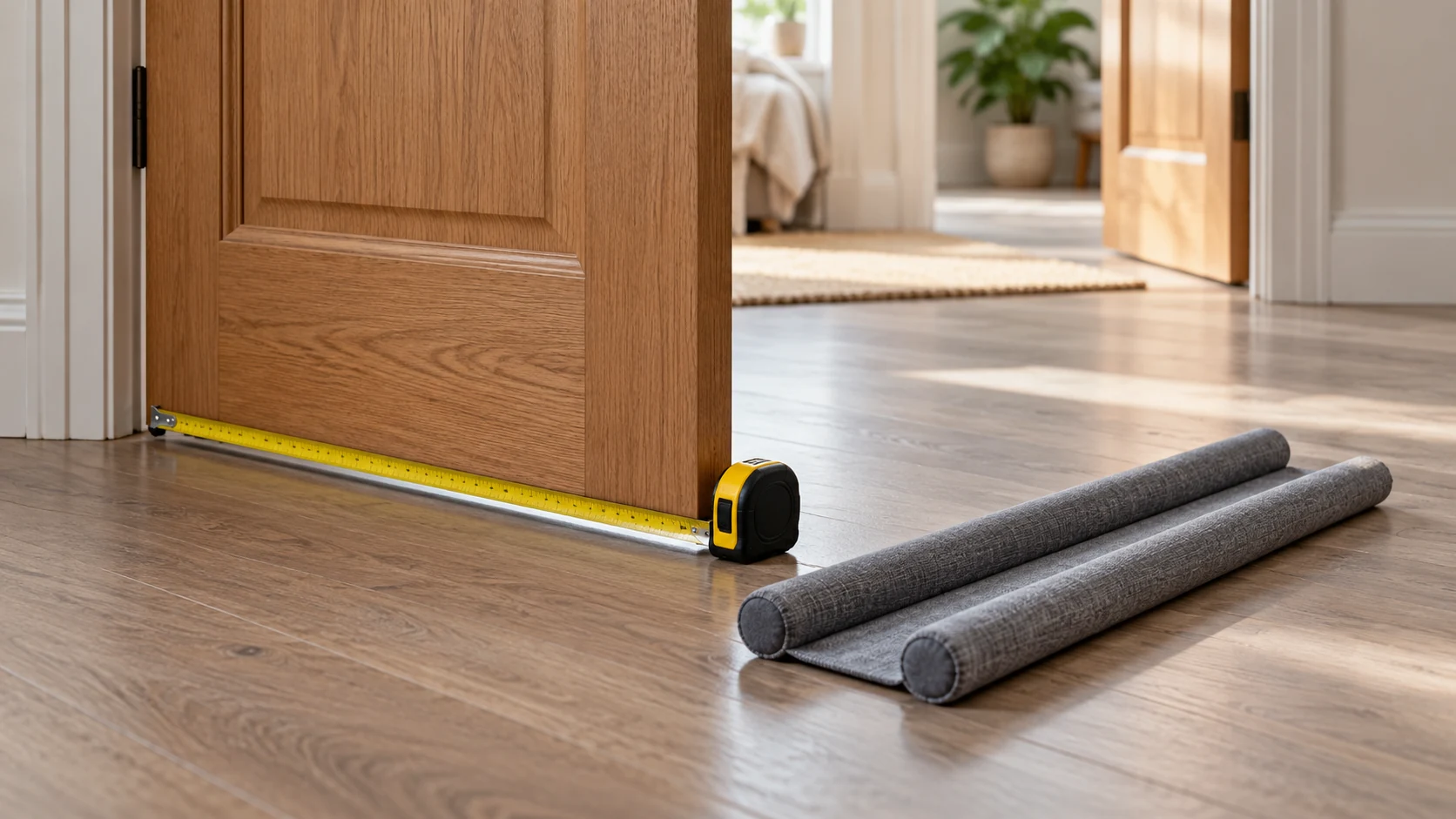
Plan door draft stopper fit by starting with the doorways, then comparing the offers. A single stopper described for a 32-inch door and a two-pack described for doors from 32 to 38 inches invite different assignments. Measure each door you intend to cover, note how it moves, and decide whether one or two units would have a real place. The width in a product title is useful evidence about that offer. It cannot prove that a stopper will travel cleanly under your door or close a particular gap.
This guide concerns the twin under-door form that sits around the bottom of a door. The two exact Product pages used here show complete stoppers rather than loose replacement pieces. Their width and quantity claims can help you make a plan before buying. If you already installed a barrier and still feel a draft, the next task is to find the remaining opening. Here, the question is whether a proposed purchase has an assigned doorway and enough verified fit information to justify it.
List doors before choosing a pack
Write down every doorway you hope to treat. Give each one a location that someone else could identify, such as “bedroom door” or “door to hall.” Do not combine two openings into a single “standard door” row just because they look similar. A replacement door, thick threshold, or different floor covering can change the way a soft under-door barrier meets the opening. Keep the count tied to actual doors, then make one row for each proposed stopper.
Measure the door leaf across its bottom edge while the door is closed. Record the width, the unit of measurement, and where the tape began and ended. Check again if the first reading crossed the trim or nearby frame instead of the moving leaf. A seller's stated 32-inch width or 32-to-38-inch range matters only when compared with the part of the door that would carry the stopper. If you cannot reach that edge safely, leave the measurement pending instead of estimating it from the room.
Look at the floor path while opening and closing the door normally. A rug that stays out of the way of a bare door might touch a new sleeve. An uneven transition can leave one side of an under-door product at a different height from the other. Make a note of those conditions without claiming that they rule a product in or out. Width is one screening dimension. Floor clearance, the door's movement, and the shape of its bottom edge still need an actual fit check.
Keep the problem you want to address on the worksheet, too. You may have noticed light under a closed door, or you may simply want a removable barrier before winter. This article does not prove where air enters a room. The guide on a door draft stopper missing the real gap starts with the diagnostic question after a barrier is in place. Use that approach if an installed result disappoints you. For a proposed purchase, first identify the door and the size claim you are considering.
Read the single 32-inch listing narrowly
The SNYMW twin door draft stopper listing identifies an adjustable under-door product for a 32-inch door. Its native Product page sits under Door Weatherproofing, and the gallery shows a whole sleeve with foam pieces pictured alongside it. That listing gives you a particular stated door width. It does not establish that every door measured at 32 inches has the same bottom thickness, floor clearance, or threshold shape.
Use the listing for a doorway you actually measured near the seller's stated width, then investigate the dimensions the page does not settle. “Adjustable” in a description does not tell you the exact safe adjustment range or how any supplied pieces should be trimmed. Ask for current installation instructions if your plan depends on either detail. Keep an unanswered dimension in the worksheet as an open question. A plausible width in the title is a reason to investigate the exact offer, not a substitute for the remaining fit information.
The Product title calls this offer brown, while the native gallery appears dark or black. Color has no bearing on the width worksheet, so leave it out of the fit decision. If appearance matters in the room, confirm the shipped color with the seller before ordering. Treat the disagreement between the listing words and image as an unresolved offer detail. Choosing whichever description seems more convenient would turn uncertain evidence into an unjustified claim about the delivered item.
One product listing also does not settle the quantity needed for two openings. If a second door needs a stopper, give it a separate row and measure it independently. The single 32-inch offer might look plausible for the first planned door while saying little about the second. Buying two units would require two fit decisions, even if the doors are in the same room. The worksheet prevents one apparently suitable dimension from being copied across the house without checking the other doorway.
Read the two-pack as two proposed assignments
The Fuliko two-pack draft stopper listing says it contains two double-sided under-door stoppers for doors from 32 to 38 inches wide. Its native gallery shows two complete sleeve forms at door bottoms and marks the pack count. The title also claims coverage for gaps up to 1.4 inches. Those are seller claims about this exact offer, not measurements taken in your house or proof of a seal after installation.
Put “unit A” and “unit B” on separate worksheet rows. Assign each to a named doorway before deciding whether a two-pack has a use. If one door measures within the stated width range and the other has not been measured, the second unit remains unassigned. You might use it later, but “maybe” is not a fit result. Once you have both widths, compare each with the listing separately and ask about any missing dimension that affects how a sleeve would sit beneath either door.
Do not turn “up to 1.4 inches” into a promise that every smaller gap will seal. A gap can vary across a doorway, and the floor on one side can differ from the floor on the other. The claim also says nothing by itself about how the product moves over a threshold. Record the gap claim as a question to check against the exact doorway and the seller's installation information. A width match alone cannot establish the contact or travel needed in use.
A two-pack can also be the wrong count. If only one doorway is on your plan, the second stopper has no assigned job. Do not invent a second draft problem to use it. If three doorways are on the plan, the pack cannot cover all three by count alone. An unassigned third door needs its own selection. The worksheet makes that mismatch visible before a package arrives, without a price comparison or a claim that one offer is better quality.
Check the bottom edge and travel path
With the door open, inspect the bottom edge that would sit between the two sides of a twin stopper. Look for a protruding sweep, raised threshold, or hardware that changes the path. Product images give you the general form, but they do not show your door's edge. If a fixed sweep is already attached, confirm whether a proposed sleeve can coexist with it before treating a width match as sufficient. Do not remove working hardware just to make an unverified new product fit.
Close the bare door gently and observe where it nearly touches the floor. Open it through its normal swing. Record any rug, transition strip, or floor rise that a moving sleeve would encounter. This is a clearance observation, not a test of a product you have not bought. If clearance is uncertain, seek actual product dimensions or the seller's installation guidance. A temporary marker might help identify the travel path, but it cannot prove how foam or fabric will behave under repeated use.
The published door-sweep gap guide investigates a different situation: a fixed sweep is present, but daylight or airflow remains. It compares brush and rubber contact and asks whether alignment or the threshold is responsible. Keep that fault diagnosis separate from this purchasing worksheet. An existing part that fails calls for a repair question. A proposed under-door sleeve calls for a fit and unit-count question before purchase.
Make a fit and count worksheet
A useful sheet can fit on one page. Give it columns for doorway, measured leaf width, floor and threshold notes, listing considered, assigned unit, and unresolved question. In a hypothetical first row, a 32-inch bedroom door could be paired provisionally with the single SNYMW listing. In a second row, a wider hall door could be compared with one unit from the Fuliko range. These are examples of recording a decision, not recommendations for a particular home. The point is to expose the measurement or instruction still needed.
Write the question next to each uncertain fit instead of hiding it in general notes. You might need the sleeve's exact interior channel dimension, instructions for adjustment, or a clearance requirement. A product title cannot answer all of those. Ask the seller about the exact offer before ordering if missing information controls your choice. If the question remains unanswered, leave the assignment provisional. That keeps a stated width range from becoming a claim of full compatibility.
Check the assigned-unit column last. A single-unit offer should appear only once. A two-pack can fill at most two rows, and each row still needs its own width and clearance check. A unit without a row is a spare, not a planned solution. If someone else will install the stoppers, give them the sheet so they know which door each unit was meant for and which questions survived the purchase decision. The record also helps them notice if an item delivered does not match its listing.
Keep the purchase decision narrow
Before buying, revisit the reason for each doorway's row. If you already tried a barrier and the room still feels drafty, locate the actual air path first. Another stopper might not address a side gap or a different source. If the issue is a failing fixed sweep, diagnose that part rather than using this guide as a substitute. The pre-purchase plan is useful when you know which physical door bottom you intend to cover and can name the information still missing.
When the exact product arrives, compare it with the native listing and its instructions. Check the actual count, width, and physical form before changing or installing anything. Try it at its assigned doorway as directed, then observe ordinary door travel and closure. If the result differs from the plan, stop and resolve the mismatch rather than forcing a sleeve into place or making an unsupported performance claim. The listing gave you a starting identity; the delivered item and the doorway determine final fit.
Keep the worksheet for the next door. A measured width, a note about the floor path, and a recorded product question are more useful than remembering that one stopper “seemed standard.” One doorway may need no new part, another may suit a single unit, and two measured openings may make a two-pack relevant. Each assignment stays separate. Confirm the product against the door in hand before treating the purchase plan as an installed result.