Office Supplies & Stationery
Desktop organizer shelf fit: measure footprint and access
Measure the desk zone and item access path before choosing an open organizer shelf; the two current listings do not certify fit by themselves.
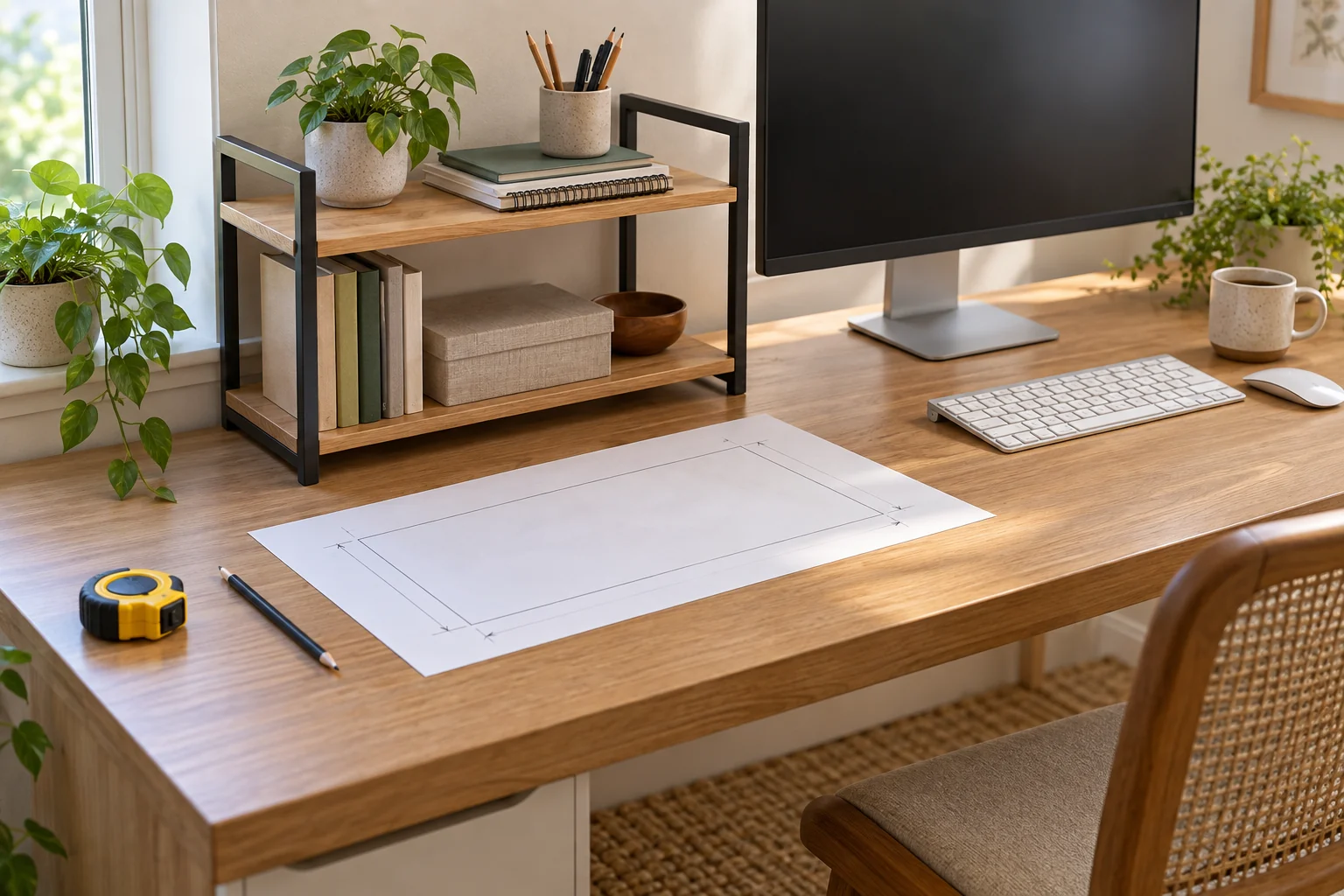
A desktop shelf can look small in a product photograph and still take the part of a desk where a keyboard, notebook, or lamp normally goes. Before choosing one, mark the space it may occupy. Then check how a hand will reach the things stored above and below it. A tidy picture says little about either constraint.
This Desktop organizer shelf fit guide compares two current open shelf listings: the Lerpwige desktop organizer shelf and the VQPeo adjustable desktop bookshelf. Both show ways to raise some belongings above the work surface. Neither page, in the source account reviewed here, gives the full assembled dimensions and usable openings needed to certify fit on a particular desk. Treat each listing as a form to investigate, then get the exact measurements for the option and configuration you would actually order.
Start with the patch of desk you can give up
Clear the candidate area and put down a sheet of paper or removable tape to represent its limit. Measure the usable width between anything fixed at the sides, such as a monitor base or a wall. Measure depth from the rear boundary to the point where a keyboard, writing pad, or forearm must remain. A shelf might technically sit on a tabletop while making the everyday task awkward; that is a failed fit for this desk.
Check the rear edge separately. Some desks have a cable channel, raised lip, or monitor arm clamp. The usable depth at the exact shelf position may be shorter than the tabletop's advertised depth. Do not assume that a product photograph shows how much clearance is needed behind the unit. If a cable has to bend around the shelf, leave room to route it without pinching it. This is a desk observation to make at home, not a specification stated by either product page.
Write down the measured rectangle and the objects that cannot move. A worker whose laptop opens at the back of the desk has a different usable zone from someone who writes by hand across its center. If the candidate shelf can only fit after shifting a daily tool into a poor position, reconsider the location before judging the shelf itself.
Measure the space above the shelf too
Look upward from the proposed base position. A monitor, wall cabinet, low window ledge, or task lamp may set the upper boundary. Measure the height available without moving those fixtures. Keep in mind that a book or small container may be taller than the shelf on which it rests. The useful clearance is the height from the desk to the nearest obstruction, less the height of the assembled unit and whatever must be reached above it.
A shelf in front of a monitor can interrupt the bottom of the screen even when the shelf itself sits below it. Sit in the usual chair and look at the proposed outline. Check the sight line in the position in which you actually work. Someone may move a monitor later, but the buying decision should use today's arrangement unless that move is already planned and measured.
The same check applies to the space under a raised platform. If a notebook, calculator, or charging dock is supposed to slide beneath it, measure that object's height and the access path. An opening can be tall enough for an item but too shallow for a hand to lift it out. Ask for the usable opening dimensions of the exact shelf configuration when the listing does not give them.
Read what the two listings actually establish
The Lerpwige listing describes a white iron and density-board desktop organizer shelf. It calls the shown form double layer and offers more than one listed length. One variation is described as “50 long,” but the source account does not explain the unit or provide a complete assembled width, depth, and height. Do not turn that phrase into a 50-centimeter or 50-inch fit claim. Its two reviewed gallery images show the same white open shelf staged with desk belongings. They are useful for seeing the general form, not for measuring a real opening or judging strength.
The VQPeo page calls its product an adjustable desktop bookshelf and display shelf. Its two reviewed images show an open shelf form in different neutral finishes. The page description does not provide a documented adjustment range, complete assembled dimensions, or a load rating in the source reviewed here. The word “adjustable” should prompt a question about the actual positions and resulting footprint. It should not be treated as proof that the unit can be made narrow or low enough for this desk.
These are two different product accounts with one shared evidence limit: the pictures cannot substitute for a dimensioned drawing. A photograph may be cropped, staged on a large table, or taken at an angle. A book in the scene is not a reliable scale reference. If a seller supplies a dimensioned diagram elsewhere, check that it names the same model, variation, and assembled arrangement as the listing you intend to buy. Save that information with your measurements.
Check access before adding storage
List the things that would live on the shelf, then sort them by how often they are used. A pencil cup reached twenty times during a workday needs a clear path. A spare notebook used monthly can sit farther back. Put a real object or a cardboard stand-in where the shelf would be and try the reach from the seated position. If the hand must pass under a monitor or around a hot lamp, the storage may be inconvenient even though the unit fits the measured rectangle.
Think about whether objects will be lifted off the top, slid out from under it, or pulled from an end. Each motion needs different space. A shelf tight against two side walls may leave room above but no side access. A deep upper platform may cast a useful area below it into shadow. Test the planned motion with the objects you already own. The two listings do not promise that a particular binder, device, or cup will fit a specific opening.
Leave the everyday writing or typing area intact. For instance, a person who keeps active paper in front of a monitor might choose to raise only a small reference stack. That leaves room to write and to move papers without brushing the shelf. Another person with a side table may find the same shelf works better there than directly behind the keyboard. The best location depends on the desk routine, not on which product image looks neater.
Make a full-size footprint template
Once you have verified an exact external width and depth for a candidate variation, cut a paper rectangle to those dimensions. Place it at the proposed location for an ordinary work session. Mark the front edge, and check whether the chair, elbows, lamp switch, charging cable, and frequently opened drawers remain usable. A rectangle is a simple way to catch an optimistic measurement before purchase. It does not simulate the upper shelf, so repeat the height and reach checks separately.
If you cannot obtain the dimensions, do not draw a rectangle from the product photo. Keep the candidate pending. Ask the seller for the exact assembled width, depth, and height, including whether the measurement changes across adjustable positions. Also ask for usable opening dimensions if you intend to store a specific object beneath it. Keep the answer tied to the model and variation rather than a broad product-family name.
For a shelf close to a desk edge, check whether its feet would have full support. The product pages reviewed here do not establish any safe overhang or anchoring method. Do not infer that a staged image approves an edge placement. The desk's own construction and the organizer's instructions control that question. If those details are missing, place the footprint fully on the stable work surface while evaluating it.
Do a small desk rehearsal
Consider a hypothetical student whose desk is shared by a laptop, one notebook, and a lamp. The laptop opens toward a wall cabinet, and a pencil cup sits on the right. The student first marks a shelf zone at the back left. On paper, the width seems available. In use, the laptop screen would cover the lower shelf and the lamp switch would sit behind it. The student tries the back right instead, where the cup can move forward without crossing the writing area. This example shows how access changes a measured fit; it is not a claim that either listed organizer suits that desk.
Now suppose a second worker uses a wide external monitor. An open shelf could hold a few reference items beneath the screen, but only if its height does not obscure the screen or require an awkward reach behind the keyboard. The worker should measure from the tabletop to the monitor's lower edge and from the seated hand position to the shelf's intended openings. A unit that fits beneath the monitor when empty may still be a poor home for a tall book or a frequently used device.
Record the outcome in plain terms: “fits the rear-right rectangle,” “blocks the lamp switch,” or “opening dimensions still unknown.” A vague note such as “looks good” will not help when comparing variations later. If two people share the desk, ask both to try the footprint; the reach path may differ with chair position and dominant hand.
Keep nearby paper guidance in its own lane
Organizing paper by task is a separate decision from fitting a physical shelf. Our guide to a paper plan for current desk tasks focuses on what should stay active and what should leave the immediate work area. Use that decision to avoid giving a new shelf space to papers that should be filed elsewhere. A shelf can hold the chosen stack, but it does not decide which stack deserves the desk.
Another guide looks at papers slipping behind desk shelves. Its concern is keeping sheets from disappearing at the rear. When measuring a new shelf, note any gap between its back and the wall or monitor stand. If loose paper is likely to pass through, plan where active sheets will sit. BG-2811's decision remains the shelf's footprint, clearance, and access; the paper guides deal with paper handling once the work area is arranged.
Decide only after the missing measurements arrive
Put the desk measurements beside the exact seller dimensions for each candidate. Compare external width and depth with the usable rectangle, assembled height with the upper boundary, and opening size with the items you actually plan to store. Leave a little practical room for reaching and cleaning rather than treating equal numbers as an effortless fit. That margin is a household choice based on the desk, not a tolerance promised by either product page.
If a variation changes size, repeat the comparison for that variation. If the listing still lacks the dimensions that matter, keep the purchase decision open. The Lerpwige and VQPeo pages give enough information to identify open shelf styles worth investigating, but the reviewed accounts do not answer the measured fit question. A short request for the exact assembled dimensions is more useful than guessing from a staged image.
Before ordering, keep one note with the chosen model, variation, seller's dimensions, desk zone, intended contents, and any unresolved opening or load questions. It gives you a way to check the package and assembly instructions when they arrive. If the actual measurements differ from the information used to choose the shelf, reassess the placement before loading it. The useful result is a desk that still works for its original tasks after the shelf is added.
Measure the desk zone and access path, then verify the exact shelf dimensions before choosing a position.