Lighting
desk lamp ideas for an evening writing spot
Build a small writing corner by placing the page first and choosing lamp direction, controls and a practical reset routine.
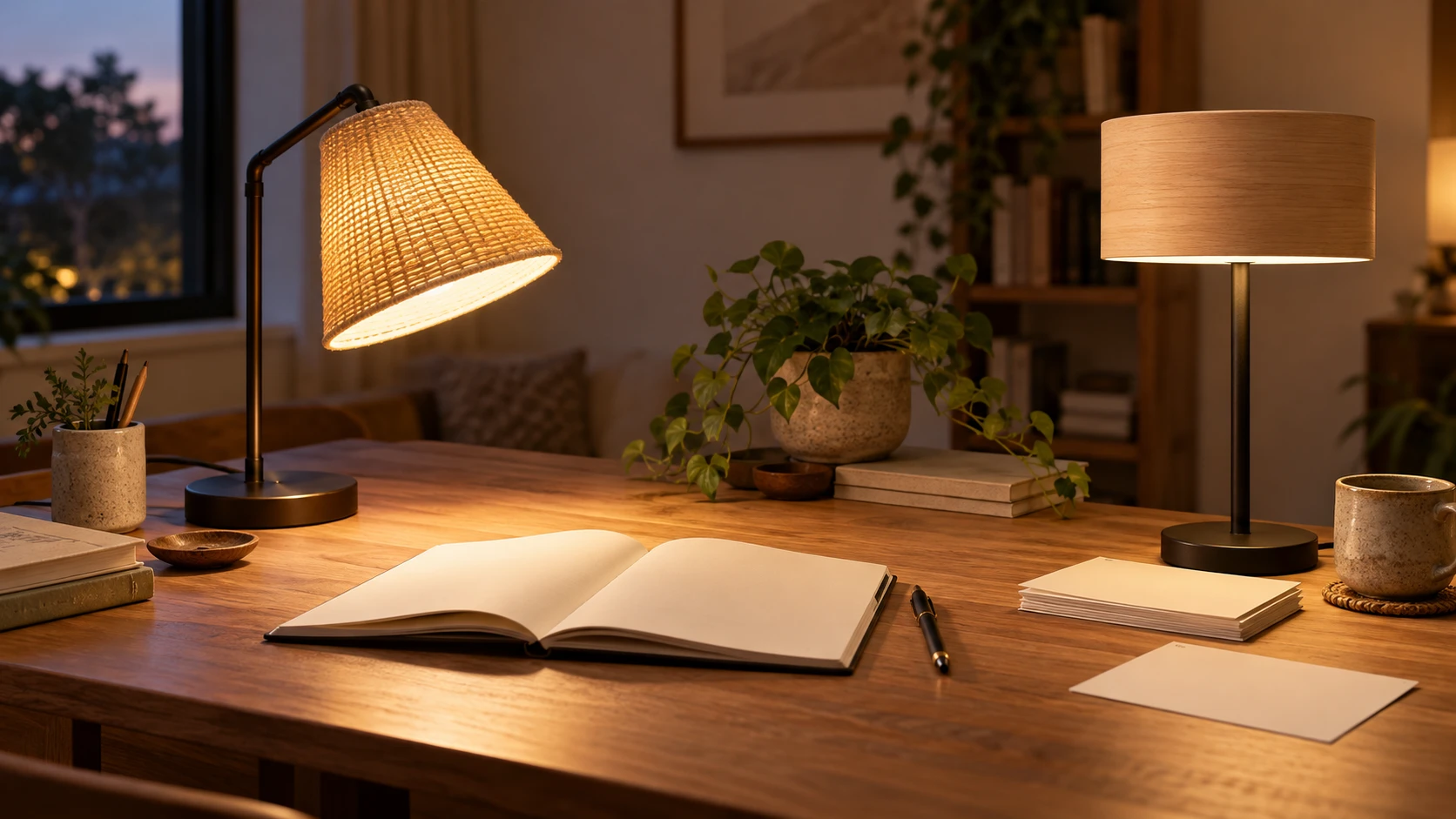
An evening writing spot does not need a room makeover. A clear patch of table, a notebook or card, and a desk lamp you can position for the task are enough to make the space feel ready when you sit down. The useful question is not which lamp makes a room look most dramatic in a photograph. It is where the light lands on the paper, whether the shade can be directed without crowding your hand, and whether the controls fit the way you actually pause and resume. This guide builds a small, repeatable writing setup around those choices.
Give the page a place first
Choose the part of the table where a notebook can open fully and a pen can rest without rolling toward the edge. Put the page there before placing the lamp. That order keeps a decorative object from deciding where your hand has to work. Leave a small zone for a stack of blank cards or letters, and move unrelated items out of the immediate reach area. You do not need to empty the whole room. The goal is a surface that can be reset quickly enough to make writing feel possible on an ordinary evening.
Think about which hand writes and where its shadow falls. Move the lamp around the page while the room has its usual evening light, then sit in the chair you actually use. A position that looks attractive from a standing viewpoint may cast the shade or your arm across the line you are writing. Make a short line on scrap paper and see what is illuminated. If the light lands on the background but not the page, change the position or direction before adding more accessories. Avoid treating any one placement as universal for every person or desk.
The native Adesso Cove desk lamp listing describes black metal construction and an articulation point at the base of its shade for directing light. Its gallery shows a slender stem and woven-looking conical shade. These are useful physical cues for imagining a page-focused corner, but the listing does not prove the exact light pattern on your notebook or the range of every possible position. Check its current bulb and electrical specifications on the product page before using it; the visual mood in a gallery does not establish an applicable bulb or room-lighting result.
Make direction a practical choice
A movable shade can help put light on a page without moving the whole lamp, provided the articulation works within the space you have. Leave room behind and beside the shade so an adjustment does not strike a wall, shelf, or tall pile of books. Move it gently according to the product instructions and look at the page from your normal seat. A shade aimed toward a notebook may also illuminate the adjacent blank card; one aimed toward the room might leave the writing line dim. The decision should come from the actual workspace, not from a styled product photo.
Keep the cord and base out of the path used to turn pages or reach for a cup. Before settling on a position, confirm that the lamp can stand on the table as intended and that its power connection can be used without stretching a cord across a walkway. This is ordinary placement planning, not an invitation to modify the lamp. If the available outlet or surface makes the desired position awkward, choose another position or a product suited to that space. A calm writing corner becomes less useful if setting it up creates a daily obstacle.
The native Adesso Roman LED desk lamp listing describes a shade that rotates to direct light and a touch step dimmer with low, medium, high, and off settings. Its gallery shows a black stem and a pale cylindrical shade. This is a different control arrangement from simply aiming a shade. The settings may be worth considering if you shift between reading a page and sitting back to think, but a named setting is not a measured promise about light level at your table. Try the actual controls and page position if possible.
A small writing spot can live within a larger room without taking it over. The fold-away reading-corner guide explores how a room divider can define a temporary area and be put away afterward. This article owns the much smaller desk-level decision: where the page, lamp, and writing tools go for one evening session. The divider guide does not establish lamp specifications, and a divider is optional. A table near a window or a quiet shelf can work just as well if the immediate writing surface is useful.
Choose one short writing ritual
Keep the first session deliberately small. Put a blank page in the light, set a pen beside it, and choose one thing to write: a note to someone, a brief journal entry, or a list of questions to revisit. The lamp is part of a cue to begin, not a requirement to produce a long or polished piece. If you stop after a few lines, leave the page and pen in a place that is easy to find tomorrow. A repeatable setup is more useful than a scene that takes half an hour to assemble.
If you write a card to another person, keep the message centered on the person and your actual memory rather than on the setup. The postcard-writing guide has its own writing activity and prompts. Here, a blank card is one possible object to place on the desk. The article does not reproduce those prompts or claim that a particular lamp improves the message. It focuses on making the physical spot ready for whichever writing task you choose.
Set an easy stopping point before you begin. You might finish one side of a card, fill half a notebook page, or write until a thought is complete. A fixed quota is not necessary. What helps is knowing where to place the finished page and where the next blank one lives. A small stack of cards, a notebook, and a pen can remain together without becoming a permanent display. This lets the table return to its other uses when the session ends.
Use controls with the actual task
Try the lighting while reading a line of your own handwriting, not while staring at the lamp. If a bright setting feels distracting for a short reflective pause, use an available lower setting. If the page is difficult to see, adjust the shade or the room's other light before assuming the lamp is defective. The Roman listing offers step settings and a rotating shade; the Cove listing names shade articulation. Neither feature alone tells you which lamp will feel right to a particular reader. Your writing surface and seat determine the useful position.
Do not turn the evening atmosphere into an unsupported health claim. A warm-looking image does not establish reduced eye strain, better sleep, or improved concentration. The practical observation is simpler: can you read what you have written, and can you move from page to page without fighting shadows or glare? Change one thing at a time—the lamp position, shade direction, or an available setting—then look at the page again. If the setup still does not work, choose a different location or lighting arrangement rather than forcing the same composition.
Consider the visual field beyond the notebook. A glossy surface can show a reflection, and a very bright background can make a page seem comparatively dim. Move reflective objects and test the lamp from the seated viewpoint. You do not need to measure a laboratory lighting value to notice an obvious reflection on a card. Do not cover a shade, alter wiring, or use an unspecified bulb to chase a certain mood. Follow the product's actual instructions for safe operation and keep the tabletop arrangement simple.
Let the setup be easy to reset
At the end of a session, put the pen back, place the finished page in its intended folder or envelope, and leave one blank page ready if the table can accommodate it. Switch off the lamp using its normal control. If the table serves another purpose the next morning, gather the writing materials in one small container rather than scattering them. The lamp can stay where it is if that location works for both uses. A routine succeeds when restoring the space is as easy as beginning.
If the spot is shared, describe the arrangement to the other person in practical terms. The lamp sits here so its cord stays clear; blank cards go in this tray; finished notes go in that folder. Do not require everyone to write in the same place or prefer the same light direction. Someone writing with the opposite hand may need the lamp moved to keep the page clear of shadow. Treat the arrangement as adjustable furniture, not a fixed ritual that must be defended.
Keep decoration in proportion to the task. One plant or a mug may make a corner pleasant, but a crowded table can leave no room for the notebook. Product galleries are built to show a lamp attractively; your own space has to hold paper, hands, and ordinary objects. Measure the base footprint and allow working clearance before buying. A lamp with appealing materials may still be too large for the table, while a smaller one may leave better page space. Neither image establishes its fit until you compare dimensions with the real surface.
Choose the lamp for the page and the room
Before checkout, identify the writing surface, the side from which you want light, the room available for the base and shade, and the controls you will actually use. Compare those needs with the current product listing, including electrical and bulb details. The Cove and Roman examples both have directional features, while the Roman listing additionally names step dimming. That difference gives you a concrete question to ask, not a ranking of light quality. Check the current offer rather than relying on an image or an old title for included components.
When the lamp arrives, make one ordinary evening trial at the actual table. Place a blank card and an open notebook in your usual positions. Set the lamp on a stable surface, connect it according to its instructions, and look at the page from your chair. Adjust direction or a provided setting, then write a few lines. If the shade crowds your hand, the cord crosses a path, or the light does not reach the page, revise the placement while the session is small. That physical trial answers more than a gallery photograph can.
The result should be a writing spot you can return to without ceremony. Keep a clear page, a reliable pen, and a desk lamp whose placement works with your table and seat. Use the Cove's articulated-shade example and the Roman's rotating, step-dimming example to think about direction and control, while keeping their claims inside the listing. The room-divider and postcard guides offer separate activities if you want them. This guide's contribution is the small decision that comes first: set the page where you can use it, then place the lamp around that real task.