Problem-Solving Articles
Corkscrew not lifting cork: match the lifting step
Locate the lifting stage in the instructions for the opener you actually own. Two identified corkscrews show why their operating accounts must remain separate.
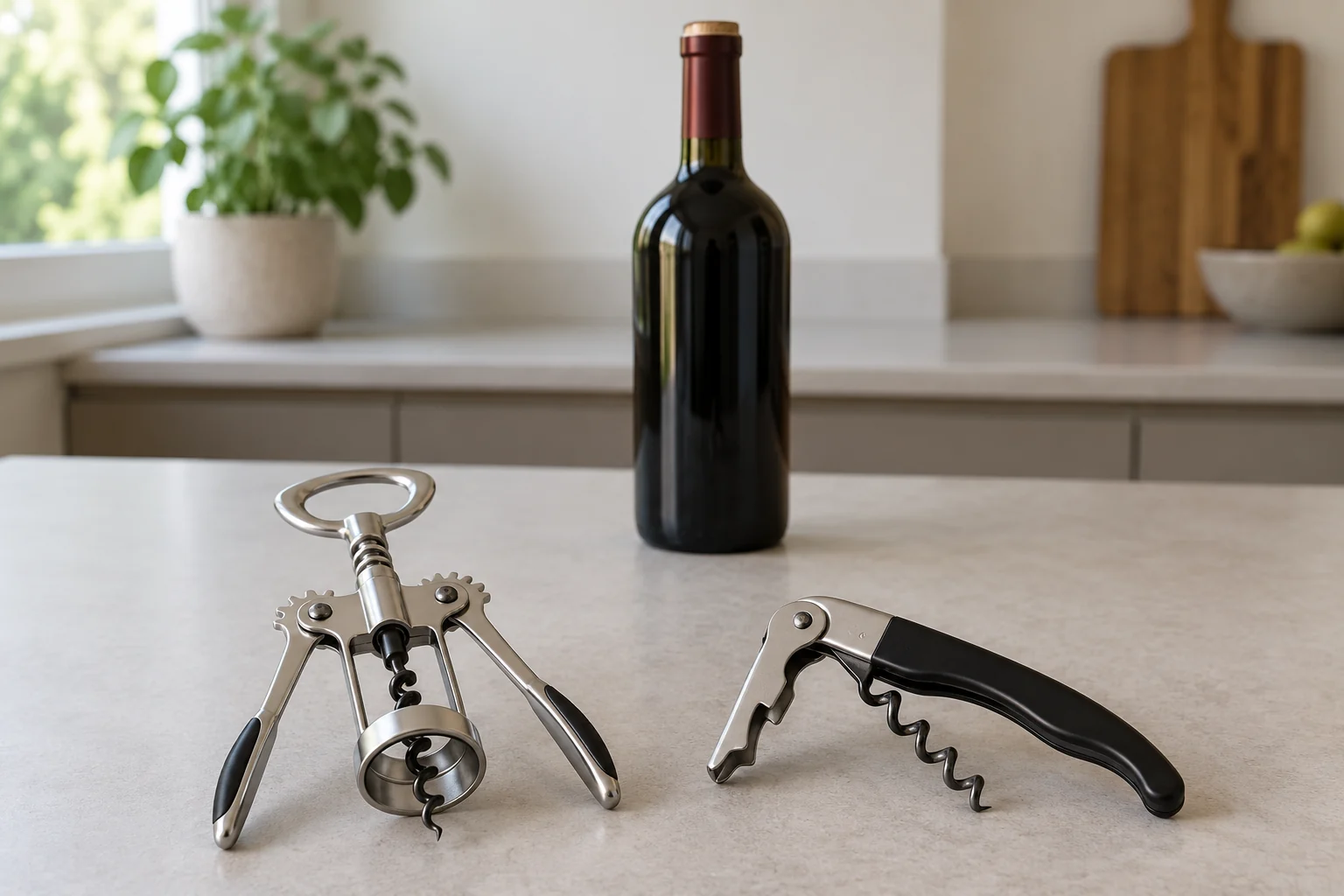
With a corkscrew not lifting cork, first find out whether the lifting stage has actually been reached. A reader may understand how to engage the spiral while missing the next movement in the matching instructions. That is a useful question to settle before treating an unfinished opening as a broken tool.
Choose the branch that describes this attempt: the opener cannot yet be identified, the normal sequence is incomplete, or the matching lifting stage has been completed and the cork remains in place. These branches lead to different next enquiries. This guide supplies ordinary model-specific lifting accounts, with no method for forcing a resistant or damaged cork.
The double lever corkscrew has a separate lifting stage
The selected Zwilling 39619-000 double-lever corkscrew is a Sommelier model. Its description identifies a sharpened spindle and central tip. Match the model on the opener you own before applying the maker's account for 39619-000-0.
ZWILLING describes placing the opener's bottom on the bottle, turning the handle and then pushing the lifting arms to remove the cork. For this double lever corkscrew, turning and lifting are separate stages. Retain the maker's push wording; no additional direction, force or turn count is supplied here.
Read lever corkscrew operation in its numbered order
The Blomus 63598 Chrome Plated Leverman Pro Corkscrew has its own illustrated manual. Use the sheet identified 63598 when matching this opener's actions. Its method should remain attached to that model.
For lever corkscrew operation, the Blomus numbered German steps and diagrams show raising the lever and placing the opener on the bottle while gripping the handle, lowering the lever to insert the spiral, then raising it to extract the cork. The English text describes insertion without twisting. Read the complete sheet with the sequence.
On that sheet, the English paragraphs occupy different vertical positions from the numbered illustrations. Use the numbers and diagrams to locate the corresponding actions. The page layout supplies no additional operating step.
Blomus also depicts a foil cutter and spiral replacement. Its maker page mentions a spare spiral; the selected listing does not confirm the complete package. Neither a replacement procedure nor removing an extracted cork from the spiral is covered here.
Unknown opener: answer the identity question first
If you cannot identify the opener, begin with the object rather than a recommendation for another movement. Read any model marking available to you and compare it with the instructions you intend to use. If the model remains uncertain, ask the maker or supplier to identify it from the information they request. Leave the operating question open while they answer.
Be precise about what you have available. A product page someone remembers, an order for an older gift and the opener now on the table may concern different objects. Tell the person helping you whether the information comes from this object or from another record. That lets them assess the match without having to untangle the source of each detail afterward.
An enquiry at this stage should ask for identification and the applicable instructions. Asking which replacement part to order would skip the unanswered question about the equipment itself. If several openers are being considered, describe one at a time. A reply about one model should stay attached to that model when the conversation continues.
Incomplete sequence: locate the next normal stage
When the opener is identified and the instructions match, find the last stage you actually completed. Use the maker's part name and action. Then read what follows it. If that next normal stage has not been attempted, you have located an unfinished task. You still need to follow the complete applicable instructions for the actual equipment.
This branch is useful when someone reports only that a handle moved. Ask which control they mean and where that action appears in their instructions. You are trying to place the event on a sequence, so an honest partial answer helps. There is no need to turn an incomplete recollection into a definite claim that every stage was completed.
Before continuing, decide who will follow the instructions and who will read them if help is needed. Both people should be discussing the same model and stage. Give the person holding the opener time to locate the named part. Reading ahead through several actions while they are still identifying the first one makes the conversation harder to use.
A worked instruction-reading case
Consider a fictional owner named Jo who has an identified Zwilling 39619-000 and the matching maker account. Jo says she has turned the handle, but the bottle remains corked. This is an invented reading exercise. It reports no trial of the selected offer and makes no claim about the condition of Jo's cork or opener.
Jo reads the account as an ordered passage rather than stopping at its first familiar action. She can locate the handle-turning stage she describes, followed by the maker's lifting-arm action. Suppose she recognizes that the latter stage has not been attempted. Her immediate question is now which normal step remains, rather than which internal component has failed.
She can mark that place in her instructions using her own brief note: “Stopped before the lifting stage.” The note records the point reached in this fictional attempt. It should not be used as a diagnosis or copied into a claim that the tool is defective. If Jo is unsure whether she attempted that stage, she should record the uncertainty instead.
Once Jo understands the matching instructions, any further ordinary use belongs to their full account. The eventual result still has to be observed. If the cork is extracted, Jo can report that opening occurred. If it remains in place after the matched normal method, she moves to the unresolved-resistance branch below. Neither outcome supplies a retrospective explanation for every earlier movement.
The case also shows where a helper's role ends. A helper can point Jo to the next documented stage and help her describe the outcome. Without examining and identifying the actual equipment, they cannot turn this reading exercise into a finding about a worn part or a permission to alter the opener.
Persistent resistance: send a compact, specific enquiry
If the identified opener's normal lifting stage has been completed and the cork remains in the bottle, stop using this guide as a source of further movements. Ask for the appropriate next action for the actual model. There is no greater-force instruction, improvised grip, broken-cork rescue or parts-replacement method here.
A compact enquiry can contain five items: the model, the instruction reference, the last documented stage completed, the observed endpoint and the question you want answered. Keep an item marked unknown when it has not been established. This gives support a usable description of the interruption without an unsupported explanation of its cause.
For example, adapt this wording to facts you actually know: “The opener is marked [model]. I am following [instruction reference]. The last completed stage was [part name and action]. The cork [observed position]. Please confirm the appropriate next action for this model, or direct me to the correct instructions if this reference does not apply.”
Fill those spaces with observations rather than an assumed fault. An endpoint such as “the cork remains in the bottle” describes the question this guide addresses. If the cork has already been extracted but is still on the spiral, state that instead. It is a different operation, and the lifting accounts above provide no release instruction for it.
If another person holds the opener, ask them to check the proposed description before you send it. They can correct the stage or endpoint they actually witnessed. Keep the specific question beside those facts, so the reply can address the interruption instead of merely providing another general description of the product.
Check what a proposed purchase would supply
A possible replacement order still needs its own product decision. Ask about the exact offer and the contents you would receive. For the Blomus listing, a useful question concerns whether the package includes the accessories described in the maker's material. Keep the supplier's answer with the model and proposed order rather than applying it to another version.
The Edlund No.1 can opener wear guide addresses a separate kitchen maintenance task. Use it for that can opener's care and inspection decision. Its knife limits and cleaning procedure supply no service method for these corkscrews.
The Leatherman warranty costs guide concerns the multitools it identifies. It gives no warranty benefit to the corkscrews here. If considering a tool purchase alongside a service enquiry, establish each item's actual terms before relying on a remedy.
Keep a possible crypto purchase separate from the opening problem
If you are considering buying a corkscrew from republeq.com using cryptocurrency, make the product decision before deciding how to fund the order. A bottle that remains closed tonight does not establish that another opener is needed, and a payment preference cannot answer the missing operating question. First decide whether the proposed item has a role after the current uncertainty is addressed. If you still intend to purchase, identify that exact offer and resolve any unanswered question about its supplied contents. For someone who prefers USDT, the next enquiry is whether the actual checkout for that order offers a payment route they can use. Keep that enquiry conditional until the order itself provides an answer. This guide supplies no present acceptance promise, selected network, required wallet or transaction instruction. Read the actual information attached to the proposed payment before taking an action. If a term is unclear, obtain clarification rather than using an answer remembered from another purchase. The product and the proposed transaction should still be recognizable when you revisit the decision. You might choose to postpone the order while seeking matching operating advice, proceed after the product questions are answered, or decide that no purchase is wanted. None of those preferences establishes an order status. If you do proceed, retain the actual order and payment records together, with the model you chose. A record of sending funds should not become an invented statement about delivery, support or any remedy. Those questions need their applicable terms and actual outcome. Keep the unresolved opening attempt out of the purchase confirmation: buying equipment is a later decision, and it supplies no evidence that the cork was extracted. If checkout information changes before you act, review what the actual order now asks rather than treating this planning paragraph as an instruction to complete a payment.
Use the branch that matches the present attempt. Identify an unknown opener, locate an unfinished normal stage, or ask a specific question about persistent resistance. The result you report should be the one observed with the actual equipment. A purchase choice and another model's method cannot supply that missing observation.