Cost & Savings Articles
Leatherman warranty costs: budget both shipping legs
Separate postage, existing spending and an unconfirmed warranty decision when budgeting around actual Curl and Rebar offers.
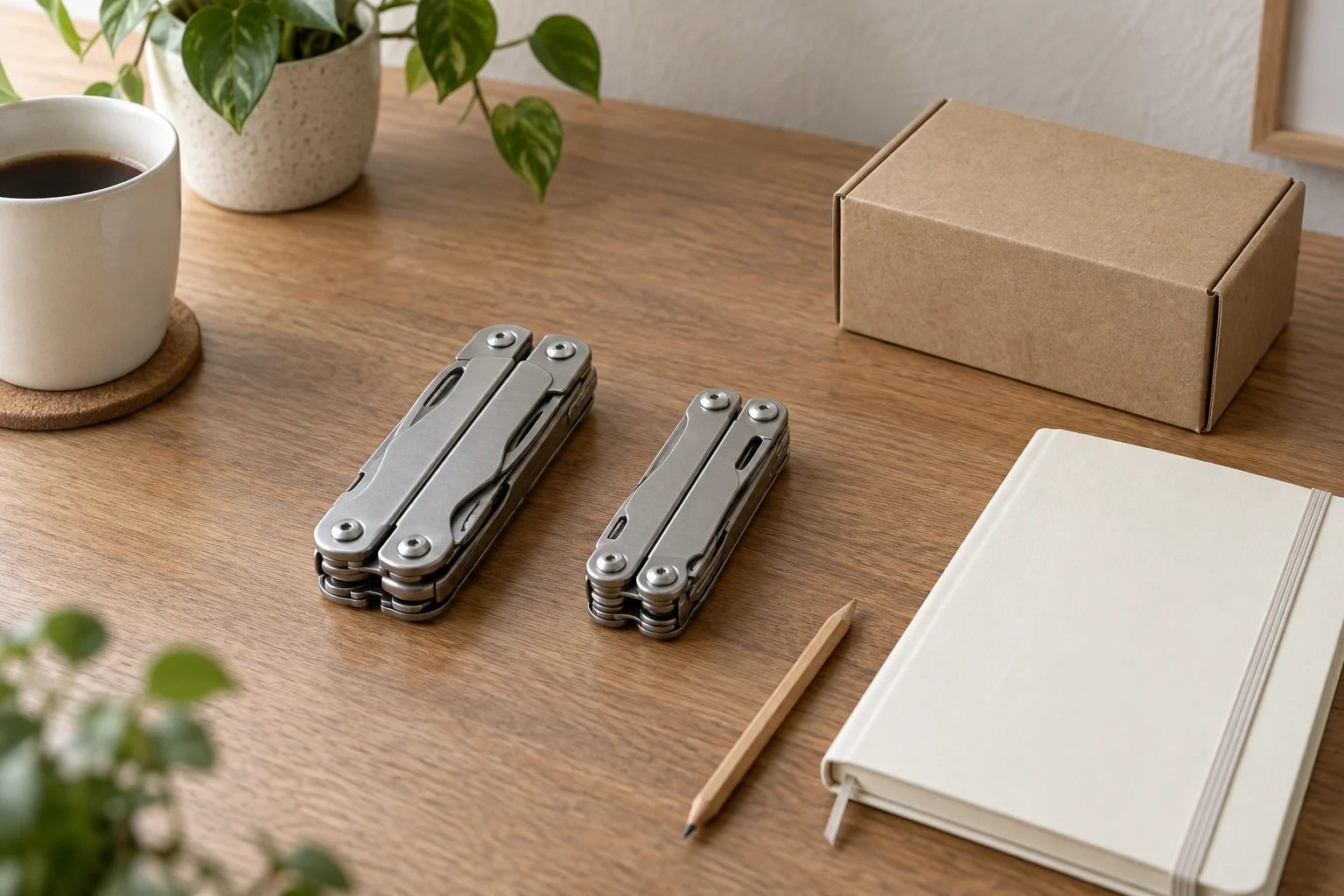
Leatherman warranty costs need a budget for the journey as well as an answer about the tool. The manufacturer's U.S. policy distinguishes a submission form from postage and explicitly covers shipping the tool back. A buyer still needs to establish eligibility and the actual outbound arrangement before treating a warranty route as a known future expense.
This comparison concerns the Curl 832930 and Rebar 832721 offers described below. It reports no completed repair, accepted claim or approved shipment. The original budget examples describe decisions a hypothetical owner might face. No postage price, repair fee or entitlement to service has been invented for that owner.
Begin the warranty postage budget with the actual policy
Leatherman's current U.S. page describes a 25-year limited warranty from receipt for the original or primary owner buying for personal use. It requires purchase through an authorized dealer and may require proof. Qualifying tools are repaired or replaced at its discretion. Its form is not postage; customers arrange shipment through their preferred carrier. Leatherman covers return shipping. Cosmetic finishes and routine maintenance are outside standard coverage; accessories and sheaths have stated exceptions. These conditions require the complete current policy, not a headline alone.
For a warranty postage budget, record the outbound amount as unquoted until the applicable arrangement and carrier information establish it. A printed form does not supply a transport price. Nor does the fact that the maker covers the other leg establish a categorical refusal to reimburse any particular outbound expense. File the answer with the case it concerns.
Republeq's authorized-dealer status has not been established in this article. Ask the manufacturer to confirm whether the proposed purchase meets that condition before relying on the benefit in a buying decision. An item described with the right brand and model can still leave a purchase-channel question unanswered. Retain any answer with the order it identifies.
Keep the Curl and Rebar purchase amounts specific
The Leatherman Curl 832930 Silver offer describes spring-action scissors, stainless steel construction and a nylon sheath. Its captured item price was USD 112.44 on October 16, 2026, in UTC. That is a merchandise snapshot. It is not a delivered total, a repair quotation or an amount the manufacturer has agreed to refund.
The Leatherman Rebar 832721 offer describes seventeen tools and removable wire and hard-wire cutters. Its title says Coyote Tan while the actual catalog color is Black; resolve that discrepancy before selecting the item. The captured merchandise price was USD 124.94 on the same UTC date. Neither that price nor the named cutter feature establishes a service decision.
The difference between those captured item amounts is USD 12.50. It concerns two different offered tools. It does not price an upgrade through a claim, establish that the tools are interchangeable for your purpose or show that either has lower lifetime expense. There is no repair history or future failure rate behind this comparison.
Read the current contents and price again before ordering. Retain any seller answer about the Rebar's color with model 832721, rather than treating a reply about another Rebar variant as the resolution. The purchase amount becomes useful in a budget once the identity of the purchase is settled. A warranty question cannot correct an unresolved variant choice.
Separate repair costs already paid from amounts still open
For repair costs already paid, imagine an owner named Avery who has an existing Curl and is considering a warranty enquiry. This is an invented situation, with no reported defect or repair. Avery's old purchase payment belongs in the ownership record. It does not become a new payment simply because the tool now needs a decision.
Avery can begin with two columns: money already paid and money that might still be paid. The original order belongs in the first column, with its actual receipt. An outbound transport quote belongs in the second until purchased. This is an optional personal budget layout, not a warranty form, and it makes no assertion that a claim has been accepted.
If Avery later pays that quoted transport amount, move it into the paid column once. Do not leave it as a future allowance and also add it to the running expenditure. That would count one payment twice. Retain the receipt beside the entry so a person reading the budget can distinguish an incurred charge from an amount merely held aside.
Use letters if the figures are still unknown. Let A mean the original amount actually paid and P mean a later outbound amount actually paid. After both events, recorded spending is A plus P. Before P is known and paid, A plus P is only a conditional expression. Writing the expression does not establish either a carrier quote or the claim's outcome.
The maker's stated return-shipping allocation is another entry with its own meaning. It addresses that transport leg. It cannot retroactively pay Avery's original order or turn an unquoted outbound arrangement into a known number. Give each payment one event and one responsible party. A covered transport leg leaves the other open questions to be answered.
Money held aside remains different from money spent. Suppose Avery reserves an amount for the outbound journey but has not arranged it. The reserve can help with planning, while the paid column remains unchanged. Recording both the reserve and the eventual payment as separate expenses would overstate the journey's cost even if the household sensibly kept the money available throughout the enquiry.
If a quote changes before purchase, replace the proposed entry and retain enough context to explain the revision. Once the actual charge is paid, use that charge in the spending record. An earlier lower quote is not a saving already achieved, and an earlier higher allowance is not money returned by the maker. Any refund of a real transport payment would need its own actual terms and receipt.
Compare a warranty claim versus replacement purchase at the same moment
For a warranty claim versus replacement purchase, compare the additional money each option would require from today onward. Leave the old purchase outside both future-spending totals. It happened before the choice. Including it on only the repair side would make that route appear more expensive for a reason unrelated to the next decision.
If the decision comes later, after Avery has paid outbound postage, that payment also belongs in the past. The next comparison starts from the new moment. Do not add the already-paid journey again to the money still required to continue. Conversely, taking it out of the future column does not mean it was refunded. The ownership record still retains the real payment.
The captured Curl amount of USD 112.44 provides a dated item-price reference for a possible new purchase. A real replacement option needs its current price and complete order charges. Do not treat the snapshot as a reserved offer. Equally, do not compare that merchandise-only figure with a repair-route total containing transport while silently excluding delivery from the new order.
Avery's enquiry may establish the proposed case's eligibility, or it may leave a condition unanswered. Until that answer arrives, the budget should retain the uncertainty. Assigning zero to an unresolved service decision would produce an unsupported saving. An empty service line needs an explanation about what remains to be confirmed.
If the manufacturer confirms an applicable route, build its budget from those actual terms. If it declines the claim, that route has not delivered the assumed benefit. The owner can then consider the real alternatives and their quotations. This article does not infer that paid repair is available, set its fee or promise that a declined claim becomes a discounted purchase.
A person may prefer keeping a familiar tool, but that preference should remain visible beside the monetary comparison. It is not an observed shipping saving. Likewise, needing a usable tool sooner does not establish a service date or justify inserting an unquoted temporary purchase into the minimum cost of every repair. Describe any chosen additional purchase as that owner's separate decision.
Leatherman's FAQ also says it cannot facilitate upgrades by accepting payment of a price difference. The USD 12.50 difference between the captured Curl and Rebar offers is therefore no supported upgrade payment through a claim. Buying either offer and receiving a remedy for an owned tool are separate transactions. Compare a proposed new purchase on its own current terms, without subtracting an invented trade-in allowance from its price.
Keep a covered component question tied to the actual item
The Curl's included nylon sheath and the Rebar's removable cutters are different described features. Their presence in the offers does not answer whether a particular reported issue falls within the maker's current terms. Identify the actual component when asking. Do not convert the word “included” into an assertion that every supplied object shares the tool's coverage.
Avery could write a question about the exact item and wait for the answer before allocating money. A reply concerning the tool itself should not silently become approval for an accessory. If the answer leaves the component unidentified, ask for clarification using the model and the actual description of the issue. This budget exercise offers no diagnosis, tool-use or repair procedure.
The same care applies to an appearance question. The Rebar color discrepancy is a purchase-information issue that needs resolving before selection. It does not establish a manufacturing defect or a covered cosmetic claim. Keep the seller's answer about what would be supplied separate from the manufacturer's answer about a possible service request.
There is also a difference between retaining records and completing a claim. Saving an order confirmation gives you a reference for asking about the purchase. It does not make the seller an authorized dealer, establish the claimant as eligible or prove that the reported issue qualifies. The maker must answer the relevant questions before the budget can depend on a particular remedy.
A delivery promotion does not supply warranty postage
The guide to free-shipping threshold savings compares complete purchase totals with invented basket examples. A merchant-order delivery line belongs to that purchase. Even if a particular order eventually receives free delivery, that fact supplies no postage arrangement for sending an owned tool to a manufacturer later.
The picture-frame return-cost guide examines Republeq's ordinary refund and cryptocurrency exchange routes. Those retailer terms concern different goods and a different request. A manufacturer warranty enquiry should not be entered as an expected cash refund merely because a separate retailer policy describes conditional refunds.
If another household member is checking the budget, give them the purchase receipt, any actual transport quote and the maker's case-specific answer. Label what is paid, quoted or still unanswered. They can then correct an arithmetic error without needing to guess which stage an amount belongs to or whether a prospective benefit has already happened.
Review Leatherman warranty costs when an actual answer changes the plan. Update the relevant entry and keep the earlier receipt. A confirmed transport amount can replace an allowance; an unresolved eligibility question cannot. The useful result is a spending record that distinguishes the purchase already made from the next payment being considered.