Home & Living
cordless roller shade inside-mount fit: measure the recess
A window-fit guide that keeps opening width, usable recess depth and missing bracket specifications distinct before ordering.
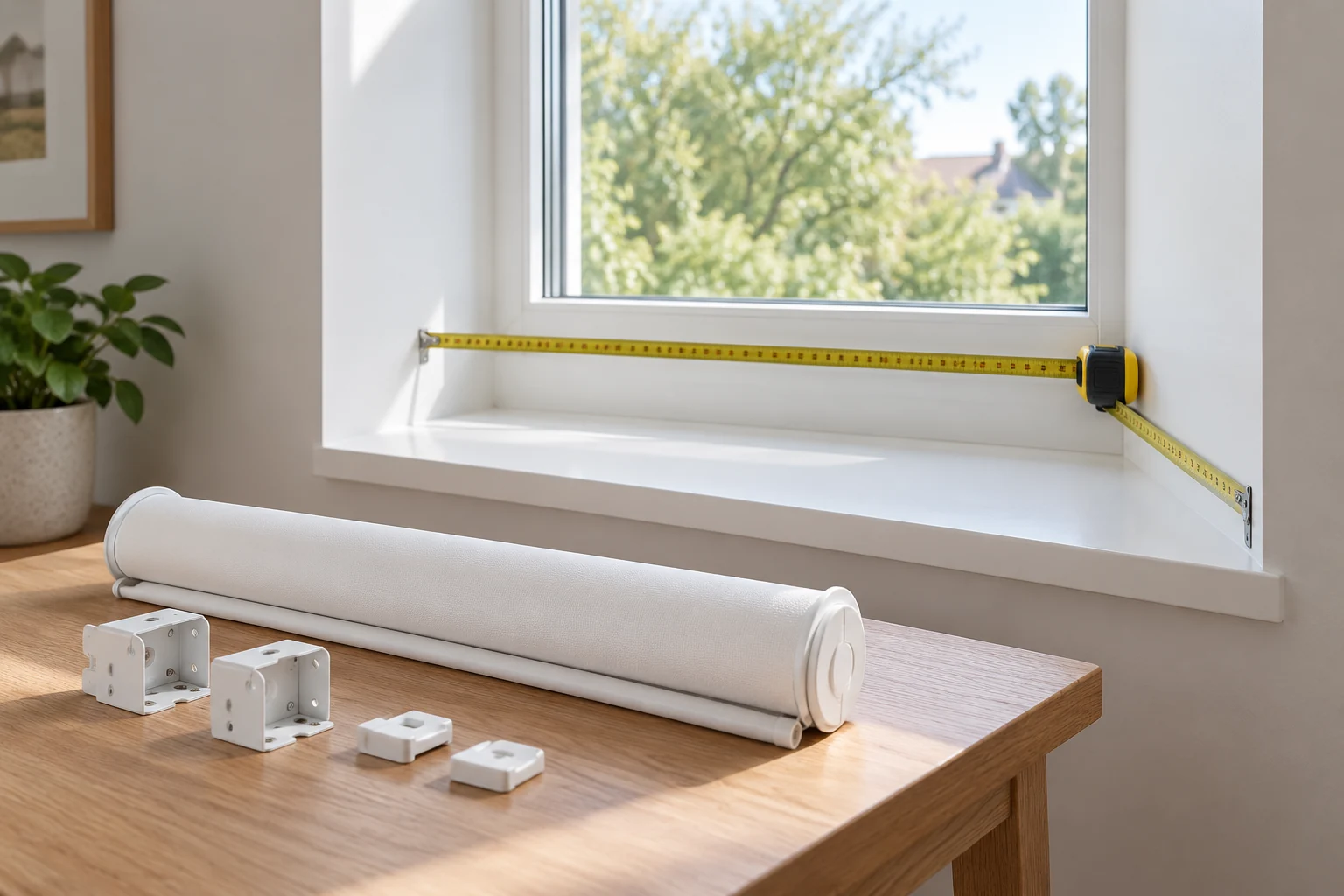
A cordless roller shade inside-mount fit check begins before someone compares fabric colors. The shade has to fit the window opening and its mounting hardware has to have room in the recess. Width, depth and the usable hanging space answer different questions. A stated product width cannot answer all three. This guide shows how to keep those measurements separate, compare the limited facts on two current listings and identify what the exact model instructions still need to resolve. It is a purchase and installation-fit decision, not a repair for a shade already in place.
The Grandekor WM-DW-69454 listing identifies a gray manual cordless roller shade stated as 34.5 by 72 inches.
Its listing supplies inside-mount depth and width directions. Those directions are not an installation certificate for a particular window.
The Achim Glide n’ Go listing describes a cordless vinyl roller shade and displays color and size selectors.
The captured page does not give a comparable minimum recess depth or inside-mount width deduction. Treat those missing details as questions for the exact selected variant and its installation instructions.
Give width, depth and drop separate lines
Opening width is the side-to-side distance available at the place the shade and its hardware would sit. Recess depth is the front-to-back space from the front edge toward the window. Drop is the vertical distance the covering needs to serve the intended use. A product title may put two numbers side by side, yet those numbers do not state the recess depth. Write each measured dimension on a separate line with its units and with the exact points used for the measurement. That small habit prevents a depth requirement from being mistaken for a width allowance.
A window opening is not always a perfect rectangle. Its left and right sides can differ slightly, and trim can change the available space near the top. Take the measurements required by the manufacturer at the locations that guide specifies. If the instructions call for multiple points, record each rather than hiding a narrower spot behind an average. Do not invent a universal rule for which point controls every brand. The correct ordering width depends on the specific unit, mounting hardware and published instructions.
Recess depth needs the same attention. Measure at the place the actual bracket and shade assembly would occupy, not at a convenient point lower in the opening. A protruding sash, handle, screen part or uneven trim can reduce usable space. Keep a note about each visible obstruction and where it sits. The presence of an obstruction does not automatically make a shade incompatible; it tells you to consult the model’s clearance instructions. Avoid guessing that a slimmer-looking photograph proves more space is available.
Read the Grandekor number within its stated scope
Grandekor’s listing states a minimum 3-inch depth for inside mounting.
That is a threshold to compare with the measured opening, not proof that every 3-inch-deep window will accept every option. Hardware, trim, measurement location and interfering components still matter. If a clean, usable recess measures less than the stated minimum at the required position, do not assume an inside mount will work by pushing the assembly harder into place.
The same listing states a half-inch width deduction for its inside-mount ordering instruction.
This is not a general rule for cordless shades. Record raw opening measurements first. Then apply the deduction only as the exact model instructions direct. Rounding, hardware width and seller ordering conventions should be confirmed from that documentation instead of filled in from another retailer’s example.
Grandekor also gives an outside-mount instruction that adds 4 inches to the opening width and height.
That is a different mounting decision with a different measuring reference. Do not combine the inside-mount deduction with the outside-mount addition. If a recess is too shallow, an outside mount may be worth discussing, but wall surface, coverage and hardware requirements need their own check. Never transfer one product’s numbers to another brand.
Leave Achim’s missing depth answer open
Achim’s captured page supplies selectable sizes and colors but does not state the minimum inside-mount depth in the visible product description.
A displayed size is a product option, not a complete fit conclusion. Select the intended variant, obtain its current model-specific installation guide and look for bracket dimensions, measuring reference and clearance requirements. If those details are unavailable, the truthful result is “fit not established yet.”
The absence of a number on one sales page should not be filled by copying another product’s number. The photographs show different external headrail or cover forms, and the listings name different operation systems. A difference in appearance does not by itself prove that one needs more depth or that either uses interchangeable brackets. It simply reinforces why the actual mounting specification must be found for the item in the order. Keep the product SKU and selected size alongside the question sent to the seller or maker.
A worked example with an unknown answer
Suppose a fictional window is 36 inches wide at the top and has a usable recess depth of 2.5 inches where a shade bracket would sit. A reader considering the Grandekor listing can see that 2.5 is below its stated 3-inch minimum for inside mounting. The example therefore does not establish an inside fit for that listing. It does not say the shade is defective, or that an outside mount is automatically safe. Those are separate decisions requiring the actual space and hardware directions.
Now consider the Achim listing for the same fictional opening. Its visible product page does not supply a comparable minimum recess depth, so the 2.5-inch measurement cannot be declared compatible or incompatible from that page alone. The correct next task is to obtain the exact variant’s installation requirements. If the seller supplies a reliable model guide, compare its specified depth with the same measured recess. Do not treat an unknown as a pass merely because the product image looks slim.
Change the fictional depth to 3 inches exactly. Grandekor’s stated minimum is now met numerically, but the reader still has to check the manufacturer’s measurement location, hardware and obstructions. The Achim answer remains unknown until its instructions are obtained. This example separates three possible results: below a stated threshold, meets a stated number but needs the rest of the fit check, and lacks the required product specification. A useful compatibility guide should preserve those different levels of certainty.
Check the parts that occupy the opening
A roller shade is more than the visible sheet of material. Its top assembly, brackets and lower edge occupy space while the material travels. Look at the intended position of the headrail and at any handle, lock, sash or trim that might meet it or the descending shade. Use the exact installation diagram to decide which clearances are required. A product photograph can show an assembly type, but it cannot substitute for a bracket drawing or a measured installed clearance in your own window.
Do not assume that existing bracket holes or a previous shade’s supports are reusable. Similar-looking products can have different hole spacing, fasteners and loads. Reusing hardware without the maker’s compatibility statement may be unsafe and can put the shade at the wrong position. If the mounting surface is damaged or uncertain, ask an appropriate installer before drilling or hanging the unit. This article does not specify anchors or a repair method for a particular wall material.
Check the intended room use after the fit question is settled. A shade that physically fits might still leave a gap or interfere with a handle in the position where people use the window. Record the needed light and privacy coverage and the window’s normal opening path. Those are reader-specific choices, not universal product specifications. The first decision is whether the exact assembly can be mounted as instructed; the second is whether that placement serves the household’s actual use.
Keep fit separate from later operating symptoms
A shade that fits its opening can still develop an uneven lower edge. The existing uneven-hem guide examines that visible post-installation pattern. It does not make a new shade fit a shallow recess. Before purchase, the relevant evidence is the opening and exact mounting specification. After installation, an uneven hem is a separate observation. Mixing those decisions makes it hard to tell whether the buyer needs a different size, a different mounting route or help with an operating symptom.
Likewise, a shade may reach the selected height and then rise after release. The shade-rises-after-release guide records that motion without claiming an internal cause. The present fit check does not diagnose it. If the unit is already installed and that is the actual concern, record the movement and exact model rather than revisiting the original order-width calculation as if it proved a mechanism fault.
Make an exact-model fit note
A useful note for the seller has the selected product name, SKU or model, color and size; proposed inside or outside mount; opening width measured at the required points; usable recess depth at the bracket location; vertical space; and visible obstructions. Attach a plain photograph of the opening if it helps explain unusual trim. Do not send a photograph with an invented measurement drawn on it. Where the product page lacks a bracket dimension, ask that precise question and save the source of the answer.
Keep the response bound to the exact option you intend to order. A customer-service statement about a different width or a similar product line may be useful background but not a fit certificate for your selected unit. If an instruction sheet changes, use its version or date in the note. A short record can prevent a later conversation from replacing a documented uncertainty with somebody’s memory of a different shade. It also makes it easier to revise the plan if the window measurement was taken at the wrong location.
Before committing to an order, make three short columns in the note: “measured at my window,” “stated for this exact model” and “still unknown.” Put the recess depth and opening width in the first column. Put only verifiable current model directions in the second. Leave bracket clearance or mount details in the third until a real instruction sheet or seller response supplies them. If a number changes after a better measurement, keep the earlier note as history and mark which one controls the decision. This prevents a guess or a value copied from a different product from quietly becoming the specification. It also gives a household member a clear explanation of why the purchase is ready or why one precise question remains.
For the Grandekor listing, the current inside-mount depth and width directions give a starting comparison, while the outside-mount figures belong to a different route. For the Achim listing, the captured page leaves recess depth unanswered. In both cases, the honest compatibility result must join the actual window measurements to the exact product instructions. A cordless roller shade inside-mount fit cannot be established by a two-number title, a photograph or a borrowed bracket rule.