Crypto Commerce
Copperline 200-pack classroom audio versus Egghead headset kits
A classroom audio order can cover listening lessons and still leave spoken assignments unresolved. The Copperline 200-pack is a candidate for a broad listening rollout: its description specifies wired stereo on-ear headphones with a 3.5mm connection. Egghead's description explicitly includes a boom microphone, making that kit worth examining when students need to record speech or participate in conversations. Decide which assignments require a microphone before choosing the package quantity.
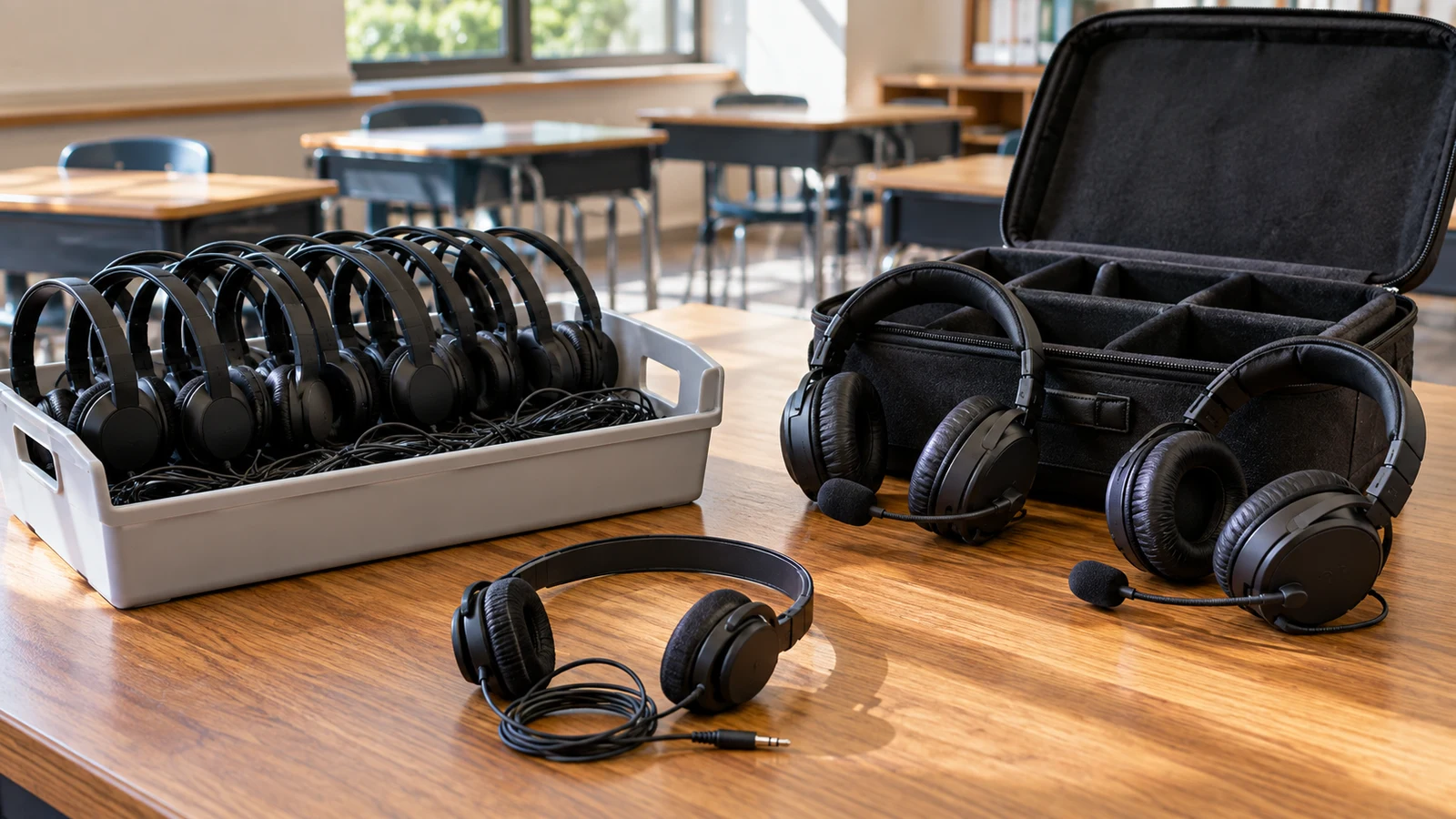
A classroom audio order can cover listening lessons and still leave spoken assignments unresolved. The Copperline 200-pack is a candidate for a broad listening rollout: its description specifies wired stereo on-ear headphones with a 3.5mm connection. Egghead's description explicitly includes a boom microphone, making that kit worth examining when students need to record speech or participate in conversations. Decide which assignments require a microphone before choosing the package quantity.
These descriptions support a comparison of listed features, not a verdict on sound quality or classroom durability. Copperline's description does not establish a microphone capability. Egghead's broad device-compatibility language does not establish that its microphone will work with your particular computers and learning software. A purchase decision should connect each planned activity to a confirmed device setup, then account for how many students need that setup simultaneously.
Egghead Headphones Alternative: Separate Listening Seats From Speaking Seats
Start with the assignment students will submit. A lesson that asks them to hear a passage and select an answer has a different equipment requirement from one that asks them to record a spoken response. Write those activities separately on the purchase request. This gives the person approving the order a reason for the chosen equipment beyond the size of the package.
For listening assignments, the Copperline 200-pack description establishes a 200-unit package designed for K-12 classroom use. It identifies stereo on-ear headphones and a standard 3.5mm connection. That is a useful starting specification when the intended classroom devices have a suitable headphone connection. It does not establish how the headphones sound, how long they last, or how comfortably they fit individual students.
For spoken assignments, inspect the Egghead headphones alternative alongside the listening package. Egghead's description names an omnidirectional boom microphone mounted on a flexible gooseneck. It also identifies inline volume and mute controls. Those are relevant features for a student who needs to position a microphone and manage audio during an activity, though their performance in your classroom remains something to evaluate.
A microphone requirement does not automatically mean every student needs the same headset throughout the day. Consider whether spoken work happens at assigned recording stations, during rotating activities, or with the whole class at once. A shared speaking station and a simultaneous oral assessment produce different purchasing needs. Let the lesson arrangement determine the number of microphone-equipped positions.
Existing equipment belongs in this decision too. If students already use a device microphone, evaluate whether that arrangement produces an acceptable submission in the intended room. Do not assume it is adequate simply because a recording button appears in the application. Equally, do not buy a boom microphone for an assignment that never asks students to speak unless another documented need justifies it.
Egghead Headphones Alternative: Translate The Lesson Plan Into An Order
Prepare a short allocation sheet with a row for each classroom or activity area. Record the activity, whether it requires speech capture, and the number of students participating at the same time. Add the exact device model beside those entries. This makes it possible to distinguish a shortage of listening headphones from a shortage of confirmed recording setups.
For example, a teacher might plan independent listening at student desks while spoken responses take place at a separate station. In that proposed arrangement, the microphone-equipped allocation would follow the station schedule. If the teacher instead requires everyone to submit a spoken response during the same lesson period, revisit that allocation. Neither arrangement is a claim about what either product can support without checking the actual setup.
The Copperline 200-pack provides a stated package count, but that count alone does not show how many classrooms it will cover. Your allocation depends on enrollment, concurrent use and whether equipment stays with a student or moves between rooms. Keep any reserve units visible in the request so they are not accidentally counted as both spare stock and equipment already assigned to desks.
The Egghead product is identified as a ten-pack in its catalog title. Confirm that quantity for the selected variant before building the order around it, since the supplied description does not independently state the pack count. Also ask how included storage is allocated. The description mentions a resealable storage bag; it does not establish a separate bag for every headset.
Understand Bluetooth Audio Direction Before Pairing Devices: Keep The Connection Check Specific
Copperline's description lists compatibility with several device families, including Chromebooks, computers and tablets. Treat that as vendor compatibility language, not proof for every model within those families. Record the actual devices the school intends to use and inspect their available connections. A familiar device name is insufficient when the purchase depends on a particular physical audio port.
For Copperline, the immediate question is whether the intended listening device accepts the listed 3.5mm connection. If an adapter appears necessary, establish its suitability and cost separately. The supplied description does not promise an included adapter. Keep an unresolved adapter requirement on the purchase sheet rather than assuming someone will solve it after the bulk order arrives.
Egghead requires its own connection check. Its description says the headsets work with smart devices, but it does not specify the connector in the supplied text. Ask for the connector details of the selected model and confirmation that both listening and microphone functions work with the intended device. Do not transfer Copperline's stated 3.5mm specification to Egghead merely because the products appear in the same comparison.
If your equipment discussion also includes wireless devices, Understand Bluetooth audio direction before pairing devices provides a separate guide to that question. Neither supplied product description establishes Bluetooth support for these classroom products. Keep wireless planning separate from the features documented here, and do not add pairing steps to a purchase brief for a connection that has not been specified.
Where a sample or existing matching unit is available, run the intended assignment on a representative classroom device. For listening, check that the lesson audio reaches the headphones. For speaking, record a short response and play it back through the application students will use. Confirm which microphone the application selected so a successful recording is not mistakenly attributed to the headset when it came from the computer.
Record the device model and application used for that check. A note saying only that the headset worked leaves the next teacher without enough information to repeat the setup. If different classrooms use different devices, keep those results separate. An untested combination can remain an open purchasing question without being treated as either compatible or incompatible.
Egghead Headphones Alternative: Compare Fit, Handling And Classroom Storage
Copperline's description lists ten colors: red, pink, blue, black, green, purple, orange, yellow, gray and white. Those options could support a classroom color-assignment system. However, the description does not specify the number supplied in each color. Avoid designing an allocation that depends on equal quantities until the seller confirms the assortment for the selected package.
Decide what a color would identify before making it part of classroom instructions. It might identify a room or a storage area, while a separate label identifies an individual unit. If students move between rooms, check whether the proposed system remains understandable. Color variety is a documented feature; a workable distribution process is something the school needs to design.
Egghead's description identifies padded ear cups and an adjustable headband, with vendor language describing comfortable extended use. That does not establish a comfortable fit for every student. If a sample is available, evaluate the adjustment with the intended age group and the planned activity duration. Copperline's description says the headphones are suitable for multiple ages, but it supplies no fit measurements.
The flexible microphone on Egghead adds another handling question. During an evaluation, check whether students can position it as instructed and operate the inline controls without interrupting the assignment. Ask what the mute control affects on the selected model. The description confirms a mute control but does not explain its precise operation, and classroom instructions should reflect the actual behavior.
Egghead describes its fabric cord as tangle-free. Treat that wording as a vendor description, not a tested guarantee that cords will never knot during storage. Copperline's supplied description does not identify cord length or storage accessories. Before selecting containers or assigning desk positions, obtain the dimensions and handling information your arrangement actually requires.
Care instructions deserve a separate check because neither supplied description establishes a cleaning procedure. Ask which cleaning products and methods the manufacturer permits, particularly if equipment will pass between students. Do not assume that ear pads detach, that surfaces tolerate a particular disinfectant, or that either product can be immersed. Choose a handling routine only after the relevant instructions are available.
For shared equipment, plan where used units go and who checks them before redistribution. That proposed routine can include looking for visible damage and setting aside a unit with an unresolved problem. Ask about replacement parts and support before relying on repair as a way to maintain the classroom allocation. Neither description establishes repairability or the availability of replacement components.
Egghead Headphones Alternative: Finish With A Model-Specific Purchase Request
Once the activity and connection questions are settled, compare current offers for the exact selected variants. Save the product identity and confirmed package quantity with the request. A comparison between a bulk listening package and a microphone-equipped kit becomes misleading if the quantities or included items change while the buyer is reviewing the order.
Use current pricing to compare the cost of the equipment you will actually assign. Keep any confirmed adapter or storage costs separate from the product price, and account for unused package quantities in the decision. A lower package price does not by itself show which option equips the planned lesson more economically. The relevant comparison is between complete, suitable classroom allocations.
Before committing funds, confirm current availability, delivery information and the support terms that matter to the school. Ask how the seller handles a unit that arrives with a problem and whether any return conditions affect an opened bulk package. These are questions to resolve for the order, not benefits established by either product description. Retain the answers with the purchasing record.
A request for the Copperline 200-pack should identify the listening activities, compatible devices and intended allocation of the units. A request for Egghead should identify the speaking activities and the confirmed microphone connection. A mixed request should explain which positions need each type. That gives the approver a concrete account of what the purchase will enable without claiming unmeasured performance.
Take the allocation sheet to the teacher or technology lead responsible for the lesson setup, then use the linked product pages to confirm the selected models and current order details. Resolve any remaining connector or package-content questions before assigning equipment to classrooms. Keep the final request specific enough that a substitute buyer can order the intended items without guessing which features the lesson requires.