Home & Living
Conflicting soap dispenser listing: confirm the unit first
Conflicting soap dispenser listing? Keep title, model-box and manual evidence separate until the exact offered unit is confirmed.
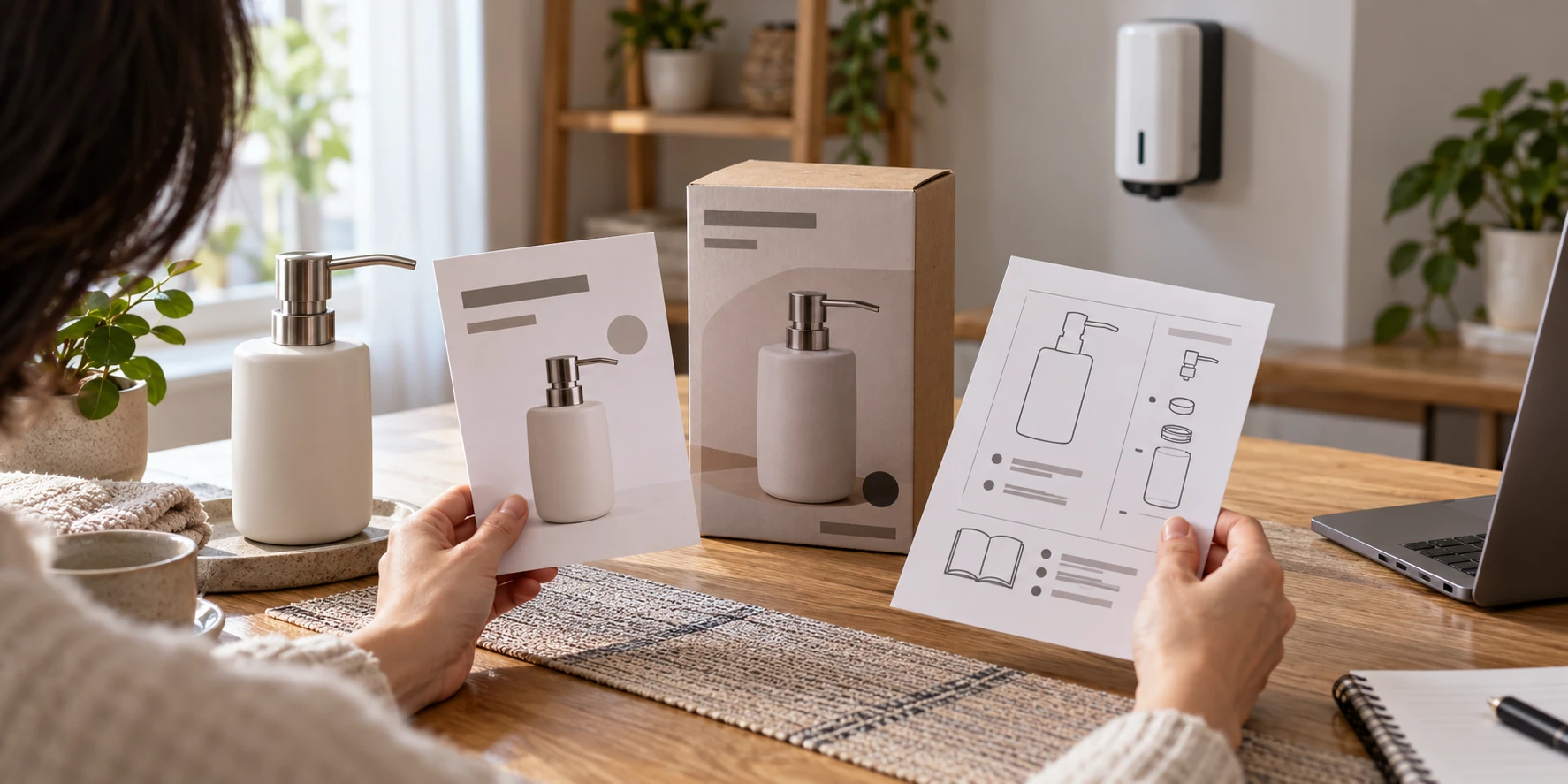
When the product page disagrees with itself
Conflicting soap dispenser listing information creates a buying problem before anyone reaches the sink. You may know whether you want to press a pump or use a touchless dispenser, yet find a page whose wording and pictures point in different directions. Choosing whichever detail you prefer leaves the order unresolved. The useful next step is to identify the exact unit being offered and obtain documentation for that unit. This guide uses a discrepancy sheet to organize that question. It does not diagnose a dispenser, prescribe a refill, or supply installation instructions.
Start by writing the decision in one sentence: “I need confirmation of the model and operating mechanism for the variant I can actually order.” That sentence is more useful than asking whether the product is good. It tells a seller what the answer must establish. It also limits your own assumptions. A reassuring reply about quality, popularity or appearance may be sincere while leaving the mechanism question unanswered. Keep the original question visible so an attractive photograph does not quietly replace the requirement you meant to verify.
Two pages, different evidence limits
The Y58 dispenser listing calls the item a black manual hand pump dispenser for foaming soap. Its gallery includes a photographed box labeled “Sensor faucet soap dispenser,” with model text Y5801MD(Black), and pictures of a faucet-shaped unit with a separate bottle and housing. A photographed manual also refers to a sensor faucet. These are observations of the page, not confirmation that the title and photographed model identify the same supplied variant. The manual-versus-sensor question remains unresolved. Do not select a mechanism or follow that manual by silently deciding which representation must be correct.
The stainless wall dispenser listing identifies a wall-mounted foam hand-soap dispenser. Its description contains only “1,” while its gallery shows a reservoir with a front push pump and illustrated foam delivery. That gives a second example of how product evidence can be distributed unevenly across a page. The images also make promotional claims about leakage, corrosion and service life; those are not independent test results. This page cannot resolve the first page's contradiction, establish interchangeable parts, or guarantee the contents of a particular delivered order.
Make a discrepancy sheet
Draw three columns on paper: what you observed, what remains unresolved, and what response would resolve it. Use one row for each disagreement. In the first column, preserve wording rather than editing it into a smoother combined description. In the second, ask a narrow question. In the third, describe the evidence you need, such as an exact selected model linked to its applicable instructions. This is an original organizing method for a purchase enquiry. The sheet does not certify either product or turn a photograph into a specification.
Keep observations and interpretations visibly separate. “The title uses this phrase” is an observation you can preserve with a page capture. “The seller probably meant a different version” is an explanation you have proposed. Put the explanation in a question, not in the product record as an established correction. Several explanations may fit the same mismatch, and the buyer usually cannot distinguish them from the page alone. A careful sheet keeps those alternatives open until the party responsible for the listing identifies the offered unit.
Attach each row to the particular selection you are considering. Record the page address, the date you looked, and any variant selector or model field shown at that time. If a page lets you change an option, do not assume every image changes with it. Describe the selected option separately from the image you are asking about. You are creating a record of your enquiry, not asserting how the site's selection system works. If you cannot tell which image belongs to the selection, that uncertainty belongs in its own row.
Ask a question that can be answered
A useful message could read: “For the exact variant currently selected on this page, please identify the supplied model, say how it is actuated, and provide the instructions that apply to that model. The title and photographed material appear inconsistent to me. Please explain which representation applies to this order.” This is a proposed message, not a report of a real seller exchange. It avoids accusing someone of deception while making clear that a generic product description will not settle the issue.
You can send the relevant images with the enquiry if the seller's contact method allows it. Label them as references from the page, keeping any visible model wording intact. Do not crop away the very identifier that makes the question specific. Conversely, avoid sending unrelated personal information from an account screen. The recipient needs enough context to identify the discrepancy and the selected item. A long collage of unrelated product pictures can make a simple question harder to answer because it obscures which exact order you are considering.
Read the reply against the open row
Suppose a fictional buyer, Lena, receives the answer “Yes, this is a soap dispenser.” That reply confirms a broad product role but does not answer her mechanism question. She leaves the row open and asks which selected model the answer refers to. If she instead receives a model identifier and a document, she compares the identifiers before marking anything resolved. This example illustrates a reading task. It does not claim that either linked seller has provided such a reply or that a particular document establishes a product's actual operation.
An answer may resolve only part of the sheet. A seller could identify the model while leaving the applicable instructions unclear. Another answer might supply a document without explaining whether it belongs to the selected variant. Mark only the field actually answered. Avoid one large “confirmed” checkbox that hides several unanswered questions beneath it. A purchase can remain pending with useful progress recorded. The point is to preserve the remaining decision, rather than making the paperwork look complete before you know what the order represents.
Consider another fictional reply: “The photo is for reference.” That may explain why the seller does not promise visual agreement, but it still leaves the selected unit unidentified. Lena asks the respondent to name the applicable representation rather than guessing what the disclaimer excludes. If the answer changes her intended choice, she returns to the requirement instead of revising the requirement to suit the answer. This makes the enquiry useful even when its result is that the candidate no longer meets her needs.
A shared enquiry benefits from one person keeping the current version of the sheet. Another household member can add a question without rewriting an earlier observation. If they disagree about what a response establishes, quote the response beside the unresolved field and ask a follow-up. Do not turn a family member's interpretation into a seller confirmation. The record should make that distinction obvious to someone who joins the discussion later. This keeps a small purchase question manageable without requiring a complicated approval process or pretending every uncertainty needs a separate investigation.
Keep buying and repair questions apart
The published Moen soap dispenser care guide owns a different task: a dry-spout symptom on a matching manual assembly, including bounded maker cleaning and priming guidance. A buyer's discrepancy sheet supplies no authority to apply that procedure to another unit. If you already have a dispenser that is not delivering soap, use its own identified instructions and describe its observed condition. Resolving a shopping-page contradiction is not evidence that an installed dispenser has been repaired or that another maker's care method applies.
Likewise, the centerset bathroom faucet fit guide concerns sink holes, connections and installation decisions. It can help you recognize that a fixture purchase has separate fit questions, but a product-identity answer does not settle those questions. Keep any mounting or installation enquiry in its own record with the appropriate product documentation. This article does not offer a hole size, connector specification, power arrangement or installation sequence. A seller's answer about the offered unit should not be stretched into permission to modify a sink or an electrical connection.
Preserve the unresolved branch
Before paying, decide what you will do if the requested clarification does not arrive. You might leave the candidate pending, seek a better documented candidate, or ask a qualified person to review the supplied documentation for your intended project. Those are choices available to the buyer, not claims about which product is superior. Write the choice beside the open row. Otherwise, silence can gradually become an assumed approval, especially when a sale banner or a deadline makes returning to the unresolved question feel inconvenient.
If the page changes while you are waiting, preserve the earlier capture and record the new wording separately. A changed title may remove the visible contradiction without explaining the particular order you discussed earlier. Ask whether the clarification applies to the selected item now available and, if relevant, to an order already placed. Do not overwrite the earlier evidence and later wonder why you asked the question. A short dated history makes the exchange understandable without requiring you to remember every image or reconstruct an earlier version from memory.
Checkout is another decision
If a checkout presents USDT as an available payment option, keep the payment decision separate from the unresolved product identity. A payment route cannot establish which dispenser will arrive, how it operates, or which instructions apply. Before authorizing any payment, read the merchant's actual checkout terms and confirm the order details displayed there. Do not infer payment availability, return rights, dispute handling, delivery timing or currency conversion from this article. It makes no claim that either linked product currently supports a particular checkout method. In a hypothetical comparison, Lena writes two independent questions: “What exactly am I ordering?” and “What payment and order terms am I accepting?” She does not close the first because she recognizes a payment label on the second screen. If either question stays unresolved, she records it as unresolved rather than treating a completed form as an answer. Keep any quoted amount, chosen payment method and order reference with the actual transaction record, following the service's instructions. Never send wallet secrets or recovery phrases as part of a product clarification enquiry. If an order has already been placed, identify that order when asking what will be supplied, but do not assume a pending enquiry pauses fulfillment or changes the seller's terms. Confirm any requested change through the merchant's authorized process. This paragraph offers a decision boundary, not financial advice, a recommendation to use a digital asset, or a promise of recourse. Product evidence and payment terms both deserve direct answers, and neither one supplies the missing answer for the other. The practical outcome is a clear record of what you understood before deciding whether to proceed.
Check the delivered identity separately
If you proceed with an order, retain the clarification alongside the order confirmation. When the package arrives, compare its identifiers and contents with what was actually confirmed before beginning installation or use. Follow the seller's applicable process if the item does not match. This is a record comparison, not a recommendation to dismantle the unit or test an uncertain mechanism. A package that looks familiar may still leave an unanswered variant question. A package that differs from the gallery may require clarification rather than an immediate assumption about its condition.
Give the record a clear stopping state. “Awaiting model confirmation,” “model identified, document pending,” and “delivered identifier differs from confirmed order” describe different situations. These are suggested labels for your own notes, not official seller statuses. Add the person who will take the next action and the question they need to ask. In a shared household, that small handoff prevents someone else from interpreting an abandoned browser tab as a completed choice. It also avoids sending a second enquiry that accidentally omits the earlier clarification.
Finish with a decision you can explain
Return to the requirement you wrote at the beginning. Can you identify the selected unit and the documentation you would rely on, or are you still choosing between inconsistent representations? State the remaining gap plainly. A tidy set of screenshots is useful only if it supports the actual decision. Conflicting soap dispenser listing evidence is handled when you have a documented basis to proceed, or a deliberate pending decision with a named next action. You do not need to invent a repair, settle an unsupported mechanism claim, or order an uncertain product to make that progress real.