Home Decor & Table Settings
Coaster materials: blank ceramic tiles and diatomite mats
Read what the two coaster packs actually include before choosing a craft blank or a ready-looking diatomite mat.
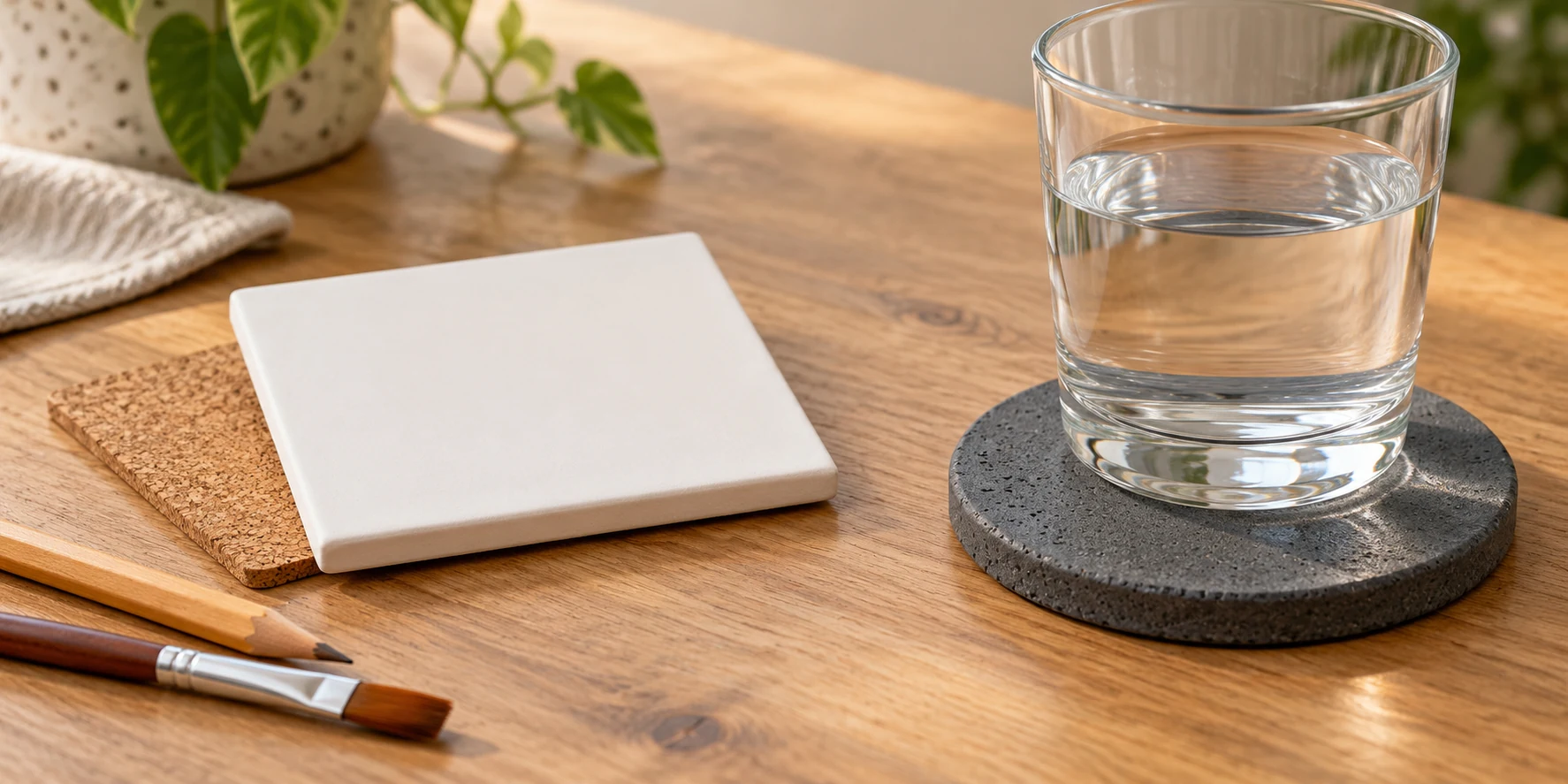
Two packs can both be labeled coasters and ask very different things of the buyer. One may be a blank surface for a craft project; another may be presented as a drink mat you can place on a table. Coaster materials help explain part of that difference, but the material name alone does not tell you what arrives, what preparation is intended, or how the surface will behave under a particular cup.
This guide compares a current Hidove offer of 48 unglazed ceramic coaster tiles with cork bottoms and a Fuliko offer of 40 round diatomite coasters. The first listing invites customization. The second describes its pieces as water-absorbing mats for cups and other items. Those are seller descriptions, not independent performance tests. Begin by reading the exact pack and deciding whether you want a project to complete or an item presented for direct placement.
Identify the object before the material claim
Look at the title, product description and gallery together. A word such as “ceramic” can name a blank tile, a finished drink coaster, or a decorative craft component. “Diatomite” names a material but does not settle the size of the pack or whether other pieces come with it. Write down the item count, shape, dimensions and any backing that the seller explicitly states. Leave any missing detail marked as unknown.
The Hidove blank ceramic coaster pack is listed as 48 unglazed tiles with thickened cork bottoms. Its single captured gallery image shows stacked white square pieces and separate-looking cork pads. The title and description call the tiles blank and discuss ink painting, acrylic pouring, epoxy, polymer clay, decoupage and vinyl as possible customization techniques. That list describes ideas for a project; it does not establish that the paints, clay, epoxy, tools or finishing instructions are supplied.
The Fuliko diatomite coaster pack lists 40 round pieces, each four inches in diameter and 0.35 inches thick. The seller describes them as mats for soap, cups, bottles and similar items. Its single captured image shows dark round pieces and a drink staged on one. The image communicates intended use, while the listing supplies the size and count. Neither image tells you how well the pieces will handle your own drink or furniture finish.
Before comparing material performance, check whether those different packs fit your actual task. Forty or 48 pieces may make sense for a classroom, event or repeated craft session, but can be more than a small household table needs. Count the places where you would use a coaster and the pieces you would want to decorate or give away. The seller's package size is a fact; whether that quantity is useful is your decision.
Read “blank” as a project description
The Hidove listing describes a blank, unglazed surface and proposes many ways to customize it. If you want a personalized set, choose a design and ask what supplies and finishing steps that design needs before you order a large pack. A technique named in the description is not a verified recipe for that exact tile. In particular, a mention of polymer clay does not make the coaster itself a packet of modeling clay, and it does not prove every clay or adhesive will bond safely to the tile.
Decide whether you intend to leave a tile plain or add a design. If you add one, consider what will touch that design: a wet glass, a warm mug, a sponge during cleaning, or hands carrying the piece. Use the chosen craft material's own directions for application, curing and care. The native coaster page does not provide a tested compatibility table for inks, paints, resins, sealants or vinyl. A small trial piece may be useful before decorating the full pack, but it cannot replace product-specific instructions.
The seller calls the ceramic surface porous and makes moisture-absorption and furniture-protection claims. Treat those as claims tied to that offer. The captured page does not supply a measured absorption rate, stain test, scratch test or evidence that a decorated tile retains the same behavior. A design layer might change the exposed surface, but how much depends on the material and application. Do not promise the result to a gift recipient or a customer based on the listing words alone.
The pictured cork pieces deserve a separate count check. The listing says the tiles have cork bottoms, while the gallery presents what look like separate pads near the stack. Ask the seller whether the pads arrive attached, loose, or in another form if that affects your plan. The coaster backing enquiry guide owns the deeper question of whether a separate accessory order is needed. This article keeps the uncertainty visible rather than assuming the picture answers it.
Read “ready for use” as an offer claim
The Fuliko listing presents its round pieces under a drink and describes uses under cups, soap bars, bottles and other items. It does not describe a decoration project. A buyer seeking a plain coaster may reasonably compare it as a direct-use offer, subject to checking the delivered pack and seller directions. The dark color and round shape are visible in the captured image. The drink shown there is a staged example, not a measured test of absorbency or a guarantee for a particular table.
Its description says the diatomite is porous and soaks up water quickly. It also gives care directions: rinse or wipe with a damp cloth, let air-dry, and gently sand a stubborn stain. Those are the seller's directions for the offered item. We have not tested the speed of absorption, the result after repeated washing, or whether sanding suits every visible finish. Check the current instructions for the item you receive, especially if the coaster will be used on a sensitive surface.
A four-inch stated diameter is more informative than a photo of a glass on a coaster. Measure the base of the cup, bottle or soap dish you expect to use. Leave room for ordinary placement rather than relying on the staged cup size, which is not specified. The 0.35-inch listed thickness can help you picture the profile on a table, but it does not tell you whether the piece will slide, mark a particular surface or survive a drop.
If you want a matched display for a large gathering, compare the pack count with the number of places before choosing. A 40-piece supply is different from a four-piece household set. The four-piece coaster return routine addresses keeping a small set together after use. Here the focus is the form in which a larger pack is offered, including whether work is still expected before the pieces reach the table.
Keep absorbency and surface protection as open questions
Both sellers use language about taking up moisture. The ceramic offer describes an unglazed porous surface; the diatomite offer describes porous stone-like mats. Those descriptions do not place the two products on a common measured scale. No independent side-by-side test was supplied for the exact pair. A buyer cannot conclude that one absorbs faster, protects a finish better or lasts longer merely because one page uses stronger adjectives.
The furniture underneath matters. A coaster with cork backing and a coaster whose listed surface is diatomite have different stated constructions. Yet neither page establishes how the item interacts with a particular wood finish, lacquer, stone counter or desk covering. If the surface is delicate, consult its care guidance and the coaster's current instructions. Test an unobtrusive area only if the relevant care directions permit it; do not make a risky experiment on a valued table to validate a marketing claim.
The desk condensation guide deals with keeping drinks and papers in separate places during work. That layout is useful regardless of which coaster material you consider. This guide's narrower question comes earlier: are you buying blank pieces for a project or a product described for immediate placement, and what evidence supports that reading?
A clear answer may require asking the seller. For the ceramic pack, ask about backing attachment, included supplies and any recommended finish for a decorated tile. For the diatomite pack, ask about the intended surfaces or current care instructions if the listing leaves your use uncertain. Keep the question attached to the exact product URL and variation. A general material explanation cannot substitute for an answer about a particular package.
Check what arrives before using the full pack
When the order arrives, count pieces and compare the visible form with the current offer you selected. Check for damage and verify any backing or included parts before starting a craft session or setting pieces on furniture. Save the packaging and order record while a discrepancy is unresolved. A stack in a gallery can show product appearance, but it cannot establish the exact quantity or condition of your delivered box.
If the blank ceramic tiles are for a group project, make a small sample with the actual materials you intend to use and follow those materials' directions. Let the sample complete any required drying or curing before deciding how it will be used. Do not assume an untested decoration is food-safe or heat-safe because the underlying piece is sold as a coaster. If the intended use requires a property the seller has not established, ask for suitable evidence or choose another route.
For the diatomite pieces, begin with the current seller directions and the needs of your table or counter. Check the first piece for chips, rough edges or mismatch with the listing. Place a vessel gently and observe what happens in your own setting before treating the entire pack as proven. That observation is limited to the vessel, surface and time you tested. It does not convert seller claims into a general performance rating for every drink or room.
Store the remaining pieces in a way that avoids damage and keeps the pack identifiable. A large quantity invites mixing with other craft blanks or household coasters, especially if the pieces are plain. Note which pack a sample came from when trying a design or care method. The title and order record can then help you ask a precise question later, rather than guessing that two similar-looking white or gray pieces share the same instructions.
Keep checkout tied to the exact offer
Return to the live listing before ordering. Check the selected product identity, piece count, dimensions, supplied components, delivery terms and return conditions. Product descriptions can change, and a saved article cannot establish live availability or a final basket total. A price or payment method on another page does not settle the terms of this order. The physical explanation here should help you ask better questions, not replace current checkout details.
A republeq.com shopper may see cryptocurrency among the live payment routes, but this article cannot establish whether that option is available for either coaster pack in a specific basket. If an order offers USDT, use the asset, network, amount, receiving address and deadline shown for that exact checkout. Confirm the coaster identity, quantity, shipping destination and total charge there before sending funds. The material descriptions above do not specify a cryptocurrency network or a final price. A familiar network name on a previous order is no substitute for the instructions shown now. Check the selected network in the sending wallet as well as on the order. If a transaction appears to have left the wallet while the order remains unconfirmed, keep the order reference, transaction identifier and visible status, then ask the seller or payment service to reconcile the first attempt before sending another transfer. A second payment can create a duplicate without resolving the first. Network fees, conversion, tax and shipping depend on the current transaction and need their own review. Payment confirmation would not prove absorbency, backing attachment or craft-material compatibility. A successful sample craft tile would not prove that checkout accepted a payment. Keep those records separate so a question about the delivered pack is not confused with a question about the transfer. If checkout changes the order after you have copied payment instructions, pause and read the live instructions again. A changed quantity or delivery address can mean the amount or order reference you saved no longer describes the basket you intend to pay for. When support responds, compare its answer with the actual current order instead of treating a general cryptocurrency FAQ as a receipt for this purchase.
The useful distinction is concrete: one listing offers blank ceramic tiles and suggests customization, while the other presents round diatomite pieces as drink mats. Read the pack contents, count and instructions for the exact current offer. Then choose whether you want a craft project or a plain item described for direct use, with seller performance claims still open to verification in your own context.