Home & Living
clear desk pad setup plan: assign each pad to a workstation
Map transparent desk pads to active stations and verify the stated pack quantity before distributing them.
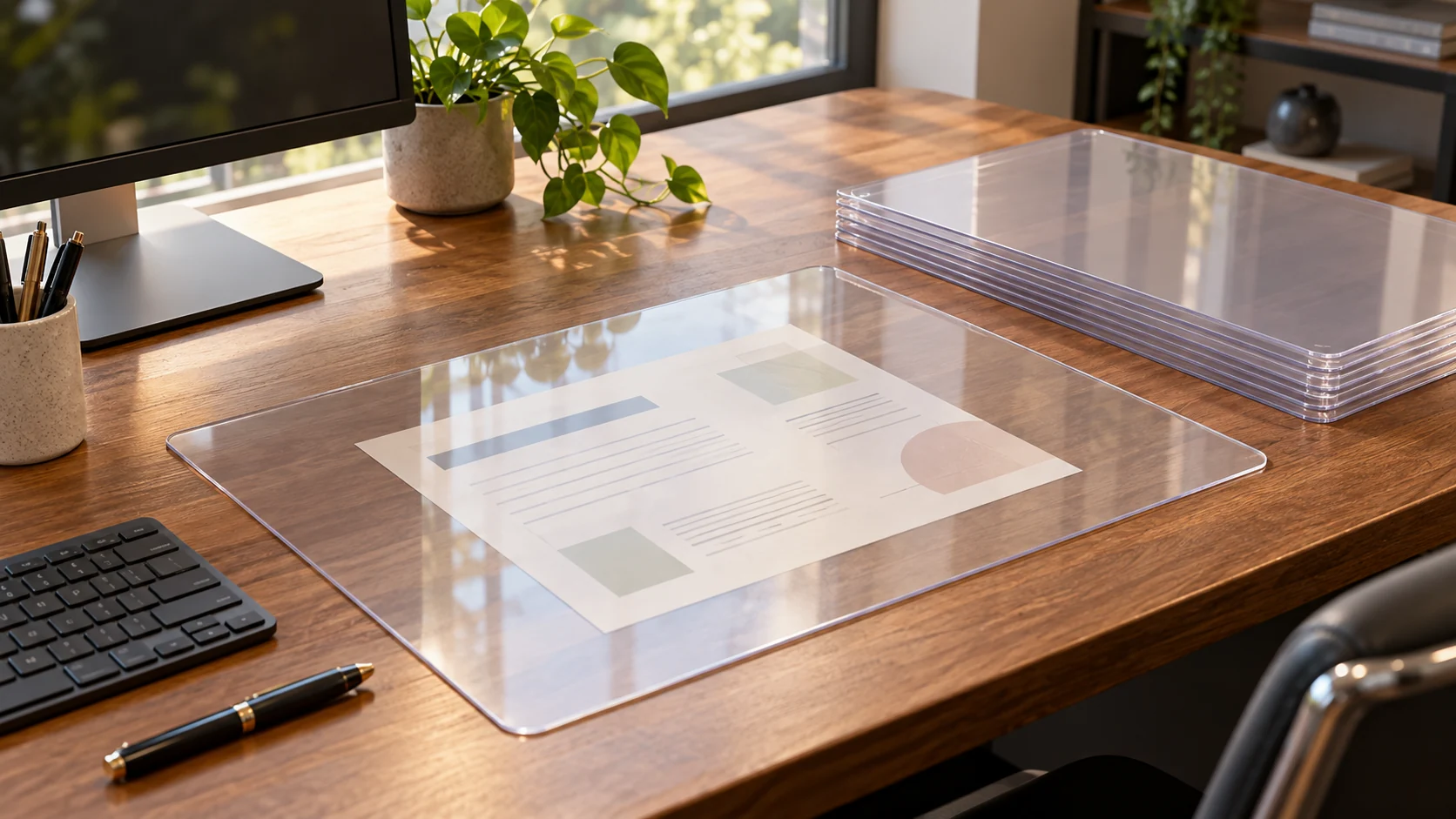
A clear desk pad can solve a specific work-surface problem: you want a writing area while keeping a schedule, reference sheet or photograph visible underneath. Buying one for every desk is a different decision from fitting one personal workstation. Before choosing a single pad or a multi-pad pack, count the surfaces that will actually use a transparent cover. A clear desk pad setup plan begins with those stations and their paper habits, then uses the exact listing to confirm the quantity and format being offered.
Count real workstations before counting pads
List each desk where a transparent pad would serve a daily purpose. A home desk used for notes might be one station; a shared reception counter and two office desks are three more. Leave future “maybe” desks off the purchase count. For each station, write down who uses it and what needs to remain visible beneath the pad. If there is no reference sheet, schedule or other item to display, ask whether transparency is actually a feature you need.
Put a small mark beside stations where people write on paper, use a mouse or repeatedly consult information on the desktop. A pad can occupy the same surface for different reasons. The listing photograph cannot tell you which reason applies to your desk. Think about the work pattern before comparing products: one person who writes daily at a single table may need a different buying quantity from an office that wants similar covers at several staffed counters.
Separate present need from replacement stock. If you have two active desks, two pads may cover the current work. A third is a spare only if there is a realistic use for it. Storage space and the chance of damage during storage belong in that decision. Do not treat a larger stated bundle as automatically better value when some units would stay unopened indefinitely.
Plan what can remain visible under a clear pad
Choose a few papers that genuinely need to stay in view: perhaps a phone list, a weekly schedule or a small reference chart. Place them on the desk where you would naturally look for them. Keep confidential information out of a shared or public-facing station. A transparent pad does not make private paperwork private; it simply leaves whatever sits beneath it visible to people near the desk.
Try the layout with a clear sheet or a paper outline before buying. Put the most frequently consulted item where you can read it without moving a keyboard. Leave room to lift or replace a schedule when it changes. This check is about whether a transparent surface supports your routine, rather than about a precise pad footprint. If the paper will be replaced every morning, ease of access may matter more than how the desktop looks in a staged image.
A glossy clear pad can reflect room light. The actual reflection depends on your desk, window and lamps; a product photo is not a test of your lighting. If visible papers are the main reason for buying, consider where glare might fall when you sit in your usual position. You can test the paper location before purchase and then check the real pad in place after delivery. Do not promise perfect legibility from a transparent product label.
At a shared counter, look at the desk from the visitor's side as well as the worker's side. A list that helps the worker may expose names or phone numbers to someone waiting nearby. Replace it with a public-facing reference, move it out of sight, or decide that this station should not display papers beneath a clear pad. Count that station only after you know what the pad will show. The buying quantity should follow the final station plan, not the first wish list.
Read the two exact clear-pad offers narrowly
The Artistic KrystalView clear desk pad is presented as a glossy 38-by-24 desk pad. Its native description says the transparent top allows papers, schedules and photos beneath to remain visible. The one complete native gallery image shows a large clear pad laid over a dark desk with papers and a keyboard on top. The photo demonstrates a possible setup; it does not establish how its glossy surface will look under your lighting or how often you can lift it to change papers.
The separate Desktex clear desk pads listing describes a bundle of five rectangular polycarbonate pads, each stated as 24 by 19 inches. The native gallery contains one image of a single clear pad with a keyboard and mouse on top. That image supports the physical pad type, but it does not show five individual units. Confirm the seller's quantity statement at checkout and in the delivered package before allocating one to each desk.
Both pages describe transparent desktop covers, but their listing structures answer different planning questions. The Artistic page illustrates one large work surface and does not present a five-unit bundle. The Desktex page states a five-pad quantity that may serve several stations. The dimensions in each listing still matter for fit, yet the reader decision here is how many clear surfaces you will actually equip and maintain. Do not infer a package count from a single photograph.
Keep quantity and coverage on separate lines
Write two numbers for each offer: stated pads per order and desks you intend to equip. Then list the stated width and depth separately. The same quantity of pads does not imply the same amount of usable desk coverage. A smaller pad may be enough for a compact station, while a larger pad can cover a wider writing area. Avoid adding the widths of multiple pads as though they form one seamless surface; seams, overlap and movement would change the result.
For a shared office, map each proposed pad to a named station before ordering a bundle. Five units with only three identified users means two still need a reason to exist. The remaining units could be planned spares, but mark them as such. For a single home desk, do not assume a multi-unit listing is the right choice just because it offers several pads. Your present work area and storage plan should account for the whole order.
When precise keyboard and mouse placement is the question, the desk pad dimensions guide works through width, depth and a fit sketch. Use that guide for the footprint decision. This article owns the buying quantity and visibility plan across one or more stations. Complete the fit sketch for each desk you intend to cover, then return to your count of needed units.
Keep the station list and fit sketches together. A five-pad order can still be a poor match if only one of your desks has a workable clear-pad layout. Conversely, one large pad cannot be divided among several desks merely because its surface area looks generous on paper. The pad is an intact physical item with its own edges. Give each intended workstation its own yes, no or unresolved fit mark before calculating how many units to order.
Check maintenance at each station
A clear pad exposes the condition of the surface and any papers beneath it. Before placing one on a desk, clear the area and decide which documents belong under the pad. If a schedule is updated often, give someone responsibility for swapping it. A multi-desk purchase also creates a repeated small task: each station needs the correct paper and a way to keep the display current. That is an operating choice, not a feature printed on the pad.
Inspect how a pad sits on the actual desk after delivery. If an edge rises or the pad moves, observe the contact area before changing the setup. The desk mat edge-lifting guide addresses that separate problem. Do not assume that buying more pads will fix a contact issue at one desk. Likewise, a single flat product image cannot guarantee that every desk surface will behave the same way.
Follow the maker's care instructions for the exact material. The Artistic page describes a glossy product with Microban and the Desktex page describes polycarbonate and a heat-resistance figure, but neither claim should become a blanket instruction for cleaning, hot objects or every desk finish. This guide uses those pages to identify physical products and stated quantity. Use the actual item instructions for care, and do not improvise a treatment from a marketing phrase.
Verify the order and distribute deliberately
At delivery, compare the package label with the offer you saved. For the Desktex listing, count the pads before assigning them to stations; the single gallery image cannot verify the five-unit shipment. For the Artistic listing, confirm the product label and the pad dimensions you ordered. Preserve the listing URL and a brief note of any difference so you can resolve a real mismatch without relying on memory.
Place one pad at the first desk and observe the setup for an ordinary work session. Check whether the visible reference sheet remains readable and whether the keyboard, mouse and writing paper can still be used comfortably. This is a practical station test, not proof of a general performance claim. If the first setup does not serve its intended purpose, pause before distributing the remaining pads to other desks.
If a pad is meant to display a frequently changed schedule, practice replacing that page during the trial. Notice whether you can lift the pad without disturbing the keyboard and whether the paper returns to the same readable position. A display that works only until the first update may not help the station over time. For a multi-desk order, make this trial part of the handoff to each user instead of assuming the first desk's arrangement will transfer unchanged.
For several desks, keep a simple distribution list: station, assigned pad, visible paper and person who updates it. That list prevents a bundle from being scattered into storage without a clear use. It also helps when a desk changes role and the paper under the pad needs to be removed. A transparent pad should not freeze an outdated schedule in place merely because the surface looks tidy.
Make the purchase count explicit
Finish with the number of active stations, the number of pads each exact offer states it supplies and the number of pads you can account for now. Leave a unit unassigned only if it has a planned spare role and a safe storage place. A bundle statement is useful evidence about quantity, but the delivered package is the final check. A photo of one pad tells you about its appearance, not the contents of the full order.
A clear desk pad setup plan works when every unit has a job. Decide where transparency helps, check the footprint with the separate dimensions guide, and verify the exact quantity before distributing a multi-pad package. The result is a plan for the desks you use today, with any spare units chosen deliberately rather than assumed to be useful someday.