Holiday Decorations
Christmas stocking display: plan the floor and ledge
Plan stocking positions around the actual room, keeping retail hook counts, surface needs and loading questions separate.
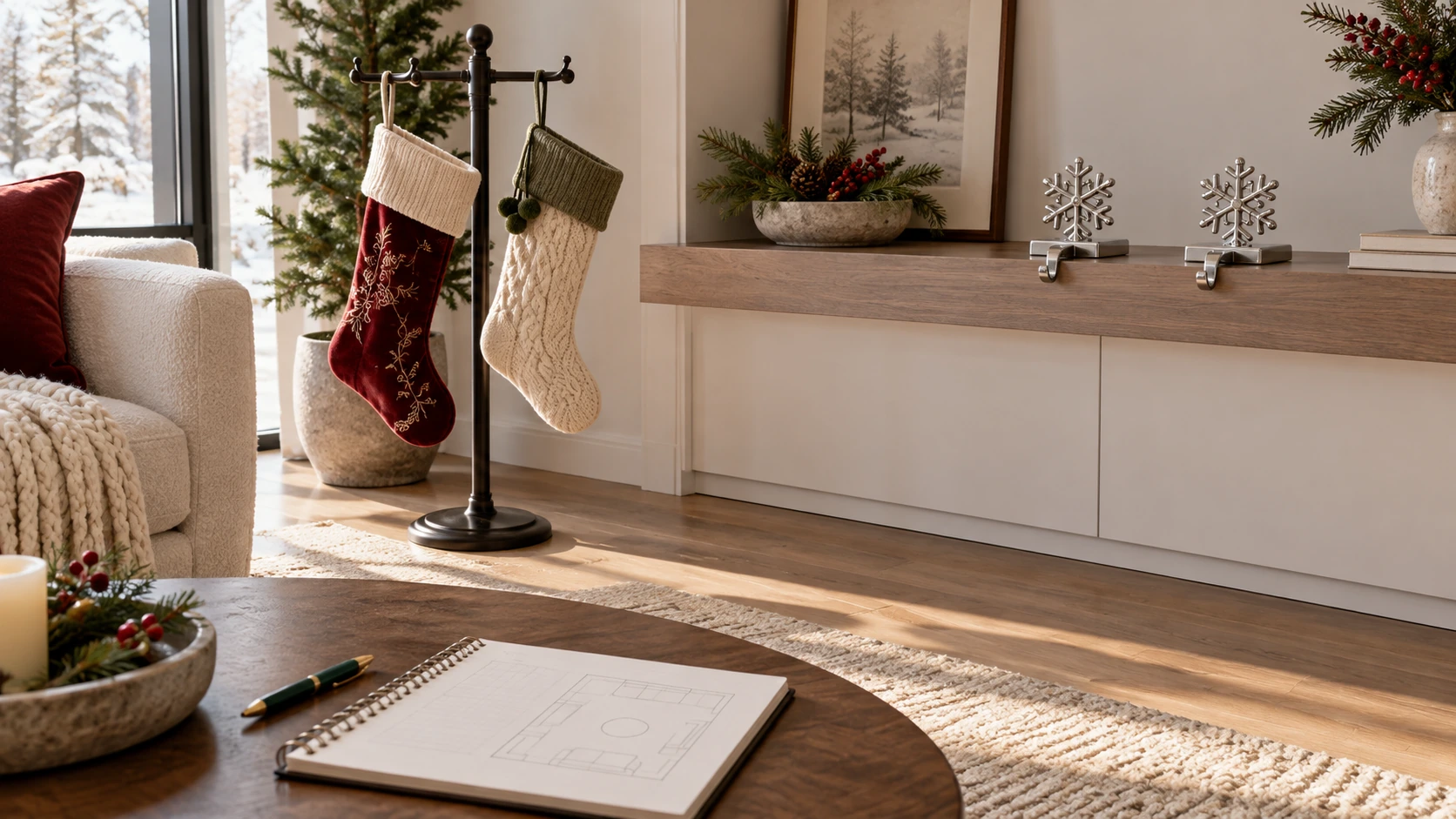
Start with the place where stockings will hang. A floor stand may solve a room with no suitable ledge; a small decorative holder may suit a household that already has a confirmed surface. The two listings here show those different forms, but neither retail image establishes what your room can safely support. For a Christmas stocking display, start with the actual number of stockings, the places people will walk, and the instructions for the exact holder. Keep the gifts and the hanging decision separate.
Draw the room before choosing a holder
Sketch the part of the room where you want the stockings visible. Mark doors, walking routes, furniture that moves, and any ledge you are considering. A rough sketch will show whether a floor stand fits and whether you can reach a surface display without moving furniture. A catalogue scene cannot answer those questions for a different home. Write the proposed location down, then compare each product's actual form with it.
Count the stockings you intend to display. A person may not receive a stocking, and a household may choose to hang an extra one. If the recipient group is still changing, write a range and keep the final count pending. Count is relevant because the floor-stand offer advertises room for several stockings, while the snowflake offer is a set of two holders. Neither number tells you which tradition your household should follow or how much each stocking will contain.
Ask whether the display has to remain in one place throughout the occasion. A floor position that works while a room is empty may interrupt a route once guests arrive or furniture is moved. A shelf or mantel position may be convenient for viewing but inaccessible for taking a stocking down. These are room-specific observations. Note which items will need to stay reachable and which routes must remain open. Do not treat a styled listing photo as a clearance diagram.
A small holder needs a suitable ledge; a tall stand needs suitable floor space. A holiday photograph cannot supply either one in your home. Keep both possibilities open until the holder's own instructions, the supporting surface, and the intended use are clear. A placement decision can be postponed without postponing the rest of the holiday plan.
Read the freestanding stocking stand as one offer
The freestanding Christmas stocking stand listing describes an adjustable height from 39 to 71 inches, three movable hook sets, and advertised space for up to 12 stockings. It names a metal rod and a base with a fillable weight bag. The first gallery image shows the stand with stockings beside a decorated tree. The scene suggests a layout, but your floor and walking routes still need their own checks.
The page also states an up-to-10-pound support figure. Keep that as a seller claim with its exact product identity. Do not divide it by 12 to create a per-hook rating; the description does not establish such an allocation. Do not infer that a filled stocking, ornament, or string of lights is safe merely because a total figure appears in a listing. Obtain the current instructions for the complete stand, including setup and loading conditions, before using a proposed arrangement.
Height and floor position are separate decisions. The adjustable range is a stated product feature, while the room sketch says where a full-height object could go. Measure the relevant ceiling and furniture clearances in the actual space and leave room for people to use the area. The page describes hooks that move and rotate; a hook's presence is not evidence of the clearance around it in your room. If the stand is intended near a tree, keep the tree's own base and access requirements in a separate note.
The supplied description includes an assembly and ballast account, but this guide does not turn a retail paragraph into setup instructions. Verify which components arrive with the exact item and follow the applicable maker directions. If the weight bag, base, or other part is missing or differs from the offer, stop at the identity question. A photograph of a decorated stand cannot resolve a missing component or confirm that an improvised substitute is acceptable.
Read the snowflake holders as a set
The Regency International snowflake holder listing identifies a set of two 9-inch resin pieces in silver hues. Its first gallery image shows two separate snowflake shapes, each on a base with a projecting hook. The image makes the product's general form clear. The short description does not state a tested load, a required surface type, a minimum ledge depth, or a fastening method. Keep those fields blank until the seller or maker supplies applicable details.
Two pieces may match a two-stocking plan, but the set count cannot establish how the holders should be placed. Before choosing a ledge, check the actual surface and the holder instructions. A shelf, mantel, or table can have different edges and finishes. The listing does not show a full installation specification for any of them. A visible base and hook show what the product looks like, not that every surface will hold a filled stocking securely.
If a holiday display needs more than two stockings, do not quietly multiply the set into an approved configuration. Separate the number of pieces you would need from the question of where each could be used. Several holders on one ledge may require different spacing and support than one holder. The captured listing supplies no combined arrangement test. Draw the possible positions on your room sketch and leave their adequacy unresolved until the specific surface and product guidance are known.
Resin and silver color describe appearance, not load capacity. The description calls the pieces resin and silver-hued; it does not document what an individual hook can carry. Choose the appearance only after the practical support question has an answer. If the display is for empty decorative stockings, say that in the plan. If someone intends to put gifts inside, treat the filled state as a separate question rather than assuming the empty-display photograph covers it.
Keep the display plan separate from the gift plan
A family may decide who receives gifts before deciding where any stocking will hang. The guide to Christmas stocking gifts and recipients owns that conversation: who participates, when gifts are handed over, and which preferences need to be asked. This article owns the physical display location. A holder's advertised hook count cannot select recipients, and a gift list cannot establish that a particular hook or surface is appropriate.
Write two columns: names or intended stockings in one, proposed display places in the other. You may settle the gift list while the display place remains open. A change in the gift plan can affect the number of stockings without changing the room's physical limits. Conversely, a room with only one suitable display position need not dictate who receives a gift. Keeping the two columns separate makes it easier to adjust the holiday arrangement without turning a holder into a rule about people.
For a stand near a decorated tree, the public guide to Christmas tree stand planning keeps the tree's advertised height and trunk statements attached to its own equipment. The tree and stocking stand need separate placements; neither guide supplies a combined clearance test. Draw both footprints in the actual room and use each product's applicable instructions. The tree scene in the stocking-stand gallery is a styling example, not a shared installation specification.
Consider the moment stockings will be taken down. If guests will gather in one place, leave space for the person retrieving them. If gifts will be handed over elsewhere, a display may need only a visible position until that time. Those choices belong to the household. A holder can support a chosen arrangement once its use is verified; it should not determine the order of giving, opening, or participation.
Use a placement worksheet for this Christmas stocking display
Give each candidate one row. For the floor stand, record the exact offer URL, stated height range, advertised stocking count, hook-set description, and any installation or load instructions you still need. For the snowflake set, record two pieces, the stated 9-inch description, and the missing surface and load details. Add a column for the proposed place in your home. The worksheet should show which facts come from the listing and which facts still need to come from the actual room or current product directions.
Use “not stated” where the retail page is silent. The snowflake listing does not give a tested load or ledge specification. The floor-stand listing gives an overall claim but not a safe per-hook figure. Leave those cells open until a suitable source answers them. If the seller later supplies a diagram or updated manual, date it and record the exact model to which it applies. Do not merge statements from different stocking-holder offers because their photographs look alike.
Record the intended contents separately from the holder. An empty decorative stocking, a small item, and a heavily filled stocking are different proposed uses. This article does not weigh any of them or certify a load. If the contents are not yet known, write “contents pending.” A plan that depends on a filled stocking needs suitable evidence for that state before use. A stocking count gives no weight measurement.
Take a final walk through the proposed room while the sketch is still provisional. Look at the doorway, seating, and any cable or decoration already planned. If a floor stand would interrupt normal movement, redraw the position. If a surface holder would crowd another object or require an unverified edge, leave that placement open. This is a planning observation, not a stability test. Product-specific setup and use questions still belong to the correct instructions.
Put the worksheet where the people arranging the display can see it. Someone else may know that a chair will move into the corner or that a shelf is used during the gathering. Add that information before selecting the location. A second person's room observation can change the plan without changing anything about the product. If the display will be moved between rooms, give each room its own placement row. Do not carry a safe-use assumption from one surface or floor position into another.
Choose a location with the missing facts visible
Choose the display after checking its space and intended use. The freestanding offer supplies a stated adjustable range and several hooks; the snowflake set supplies two decorative pieces with a short product account. They answer different parts of the question. Neither listing measures your floor route, identifies a suitable ledge in your home, or establishes every loaded arrangement. Use the worksheet to ask for those missing details before relying on the display.
If the needed instructions and room conditions are confirmed, choose the option that fits the chosen place and the number of stockings. If they remain unresolved, keep the stockings or gifts available for another arrangement. A holiday plan can change without pretending an untested holder is safe. Save the exact product identity, the current instructions, and your room notes so next season's display begins with facts rather than memory of a styled photograph.