Home & Living
Christmas ornaments for tree and garland: split one set between two places
Allocate a red-and-white ornament set between a main tree and separate entry greenery only after both display zones pass attachment and clearance checks.
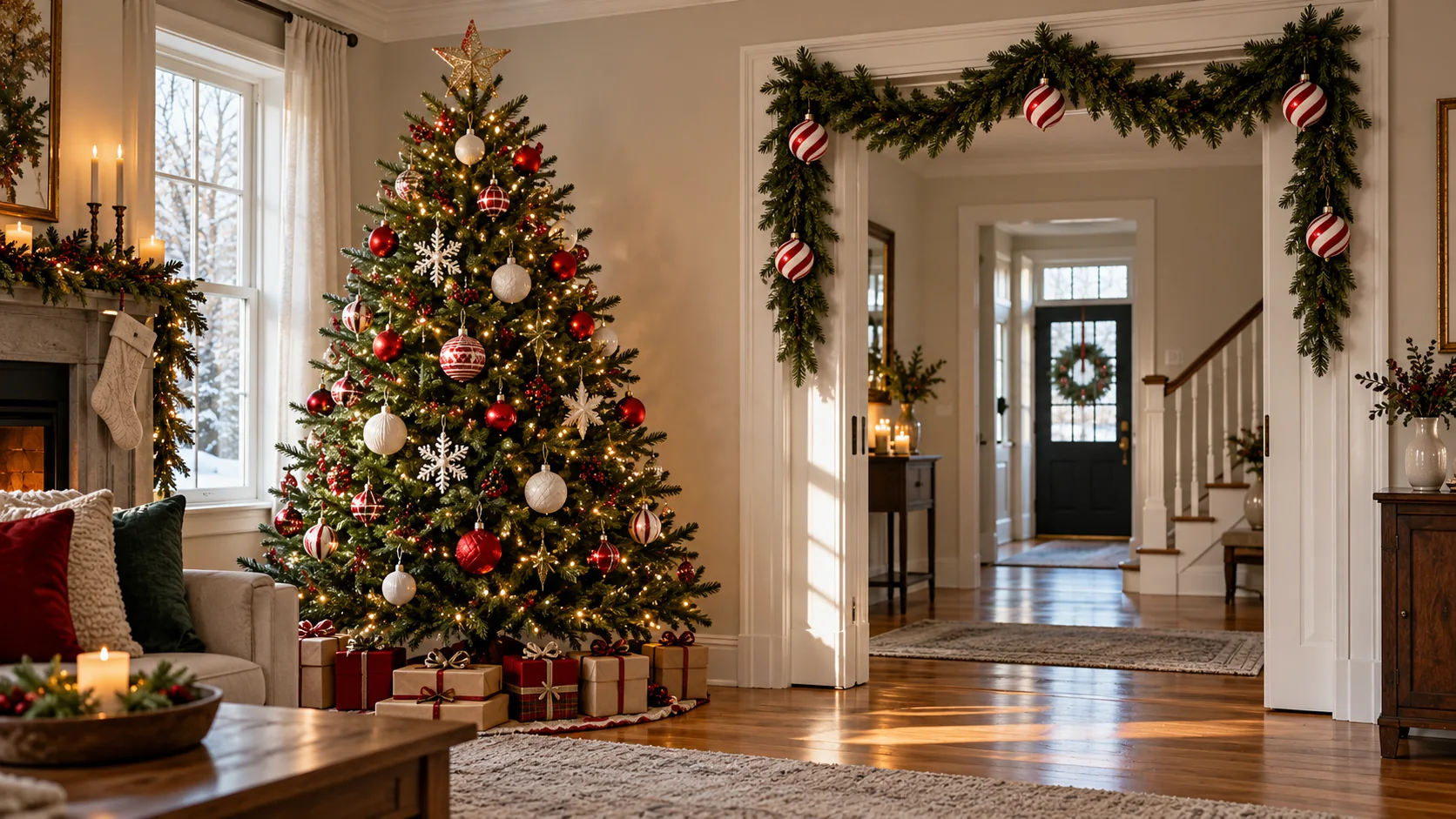
Christmas ornaments for tree and garland have two places to live. The tree has branches at several heights and may be seen from more than one seat. Entry greenery is closer to a doorway, wall, or walking route. Before you open a large set, decide how many pieces each place can actually hold and how each ornament would attach. A box count tells you what comes in the package. It cannot tell you how much room remains on your tree or whether an entry garland can carry another decoration.
This guide considers two red-and-white sets with different scales. The Coolnut twelve-piece ornament set is described as twelve plastic balls, four inches across, in six designs. Its gallery shows them on a tree and on doorway greenery. The SummerYin 155-piece ornament assortment is described as mixed red-and-white shapes in several sizes; its gallery shows hanging pieces on a tree and a staged tabletop bowl. These are examples of how scale changes the allocation. Neither listing establishes the load limit of your branches, garland, wreath, or doorway hardware.
Draw the two display zones before assigning pieces
Stand where you normally see the tree. Notice which sides face the room and which branches already hold ornaments you intend to keep. Make a quick note of open areas, including lower branches that might be brushed by people or pets. Then visit the entry greenery. Look at it from the direction a guest approaches and from inside the room. A garland that looks open from the front may sit tightly against a wall, leaving little room for a four-inch ball to hang without rubbing the door or trim.
Use two small groups on a table or a sketch with two columns: tree and entry. Add a third group for pieces you have not assigned. This prevents the package from becoming a decorating instruction. If the tree already has a clear scheme, you may need only a few new pieces there. If the garland has no suitable hanging points, its column may stay empty. An empty column is a useful answer; it means the current display cannot support the plan you first imagined.
Measure the space that would actually hold a larger ornament. The four-inch dimension on the Coolnut listing describes the ball itself. Add room for its hanger and for movement near a doorway. Hold a paper circle or an ornament you already own against the proposed spot and open the door fully. Check the path of coats, bags, and hands. At the tree, hold the same outline near a branch and step back. A piece may fit physically while obscuring a favorite keepsake or a line of lights.
Check attachment before planning a pattern
Begin with the greenery's own instructions. Some garlands are decorative strands with no stated capacity for additional ornaments. Others may have wire branches, loops, or ties, but the presence of a loop does not certify a safe weight. Inspect how the garland itself is mounted. An ornament hanging from a loose strand adds a different demand than one on a branch supported at several points. If you cannot identify a secure attachment and enough clearance, leave that position undecorated.
Do the same check at the tree. Test a branch with an ornament you already have and watch whether the branch tip sags or the ornament slides toward the end. Move it inward or choose a different branch if needed. Keep ornament hooks and strings separate from light wires. The product photos show decorative arrangements, not permission to fasten anything to electrical cords or to use a display outdoors. Follow the tree, lighting, garland, and ornament makers' instructions for the exact items you own.
Put one candidate piece in each zone before assigning the rest. Let it hang long enough to see how it sits from an ordinary viewing point. On a door frame, check the door's full travel again and look for contact with trim. On the tree, look at it with lights on and off if those are normal settings in your room. A planned allocation can change after this one-piece trial. That is easier than moving a dozen ornaments after discovering the first one blocks a latch or hides an existing display.
Use the large balls as test pieces
The Coolnut page describes six red-and-white designs with two balls of each design. Its gallery includes striped and snowflake patterns, a tree scene, doorway greenery, and a staircase scene. Those images support the visual idea of repeating one design in separate locations. They do not prove that every ball in a delivered set has an identical hanger or that a particular garland will hold one. Inspect caps and strings on the actual pieces before hanging them.
Try one four-inch ball at the proposed entry location. Step back to the approach view. If it dominates a narrow garland or swings into a doorway, put it back with the unassigned pieces. It may work better on a tree branch with more clearance. If the entry position works, consider a second ball only after checking the next attachment point separately. Two matching designs can connect the entry and tree visually without requiring half the box at each place.
Keep the tree allocation modest at first. Hang one larger ball where you can see it from the room, then place another at a different height. Look at existing ornaments and lights before adding more. The point is to learn whether the scale works on your tree. For detailed choices about repeated color and larger accents across one tree, see the tree-only ornament set plan. Here the decision is how to share one purchase across two separate displays.
A table centerpiece is another use described on the Coolnut listing. Treat that as a separate placement decision if entry greenery fails the attachment check. A bowl or tray must have enough stable space for the ornaments without allowing them to roll into a table edge. Keep it clear of a meal setting and any candle or heat source. A staged product photograph cannot establish a safe arrangement for your table. You can still use the ornaments on the tree and leave the table undecorated.
Give the mixed assortment a different job
The SummerYin listing names 155 pieces in red and white, including balls and shaped decorations. Its gallery shows Santa, train, stocking, tree, gift, snowflake, and icicle forms among the assortment. It also shows several sizes. Review the current listing and the delivered package before relying on a particular count of any shape. A mixed box gives you many possible pieces, but the right number for either display is set by available hanging points and the view you want.
Sort a small sample by attachment type and approximate size. Put pieces with intact pre-tied strings together. Keep anything with a loose cap, damaged string, or uncertain attachment aside for inspection. The seller describes the pieces as plastic and makes claims about falls and cap strength. Do not use those claims as a reason to drop-test them or overload a garland. The material and hanger still need a sensible location in your home.
Choose the tree's sample first. Try one shape that stands apart from the larger balls and one quieter piece that repeats the red-and-white palette. Hang them far enough apart to judge each one. If the tree already has ornaments, use the new pieces to fill actual open areas, not every branch. A box with 155 pieces can remain mostly full after the tree looks complete. You can save unused pieces for another suitable display or another year.
For the entry, select only shapes whose hangers work with the inspected greenery. Some long ornaments may reach lower than a round ball, and a dangling icicle may be more likely to meet a coat sleeve near a doorway. Hold the ornament in place before hanging it. If it falls into the passage, choose a shorter piece or leave that point open. Do not infer from a product scene that the assortment is suitable for rain, snow, or direct sun at your entrance. Use the exact maker's directions for environmental limits.
Decide whether the displays should echo each other
The two locations do not need identical inventories. A large striped ball on entry greenery and a smaller striped or red piece on the tree may be enough of a connection. Try that pair and walk the route between the two displays. If you can see both at once, too many large repeated balls may compete for attention. If the rooms are separate, a stronger repeat may help the displays feel related. This judgment comes from your space, not a fixed percentage of the package.
Entry greenery often has its own visual role. An existing wreath, door color, or lights may already draw the eye. Decide whether ornaments add something you want from the approach view. The doorway garland color guide handles the choice between a quieter green frame and a red-accented one. Once that choice is made, use this allocation check to decide whether individual hanging ornaments fit the completed frame.
On the tree, check scale from the ordinary room view instead of counting pieces from the box. A large ball may read as an accent even when the entry display uses several small shapes. If the tree is compact or pre-lit, its branches and built-in details already occupy visual space. Move or remove a test ornament if it hides those details. There is no obligation to mirror the entry arrangement exactly.
Run a short placement trial
Set out the first pieces you plan to use: perhaps one larger ball for the entry, two for the tree, and a few smaller shapes as alternatives. The exact numbers are only a trial group. Photograph each display before hanging. Attach one piece, take a step back, and check support and clearance. Add the next piece only if the first one stays secure and still leaves the display legible. Keep the unassigned group nearby so changing the plan does not mean searching through the whole box.
After the first pass, use the room as it is normally used. Open the door, walk past the entry, sit near the tree, and turn the tree lights on if you usually use them. A piece may look balanced up close and disappear from a seat. Another may catch a sleeve every time someone enters. Move those pieces or leave them off. Do not solve a crowded passage by shifting an ornament onto a light wire or an unsupported garland tip.
Record the final allocation in ordinary words on a storage label: for example, “large red balls on tree; two matching balls on entry garland; mixed shapes still boxed.” That note will help next season if the pieces return to the same locations. If the tree or garland changes, repeat the attachment and clearance trial. A successful arrangement this year is evidence about these two displays, not a universal capacity for every tree or garland.
Christmas ornaments for tree and garland are easiest to allocate after each location has earned its share. Start with one secure test piece in each place, look from normal viewing points, and let the unused ornaments stay in the box when the displays have enough.
Set aside pieces for the tree and entry greenery, then test their actual attachment points before hanging.