Home & Living
Christmas door hanger size: check the door plane and viewing path
Measure the door face and approach sightline, then compare an item with listed dimensions against a hanger whose size is not supplied.
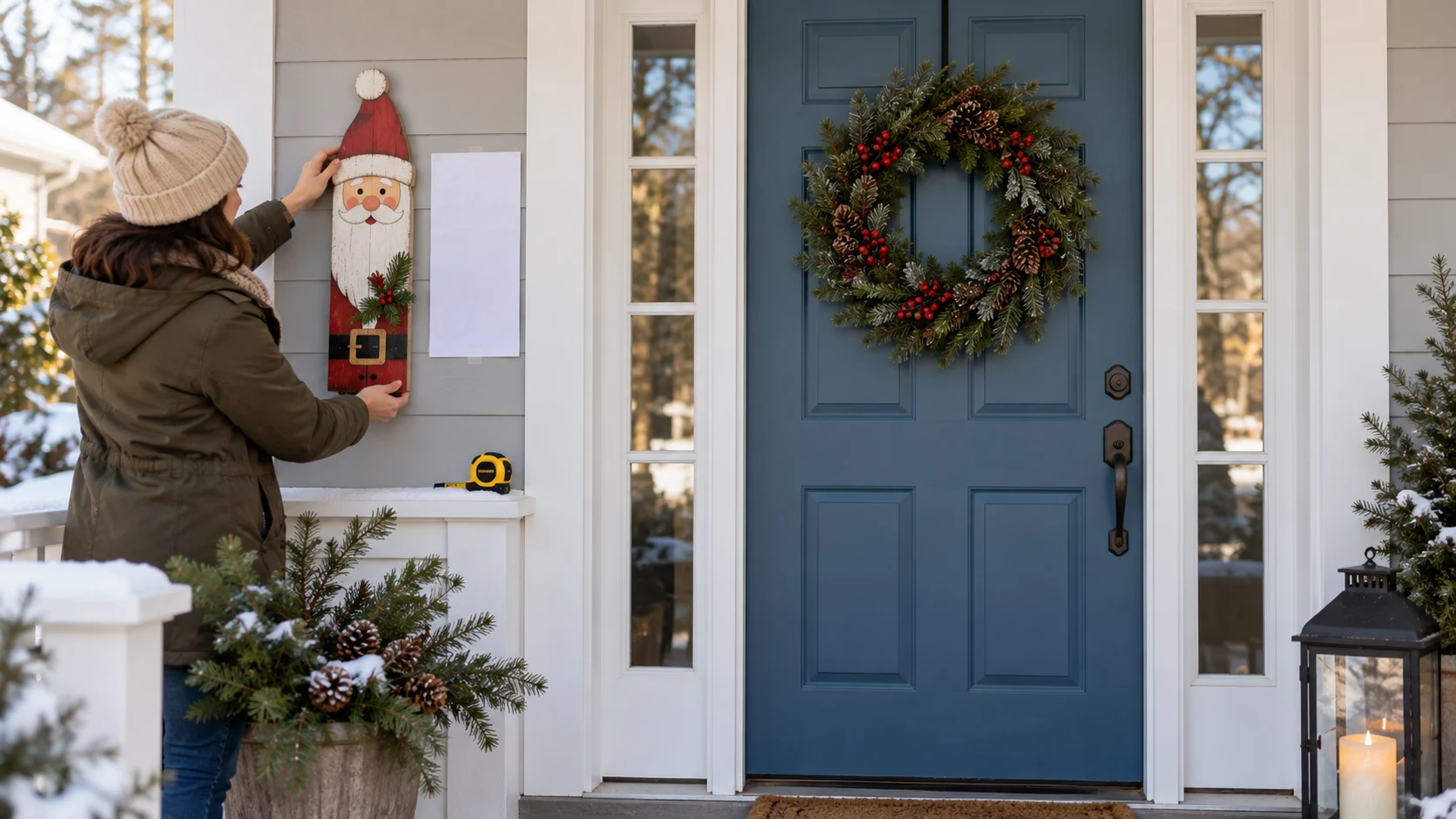
A decorative hanger can look small in a product photo and occupy much more of a real front door. Before buying or hanging one for the season, decide what part of the door face is available and where someone approaching the entrance will see it. Christmas door hanger size is a placement question as much as a listed measurement. You need the actual door, its hardware, the hanger's dimensions where supplied, and a plan for checking the display after the door moves.
Compare two examples without pretending they provide equal detail. The Bunny Santa decorative door hanger is listed at approximately 24 by 18 by 0.3 inches. The North Pole Santa Christmas door hanger is identified as a door hanger, but its current listing gives no comparable dimensions. That gap matters: you can test the first item's listed outline against your door on paper, while the second requires a measurement from the seller or the actual item before claiming it fits.
Measure the part of the door you can use
Stand in front of the door and mark the area you want to decorate. Measure the door face itself, then note the handle, lock, knocker, peephole, glass, mail slot, and any raised panels that affect the usable flat area. The full door width is not automatically the space available for a hanger. You may want to preserve a visible peephole or keep the decoration away from a frequently used handle. Record those choices as your own placement requirements, not as dimensions supplied by a product page.
A paper rectangle roughly the size of the listed Bunny Santa outline can help you judge scale. Hold it where the hanger would appear, then stand back at the normal approach point. This is a visual trial of a published size, not a test of the item's weight, attachment strength, or exact cutout. Its decorative edges may occupy less than the full rectangle. If the outline crowds a window or a house number, you have learned something useful before choosing a mounting position.
Do not create a matching rectangle for the North Pole Santa item from a photograph. A listing image may be cropped, styled beside objects of unknown scale, or displayed at a different aspect ratio on your screen. Ask for exact dimensions or inspect the actual hanger. Until then, write “size not confirmed” in the comparison. That is more useful than a guessed measurement, especially if the entry is narrow or a handle already limits where decoration can go.
Consider the door from both sides if people use it in more than one direction. A hanger may look centered when the door is closed but pass near a wall, frame, light fixture, or adjacent object as the door moves. Observe the real path before final placement. The exact distance needed depends on the door, decoration, and attachment, so this guide cannot give a universal clearance number. Measure or test the actual combination according to the maker's instructions rather than relying on a storefront picture.
If the door has a storm door or screen in front of it, measure the space between them with the actual entry closed. A flat paper outline may show width and height but says little about depth or contact with the outer panel. The Bunny Santa listing gives an approximate thickness; the North Pole Santa page does not. Even a listed thickness omits the effect of hanging hardware. Treat this as a reason to inspect the complete item and door assembly, not as permission to force a decoration into a narrow gap.
Test the view from the approach path
Walk toward the door as a visitor would. Note when the decoration becomes visible and whether a railing, storm door, porch column, or seasonal display hides it. A larger hanger is not automatically better if it can only be seen from one angle. A smaller one may sit more naturally within a panel. Decide whether the intent is a close-up greeting at the handle or a shape visible from farther down the path. That decision will change the position you test.
Check the contrast against the actual door color in daylight and in the light normally present when guests arrive. The Bunny Santa listing describes a multicolor design; it does not tell you how those colors will read on your particular door. The North Pole Santa title establishes a theme but provides little display detail. If the design disappears against the surface, repositioning within the usable area may help. Avoid promising that a listed color or finish will remain visible under every lighting condition.
Place the paper outline or the actual item at a first proposed height, then repeat the approach. Ask someone else what they notice without telling them where to look. If the decoration covers the doorbell, the number, or a feature that people need to use, choose another location. You are judging your entrance, not following a universal centerline. Keep the sightline experiment separate from attachment: hold a temporary guide for visual planning only, and use the maker's approved method for the actual hanger.
The holiday wreath changeover guide addresses when to swap a wreath while keeping the entrance usable. This article owns a narrower question: whether a decorative hanger of known or unknown size has an appropriate place on a specific door. A wreath and a hanger may share an entrance, but their dimensions and attachment details must be checked separately. Do not assume that a location used for last year's wreath will fit a different shaped hanger.
Resolve attachment and movement on the actual door
A listing title that says “door hanger” does not establish what hardware comes in the package or which doors it can attach to. Check the complete item and its instructions before deciding how it will hang. Look for its intended attachment point and any supplied hardware, then compare those with the door surface you have. If the instructions do not cover your door type, ask the maker or seller instead of improvising a fastener. This guide does not certify an attachment method.
Before the final installation, open and close the door through its normal range with someone observing the planned location. Watch the top edge, handle side, and any frame or storm door that could meet the decoration. If you have only a paper outline, it can reveal a possible conflict but cannot prove the actual hanger will clear it. The item may have thickness, moving parts, or an attachment that changes its position. Resolve those details with the real object and its directions.
Keep ordinary entry tasks in view. Can a person find and use the handle without pushing the hanger? Can a visitor read the address or see the doorbell? Does the door latch in its usual way after the decoration is mounted? If the answer is uncertain, adjust the plan and test again. The point is practical use of the entrance. Do not assign a safety rating to a decorative item or claim that a quick open-and-close test replaces the maker's fitting instructions.
The Bunny Santa listing identifies birch plywood and says it is UV-coated for indoor or outdoor use. Those are claims about that item, not about the other hanger or your particular exposure, attachment, or weather conditions. Read the exact product instructions for care and placement. The North Pole Santa listing is too sparse to transfer the same material or use claims. If outdoor suitability matters to your decision, leave that candidate pending until you have its own information.
Ask how the door behaves on a busy holiday visit. People may open it while carrying bags, greeting guests, or reaching for a parcel. The display should be tested in that ordinary movement, with the actual hanger and its specified attachment. Keep the test focused on visible fit and access. It cannot establish that a product resists every bump or weather event. If repeated contact occurs, move or remove the decoration rather than treating that contact as a normal part of its design.
Choose the display you can describe accurately
Write a simple comparison in your own notes: candidate name, verified width and height, intended door location, attachment information you actually have, and anything still unknown. For the Bunny Santa product, the approximate listed dimensions can be recorded as listed. For the North Pole Santa product, leave size and hardware blank until confirmed. This prevents a pretty photograph from becoming a false specification. A comparison with a visible blank is better than a table filled with guesses.
If two people are choosing the decoration, show both of them the same door measurements and approach view. One person may focus on the character design while another notices that the planned position covers the peephole. Agree on the practical limits first, then choose within them. This is especially useful when the person buying the hanger is not the person who will put it up. Send the dimensions and a photo of the actual door, but label a paper outline as an estimate rather than a product fit test.
Plan when the hanger will come down without turning this into a general storage system. Decide who will remove it and where the instructions or packaging will be kept so the next installation starts with the same product facts. The holiday storage access guide covers finding seasonal items during later visits. Here, the focus is only on retaining the exact hanger's size and attachment information. A note about its selected door position can save another round of guessing next year.
Recheck the actual display after it has been mounted. Stand at the approach point, use the entrance normally, and look for movement or interference that a static paper rectangle could not show. If something conflicts, follow the item's directions as you change the position or remove it. Do not leave a problem in place because the decoration looked good in a close-up photograph. The final decision should reflect the real door in use and the actual hanger, not the product thumbnail.
Christmas door hanger size becomes a useful buying filter when you keep three facts separate: a listed dimension, a measurement of your door, and a test with the actual item. The Bunny Santa listing supplies one approximate outline; the North Pole Santa listing leaves its outline unresolved. Choose a design only after its missing details are known well enough for your entrance, then place it under its own instructions. That makes the seasonal display easier to see, use, remove, and describe next year.