Home Security
Agree a holiday storage access plan for seasonal visits
A holiday storage access plan distinguishes an agreed seasonal decoration visit from continuing permission to enter a storage space.
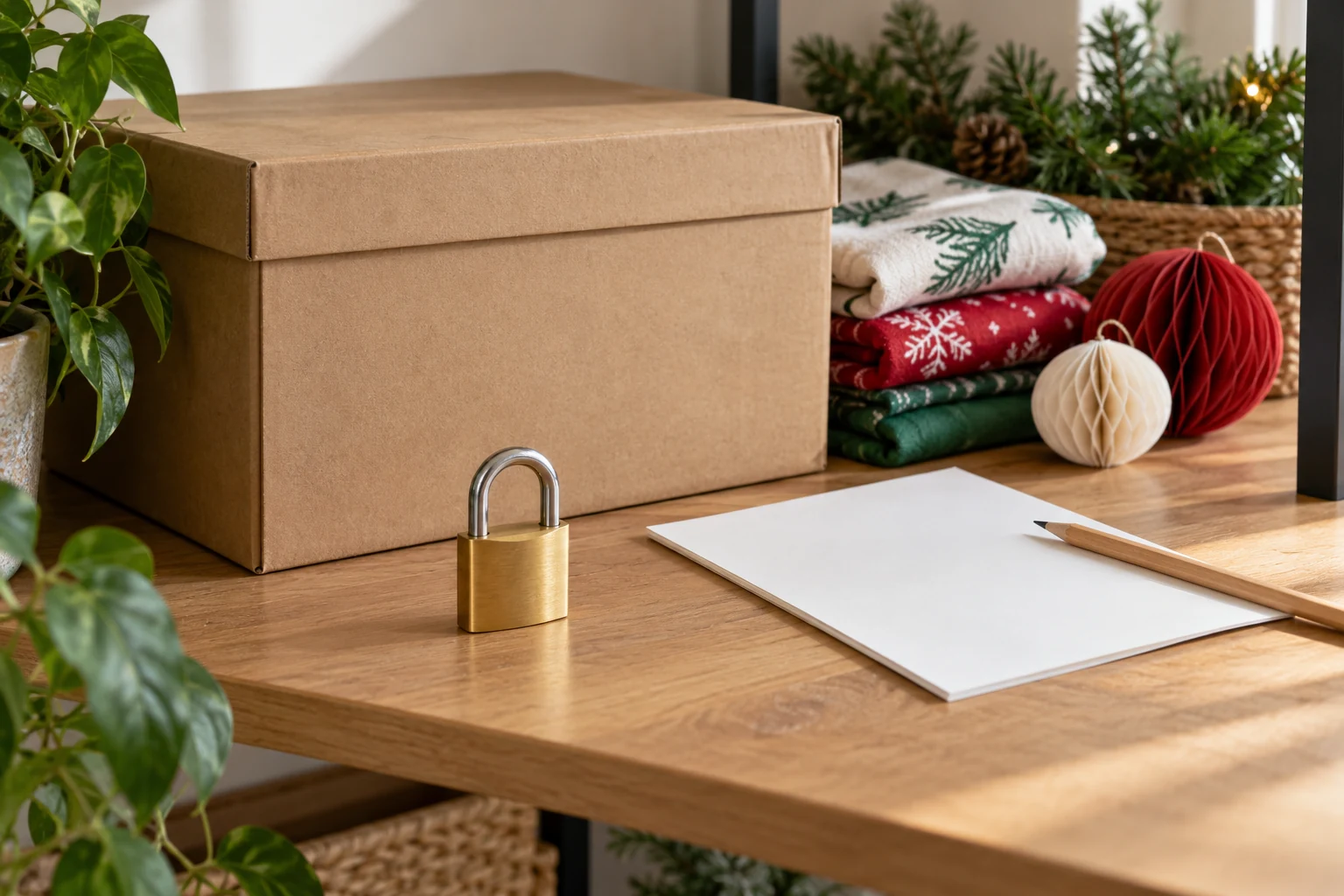
A holiday storage access plan can begin with one question: who has permission to reach the decorations, and for which occasion? Helping bring out a display does not settle permission to enter the same storage space next month. Agree on the place, the purpose and the end of the arrangement before treating seasonal help as continuing access.
The Defender brass padlock offer identifies a padlock, while its description adds unrelated gardening, watering, sprinkler and cleaning words. Its photograph shows a complete lock body and shackle. That account supplies no storage-site approval, supplied-key inventory or access arrangement for a household. Do not turn the noisy description into additional product functions.
The ABUS 41/50mm ETERNA laminated padlock offer repeats its title in the description. Its photograph shows a complete laminated-looking body with a blue base and a closed shackle. The captured account establishes no fit for your storage closure, supplied-key count or permission for another person to use the space.
Name the seasonal access being requested
Start with the actual task. Someone might want to retrieve a decoration collection before a family dinner or put it away after the final visit. Describe that request in ordinary terms. A request to help with one display can remain a request for that display, with other stored belongings outside the conversation.
Identify who controls the storage space and who owns the belongings involved. Those may be different people. Obtain the relevant person's agreement instead of assuming the person who knows where a box sits can authorize access to the room. This article describes a household planning conversation, without establishing anyone's legal rights over a property.
Write the occasion beside the request. “Bring out the winter table pieces for Saturday” describes a different arrangement from “use the storage room whenever you need something.” The people involved can choose either arrangement where they have authority. They should know which one they have actually discussed.
Define the holiday decoration access window
A holiday decoration access window states when the agreed help can take place. Choose dates or times meaningful to the people sharing the arrangement. A person expecting an accompanied visit may understand the request differently from someone planning to collect a box while the owner is away.
Include the end of that arrangement. If the plan covers bringing out the decorations, decide whether putting them away requires another conversation. If it covers both tasks, say when the later task is expected. A season can contain several separate visits; a broad seasonal label need not grant permission for every visit.
Leave a provisional date visibly provisional. The person helping may need to confirm travel plans, while the person controlling the space may need to be present. Agree on who will confirm the remaining detail. The plan can retain a useful proposed date without reporting it as an appointment both people have accepted.
Separate finding a box from permission to enter
A clear contents label can help someone recognize the right collection once access has been agreed. It cannot grant that access. Keep the directions for finding the decorations separate from the conversation about who may enter the space, when they may do so and whether another person will accompany them.
The public holiday decoration box label guide chooses names that the next person can understand when unpacking. Its label-maker features remain specific to those devices. Here, a recognizable box name identifies the requested collection; it does not authorize entry or establish an inventory of everything inside the container.
If the decorations move, update the relevant person rather than treating an old location note as permission to search elsewhere. Another cupboard or room may have a different arrangement. Ask about the new location explicitly. A useful description of the intended box can remain valid while the access question changes.
Give a seasonal storage permission note a clear scope
A seasonal storage permission note can record the agreed person, place, purpose and dates. Use a shared message or other place the participants already use. The note records their agreement; it is not a substitute for instructions, proof of ownership or an independently granted right to enter a property.
Describe whether someone else may help with the task. A visitor may want to bring a relative who can carry a box. The person controlling the space can consider that proposal before the visit. Permission given to one person should not be silently widened to an unnamed group because the task involves a holiday gathering.
Keep unrelated requests separate. Someone collecting decorations might also ask to look for a table, retrieve another person's belongings or store an extra bag. Each request can be discussed on its own terms. The original note can stay limited to the collection and task the participants actually agreed.
Follow a fictional accompanied visit
Imagine that Noor keeps a shared decoration collection in a storage room she controls. Her cousin Ellis offers to help retrieve it before a holiday dinner. Ellis knows the building but has not been invited to enter the room independently. In this fictional example, they agree that Noor will meet Ellis and show him the intended collection.
They choose a visit that fits both schedules. Noor identifies the table pieces they want for this dinner, leaving a different collection for a later occasion. Ellis offers to bring a friend. Noor asks them to discuss that change before he invites another person into the storage visit.
Their arrangement concerns this retrieval. They have not agreed that Ellis can return alone, collect other belongings or arrange a later visit for somebody else. They can discuss those possibilities if needed. For now, the plan tells Ellis what help Noor has accepted and tells Noor which visit she is expecting.
Keep access equipment questions with the actual item
If a padlock is part of the existing arrangement, identify the actual item and its applicable instructions with the responsible person. The two product accounts here do not establish how your storage is fitted or operated. They supply no basis for replacing existing access equipment without discussing the intended change.
A product photograph does not inventory the access items someone owns. Neither selected gallery shows supplied keys. That absence cannot establish what arrives with an order or what another household has retained. Ask the responsible person about their actual arrangement rather than deciding from the catalog image.
Keep a proposed purchase separate from the permission conversation. Buying a lock does not decide who can use a space, and agreeing on a visit does not establish which lock fits its closure. This guide provides no installation, opening, combination, reset or bypass procedure, and it makes no security-rating or weather-resistance comparison.
Respond to a changed arrival plan
Suppose Ellis learns that he will arrive earlier than Noor. He contacts her instead of treating the original appointment as permission to enter alone. They can move the visit, arrange another authorized person to meet him or leave the task for another day. The changed arrival creates a question for the participants to settle.
If Noor is unavailable, Ellis retains that uncertainty. Knowing the location of the decorations does not answer who can authorize a different arrangement. A message sent to somebody who has not replied is not the same as a confirmed plan. In this fictional scene, Ellis waits for an agreed next step.
They can write the changed arrangement in the same conversation as the original visit. Identify what changed and what remains agreed. An earlier message may still provide the collection name, while the later one supplies the revised meeting time. Keeping both messages lets either person follow the actual plan.
Discuss putting the decorations away separately
After the dinner, Noor and Ellis decide when the table pieces will return to storage. The retrieval appointment did not establish that later visit. They check who is available and whether the same access arrangement still suits them. This is a new seasonal task with its own date.
The public bingo set lending plan distinguishes an agreed collection from the return of borrowed equipment. Its game contents and fictional loan remain separate from this storage-access question. Here, knowing that the decorations will come back does not settle who may enter the storage space to put them away.
Noor might prefer to put the collection away herself after Ellis brings it to her. Alternatively, they might arrange another accompanied visit. Those are different proposals. They choose one before describing the task as complete, without assuming that help with the dinner includes every later storage activity.
Close temporary access without assuming the next season
When the agreed seasonal work ends, confirm whether anything remains to be done under that arrangement. A later collection, another visit or a question about access equipment can stay open with the responsible person named. Completion of the dinner does not prove that every related arrangement has been resolved.
If somebody has been entrusted with an access item, discuss its disposition with the person responsible for it. This conditional question makes no claim that either linked offer supplies a key or that a particular transfer occurred. Record what the participants actually agree, without publishing sensitive access information in a decoration label.
Ask again before treating the same arrangement as permission for the next holiday. Noor may change how she uses the storage room, Ellis may have different plans or the decoration collection may move. A successful visit is useful experience. The dates and permission for a future visit still need to be agreed.
Leave a second holiday visit open until it is agreed
A family calendar may include more than one gathering. Noor could need the same collection for a dinner, then a different display for a later visit. She and Ellis can name those occasions separately. An agreement about Saturday need not answer who will retrieve another collection the following week, even if the room and people remain the same.
Suppose Ellis offers to collect both groups during the first visit. Noor can consider that revised request before they move anything. She may prefer to keep one group stored until its own occasion, or she may agree to bring both out. The useful detail is the decision they actually reach. The existence of another event cannot settle it for them.
If they agree on two visits, record each visit with its own purpose and expected participants. A change to one appointment does not automatically change the other. Ellis can tell Noor which occasion his message concerns, and she can answer that specific request. They can reuse the collection description where it remains accurate while retaining the different dates. This keeps a longer holiday calendar understandable without turning a sequence of agreed visits into general permission.
Keep ordinary storage planning within its purpose
This plan concerns access to seasonal belongings. It gives no instructions for locking occupied areas, controlling an exit or changing a building's emergency arrangements. Questions about the suitability of a real closure or storage location belong with the responsible person and applicable requirements for that place.
It also supplies no packing method for fragile decorations. A person who can identify the right box still needs the relevant item and container guidance. If the intended task changes from retrieving a collection to dismantling equipment or moving unfamiliar objects, describe that changed task before assuming the original offer of help covers it.
A holiday storage access plan ends with a shared understanding of the visit that has actually been agreed. Keep the collection name, permission and dates connected without treating them as the same information. The next seasonal task can then begin with a clear request rather than a remembered assumption about who may enter.
Keep crypto payment with the agreed purchase
If you choose to consider cryptocurrency for a holiday storage purchase, first identify the offer that your product enquiry actually concerns. The captured republeq.com product page names USDT, USDC and BTC in its checkout message. That message supplies no answer about which people, dates or purposes form an agreed access arrangement. Keep the product question open until you have the information needed for your own decision. A willingness to pay does not authorize an unagreed visit. A participant's reply about dates does not establish that a purchase has occurred. When the proposed basket changes, read the changed offer against the answer you received before proceeding. If another person will place the order, give them the selected reference and any unresolved condition. Ask them to bring a proposed substitute back for consideration rather than choosing from a familiar photograph. Read the instructions and terms presented for the actual transaction. This guide supplies no transfer directions, wallet address, network selection, exchange rate or fee estimate. Obtain clarification about a missing payment detail from the relevant transaction interface or responsible provider. Do not fill the gap from a product photograph or an earlier shopping session. You can leave a purchase undecided while either its product question or its payment question remains unresolved. After an authorized order, retain the order confirmation and any payment record provided for that transaction. Keep those records with the exact offer purchased. They cannot establish who can enter, identify the person responsible for access or replace the instructions for the equipment delivered. If the received item differs from the discussed proposal, preserve that difference when contacting the supplier. A payment record concerns the transaction that occurred. The permission conversation concerns the arrangement discussed. Retain both records with their own meaning so a later question can be addressed from evidence.
A holiday storage access plan keeps a seasonal collection, an idle padlock and a blank visit note together while permission and dates are agreed.