Crypto Commerce
ChenL 4K helmet camera helmet camera vs FANRUINA 4K camera for rides and video
Compare ChenL 4K helmet camera by recording modes, stabilization, microphones, mounting, battery information, and source uncertainties.
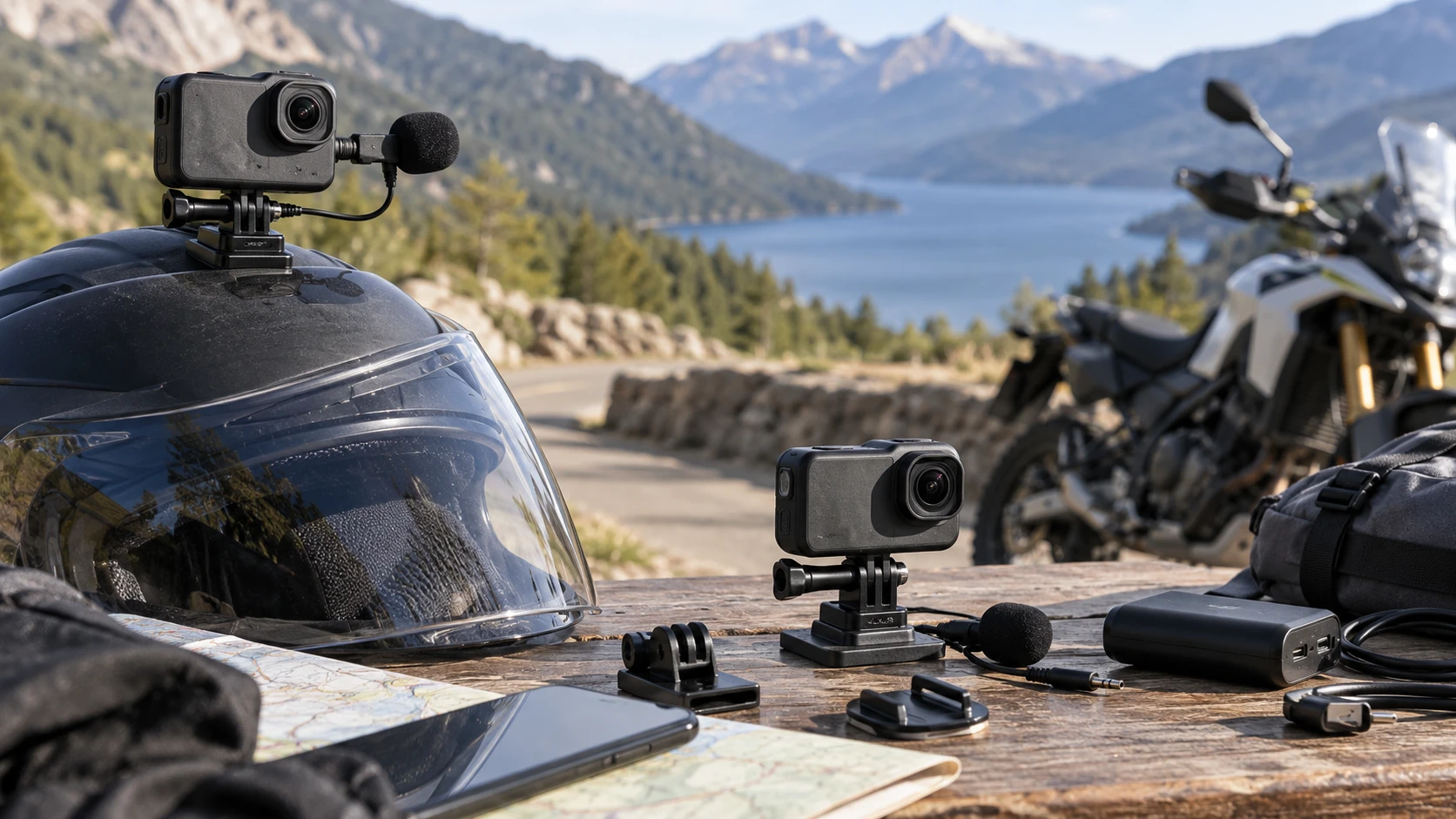
The ChenL 4K helmet camera lists loop recording, pre-recording, slow motion, a detachable microphone, and a rechargeable battery rated for 60 to 120 minutes. FANRUINA lists 4K recording, a rotating body, an external microphone connection, USB-C charging, and built-in stabilization. Both could be used to record movement, but their short product descriptions answer different parts of the setup question. The right choice depends on where the camera and microphone will go, which recording mode you need, and how long a session lasts.
The published guide on action camera battery planning explains why time away from a charger needs a plan. Its examples are general, not battery tests of these two products. For a ride, distinguish elapsed trip time from minutes actually recording. A camera may spend time powered on while you frame a shot, check a clip, or wait for an event. Keep the battery plan tied to the exact recording mode and mounting arrangement rather than a generic 4K label.
Start with the shot and the controls — FANRUINA 4K action camera
ChenL's description lists 4K video, slow motion, pre-recording, and loop recording. These modes serve different jobs. Loop recording can help manage continuous footage, while pre-recording may preserve the moments before you press a control, depending on its implementation. The source does not state the resolution, frame rate, file length, or triggering rules for those modes. Check the manual and make a trial file before relying on one during a long ride or an event that cannot be repeated.
FANRUINA is described as a 4K Ultra HD camera for vlogging and live streaming, with a 270-degree manual rotation feature. The saved excerpt does not say whether that number applies to a screen, camera body, or lens mechanism. Verify what actually rotates, how it locks, and whether the view stays steady when the unit is mounted. A rotating element may be convenient for changing the angle of a stationary shot, but it does not by itself establish better moving footage. The Republeq's catalog current instructions should settle the physical configuration.
Neither source gives a directly comparable frame rate or video bitrate at 4K. Those details affect motion rendering, file size, and editing flexibility. Record a representative scene if you can, then inspect the saved file on a larger screen. A short clip of a road with repeated texture, passing shadows, and changing light can reveal more than the shared resolution label. The listings do not provide a side-by-side image test, so do not assume their footage will look alike because both mention 4K.
The controls matter as much as the recording mode once a camera is mounted. ChenL lists remote-control functionality; FANRUINA's short description does not mention a remote. Ask what can be started or stopped with ChenL's remote, how it pairs, and whether it works in the intended mounting position. Check the button layout on both cameras before a ride. If a control requires taking a hand off a handlebar or removing the camera, a convenient mode on paper may be difficult to use safely in practice.
Check stabilization and mounting together — FANRUINA 4K action camera
ChenL says it has built-in anti-shake stabilization. FANRUINA says its built-in stabilization reduces shake and smooths footage. Neither excerpt describes the mechanism, crop, supported frame rates, or performance on a helmet or vehicle. A stabilization claim is not a substitute for securing the mount. Test the exact camera position over the kind of vibration you expect, then inspect whether the horizon drifts, the view crops too tightly, or details become distorted.
The ChenL listing identifies a helmet or chest position for its detachable microphone, which gives a starting point for planning the audio setup. It does not confirm that a helmet mount for the camera is included or specify the attachment hardware. FANRUINA's description mentions 270-degree manual rotation but gives no mounting-kit contents. Compare the actual package, bracket compatibility, and the space required for cables before buying accessories. Fit the assembled rig while stationary and check that it does not block a vent, visor, mirror, or control. Record a few seconds after tightening every joint; a small shift can change the framing once motion begins.
A chest-mounted camera and a helmet-mounted camera see different motion and framing. Likewise, a camera attached to a motorcycle may transmit vibration through the bracket. These are general setup differences, not measured advantages for either model. Decide whether the shot should show the road ahead, the rider's hands, or a conversation, then position the camera accordingly. Check the field of view in a test clip; neither saved product description provides a verified angle or distortion measurement for this comparison.
Plan audio before the trip — FANRUINA 4K action camera
ChenL lists a detachable microphone that can be placed on a helmet or clipped to the chest. FANRUINA lists an external microphone connection, but the saved source does not say whether a microphone comes in the box or what connector and power it needs. A connection is useful only when the microphone you plan to use is compatible. Confirm cable length, connector type, and weather protection for the exact camera and microphone. Keep the cable clear of moving parts and clothing that can rub against it.
Wind can overwhelm speech even when the picture is steady. Make a brief audio test at a safe, representative speed and listen through headphones afterward. Try the microphone position you intend to use rather than judging audio from a quiet room. ChenL's detachable mic and FANRUINA's external input suggest different setup possibilities, but neither listing supplies a comparable audio sample or wind-reduction rating. If clear narration matters, reserve time for several placements before the recording day.
The saved sources also leave waterproofing unresolved. Neither description gives a depth rating, a weatherproof microphone contract, or a sealed-case specification for the configuration being compared. Do not assume a ride in rain or a water activity is covered by a general action-camera category. Ask whether a compatible case exists, which ports remain accessible, and how a connected microphone is protected. Protect the camera and charging connector according to the manual rather than extrapolating from another model's rating.
Think through a complete recording sequence before mounting anything. Start a clip, stop it, review a few seconds, and put the camera back in the same position. If you need to remove a helmet or vehicle mount for every check, that friction will affect how often you verify the result. A remote can help with starting a recording, but it cannot confirm that a microphone cable stayed connected or that the lens remained clean. Do these checks while stopped, and use the saved test file to confirm picture and sound together.
Make the battery and file plan specific — action camera battery planning
ChenL rates each rechargeable battery for 60 to 120 minutes of recording. That range is wide enough to change a day plan, and the source does not say which mode, temperature, or features produced each end. Confirm how many batteries are included and measure a representative 4K session with the settings you will actually use. FANRUINA mentions USB-C recharging but provides no capacity or runtime in its saved description. Ask for those details before claiming that one camera lasts longer.
A charging connector does not guarantee convenient charging while recording. Check whether either device supports operation from external power, how a cable affects the mount, and whether the battery remains accessible when installed. For stops between rides, identify a dry place where a camera can cool, charge, and transfer files. The listings do not confirm fast charging, removable batteries, or power-bank compatibility for both models. Carrying a cable alone may not solve a long recording day.
Storage deserves the same care. Neither short excerpt states an included memory-card capacity, required speed class, or maximum card size. Confirm supported media in the manual, test a card in the camera, and make sure a sample clip plays back before departure. Loop recording may overwrite older files depending on its settings, so inspect how ChenL protects footage you need to keep. Copy important files before a card fills or a long day of repeated loops begins. FANRUINA's live-streaming claim also needs a separate check of phone, network, and app requirements.
The FANRUINA source contains a sensor-size contradiction: its title says 1.33-inch CMOS, while its description says 33 inches. Those statements cannot both describe the same sensor dimension. Ask for a model-specific specification or manual before using either figure to compare image quality. ChenL's saved excerpt gives no sensor size. In this comparison, actual sample footage and verified recording settings carry more weight than an unresolved number in one listing.
The FANRUINA 4K action camera may suit a video setup that benefits from its claimed rotation and an external microphone connection, once their exact implementation is confirmed. ChenL gives more stated information about recording modes, a detachable microphone, remote functionality, and per-battery runtime. Neither short source settles weather protection or 4K frame rate. Build the intended camera, mount, microphone, card, and power kit on a table, then test it before recording a long ride.