Cameras & Imaging
Camera lens adapter compatibility for video autofocus
An electronic adapter adds a third component to a camera system. Compare the named mount route and the particular video focus mode you need before ordering.
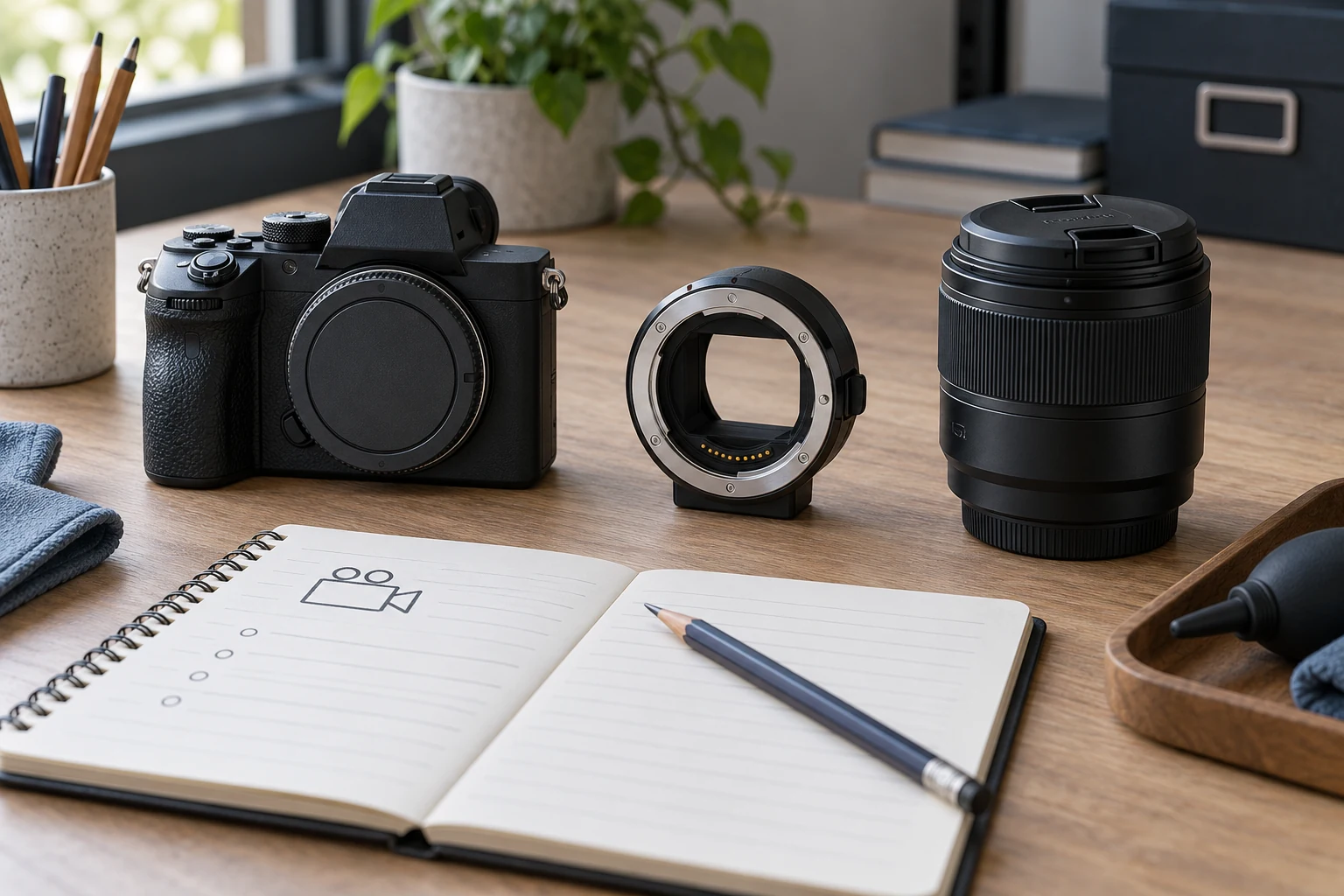
Camera lens adapter compatibility needs a video-use question as well as an equipment list. If your intended recording depends on a particular autofocus mode, ask about that mode before choosing an adapter. A description that mentions autofocus can leave the recording behaviour you need unanswered. An explicit restriction deserves its own place in the decision, where it will still be visible when you return to the offer.
Start with the shot you want to record. Write down what the camera must do during that shot, using the terminology in your actual equipment instructions. Then identify the complete lens, the exact adapter and the actual camera body. This article helps organize that suitability question. It supplies no mounting procedure, firmware advice, camera settings or measured autofocus results.
Give the recording requirement a concrete purpose
Consider an expressly hypothetical project: Mira wants to record a short conversation for a community archive. She already has a lens and a camera body, and is considering an electronic adapter. Her first note says only that she wants autofocus. That leaves the intended operation vague. Before shopping, she needs to decide what behaviour her recording plan actually requires and identify its name in the applicable equipment information.
Suppose Mira's revised project note names a particular video focus mode as essential. This is an invented requirement, not a statement about any camera's features. It gives her a question she can put beside each proposed arrangement. An answer about still photographs would leave that video requirement open. A response about another recording mode would need the same careful reading.
Keep the requirement proportionate to the project. A feature someone else enjoys need not become part of Mira's brief. Conversely, a function she relies on should not disappear from the brief because an attractive product description does not address it. Keep the note beside the offers while you investigate them.
Read the CIYISON offer at its stated scope
The CIYISON EF-FX1 adapter offer describes an adapter for EF and EF-S lenses to X-mount mirrorless cameras. It says electronic contacts maintain lens-camera communication and enable autofocus functions. Those are the native offer's statements. The captured description supplies no exact lens, camera-body and video-mode support matrix. Its general autofocus wording therefore leaves a question about a particular recording mode unanswered here.
A useful enquiry can quote the exact function the buyer needs and ask for applicable information about the complete proposed arrangement. There is no need to fill an empty field with a favourable assumption. Nor does that empty field establish that the function is unavailable. Keep it marked as unanswered until information addressing the actual equipment and intended mode is obtained.
Retain the Commlite video limitation
The Commlite CM-EF-EOS R adapter offer describes Canon EF/EF-S lenses on Canon R-mount bodies, naming EOS R, EOS RP, EOS R6 and EOS R5. It directs buyers to consult a compatibility table and states that the adapter does not support AF-C in video mode. This article preserves that explicit limitation. It independently verifies neither a supported combination nor the description's separate internal-motor or stabilization claims.
The Commlite statement about AF-C in video mode should remain beside any enquiry about that use. Do not shorten a saved note to the word autofocus and lose the exception. If that exact mode is essential to a buyer's project, the stated restriction is a reason to pause the suitability decision. An unanswered question about a different offer does not supply a supported alternative.
Keep all three components in the question
An adapted arrangement introduces a separately selected component between the existing lens and body. Give each item its own full identity in the enquiry. A useful request names the actual lens, the exact adapter offer, the actual camera body and the intended recording mode together. This lets the recipient address the arrangement you propose without having to invent a missing part.
Read the direction of the offer's mount description carefully. The lens-side name and the camera-side name have different jobs in the proposed connection. Repeating a familiar lens-side label across two offers does not make their body-side descriptions the same. Keep the words attached to the side they describe while you ask about your actual equipment.
If a supplier suggests a different adapter, give that suggestion a new entry. It changes the proposed arrangement and may change which information applies. Retain the original question and reply so that a later reader can see what was replaced. A reply about the first proposal should not silently become the answer for the substitute.
Use separate outcomes for limits and missing information
Give the proposed arrangement a small decision sheet with a place for the intended use and a place for the evidence addressing it. Write an explicit restriction in full. For a function the evidence does not address, write unanswered. These entries mean different things. An omission cannot resolve the question in either direction, while an actual stated exclusion should remain available to the buyer.
In the hypothetical project, imagine that Mira reads a restriction covering the exact mode she made essential. Her next decision concerns the project requirement: she can keep that requirement and investigate an appropriately documented arrangement, or reconsider the project before selecting equipment. This article recommends no alternative mode and promises no equivalent result from a changed recording plan.
Now imagine a different proposal with a general function claim and no answer about Mira's named mode. She still needs a specific answer. Marking that proposal confirmed would conceal the gap; marking it unsuitable solely because the field is empty would add a conclusion the evidence has not supplied. The decision sheet should preserve the question she actually needs answered.
The same sheet can hold a response that answers only part of the request. For example, an expressly fictional reply might confirm the identities it discusses while saying nothing about recording behaviour. Mira can retain that identity information and follow up on the remaining function question. A partial answer need not be discarded, but its scope should stay visible.
Ask for a reply about the intended mode
A concise request can begin with the proposed equipment chain, followed by the exact recording use. Ask the appropriate equipment contact for applicable compatibility information and any limits affecting that use. If the answer points to a table, check that the table concerns the adapter and the actual equipment in your request. Keep any relevant qualifications with the answer.
A statement that something works can be too broad for a particular video requirement. Ask which operation it addresses and which named equipment was considered. If the responder describes a demonstration, ask what arrangement and mode the demonstration used. This article reports no demonstration and gives no instructions for conducting one; the questions help identify what an answer would establish.
Keep the recording requirement in a forwarded enquiry too. A friend helping with the purchase might receive the product link without the project note. Send the missing context rather than expecting that person to infer it. The helper should be able to tell which behaviour is essential and which questions are still open before deciding what information to seek.
Separate adapter questions from other accessories
The published camera lens mount variant guide examines complete native Sony E and Nikon Z lens offers and keeps each selected version beside the actual camera. Its two-equipment enquiry does not approve an adapted system. Adding an electronic adapter creates the three-component, recording-mode question addressed here.
The lens hood compatibility guide concerns the hood's named target optic and the scope of the relevant compatibility statement. That question gives no evidence about video autofocus through an electronic adapter. Keep any hood enquiry separate from the mode-specific adapter decision so that an answer about one accessory cannot be mistaken for an answer about the other.
A detailed accessory list can make an incomplete suitability answer look more substantial than it is. Read the response for the recording question it actually addresses. A package inventory or a statement about another accessory may be useful elsewhere in the purchase, yet it leaves the proposed electronic arrangement's intended behaviour to be examined on its own evidence.
Read a revised requirement as a new decision
Return to Mira's fictional archive project. Suppose she changes the plan so that the originally essential focus mode is no longer part of it. That is a project change, and the revised requirements need their own review. Removing a requirement from the brief does not establish how any particular adapter performs under the new plan. She still needs information applicable to the use she now proposes.
If the camera or lens changes instead, revise the equipment chain before asking the next question. The earlier response remains attached to the arrangement it named. Keeping that distinction is useful when a household owns several cameras or a borrowed lens becomes unavailable. The project may be the same, while the equipment requiring an answer has changed.
Set a practical point at which to stop shopping and seek the missing answer. A buyer can spend a long time comparing general feature descriptions without getting closer to the required mode. Use the open item on the decision sheet to guide the next enquiry. If the evidence remains insufficient, leave the purchase decision open rather than converting research time into a compatibility finding.
Buying through Republeq with a crypto preference
If you investigate an adapter through republeq.com and prefer crypto such as USDT, keep the equipment decision with the order enquiry. Name the exact adapter and retain the recording-mode question that prompted the purchase. A payment preference cannot answer whether the proposed lens, adapter and camera arrangement supports the use you need. Before authorizing a transaction, ask for current instructions applicable to the actual basket and resolve any uncertainty about the required asset, network, destination or order reference. This passage establishes no available payment method or current payment route for a particular order. A helper arranging the purchase should receive the same equipment requirement you used when comparing the offers, including any explicit function restriction. If a different adapter is substituted, pause and seek information about the revised arrangement before transferring the earlier suitability answer to it. Keep the selected item identifiable in the order correspondence, so that a general message about camera accessories cannot obscure what you intended to obtain. If a payment or order attempt has an uncertain outcome, reconcile that exact attempt before authorizing another one. An unanswered confirmation should remain an open order question until the destination establishes what happened. Order confirmation and payment status also leave the equipment question separate: neither supplies a camera-specific focus result or proves that the delivered item matches a proposed system. Preserve the relevant compatibility response with the exact selection it addressed. If an important video-mode question remains unanswered, you can leave the purchasing decision open while asking for the missing information. That keeps the intended recording use involved through the transaction without presenting an unexamined arrangement as approved.
Finish with a mode-specific decision
Before choosing, read the intended recording requirement beside the complete proposed arrangement. Check whether the information you obtained addresses both. Keep explicit exclusions intact and identify remaining unanswered functions without predicting their outcome. If you changed the equipment or the project during the enquiry, make sure the latest answer concerns that revised proposal.
Camera lens adapter compatibility for video autofocus remains a specific suitability question. The useful result is an honest account of the intended mode and the evidence addressing it, including any limitation that affects the decision. Choose only after the required use has been resolved to your satisfaction with applicable equipment information; otherwise keep the unanswered point visible.