Crypto Commerce
Plan a camera kit handover for a temporary loan
Before a camera leaves your hands for a temporary loan, write down what the other person is actually taking. A bundle name cannot settle that question, and a bag full of accessories is easy to remember differently later. A useful camera kit handover identifies the lender and borrower, lists the observed outgoing items, and leaves a place to compare them with what comes back. The record can be a shared note or a sheet of paper. Its job is to make a conversation about the return specific, even if the kit changes hands quickly.
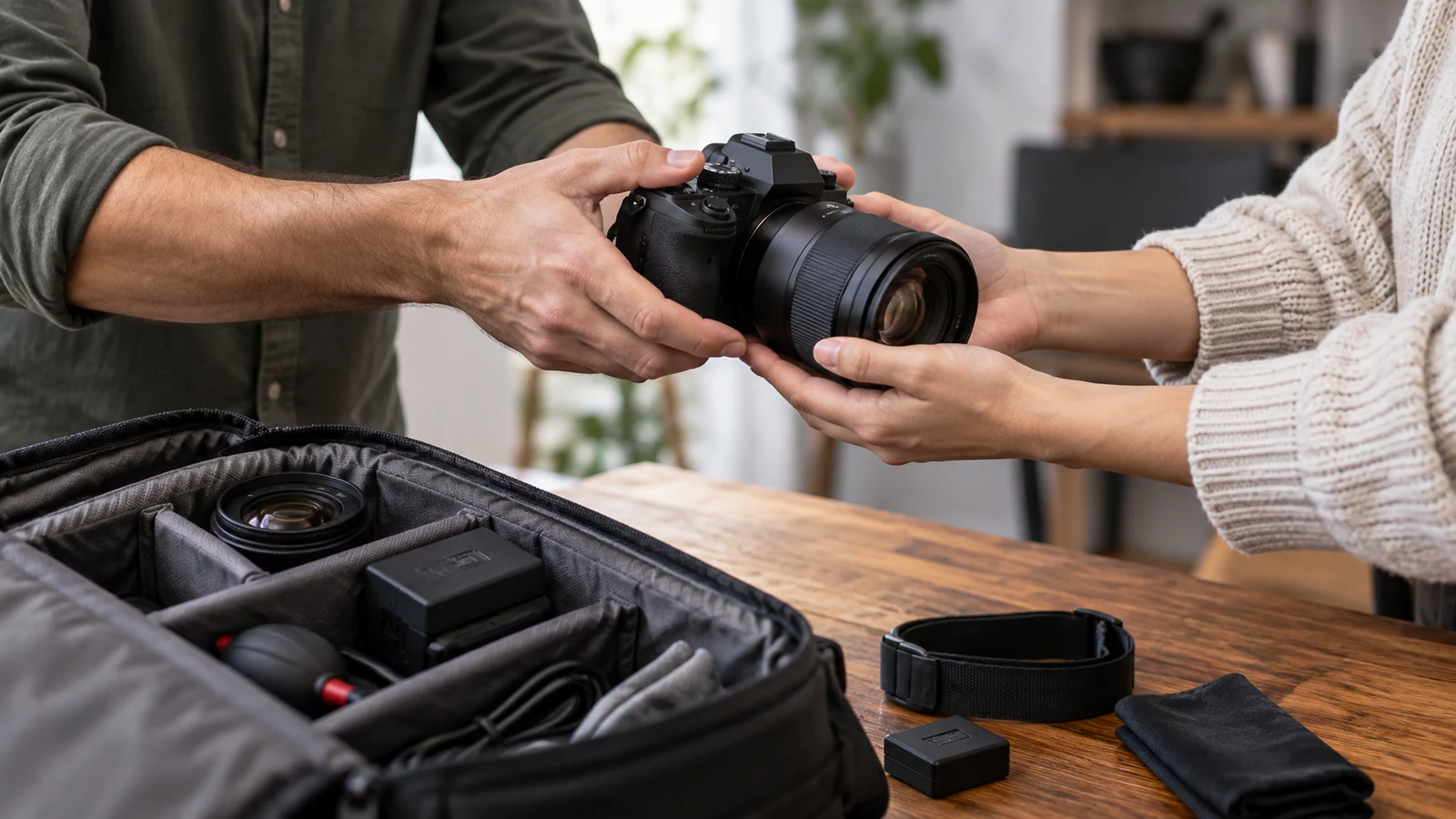
Before a camera leaves your hands for a temporary loan, write down what the other person is actually taking. A bundle name cannot settle that question, and a bag full of accessories is easy to remember differently later. A useful camera kit handover identifies the lender and borrower, lists the observed outgoing items, and leaves a place to compare them with what comes back. The record can be a shared note or a sheet of paper. Its job is to make a conversation about the return specific, even if the kit changes hands quickly.
Start by asking the borrower which physical pieces they expect to use. Set each proposed item where both people can see it before writing the outgoing list. Someone might plan to bring their own case or grip; that piece should be identified separately from anything the lender is supplying. If the people cannot agree whether an item belongs in the loan, leave that question open until they can check it. A guess entered as a fact is harder to untangle after departure.
Use The Canon Camera Kit Listing As Context, Not An Inventory
A product page can explain why someone expects certain accessories, but it describes an advertised bundle rather than a particular loan. For example, the Sony ZV-1 II white vlog camera bundle listing names a Deco Gear case, a 64GB card and a grip/tripod, along with software and unspecified accessories. If that is the equipment under consideration, a camera kit handover still needs an observed list of the physical objects that actually pass from lender to borrower. Do not turn the listing's open-ended word “accessories” into items neither person has identified.
The listed Canon camera kit is described as a PowerShot G7 X Mark II (International Version) bundle with two 64GB cards and three NB13L batteries in its title. Those numbers describe the listing, not what a lender owns or chooses to lend. If one battery stays with the lender, the handover record should reflect only what went out. Conversely, an extra piece someone places in the bag does not become the lender's property merely because a catalog page mentions something similar.
Keep the difference between description and observation visible. A heading such as “Advertised bundle reference” can hold the product name if it helps the people recognize the camera. The separate “Handed over” section should contain only pieces they have looked at together. Software named in a bundle description is not a physical item to add to a return tally. Neither a photograph of a product nor a title establishes which objects are present, who owns them, or what condition they are in.
Make The Canon Camera Kit Record Item-Specific
For each piece actually handed over, write an ordinary description and a quantity. If two small objects look alike, give them distinguishing details the two people can observe, such as an existing label, a visible mark, or a jointly chosen tag. Record those details as descriptions, without treating a mark as proof of ownership. “Battery with blue label, one” is more useful for a return comparison than “batteries, some.” If nothing distinguishes two items, say so and agree how the count will be checked on return.
Describe a camera by the identifying detail both people can read from the particular unit, if one is available, rather than assuming that every device with the same model name is interchangeable. For a case, distinguish the one lent from the borrower's own case by an observed feature. If the handover happens in a hurry, a short accurate list is preferable to a detailed list filled with assumptions. The borrower should have access to the same outgoing record so that an unfamiliar description can be corrected while the objects are still present.
Keep Camera Battery Planning Apart From The Return Count
A borrower may ask how long the camera can be used away from a charging point. The handover record can answer how many particular batteries were lent, but that count cannot establish operating time for the borrower's plans. Treat the use question separately; the guide to camera battery planning addresses time away from charging. Here, keep the task narrower: identify the physical batteries included in this exchange and compare that same set at the return. Do not infer battery interchangeability from a similar shape or a bundle title.
If the lender keeps one battery, write “retained by lender” outside the outgoing list. That notation prevents a later reader from interpreting an absent item in the bag as a missing return. If the people have not yet settled whether a battery is included, write “inclusion undecided” and settle it before the borrower goes. These are different states. One records a deliberate choice; the other records a question. Neither should be silently converted into an item that the borrower received.
Agree On A Return With The Canon Camera Kit Record In Hand
The inventory answers what is expected back. The people also need to agree when and how the comparison will happen. Write down their intended return date, a contact method they both accept, and who is expected to receive the items. If the lender will be unavailable, ask whether another named person may receive them or whether they should wait. Avoid leaving a bag with an intermediary on an assumption that everyone agreed to it. A change to the arrangement can be noted in the same record without rewriting the original outgoing list.
Ask whether the borrower expects to share the camera or its accessories with someone else during the loan. If the lender is comfortable with that, record who may take custody and how the original borrower will coordinate the return. If they do not agree, say so before the handover rather than relying on an unspoken expectation. The point is to keep track of the movement of the objects, not to make a judgment about how careful another person will be.
A simple layout can use columns headed “Item observed going out,” “Identifying detail,” “Quantity,” and “Return observation.” Add a short note for pieces kept by the lender or brought by the borrower; do not put those in the expected-return total. Leave room for an unresolved question. If the two people use a shared note, make sure the descriptions still make sense without the bag in front of them. A cryptic abbreviation may save a few seconds at departure and cause a longer conversation later.
Try A Fictional Canon Camera Kit Handover
Consider a fictional exchange between Mara, who is lending equipment, and Eli, who will borrow it. They place a camera, a case with a stitched orange square, a card in a sleeve marked “A,” and one battery with a small blue label on a table. Both can see those objects. They write each as one observed outgoing item, using the case feature and the two labels to help identify the small pieces later. These details belong only to this example; they make no claim about the contents of either listed product or any kit a reader will receive.
Mara leaves another battery at home and notes it as retained, outside the loan. Eli brings a plain black pouch and writes it as borrower-owned, also outside the expected return. The bag may end up containing the pouch and all four lent pieces together, but the return list still names only what Mara handed over. If Eli expected a grip as well, they check for it before departure. If they cannot establish that it was included, they record that question without adding a grip to the outgoing inventory.
They agree on a return day and a way to contact each other if plans change. Mara will receive the equipment herself unless they arrange otherwise. Eli reads the outgoing entries before leaving and corrects “black case” to “case with orange square,” since the plain black pouch is Eli's. That tiny edit prevents a later mix-up between the case Mara lent and the pouch Eli brought. It also shows why an item-by-item record is useful even when both people believe they will remember the contents of the bag.
On the return day, the camera, orange-square case and blue-label battery are on the table. The sleeve marked “A” is not immediately there, and a different unmarked sleeve is in the bag. The people can mark three observed matches, then record the fourth entry as unresolved: “Sleeve A not observed at return; unmarked sleeve present, ownership and contents not established.” This wording does not decide that Eli lost an item or that the unmarked sleeve replaces it. They can ask where each sleeve came from and update the record when they have an answer.
If the marked sleeve later turns up, record where it was found and that it was compared with the original description. If it does not, leave the difference open rather than crossing out an entry merely to make the lists agree. The same restraint applies when an item looks similar but its identifying detail cannot be checked. A return tally should show what both people observed and what remains uncertain, not force every object into a match.
Finish The Canon Camera Kit Comparison Without Guesswork
At the actual return, put the outgoing record beside the objects and read it one entry at a time. Mark a match only for an item that can reasonably be identified from the agreed description. Note an extra object separately, since it could belong to the borrower or another person. If a quantity differs, write down the observed quantity rather than altering the original count. Keeping the outgoing and returned observations distinct lets both people revisit a discrepancy without depending on memory of the earlier conversation.
For a camera kit handover to remain useful after the loan, keep the original observations legible even when the outcome changes. Add a dated clarification instead of quietly replacing “uncertain” with “returned.” A note could say that both people later identified a particular case, or that they still disagree about whether it went out. The record need not assign fault or set a replacement cost. Its immediate value is a shared account of which physical items were observed at each exchange and which questions still need an answer.
If you are considering a listed kit for future use, its product page can provide a starting description for a conversation about what you might lend. It does not create a handover record for you. Whether you buy a camera kit with cryptocurrency or another available method, write the loan list only when the actual equipment is in front of both people. Before they part, make sure the borrower can read the descriptions, the retained and borrower-owned pieces are clearly separated, and the return arrangement has a contact route. Those few written distinctions make the later comparison possible without pretending the catalog witnessed the exchange.