Product Compatibility & Accessories
Camera filter size: thread diameter and focal length
Separate camera filter size from lens focal length. Read the actual HOYA 77mm set and Digital Nc 95mm polarizer without assuming an unverified fit.
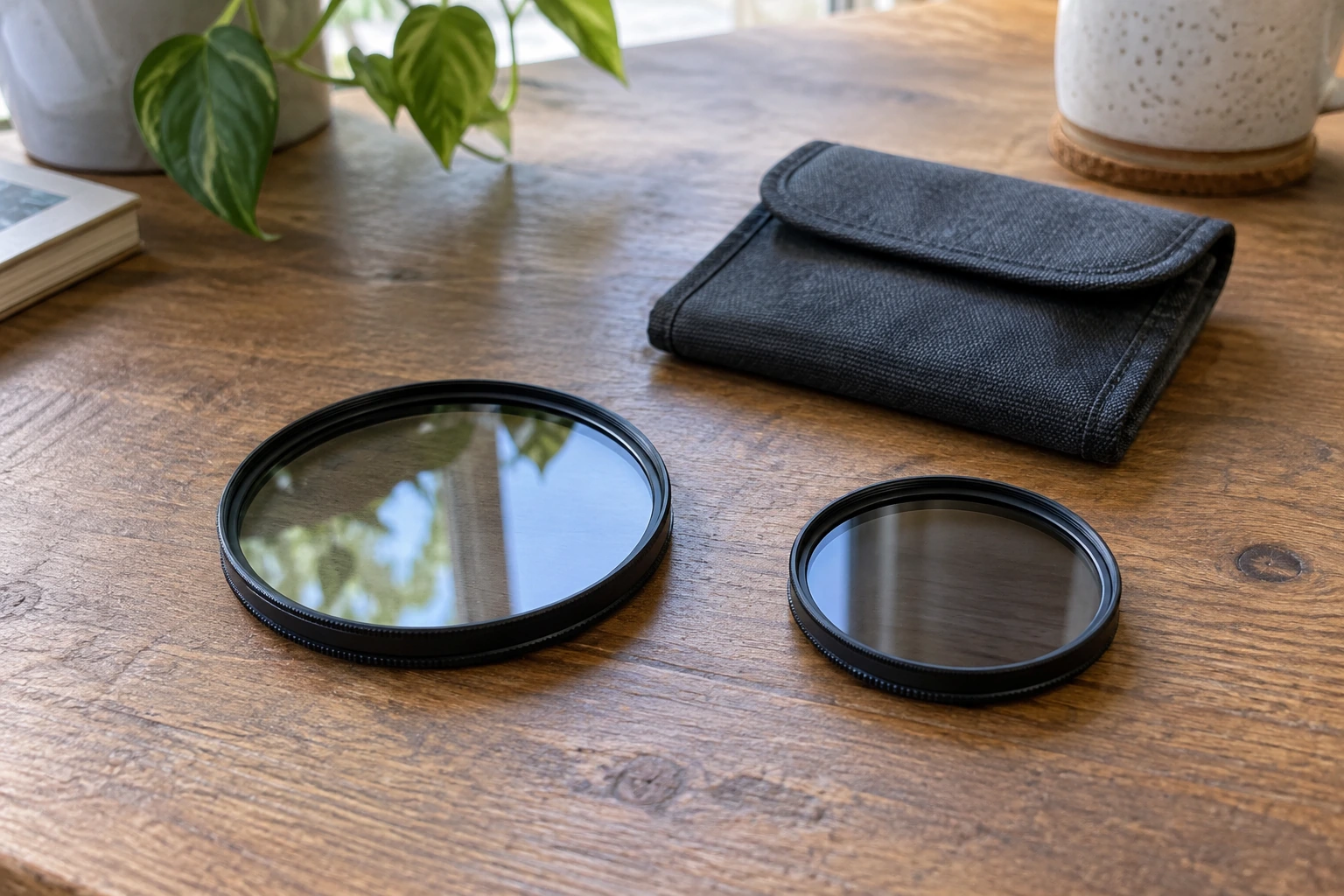
A camera filter size enquiry can go wrong while every number is copied accurately. A lens's focal length and its filter-thread diameter both use millimetres, but describe different properties. Before choosing between the actual HOYA 77mm set and Digital Nc 95mm polarizer discussed here, identify which number answers the filter question.
The worked situations below are hypothetical, including their equipment notes, requirements and possible supplier replies. Lens A's complete documentation is assumed to confirm a fifty-millimetre focal length and a seventy-seven-millimetre front filter thread. A separate, fully identified Lens B has a confirmed ninety-five-millimetre thread requirement. Neither lens represents a verified retail model or a tested combination with these offers.
Find the filter thread diameter in the first record
K&F CONCEPT's official filter-size guide defines screw-in filter size as the diameter of the threaded mount at the front of a lens. It explains the Ø marking and recommends the exact lens model's manufacturer specification when the marking is difficult to read. The field may be called filter size, filter diameter or filter thread.
In Lens A's record, write fifty millimetres beside focal length and seventy-seven millimetres beside filter thread diameter. The second field supplies the size comparison for this enquiry. An abbreviated note saying fifty-millimetre lens would omit the property needed to investigate the two selected filter offers.
Suppose the first shopping message asks for a fifty-millimetre filter because the writer copied the focal-length field. The correction is specific: replace that requested size with the confirmed seventy-seven-millimetre thread requirement, while preserving Lens A's full designation. Nothing about the focal length has changed. The message now asks about the property its writer intended to specify.
Read lens focal length and filter size as two fields
K&F's guide distinguishes these measurements even though both use millimetres. A fifty-millimetre lens does not necessarily take a fifty-millimetre filter, and different lens versions can have different front threads. It also notes that some lenses use another filter arrangement, making the particular lens specification necessary.
For lens focal length and filter size, the hypothetical record already supplies separate answers: fifty and seventy-seven. Lens B's record supplies a ninety-five-millimetre thread requirement without needing to borrow Lens A's focal-length figure. These are two equipment records, each with its own documented interface.
When the owner sends both records to someone researching accessories, label them A and B for that exchange. The labels help avoid a specific copying error: putting the seventy-seven-millimetre requirement into B's enquiry because it appeared in the previous message. Their complete lens designations remain part of the notes; the short labels merely organize this example.
Check what the seventy-seven-millimetre offer contains
The HOYA NXT Plus 77mm filter-set offer identifies a black UV filter and an included circular polarizer. Its native reference is SKU sku-417041003, with UPC 192223065741. The set wording matters when the first requirement in the hypothetical enquiry is specifically for a UV filter.
Lens A's seventy-seven-millimetre thread record and the offer's seventy-seven-millimetre size correspond at the stated-size level. The next part of the enquiry concerns the actual supplied component: does the answer address the UV item in this selected set? A response confirming only that a polarizer is available would leave the UV request unanswered.
If a possible reply confirms the selected offer includes both the UV filter and the circular polarizer, mark the contents question answered for that set. This does not mean the household needs both components. The hypothetical owner may be researching the UV item now while recording the included polarizer for a later, separate decision.
A note saying two filters could lose that distinction. Write UV filter plus included circular polarizer instead. The description names two filter types within the set account, rather than two interchangeable copies of the same item. The stated contents therefore answer a different question from the seventy-seven-millimetre size.
Review the HOYA features without inventing a trial
The native account describes Schott B270 glass with ten-layer HMC multi-coating, a slim aluminum frame and front filter threads for accessories. These are listed construction features. The description also makes optical and protective claims; no transmission, glare-reduction, scratch-resistance or image-quality test has been performed for this article.
Suppose the owner asks two questions in one message: whether the selected UV component addresses Lens A's documented interface, and whether a particular claimed optical result has been measured. A reply confirming the supported combination would address the first question. It would not supply the missing test result simply because it arrived in the same conversation.
The saved note can record the supported combination and leave the performance-evidence request open. This is a useful stopping point for that exchange: one answer has been obtained, and the remaining question has a defined subject. There is no need to repeat the interface enquiry when the unanswered matter concerns a measured result.
Notice when a reply changes the offered contents
Consider a possible reply offering a single seventy-seven-millimetre UV filter instead of the selected set. The size label has stayed the same, while the proposed purchase has changed. If A's owner wants to investigate that alternative, create a separate item entry with its actual reference before comparing it with the HOYA set.
The included circular polarizer now becomes a concrete comparison point. A buyer interested only in the UV requirement may ask about the alternative on that basis. Someone who also wanted the included polarizer would need the alternative's own contents account. The original set description cannot supply a component omitted from another offer.
Keep the supplier's original set answer available during that comparison. It explains which offer contained the UV item and included polarizer when the enquiry began. A later decision to choose a different item should update the selected reference explicitly, so the old contents statement does not follow the new purchase by accident.
Move the ninety-five-millimetre requirement to its own enquiry
The Digital Nc BW650-1300F8-16VCP95 polarizer offer identifies a black 95mm circular polarizer. Its native reference is SKU sku-424897839, with UPC 722532285693. The actual offered brand is Digital Nc, and that identity belongs beside Lens B's separate ninety-five-millimetre requirement.
In this worked situation, B's owner is seeking a circular polarizer. The selected record therefore supplies both a relevant filter-type label and a matching stated size to investigate. Those two fields make the enquiry more complete than a message asking whether the item suits an unnamed camera.
By comparison, the HOYA offer discussed here remains the selected seventy-seven-millimetre set. Moving its link into B's note would introduce a different stated size. This article selects no adapter and assesses no adapted arrangement. The two enquiries continue with their own filter references and documented lens requirements.
Separate the retailer target claim from the hypothetical lens
The Digital Nc description says the polarizer is for a Tokina 150-500mm f/5.6 AT-X. That is the selected retailer's target claim. An independent manufacturer match for that exact named lens has not been established here. The hypothetical Lens B was defined by its own complete record, and is not being identified as that Tokina claim.
If a possible supplier reply merely repeats the Tokina wording, compare it with the question sent. B's enquiry named B's actual full designation and ninety-five-millimetre requirement. Repeating a different target statement would not establish the proposed combination. The next message can ask whether the answer covers the specific lens designation already supplied.
The Digital Nc model code also contains numbers. Retain BW650-1300F8-16VCP95 as the filter's identifier; do not decode the string into a new focal-length or mechanical specification. The native account already states ninety-five millimetres explicitly, so the size enquiry has a named field without a speculative interpretation of the code.
Its stated construction includes heat-treated glass, multiple coatings and a metal ring. The transmission wording is unclear as written. If B's owner asks about that wording, quote the particular statement in the enquiry. This article does not turn it into a verified light-reduction measurement or rank it against the HOYA account.
Decide what an accessory-thread reply covers
Both selected accounts mention threads for additional accessories. Imagine B's owner later adds an existing front accessory to the proposed arrangement. Its exact reference now belongs in the request. The original B-and-filter question described a simpler combination, so its answer should remain attached to those named parts.
If a possible reply addresses the ninety-five-millimetre polarizer and Lens B but says nothing about the added accessory, record the additional component as unresolved. The next enquiry can focus on that component within the complete arrangement. No mounting, removal, adjustment or modification sequence is supplied here.
This produces a specific difference between the two saved notes. A may still concern the UV component of the HOYA set alone. B may concern the Digital Nc polarizer plus an additional identified item. A general statement that both listings have accessory threads would erase the extra question in B's note.
Use the hood guide for its actual hood targets
The lens hood compatibility guide discusses Sony LHP-1 and Fujifilm LH-XF18. Its Fujifilm reference names XF18mmF1.4 R LM WR as the target, while the Sony retail account names RX1 Series. These are the hood identities and target statements from that separate discussion.
Suppose someone attaches that guide to A's message because they remember seeing an eighteen-millimetre lens designation there. It can help identify the hood enquiry they meant to share. It supplies no filter-thread specification for hypothetical Lens A, whose record already states fifty-millimetre focal length and seventy-seven-millimetre thread.
The practical correction is to put the hood message beside the hood it actually concerns. Leave A's filter request with the HOYA set and A's own documentation. This avoids replacing a completed thread field with a focal-length number copied from a different accessory discussion.
Read the microscope example within its own instrument
The microscope eyepiece fit guide separates 10X magnification from mounting and field-size statements in two AmScope offers. Its optical power and microscope interfaces concern those products. Neither mounting diameter supplies a missing specification for Lens A, Lens B or either selected photographic filter.
If a shared equipment list includes a microscope as well as the two hypothetical lenses, give that instrument its own row or note. A number labelled mounting diameter can be meaningful in that row without becoming a photographic filter thread. The instrument reference explains which physical interface the measurement belongs to.
Finish with two identifiable equipment notes
A's completed enquiry should still show its full lens designation, fifty-millimetre focal length and confirmed seventy-seven-millimetre thread field. Its selected offer is the HOYA set, with the UV requirement distinguished from the included circular polarizer. Any answer about that component can be retained alongside the question it addressed.
B's note should show its separate full lens designation, confirmed ninety-five-millimetre requirement and the selected Digital Nc polarizer. Preserve whether an answer covers the original pair or a later arrangement with another accessory. The unverified Tokina retailer claim remains a separate statement rather than B's assumed equipment identity.
For camera filter size, these worked notes leave each number with its stated property and each response with its named combination. If the next reply concerns a different SKU, a performance claim or the additional accessory, the saved question already identifies which part still needs an answer.