Furniture & Home Organization
Check cabinet tab pull fit at the mounting edge
Use named profile dimensions to frame a mounting-edge enquiry before accepting a tab pull for an existing cabinet front.
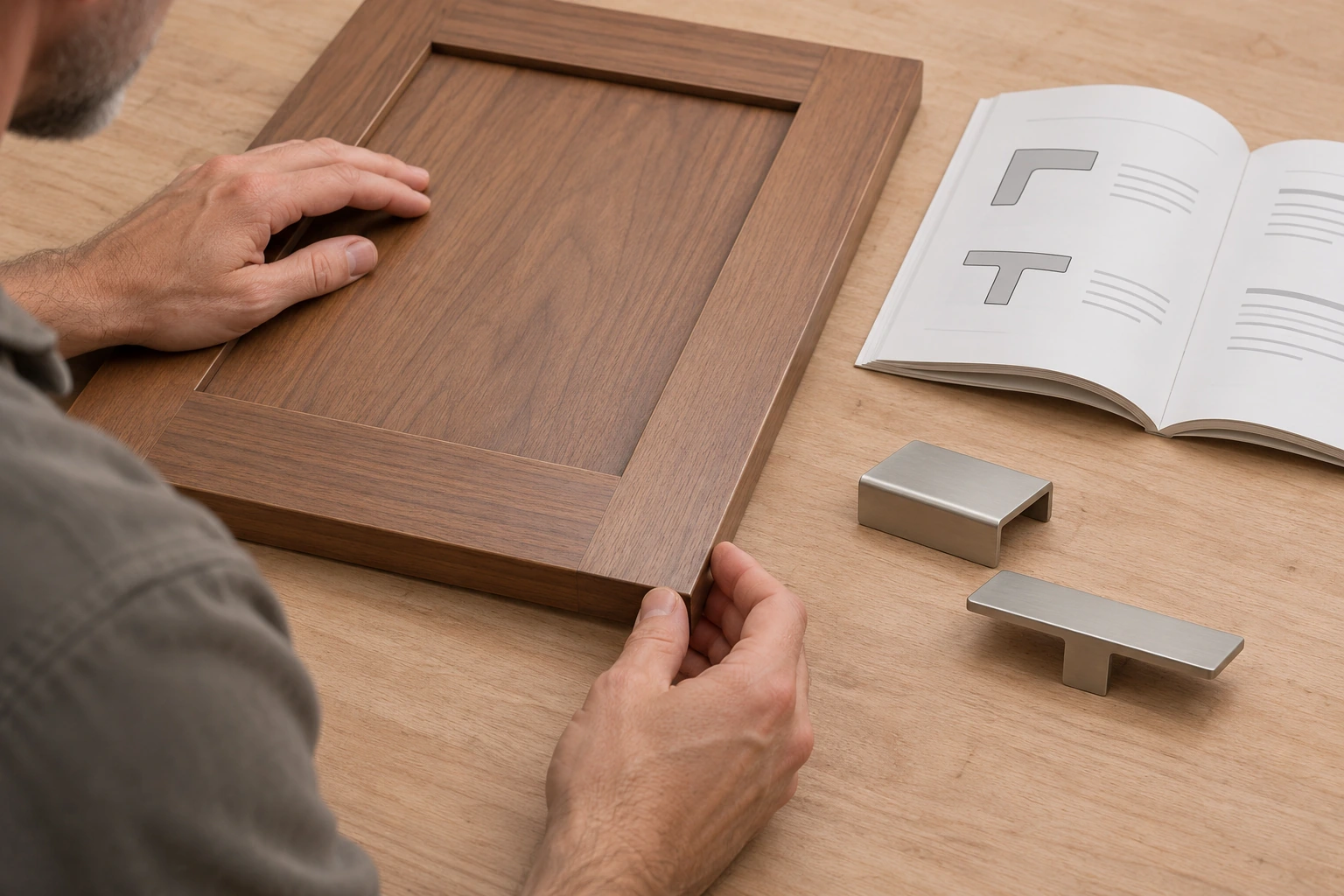
A discreet grip can appeal before its attachment arrangement is clear. Assess cabinet tab pull fit at the proposed mounting edge before accepting a profile for your cabinet front. Identify the surface the chosen pull is intended to meet and obtain the applicable clearance information. An attractive outline leaves that relationship to establish.
Begin with the proposed attachment location
This guide concerns a tab or edge grip considered for a cabinet front. It frames the question to take to the hardware maker or cabinet supplier when a profile drawing leaves the installation relationship unclear. It gives no drilling, rebating or fastening procedure, and establishes no required reveal or successful installed fit.
Consider Mina and Dan, an invented household planning a cabinet hardware choice. Mina prefers an unobtrusive grip near an edge. Dan wants to understand where the proposed piece would attach before they choose it. Neither person has established that relationship. Their first useful question is about the proposed arrangement, while the finish choice can wait.
They put a drawing of their proposed front beside the product information they are considering. In this original example, the drawing is their communication aid. It is not an installation template or a measured plan supplied here. They intend to point to the edge they mean when asking which product information applies.
“Along this edge” still leaves room for misunderstanding. Mina can indicate the particular front and the place she has in mind, then ask the responsible supplier to identify the intended contact surface. Dan can ask what additional cabinet information is needed. The enquiry can remain specific even while the actual mounting arrangement is unresolved.
Keep the two native offers identifiable
The ALNO A960-8 tab pull offer describes Silver with a polished nickel finish and names both Spa 2 and the Tab Collection. Its native UPC is 785584020803. The metadata calls an 8.5-inch value depth, while the size field is empty. Preserve that field label when asking about the number.
The Baldwin 4622.BIN edge pull offer names a six-inch center interval and Lifetime Polished Brass, while its catalog color is Silver. Its native UPC is 723079619729. Several finish variants appear in the captured record. Establish the actual selected version without treating the generic color field as a complete finish description.
The ALNO gallery has two views representing different finishes; the Baldwin gallery has six. Each view depicts one complete grip form. Those images contain no printed brand, model or dimensional label. They illustrate the offered forms without certifying a measured cabinet relationship, an authenticated delivered item or a supplied installation arrangement.
Use the exact ALNO maker account
ALNO's current A960-8 product page places it in Cabinet Hardware and the Tab Pulls series. It gives an eight-inch center-to-center dimension and identifies PN as Polished Nickel, including an A960-8-PN selection. This helps identify the maker account being discussed. It does not supply the contact-face or cabinet-reveal instructions sought in this guide.
Keep that particular page with the enquiry. Another length in the A960 range is a separate selection, even when the collection name is shared. The exact A960-8 page reviewed here supplies no fastener, substrate or mounting-plane procedure. A model identification can be established while those installation questions remain unanswered.
Read mount width as its own named dimension
A branded ALNO product sheet hosted by a retailer provides a separate profile key. For A960-8, it lists 8½ inches overall length, eight inches center to center, one inch width, ⅞ inch projection and ¼ inch mount width. Keep each number with its letter and name. The sheet's PDF metadata dates to 2016, and its printed note says specifications may change.
The sheet labels overall length A and center to center B. Width is C, projection is D and mount width is E. Its diagram shows where those labels refer on the depicted profile. It also describes concealed installation. None of that provides an approved cabinet reveal, a mounting orientation or an installed-fit result for your front.
The retail metadata's depth field and the sheet's overall-length field both contain 8.5, but those differently named fields should stay distinct. Ask which specification and version apply to the offered item. The document's named ¼-inch field is not an instruction to create a quarter-inch gap in a cabinet.
Read the pull profile drawing with its own labels
Baldwin's official 4622 page reviewed here identifies finish variant 4622.150.BIN, Satin Nickel, and marks it discontinued. It describes solid brass, six inches center to center and a projection value of 1.125 inches. Those statements belong to that maker account. They do not confirm the retail offer's selected finish or establish a clearance for your cabinet.
The page's linked dimension image shows a seven-inch overall extent, six inches between the outer hole centers, a 1⅛-inch main plate extent and a ⅜-inch short leg in the L-shaped profile. Read the dimension arrows on that actual image. This guide assigns no cabinet mounting orientation to those axes and supplies no required gap from them.
Keep the page's projection label beside the drawing when asking about the intended installation relationship. The linked image does not label its short leg as a required cabinet reveal. A pull profile drawing can give named dimensions while leaving the particular cabinet contact and clearance requirements for an applicable installation instruction to resolve.
Ask where the profile belongs on the actual front
Mina initially points to a short return on a pictured grip. Dan asks whether they know which side would meet the cabinet. In the fictional exchange, neither has an answer yet. They add that question to their enquiry instead of rotating the picture in their minds and treating the imagined position as an approved arrangement.
Their proposed message can name the exact product and the front they are considering, then ask the supplier to show the intended contact surface on the applicable drawing. They can also ask what cabinet information establishes the permitted clearance in that arrangement. These are original suggested questions, with no invented supplier answer.
If a reply provides another drawing, compare the product identification and ask whether it addresses the same front and proposed position. An answer about a different length or another cabinet should remain attached to that different proposal. You can explain what remains unanswered without turning a partial reply into a complete installation approval.
Mina and Dan can decide who will follow up and when they will reconsider the choice. Their original example requires no order or alteration. If they remain unsure how the information relates to their front, they can leave the selection pending. They can state that decision while leaving the intended attachment unresolved.
Imagine that Mina receives a reply identifying the product but offering no explanation of its position on her front. She keeps the identification and asks the remaining question directly. Her follow-up can refer to the same picture she sent, so the respondent can see which edge she means. The example supplies no actual manufacturer correspondence or installation answer.
Dan might prefer to speak to the cabinet supplier first. They can agree which person needs to identify the proposed front and which person can explain the hardware document. An answer from either party can be carried into the next enquiry with its original context. Their household does not need to settle an unfamiliar construction detail from memory to ask for help.
If they send a side view, they can explain which part of their own proposal it represents. A label such as “the front we are considering” gives the recipient a subject for clarification. It supplies no dimensions or mounting permission. They can ask the recipient what additional information would be needed instead of drawing an attachment arrangement they have not established.
The fictional enquiry can also end with a decision to consider another documented arrangement. Mina can preserve the reason the first proposal remained open, and Dan can keep the particular question with the item it concerned. A later candidate then gets its own assessment. Nothing in their unanswered exchange establishes a fault in the first item or approval of a replacement.
Leave existing-hole and screw questions with their own guides
The published cabinet handle replacement guide concerns retaining an existing front and its holes through a cosmetic change, including footprint and hardware questions. That decision differs from identifying the proposed tab profile's mounting-edge relationship. Its source dimensions do not apply to these ALNO and Baldwin offers.
The cabinet pull spacing guide identifies the two-hole replacement measurement and keeps it separate from overall length and projection. It supplies no mounting arrangement for the profiles here. A familiar center interval cannot answer which surface an unspecified tab arrangement is intended to meet.
Keep the requested answer tied to the decision you are making. You might already know a product's stated hole interval while still needing the mounting-edge relationship clarified. You might instead have a separate existing-hole replacement project. State which question is open so a helpful answer about one project does not get applied to the other.
Keep an optional order with the actual selection
If you later consider buying a pull through republeq.com, retain the exact proposed item and the unanswered cabinet question while deciding whether to order. Mina and Dan's fictional enquiry requires no purchase and establishes no actual installation result. A preference for crypto supplies no missing product or cabinet information. If the actual checkout offers cryptocurrency, including USDT, review the methods and conditions presented for that particular basket. This article establishes no current token availability, transfer network, payment address or amount and supplies no transfer procedure. Read the delivery and return terms applying to the actual selection. Keep any unanswered order question visible alongside the payment choice. If you proceed, keep the real order identity and payment response. An uncertain transaction result needs clarification through the merchant before another payment is considered. Opening a new page or repeating an enquiry does not establish that an earlier transaction failed. Keep any supplier clarification attached to the particular product version and cabinet proposal it identifies. A payment confirmation would not establish a mounting orientation, approved reveal or installed clearance. If the selected version changes before ordering, establish whether an earlier answer still applies to it. The household's imagined agreement about who will follow up is separate from any merchant process and authorizes no cancellation, alteration or repeated transaction. Use the real order information for those questions. A pending product choice can remain pending while you seek the particular cabinet answer you need, without turning a completed payment into evidence for an unverified physical arrangement. Retain the current terms alongside the actual order if you decide to proceed.
Give the next enquiry a clear subject
For the next conversation about cabinet tab pull fit, bring the exact product identification, its applicable profile information and the cabinet-front question. Point out which relationship still needs explaining. Preserve any reply with the proposal it actually addresses so the next person can continue from the same question before choosing an attachment arrangement.