Office Supplies & Stationery
Plan a business card letter opener handout before buying
Decide whether a finished contact message needs a card-holder handout before ordering; compare that role with a decorative desk letter opener.
A business card letter opener can look like a ready-made handout while the contact message that belongs with it is still unfinished. Before buying a carrier, decide what you want an adult recipient to learn from the card. Confirm whose details it contains and what contact route you intend to share. If those decisions remain open, leave the carrier purchase open too.
This is a spending decision about a contact handout. It begins before choosing a quantity or putting a product into use. The aim is to establish whether there is a completed message that needs the proposed carrier. There is no price comparison here, no promised reduction in costs and no prediction that a recipient will keep or respond to a handout.
Describe the intended contact handoff
Begin with the conversation in which you would offer the card. Perhaps you are meeting another adult who has asked how to contact you about a particular kind of work. Write down what you want that person to understand when the conversation ends. A name and a current contact route may be enough for that purpose. Any additional wording should belong to what you actually intend to communicate.
Keep the intended recipient in the picture while you make this decision. Someone who has requested your details presents a different situation from a person who has expressed no interest in receiving a physical item. Ask yourself whether the handoff you are planning fits that actual exchange. This guide offers no permission to distribute items at a venue or on another person's behalf; obtain the relevant agreement for the setting.
A proposed handout can remain an idea without becoming an order. Describe the idea in ordinary words and tell the person purchasing whether it has been agreed. A product link sent during a discussion can otherwise leave that person guessing whether they are being asked to research the item or buy it. Put the current decision beside the link.
Complete the contact message before choosing its carrier
Contact card readiness concerns the message you actually intend to share. Read the name, role and contact details together. If the card names an organization or another person, confirm that you may use those details in this handout. Keep a draft clearly identified while someone is still checking it. A shopping deadline does not settle an unanswered wording question.
Check the route from the perspective of the intended recipient. Can you explain which kind of enquiry belongs there? If you are deciding between two contact addresses, make that choice before preparing a final card. Do not send a purchaser both versions and expect the product choice to determine which address becomes current. The person responsible for the message needs to resolve it.
Decide how the details will be reviewed when they change. This can be a simple responsibility: the person whose details appear will approve the current message before another handoff. It requires no elaborate system. It does mean that an older card should stay recognizable as an older version while a correction is pending, rather than remaining in the stack for convenience.
Read the invitation implied by the card as well as the address. A line inviting enquiries about one service should reflect what you are willing to discuss through that route. If another person handles those enquiries, agree on that role before naming them. Avoid adding a broad availability promise simply to fill an empty space on the design. The final message can be brief when that accurately describes what you intend to offer. Save the wording that was approved so the purchaser and the person preparing the cards can refer to the same version.
Read the product role without assuming the message is supplied
The white card-holder opener offer describes a letter opener with a place for a business card. Its whole photograph shows a rectangular white tool with a card area and a recessed blade slot; the pictured card area contains illustrative business-card wording. That image does not establish that your printed contact cards are included. Confirm the actual supplied contents before treating the offer as a completed handout.
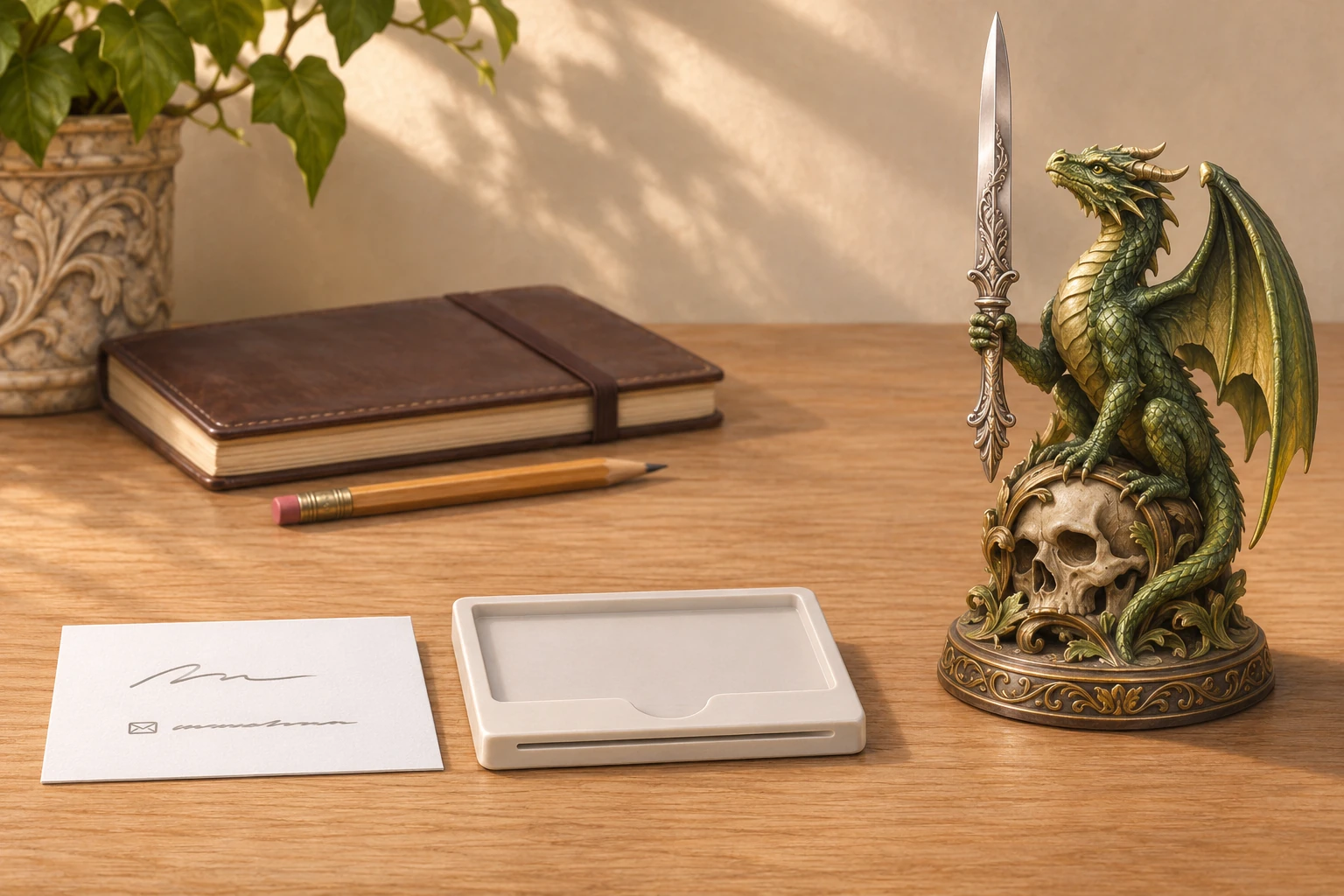
The Ebros Gift dragon letter opener offer describes model 12377 as a functional letter opener and fantasy decoration. Its whole photograph shows a green winged dragon on an ornamental skull base with a long opener seated upright. That is a desk display arrangement. It supplies no contact-card message for your intended recipient, and this guide has not independently tested its opening performance.
The offers show a card-holding tool and a decorative display arrangement. Keep each account with its own item when asking about supplied contents. Neither product account supplies your completed contact message.
Give the carrier a job in the actual exchange
State the handout carrier purpose in a sentence. For example, you might intend to offer a physical contact card with an accompanying item after a particular conversation. Then ask what the accompanying item contributes to that agreed exchange. If the only answer is that it would make an unfinished card feel ready, return to the wording decision before proceeding.
Consider the contact handoff you can already make. You may have an appropriate current card or an agreed way to share your details without adding another physical object. Identify that actual option and whether it meets the present request. Compare the existing arrangement with the proposed additional item for this particular request. Neither option needs to be chosen for every future conversation.
Leave room for the recipient to decline an offered object. A finished message can still have no role for a particular person or occasion. Avoid turning the existence of purchased supplies into a reason to distribute them everywhere. The decision to order and the decision to offer an item in an individual exchange deserve their own answers.
Work through an unfinished-card example
In this fictional example, Ellis is preparing for a meeting with another adult who has asked for contact details about a studio service. Ellis sees a card-holder tool and considers ordering it for the meeting. The current card draft still names an address Ellis may stop using. A colleague offers to place the order but has not been asked to approve the card text.
Ellis first resolves which address should receive the relevant enquiries. The colleague receives a clear update: the card remains a draft, and the physical handout purchase is undecided. No one needs to infer approval from a product photograph. Ellis can review the contact message without making the colleague responsible for a choice about how the studio should receive enquiries.
Once the message is settled, Ellis considers the actual meeting. The other person asked for contact details; they have not requested an accompanying item. Ellis can offer the completed card through an arrangement already available, or discuss a proposed physical handout if it has a reason in that exchange. The example ends with that choice still available, without asserting a response rate or a financial saving.
Keep other purchasing decisions separate
The shared broom pack savings guide concerns who takes each tool and how shared funding is understood. Those ownership and contribution questions arise when people divide a purchase. They do not decide whether the message on a proposed contact card is ready. If your handout purchase also involves shared money, preserve both questions without letting an agreement to contribute approve unfinished card wording.
The mini clothespin pack count guide distinguishes a complete clip from decoration and leaves conflicting quantity information unresolved. Its concern is the identity and count of the offered craft supply. Here, the unfinished part can be your own contact message even when the product identity is clear. Asking a seller about package contents will not choose the contact route you intend to publish.
Keep any separate use questions with the relevant product information. An adult recipient's willingness to accept a handout does not establish how its tool should be operated. If the intended use requires directions or another answer, obtain those from the responsible source before relying on the item. This purchase-planning discussion supplies no opening demonstration or independent product test.
Review a conditional checkout after the handout decision
If you consider a purchase on Republeq.com and its current checkout offers USDT cryptocurrency for that exact order, review the payment instructions after deciding whether the handout belongs in your plan. The availability of a payment option does not finish a contact message or establish that a proposed carrier is needed. Check the exact offered item, selected option, quantity and supplied contents against the order you actually intend to place. Read the delivery information and applicable return terms. If the chosen payment process requires a network, confirm the supported network and receiving instructions through the current checkout or responsible service. A token name in an article does not establish a payment address, total charge or settlement outcome. Keep the confirmed order reference and the payment information together so that a later question can be related to the exact request. If an essential instruction is unclear or changes, obtain confirmation for that order before authorizing a transfer. Do not substitute an address copied from an unrelated message or old screenshot. If an earlier payment or order action remains uncertain, reconcile its status before considering another payment. An unresolved transaction is not evidence that no action occurred. This guide has not tested a checkout, verified token availability for every buyer, calculated fees or established a recovery procedure. The conditional USDT discussion supplies no transfer instruction. Keep any unanswered product-content or contact-message question visible during checkout. A completed payment would not resolve either one. Proceed only with the purchase you have actually chosen, under the current transaction information, and retain the resulting records with the agreed handout plan.
Leave a clear decision for the person ordering
Give the purchaser the current approved message reference and explain whether an accompanying carrier has been chosen. If the contact route is still being checked, say which decision remains open and who will answer it. Keep a supplier enquiry separate from an instruction to order. This lets someone help with shopping without being asked to invent the message or assume that a draft has become final.
If the planned meeting changes, review the parts of the decision that depended on it. The intended recipient may no longer need a physical card, or a different contact route may become appropriate. Update the person preparing the handoff before the older plan is treated as current. A brief factual note about the changed purpose is enough when everyone can identify the card version it concerns.
Choose a business card letter opener handout only after the message is finished and you can explain why the carrier belongs in the intended exchange. You can also keep an adequate existing handoff or defer the purchase while a question remains open. Record that choice plainly so the person ordering knows what has been decided and the adult recipient receives the contact details you actually meant to share.
Finish the contact message before choosing a handout carrier.