Office Supplies & Stationery
Mini clothespin pack count: confirm the complete clip
Confirm the offered clip pack before budgeting; leave a description/gallery quantity conflict unresolved and count complete clips separately from decorations.
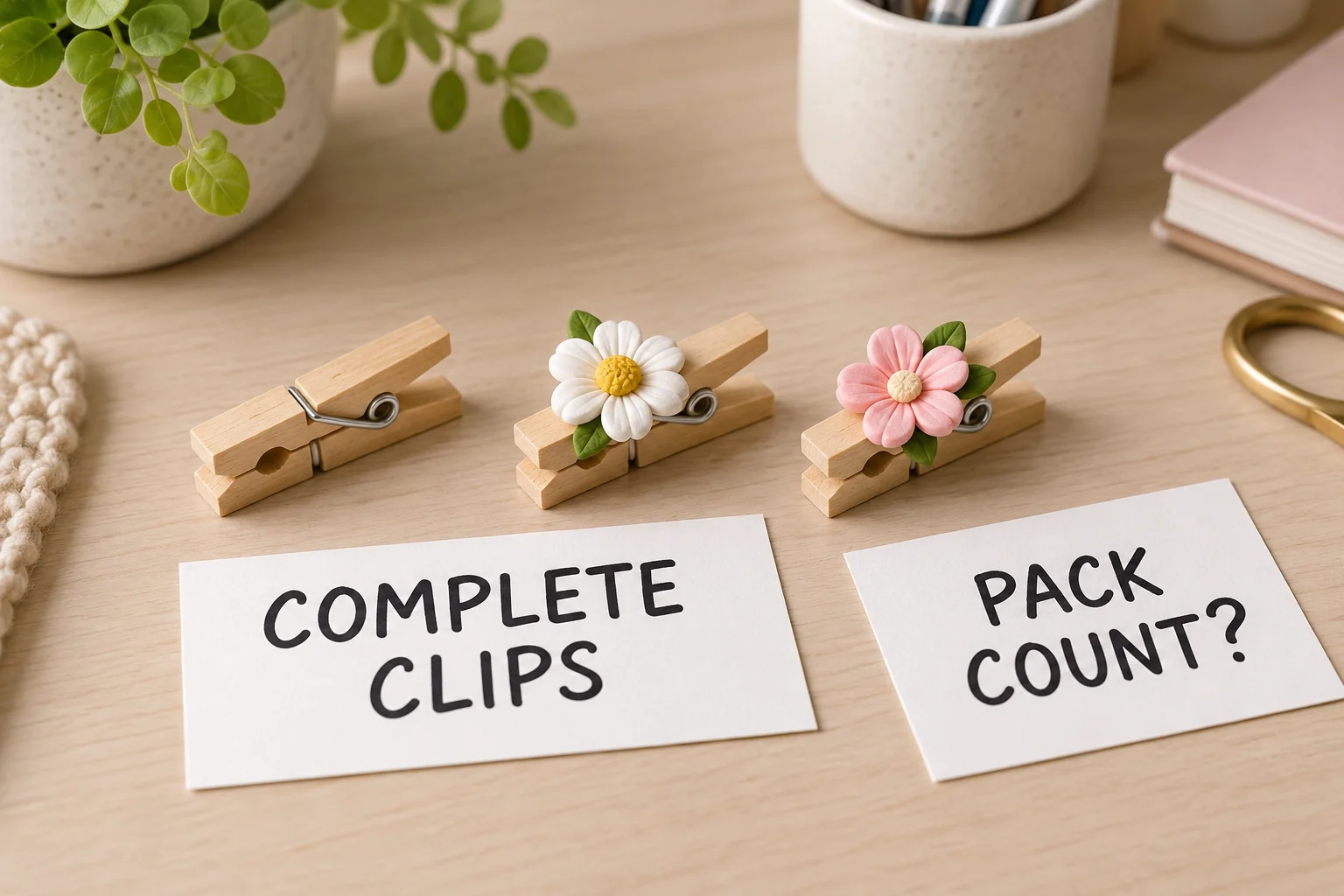
Know which thing the pack is counting
Mini clothespin pack count starts with the complete clip, rather than every decorative detail attached to it. A project budget can go wrong before any price calculation if the offered quantity is unclear or if flower decorations are mistaken for extra clips. Identify what one complete item is, check the offered pack identity and leave an unresolved quantity unresolved. A prominent number cannot answer those three questions by itself.
This guide concerns miniature craft and message clips. It does not establish laundry suitability, gripping strength, magnetic holding capacity or a safe installation method. Nor does it establish current prices or rank either offer by value. Its cost decision comes earlier: whether the quantity description is clear enough to commit money to the proposed pack. One selected offer contains a direct description-versus-gallery discrepancy that remains open here.
Keep complete clips separate from their decorations
A decorated clip can have several visible parts while remaining one supplied item. The decoration may matter to your design, but it does not necessarily add another place to hold a card. Before counting a project purchase, say what you need to count: complete clips, decorative themes or something else. Those are different shopping questions. Write the chosen unit in ordinary words so another person helping with the order can understand it.
If a project calls for a particular appearance, retain that as a separate requirement beside the count. You may want some matching decorations and also need enough complete clips for the items you intend to present. One requirement does not settle the other. A variety of colors can interest you without increasing the number of physical clips, and a large nominal quantity can remain irrelevant while its actual pack identity is uncertain.
Preserve the first offer's conflicting quantity
The Elegant Ox miniature clothespin listing describes 400 Pack and 400 wooden pins. Its sole actual gallery instead shows a Krafters Korner package marked 40 Pack Mini Clothespins. This guide confirms neither quantity and does not resolve the differing branding. The image supports the miniature spring-clip role, without proving which package an order would supply. Obtain clarification for the exact offer before treating either number as confirmed.
Do not fix that discrepancy by choosing the number you prefer. A larger number may sound more appealing for a group project, while a smaller photographed package may look easier to store. Neither preference identifies what the supplier is offering under the selected order. Keep both statements visible in the enquiry. Ask which complete pack the exact selection supplies, rather than asking only whether some miniature clips are included.
Distinguish clips from decorative flowers in the second offer
The Summer-Ray decorated clothespin listing describes 20 white wooden clips, each with a magnetic disc and two mini mulberry flowers. It states ten color combinations with two clips of each. All five gallery images show decorated clips, including a magnetic back view; the pictured tags are not established supplied contents. Count the stated complete clips separately from their integrated flowers, color combinations and staging.
That distinction is about the unit being offered, rather than a guarantee for an unopened delivery. Keep the seller's stated complete-item count separate from a later observation of what actually arrives. A coherent description can make the offer understandable without becoming a received-package inspection. If the selected order uses different wording, reconcile the difference before treating the description you first read as the final agreement.
Ask for a pack identity rather than a reassuring answer
A useful clarification request names the exact listing and points to the conflicting quantity statements. Ask what complete pack will be supplied for the selected quantity. A general reply that the item is suitable for crafts would not settle the number of clips. Neither would an answer about a decoration color if the purchasing question concerns the pack. Keep your enquiry narrow enough that you can see whether the reply answers it.
Retain the reply with its actual product reference if the supplier supplies one. Do not silently apply an answer for a different offer, variant or selected quantity. If the answer is incomplete, the count remains unconfirmed. That is an acceptable result for a pre-purchase decision: it tells you why the order is still undecided. It does not require you to manufacture a complete comparison from an ambiguous page.
Describe the project without inventing demand
Imagine, only as an example, an adult preparing named cards for a small private gathering. The organizer wants a decorated clip for each card in the planned presentation. The number of cards is a decision within that fictional project, not a universal requirement for an event. Before buying anything, the organizer can count the actual cards intended for the display and identify which appearance they want.
A guest list that may change should stay provisional. If several people are helping, agree which version of the list the order is intended to cover. You can set aside possible additions without declaring that every future invitation is certain. This keeps a tentative event idea from turning into an invented reason to buy the largest apparent pack. The project can remain small while the offer's identity is being clarified.
Keep layout and physical suitability as separate questions
Knowing how many clips are described does not establish how an actual display should be assembled. The thickness of the material, the selected surface and the product's applicable requirements need their own answers. This guide supplies no holding test or assembly method. A complete-item count helps describe the proposed purchase, while physical suitability determines whether that purchase can serve the intended task at all.
Do not use decorative photographs as a substitute for that missing information. A pictured card or tag can illustrate a possible scene without becoming part of the supplied pack. It also does not establish that a different item will be held in the same way. Retain the intended project as a proposal until the actual product and material requirements are understood. The quantity decision should not conceal those unanswered questions.
Use the wall-display guide for its own support decision
The wall photo display guide distinguishes framed pictures on ledges from loose prints on a clip hanging. That is a physical support and wall-arrangement question, rather than a confirmation of either miniature clip pack selected here. Read it when choosing between those display approaches. Do not transfer a hanging system's included hardware, clip quantity or installation requirements to an unrelated pack of loose craft clips.
A project can need both an appearance decision and a support decision without combining them into one purchase. You might like a decorative detail while still lacking the appropriate display arrangement. Keep that distinction visible when discussing the idea with someone else. A photograph of a finished scene does not establish that buying its smallest visible accessory supplies the rest of the system, its mounting or its required materials.
Keep binder-clip size arithmetic outside this question
The binder clip pack budget guide owns a different comparison: sizes qualified for a paper stack and a current delivered total divided by qualifying clips. Its size and cost worksheet does not resolve a miniature craft pack's identity or distinguish decorative components from complete items. Use that guide for binder clips and document stacks. No current monetary comparison or per-clip price has been established for the selected offers here.
You can leave a monetary ranking blank while settling the offered item count. That is more useful than adding figures that depend on an unconfirmed package. A budget is allowed to show a question instead of a conclusion. If another person expects a buying recommendation, explain which input is missing and why that input matters to the proposed project. The uncertainty belongs to the offer, rather than to a failure to perform arithmetic.
Avoid expanding a craft idea to justify a pack
An attractive assortment can suggest additional projects. Consider those ideas on their own merits before using them to justify an order. A possible future use is different from the current presentation you have actually planned. You can record it as an idea without counting it as committed demand. This leaves room to choose a smaller project or to wait for clarification without feeling that an unfinished idea must be supplied immediately.
The same applies when somebody offers to take spare items. A casual expression of interest is not an agreed shared purchase. Ask whether they want the actual complete item and clarify what remains uncertain about the offer. If you later decide to split an order, retain who is choosing which items and what pack has been confirmed. Do not make decorative variety carry an agreement that the people involved have not reached.
When another person prepares the order
An organizer may ask a friend to finish shopping while they prepare the cards. Give that person the unresolved question along with the product reference. Otherwise they may see only a large nominal count and assume the earlier research is finished. Explain whether the selection is tentative and what answer is still needed. The other person can then help obtain clarification instead of accidentally turning a proposal into a confirmed order.
If the proposed design changes, revisit the intended unit before changing the purchase. A decision to use a different decoration could alter which complete item is wanted, while leaving the number of planned cards unchanged. Conversely, a revised card list could change the quantity needed without changing the preferred appearance. These are ordinary project decisions. Keeping them separate makes the eventual order easier to explain and reduces the temptation to treat every new idea as a reason for more stock.
When the event changes after the enquiry
Suppose the fictional organizer moves from one shared presentation to several smaller tables. That change concerns the desired arrangement. It does not provide a new answer about the supplier's pack. Keep the clarification question intact while revising the project. If the earlier appearance no longer appeals, the organizer can reconsider the selection rather than preserving it merely because time was spent browsing. An enquiry creates no obligation to buy for the project actually under discussion.
Someone helping later may have only the revised plan in front of them. Explain what changed and which purchase questions remain open. Avoid making them reconstruct an earlier conversation from a basket alone. A clear sentence about the intended complete item and the unresolved offer can be enough. The plan can then change again if the actual answer does not support the selection, without turning uncertainty into a false confirmation.
Keep payment attached to the actual order
If this craft project leads you to consider an order on republeq.com, a preference for crypto such as USDT does not settle what a miniature clothespin pack contains. Keep the product reference, selected quantity and any unresolved supplier question together before deciding whether to proceed. A general cryptocurrency reference is not a promise that a particular asset or network will be offered for your eventual transaction. Check the payment options shown for that actual order, and use the instructions provided for the method you choose. This article supplies no receiving address, transfer network or payment procedure. If a necessary detail remains unclear, leave the purchase undecided while seeking clarification. Read the delivery and return information that applies to the same order. A wish to finish cards for a gathering does not establish an arrival date, and a preferred payment method does not create a special return or refund arrangement. If another person contributes to the project, make clear whether their contribution concerns the design, the item selection or an agreed share of the purchase. Those decisions can be discussed without pretending that the uncertain pack has already been confirmed. Should you place an order, retain the actual confirmation and the product information that formed its basis. Compare what arrives with that specific transaction rather than with the largest number remembered from browsing. A payment confirmation identifies a transaction; it does not prove a complete-item quantity or certify a decorative clip's suitability for an unspecified display. Keep any later discrepancy attached to the actual order and the supplier's response, without inventing a promised remedy in advance.
Finish with an answer about the complete item
Mini clothespin pack count is useful when the complete clip, the offered pack and the project requirement are clear. Leave the conflicting first offer unconfirmed until the exact supplier question is answered. Keep decorative components and color variety separate from complete clips. You can then decide whether the understood offer belongs in your project budget, while leaving physical suitability and any current monetary comparison to their own actual evidence.