Crypto Commerce
Black+Decker 2.2-cu-ft microwave versus compact COMFEE
The Black+Decker 2.2-cu-ft microwave merits the counter space if its usable interior accommodates a dish you regularly need and its installation requirements suit your kitchen. Those measurements still need confirmation. The COMFEE CM-M091AGN provides more specific dimensions in its description, making it easier to assess on paper. If your everyday containers fit the COMFEE, the Black+Decker's larger stated capacity alone gives you little reason to commit more space. For Black+Decker 2.2-cu-ft microwave , verify each step.
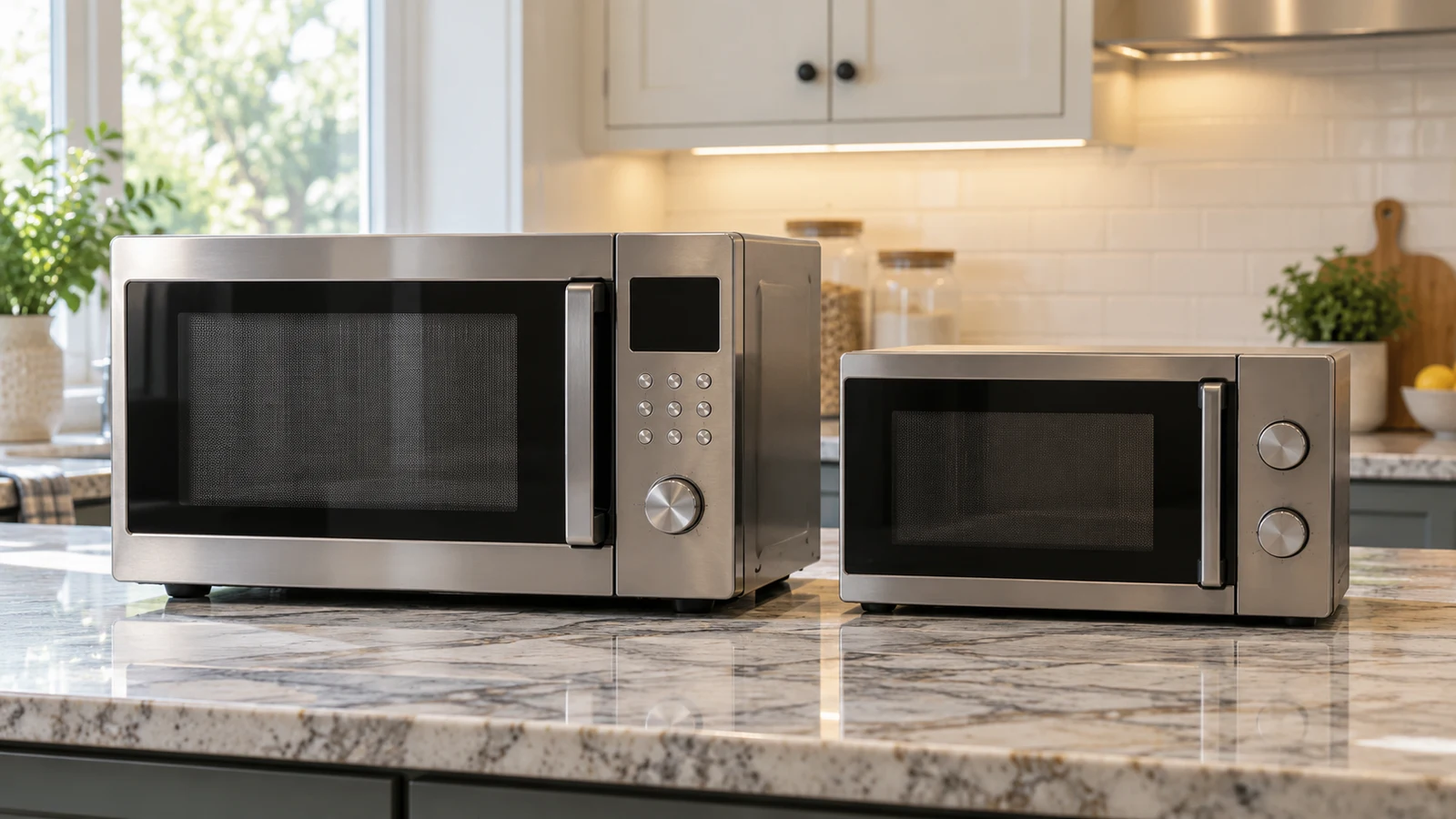
The Black+Decker 2.2-cu-ft microwave merits the counter space if its usable interior accommodates a dish you regularly need and its installation requirements suit your kitchen. Those measurements still need confirmation. The COMFEE CM-M091AGN provides more specific dimensions in its description, making it easier to assess on paper. If your everyday containers fit the COMFEE, the Black+Decker's larger stated capacity alone gives you little reason to commit more space. For Black+Decker 2.2-cu-ft microwave, verify each step.
This comparison concerns the Black+Decker EM262AMY-PHB and the green COMFEE CM-M091AGN. The practical question is whether the larger microwave would let you use a preferred serving dish or container that the compact option cannot accommodate. Start with that dish. Choosing around an actual household task gives the capacity difference a purpose and helps you avoid paying attention to features you would rarely use.
COMFEE' Microwave Alternative: Capacity And Counter Space
The Black+Decker description specifies 2.2 cubic feet of capacity and 1200 watts of heating power. It also lists express cooking, an auto-menu function, time/weight defrost and a digital control panel. It does not supply exterior dimensions, usable interior measurements or a turntable diameter. You can identify its stated capacity, but you cannot yet determine the counter area it requires or the largest dish it can accept.
The COMFEE' microwave alternative has a stated 0.9-cubic-foot capacity and 900 watts of cooking power. Its description gives exterior measurements of 19.09 inches wide, 13.23 inches deep and 11.42 inches high. The stated interior measures 12.4 inches wide, 13.7 inches deep and 8.7 inches high, with a removable glass turntable measuring 10.6 inches in diameter.
Use those COMFEE figures as a preliminary screening tool. Measure the complete outside dimensions of your usual microwave-safe container, including handles and the lid you intend to use. A container's advertised food capacity will not tell you its outside width or height. If the dimensions already conflict with the listed cavity measurements, you have a specific reason to investigate another option.
A dish that appears to fit within the cavity still needs a closer check. Interior dimensions do not establish the size of the door opening or confirm unobstructed rotation. For a rectangular container, ask whether that exact shape can rotate as intended. For a tall covered bowl, confirm the usable height above the installed turntable. Avoid treating the listed turntable diameter as a universal maximum dish size.
Consider a household that reheats food in a handled serving bowl because it is also used at the table. Measure the bowl with its microwave-safe cover in place. If the COMFEE cannot accommodate it, request the corresponding Black+Decker cavity and opening measurements. The larger model becomes useful only if those details establish that the bowl can be used as intended. The capacity label by itself does not settle the example.
For the counter, mark out the COMFEE's listed width and depth with a paper template on a clear surface. Treat this as a representation of the appliance dimensions, not an installation allowance. Check the model's instructions for required clearances and permitted placement. Its exterior measurements do not establish how much ventilation space it needs, and the supplied description does not confirm suitability for an enclosed shelf or cabinet.
Obtain the Black+Decker's exterior measurements before making the equivalent template. Without them, there is no supported footprint comparison between these two models. Leave room in your plan for the work you do beside the microwave, such as setting down a container before opening it. Decide how much of that preparation surface you are willing to give up once both appliance layouts are known.
Keep the placement decision separate from the capacity decision while you gather measurements. You may find that the COMFEE accommodates every container you intend to use. Alternatively, one frequently used dish may justify pursuing the Black+Decker. An occasional oversized dish deserves a different weight from the bowl you use each morning. Your own frequency of use can determine whether the extra capacity addresses a recurring inconvenience.
COMFEE' Microwave Alternative: Controls And Care
After checking physical fit, compare the commands you expect to enter. The Black+Decker description confirms time/weight defrost, allowing the user to enter a weight or a duration. It also names express cook options and an auto-menu function, without detailing the menu choices or express increments. If a particular shortcut matters to you, confirm its operation for the EM262AMY-PHB instead of assuming it works like another microwave you have used.
COMFEE's description is more detailed about its controls. It lists multi-stage cooking for defrosting and cooking in one sequence, plus express buttons for 30-second cooking at full power. Its nine preset menus cover popcorn, beverage, vegetable, meat, pizza, potato, pasta, soup and reheat. These are documented selections, not evidence that a preset will produce your preferred result for every portion or container.
The distinction between defrost controls and a combined sequence may matter if you regularly start with frozen food. Black+Decker explicitly offers a choice of time or weight for defrosting. COMFEE explicitly describes proceeding through defrosting and cooking in one sequence. Check the operating instructions for the steps available on each model and any required user intervention. Do not assume the Black+Decker has the same multi-stage function because both models offer defrost-related controls.
Sensor cooking should remain a question for the Black+Decker, rather than a deciding advantage in this comparison. Its supplied description does not explain a sensor function, supported sensor programs or their operation. If that feature is essential to your purchase, ask for model-specific confirmation and instructions. The documented auto-menu function does not, by itself, establish how the microwave senses food or adjusts a cooking cycle.
COMFEE also lists a kitchen timer, a clock, an LED display and an interior light. Its mute function may interest someone who wants control over audible signals, but the description does not identify which sounds it suppresses. Ask about that scope if quiet operation is important. The absence of corresponding details from the Black+Decker description leaves those features unconfirmed; it does not establish that the appliance lacks them.
For care and accessories, the COMFEE description explicitly identifies a removable glass turntable. It does not provide washing instructions, replacement-part terms or a complete accessory inventory. The Black+Decker description does not identify its removable components. Before buying either model, check how its interior and removable parts should be cleaned, and confirm any included component you expect to receive. Neither description supports a claim of easier cleanup than the other.
Plan Oven Scheduling For Dishes With Different Finish Times: The Microwave's Role
A microwave purchase can affect how you prepare a meal alongside an oven, but this comparison does not establish cooking durations. The linked guide, Plan oven scheduling for dishes with different finish times, addresses that separate planning task. For choosing between these appliances, identify the microwave's intended contribution to the meal and the container needed for it. That keeps the purchase decision focused on fit and documented operation.
Suppose you intend to reheat one side dish while the oven is occupied. The useful purchase question is whether your chosen covered dish fits and whether the controls suit the instructions you will follow. If the COMFEE accommodates it, a larger cavity may not change that particular task. If the container cannot be used in the COMFEE, confirm whether the Black+Decker resolves the limitation before assigning value to its capacity.
A different household may mainly reheat separate portions in individual bowls. In that case, examine the largest bowl actually used, including its cover, and consider how often the appliance would run. Do not assume a larger cavity supports heating several bowls together in your preferred arrangement. That requires suitable instructions and confirmation of physical fit. Buying extra capacity without a defined use leaves the central tradeoff unresolved.
The listed power figures are 1200 watts for Black+Decker and 900 watts for COMFEE. They do not provide a tested time comparison for your food. Avoid selecting the larger model on an assumed number of minutes saved per meal. Follow the food and appliance instructions applicable to the exact model, including any directions for stirring or standing. Neither supplied description establishes a performance advantage for a particular recipe.
Control preferences can then help resolve a close choice. Someone who wants a documented 30-second full-power command can find that detail in COMFEE's description. Someone evaluating defrosting by entered time or weight has an explicit description of those options for Black+Decker. If both models satisfy your dish and placement requirements, compare these specific operations against the tasks you perform most often. There is no need to treat every listed feature as equally useful.
Before purchasing, carry your measurements back to the exact product selection. Check that the Black+Decker model is EM262AMY-PHB or that the COMFEE model is CM-M091AGN, as appropriate. Confirm any selected variant and the current price. A similar-looking product or another model from the same brand may not have the dimensions or controls discussed here. Keep any answers about missing measurements associated with the exact model you intend to order.
Review support and purchase terms with the same attention you gave the fit questions. Check who handles model-specific support, what warranty terms apply and whether replacement components can be obtained. Read the applicable return conditions before relying on a return as a way to resolve uncertain fit. The supplied product descriptions do not establish those service terms, and this comparison makes no promise about eligibility or turnaround time.
If you choose a crypto payment option at checkout, verify the currency and network displayed for that transaction, along with the requested amount and any fees. Read any expiry or confirmation instructions before proceeding. This purchase step does not change which microwave fits your dishes, and it should not distract from confirming the selected model. No payment amounts, network list or refund timing are established by this appliance comparison.
Choose the Black+Decker 2.2-cu-ft microwave when confirmed dimensions show that it accommodates a regularly used dish the COMFEE cannot, and its placement requirements leave you comfortable with the remaining counter space. Choose the COMFEE when its documented dimensions work for your containers and its specific controls suit your routine. Before ordering, resolve the measurement that could change your decision: the Black+Decker's usable interior and exterior size, or the COMFEE's clearance for your exact covered dish.