Musical Instruments & Listening
Plan a birthday music dedication with the guest of honor
An original birthday planning example separates a chosen song from the personal introduction its recipient wants to hear in company.
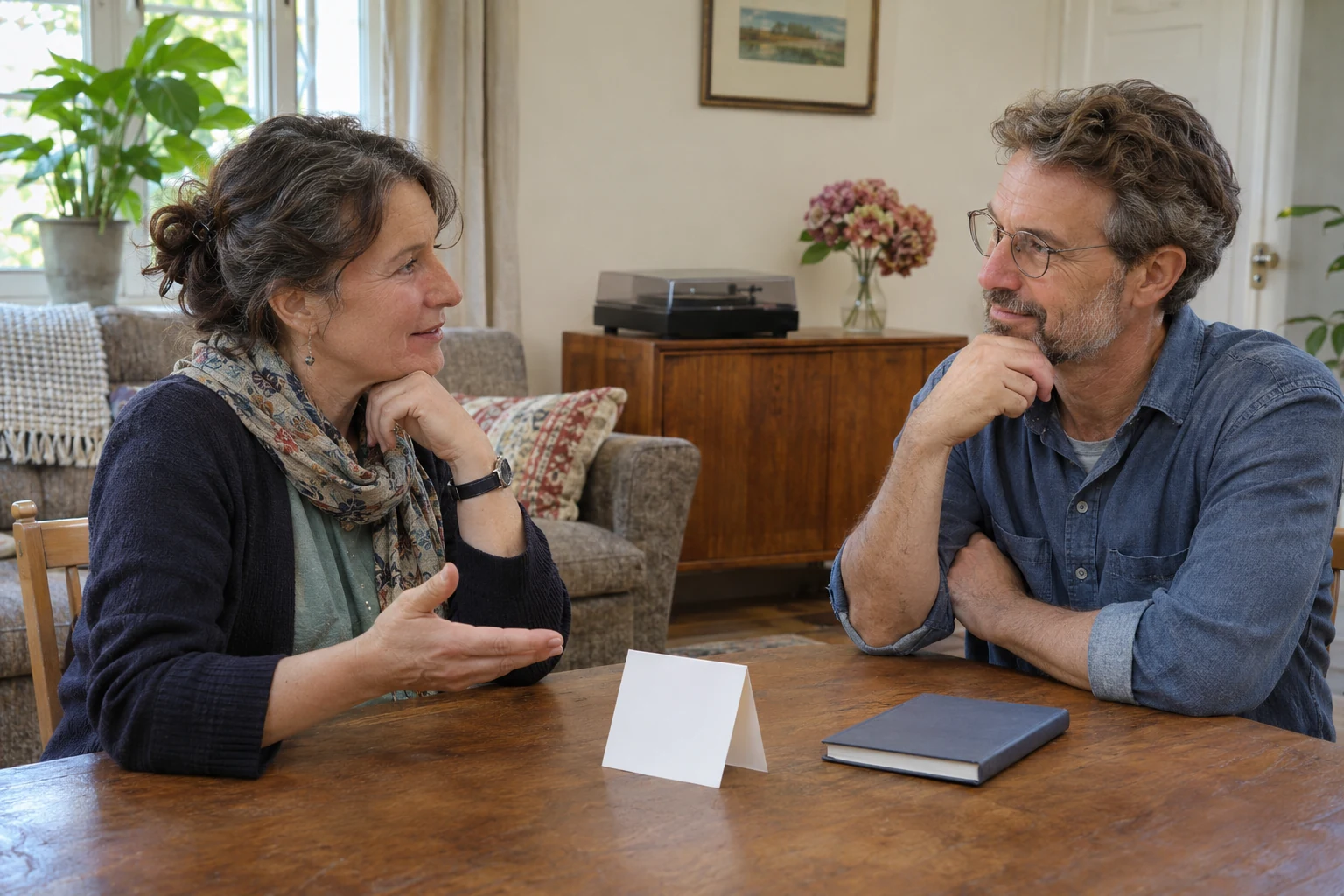
Conceptual birthday planning; no actual guest, record playback or public dedication is depicted.
Plan a birthday music dedication with the person you want to honor. Choosing a song and introducing it to a room are separate choices. Ask what they would enjoy hearing, what you may say before it and when the moment would fit their visit. You can keep the selection a surprise for other guests while agreeing on the personal part with its recipient.
Describe the moment you have in mind
Start with a concrete invitation. You might say that you would like to introduce one chosen song during the birthday visit, with a short sentence about why you selected it. Let the guest of honor consider that actual proposal. Asking whether they like music would leave the introduction, audience and occasion unspecified. They can enjoy the song without wanting the particular public moment you imagined.
For an original example, imagine Nessa arranging a small birthday visit for Theo. She remembers a song from an earlier trip they took together. She would like to play it in an already ready listening arrangement and tell the visitors how she remembers that occasion. These people, the visit and their conversation are invented. No real song, recorded performance or successful gathering is reported here.
Nessa first asks Theo about hearing the selection during the visit. He likes that idea but asks what she plans to say. That question gives them something useful to discuss before anyone is waiting for an announcement. The example stays with this one proposed moment. It creates no recurring hosting role, new group music project or obligation to explain a favorite record to everybody present.
Choose the introduction as carefully as the song
Tell the recipient the words you actually propose to use. A song introduction can name the occasion and the person without retelling the memory that prompted your choice. If the memory matters to you, explain which part you would like to mention. Keep your own recollection attributed to you rather than speaking for what the other person supposedly felt at the time.
Nessa proposes saying that the song reminds her of their journey home from the trip. Theo wants to hear it, but he would rather leave the trip's private conversation out of the birthday visit. They choose a shorter introduction that names his birthday and the selection. The song remains part of the plan while the anecdote stays between them. Nothing in the fictional exchange requires Theo to defend that preference.
If your proposed introduction includes another person's story, leave their part out while you clarify what they want shared. The birthday recipient's answer concerns their own proposed moment; it does not supply everybody else's account. You can keep the introduction simple enough to avoid the unfinished question. This is a planning recommendation for the example, without a claim about a universal etiquette rule or a legal permission process.
Let the recipient choose how visible the moment should be
Offer a specific alternative if the public introduction does not appeal. You could share the selection privately during an ordinary visit, leave a brief personal note or choose a different way to mark the birthday. Present the alternative as something you are willing to do. Avoid offering a quiet option and then treating its selection as a request the recipient must persuade you to accept.
In another version of the example, Theo would prefer to hear Nessa's choice when the two of them meet afterward. Nessa can take the musical moment out of the group visit. The earlier intention remains something she offered, rather than an event that must happen because she has already imagined it. This possible version reports no disappointing reaction from the guests and makes no prediction about how another household would respond.
If the recipient likes being introduced but does not want to speak afterward, keep that answer in the plan. Do not add a request for a speech, a story about the song or a demonstration of musical knowledge. Ask about any contribution you actually hope they will make. An agreement to hear a selection does not describe an agreement to perform for the visitors.
Put the moment into the visit you are arranging
Discuss when the proposed introduction belongs. You might place it during a pause already planned in the visit, or decide to wait until a particular friend has arrived. Use the actual occasion rather than an imagined perfect sequence. If the timing remains unsettled, say that it is unsettled. You can leave the introduction optional while the rest of the visit takes shape.
Nessa and Theo choose a pause after the visitors have settled in. She will introduce the selection only when Theo is ready for that part of the visit. The example gives no playback control sequence, sound level, equipment connection or hearing-health instruction. It assumes an appropriate listening arrangement is already available and understood. An unresolved equipment question belongs outside this planning conversation.
Tell a cohost the part of the plan they need to know. In Nessa's case, that means the chosen pause, the short introduction and the decision to leave the trip story private. She need not repeat the story to explain that boundary. If someone else will give the introduction, let the recipient hear that person's proposed words before treating the change as settled.
Keep equipment descriptions outside the personal promise
The Denon DP-300F turntable listing describes automatic start and stop and playback at 33⅓ and 45 RPM. Those are the offer's stated features, without an observed playback result.
The Denon DP-3000NE bundled turntable listing names a direct-drive model and additional Amber Protect coverage. The account does not establish a ready listening system, supplied cartridge or a successful birthday visit.
You can prepare the personal introduction while leaving a possible equipment purchase undecided. The recipient's preference gives you the words and extent of the proposed moment. It supplies no connection diagram or confirmation that a particular retail selection suits the room. Use the actual equipment's applicable instructions for its separate requirements, and keep technical uncertainty out of any promise about what the visit will include.
Revise the plan when the audience changes
A changed guest list gives you a reason to revisit the introduction's audience. Ask about the actual change rather than assuming the earlier answer covers every later version of the gathering. The question can remain brief. You are checking the moment you agreed on, without asking the recipient to repeat a private explanation to each new person helping with the visit.
Suppose Theo's colleague later joins the fictional birthday group. Nessa checks whether he still wants the same introduction. Theo keeps the song but asks for his name and the birthday greeting only. Nessa changes her planned sentence accordingly. She does not treat the earlier version as a better account that somebody should restore once the music begins.
A cohost might independently suggest telling the trip story. Nessa can explain that the chosen introduction stays short and move on. She need not invite the room to vote on whether the anecdote sounds harmless or interesting. The example gives her a particular agreed sentence to use. It does not establish that guests will react in any predictable way to the song or its introduction.
If someone proposes recording or sharing the introduction, bring that new audience back to the recipient as a separate question. Theo's agreement to hear Nessa's words with the visitors does not describe a clip he wants circulated afterward. Nessa can leave recording out of her proposed moment while that question remains unanswered. If the two of them choose a different arrangement, tell the helper what they actually chose before relying on it. This example provides no recording procedure, publication permission or licensing conclusion; it keeps the intended audience of the birthday introduction visible.
Leave room for the answer on the day
When the planned pause arrives, check whether the recipient still wants it. If Theo would rather continue the conversation already happening, Nessa can leave the introduction for another time or omit it. A plan they made earlier remains available to revise. The visit need not become a demonstration that every proposed detail happened in its original order.
If the introduction goes ahead, use the agreed words and let the selection remain the moment offered. Nessa does not need to explain the planning conversation to the visitors or announce which private details she has left out. Afterward, Theo can respond in his own way. No response is supplied as the required ending for this invented visit.
The holiday collaborative playlist guide owns joining and editing a shared list. The booklet dedication and acknowledgments guide distinguishes honoring a person from crediting a contribution. Here the decision concerns a particular spoken introduction, its audience and the recipient's preferred moment during a birthday visit.
Keep an optional order separate from the invitation
If preparing the visit prompts an equipment order through republeq.com, keep that purchase separate from the birthday invitation. A preference for crypto, including USDT, does not establish that a particular payment method is available for the selected order. Start with the exact product, selected option and stated contents you intend to consider. Review the current total, delivery information and applicable cancellation, return and refund terms before authorizing a transaction. The example supplies no receiving address, network, amount, exchange rate, fee or completion time. Obtain the current payment instructions from the responsible service for the actual order, and clarify any material detail that remains missing or contradictory. Do not borrow receiving details or an amount from an earlier purchase. If an offered cryptocurrency route suits your intended transaction, verify the asset, network, receiving destination, required amount and order reference against those current instructions. Keep any resulting confirmation with the order it concerns. Someone helping choose the birthday introduction needs the agreed words and timing, rather than wallet access, private keys or recovery phrases. If another person is authorized to arrange the purchase, give them the exact current selection and a clear account of the order they may place. Avoid sending separate people instructions that could create duplicate orders. If payment or order status becomes uncertain, obtain the responsible service's determination before considering another payment. An acknowledgement should be retained for what it actually confirms. It would not establish delivered equipment, a complete listening arrangement, the recipient's approval of an introduction or the success of a celebration. You can leave the purchase undecided while continuing the personal planning conversation with the equipment already available.
Finish with the song, the introduction and the occasion the recipient actually chose. Nessa's fictional plan ends with a short birthday greeting and a private memory left private. Your own version can be just as specific, including the choice to keep the musical moment between two people or leave it out of the visit altogether.