Outdoor Recreation & Camping
Practise bird hide etiquette on a first shared visit
Plan a shared wildlife-hide visit around the chosen site and the people using it. Keep optional optics and their unresolved catalog details in scope.
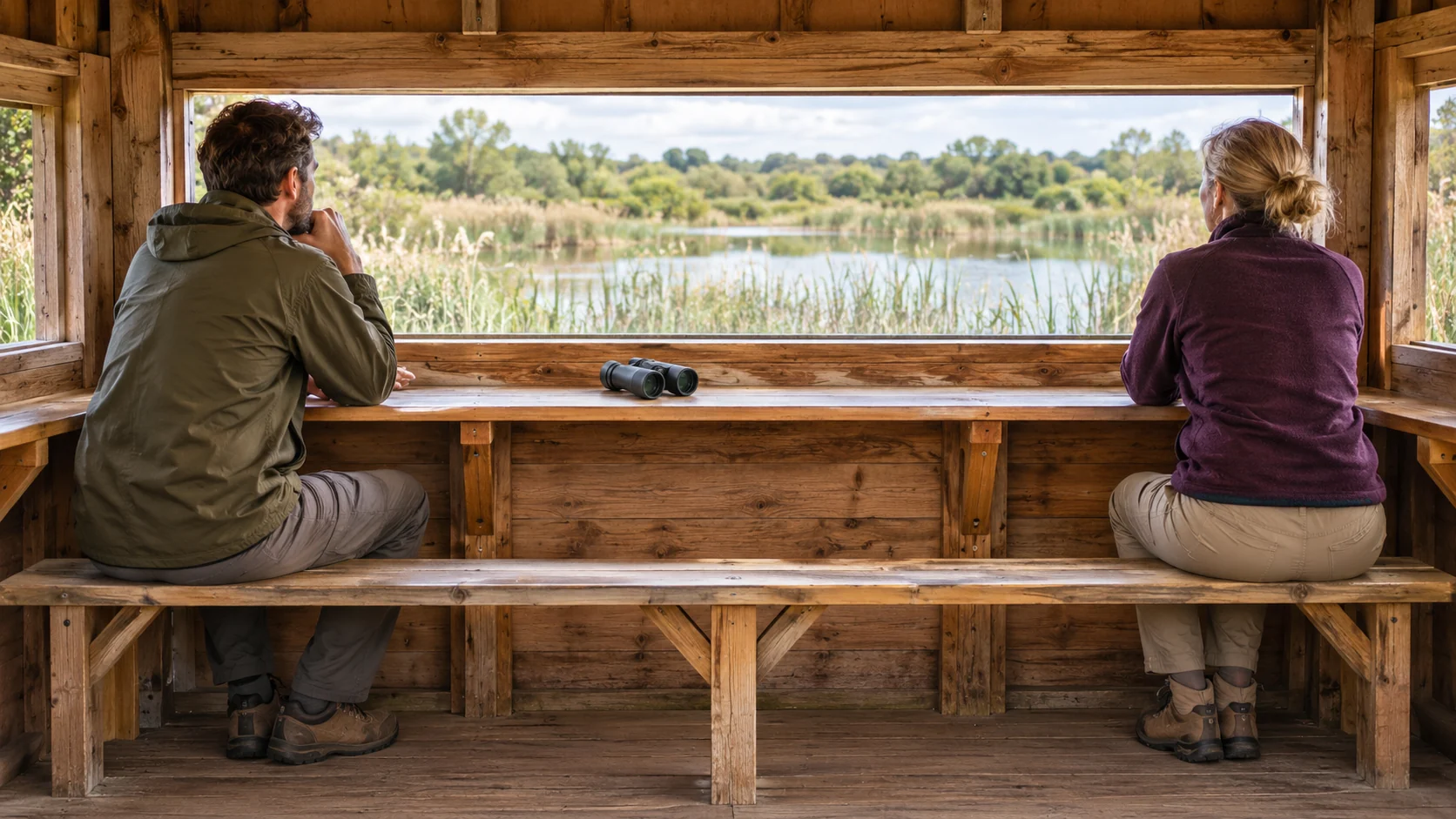
Practise bird hide etiquette with the chosen place and the other visitors in mind. Leave time to look.
Begin with the chosen site
The RSPB's beginner guide recommends reading a reserve's guidelines and checking its facilities before going. It asks visitors to respect other birdwatchers, especially in hides, and to follow paths and signs. High Peak Local Group adds advice for its own group, including keeping noise down and avoiding pointing hands through hide windows. Treat its window-closing advice as that group's guidance; follow the site instructions where you visit.
A first visit can include the family
WWT's Generation Wild activity introduces a hide visit as something families can try. It acknowledges that people sometimes worry about bringing children and says hides are there for everyone. Its request is to keep noise to a minimum. That gives a newcomer a welcoming starting point without promising how every encounter with another visitor will go. You can introduce the idea of shared viewing before the outing, so the room and its other users are part of what you look forward to.
The activity also asks readers to reflect on how they felt watching and whether other users made them feel welcome. Those are useful questions after a first attempt. A child might enjoy a brief look while an adult hopes to stay longer; discuss what each person enjoyed before planning another visit. The activity's invitation does not require a successful identification or a photograph. Leave space in that conversation for an ordinary experience, including one that felt unfamiliar or left you wanting to ask a question next time. Keep those reactions in mind when deciding whether you would like to return.
Read access information at the level you need
WWT London's accessibility page gives a concrete example of why a general description of a reserve needs more detail. It describes tarmac, gravel and boardwalk paths, and says its hides use natural lighting. The majority of its hides are wheelchair accessible, but individual entries differ. The page identifies all floors of Peacock Tower as accessible by elevator, while its Wildside entry says first floor only. These are London's published details, not a description of every public hide.
Use the location's accessibility information to frame the question that matters to your visit. A path description and a floor-access statement answer different questions. You may want to ask about a particular viewing position rather than stop at the word accessible. London's page links an Accessibility Guide, Accessibility Map and Sensory Map and invites visitors to contact its team with specific questions. Keep the answer attached to that location and your own circumstances. Reading this example does not confirm personal suitability, an available viewing position or the present condition of an elevator. London also suggests quieter visiting times, qualified by school-group patterns; ask about the conditions relevant to your visit.
Keep the operator's terms with the outing
WWT's visitor terms ask people to keep their belongings with them, use the provided bins and follow pathways, safety notices and staff advice. They also explain that an attraction or hide can close or change at short notice. A named hide on a page is therefore useful planning information, while an actual visit still depends on what applies at that site. Check the operator's site instructions rather than assuming a previous outing settles the next one.
Photography can involve the people sharing the space as well as the wildlife outside. WWT asks visitors to obtain permission before photographing or filming other visitors, staff or volunteers; commercial work needs advance site approval. Keep those stated conditions with a proposed photo. A companion being willing to pose would not answer whether another person is included in the frame. These are WWT's terms, rather than a universal photography rule for every reserve. They provide a reason to read the actual operator's policy before making recording part of a first visit.
Some hides have a separate access step
Shropshire Wildlife Trust's bird-hide entry FAQ says that Charles Sinker's Fields and Wood Lane hides require an entry code. It directs readers to the two reserve webpages for information about obtaining access. The statement identifies a preparation step for those particular places. It does not supply a code or establish that the reader already has permission to enter. Keep the hide's name with the route the trust provides.
This example is worth remembering when a proposed meeting place sounds straightforward. If you invite someone to join you at one of these hides, tell them which reserve information you are using and leave the access question open until you have followed the applicable route. A suggestion to meet there is only a proposal. The FAQ's brief answer does not establish opening hours, transport arrangements or access at a different reserve. Return to the named reserve information for the next step instead of turning a short entry into a complete itinerary.
Two optional binocular accounts
The CayaElegant binocular account, UPC 751573269737 appears under Phone Cases, although its title and description identify adult binoculars. Its actual variants are Green, Mud Color with Other wording, and Black. The three original images show those colors on a similar paired-barrel form, with a central wheel and a phone-adapter inset. No readable CayaElegant name or UPC authenticates a factory identity in those pictures. Keep the catalog reference if asking which variant an order concerns.
The description includes a phone adapter, carry case and strap. The inset shows a demonstration phone, without establishing that a phone is supplied or that the adapter fits a particular device. Nor does a bag icon establish a case's interior. These details remain questions for the selected offer. A binocular purchase does not settle entry arrangements or reserve policy, and no purchase is needed merely to read the chosen site's information. The whole offer reference is more useful for this enquiry than a description such as "the green pair". You can identify the account while leaving the precise delivered color and accessory fit unresolved.
The Think Peak Toys Red account, model TPTKBV0006 lists UPC 603051084106. Its original kit image shows a red-and-black instrument, ThinkPeak packaging, a black carrying case, woven strap and white cloth. Other gallery frames illustrate a color family and promotional comparisons. Those frames do not make the other colors or a comparison instrument additional delivered goods. The native kit description includes binoculars, a carrying case, adjustable strap and lens cloth.
Readable branding and an 8x21 label are useful observations, without authenticating the maker's model number, optical performance or an individual's suitability. The catalog's dimensions and size wording are not independently measured here. Its child-oriented description and the pictured age label also do not certify safety or fit for a particular child. Keep any unresolved product question with the exact account. The proposed hide visit can remain a family activity while an optional equipment decision stays undecided. Keep the kit's stated contents separate from a claim about what a child will see. The pictured cloth and carrying case concern the equipment; neither provides an observation, an identification or an enjoyable result for its user.
Other birdwatching activities have their own purposes
The binocular accessory-fit guide concerns specific lanyards, lens covers and storage bags. It distinguishes an included accessory from a separately selected replacement and asks what actually needs to fit. That is a useful companion if a product enquiry grows out of your preparations. It supplies no operating or attachment procedure for either binocular account in this article.
Keep a spare-part question identifiable when talking with a supplier. An answer about a bag's inclusion can leave its usable interior unresolved; an answer about a strap's length can leave its attachment unresolved. The related guide develops those distinctions. Here, the decision is whether an equipment question needs its own follow-up while your first shared outing is being planned. If you already have a usable arrangement, keep that reference in the enquiry too. A request for a replacement should identify which part needs attention. The related guide offers that narrower line of questioning without making a new accessory part of every birdwatching plan.
The window birdwatching note guide develops a personal entry from one visible detail. It allows a feature or identification to remain uncertain. That private writing exercise has a different purpose from considerate use of a shared hide. You can enjoy either activity without making it stand in for the other.
If a companion prefers the familiar window activity, that gives you something concrete to discuss when planning a future outing together. A personal note does not need to become a formal survey report, and a hide visit does not need to produce a finished piece of writing. Talk about the activity each person chose after the day has happened. A brief personal description can stay small. The window guide allows a writer to notice one feature without filling the entry with guessed details. If that is the activity someone wants, give it its own place in your plans.
If an optional binocular order uses crypto
A first hide visit does not require an order on republeq.com. If you later decide to buy a particular binocular account and want to use crypto, keep the payment question with that exact item and its selected variant. If USDT is offered for the order, confirm the requested asset and network from the current checkout instructions before authorizing a transfer. A familiar token name does not identify a receiving address or settle the charges. Read the displayed total and the applicable delivery, cancellation, return and refund information. Keep any unanswered question about the binoculars open while considering those terms; an available payment option would not authenticate the maker, delivered contents or a phone-adapter pairing. If you need clarification, use the responsible service's stated support route and retain the answer with the same order reference. You can leave a cart undecided and continue discussing the outing with your companion. If you authorize payment, preserve the transaction reference and the retailer's order record, distinguishing them from a cart or screen you only inspected. An uncertain acknowledgement needs reconciliation before another transfer is considered. Record what you actually sent and what the service reported instead of treating silence as proof that nothing happened. This paragraph supplies no wallet recommendation, receiving address, current checkout promise or assurance that a transfer can be recovered. Any later support or refund question belongs to the actual transaction and its applicable terms. Payment would not provide a hide entry code, an available viewing position or permission to photograph another visitor. Keep the order and the chosen site's arrangements in their own records, so a retail acknowledgement cannot be mistaken for confirmation of the outing.