Product Compatibility & Accessories
Binding spine compatibility: match format, pitch and sheet counts
Check actual wire and comb binder formats, document hole arrangements, material-specific punching limits and included-spine capacity before choosing supplies.
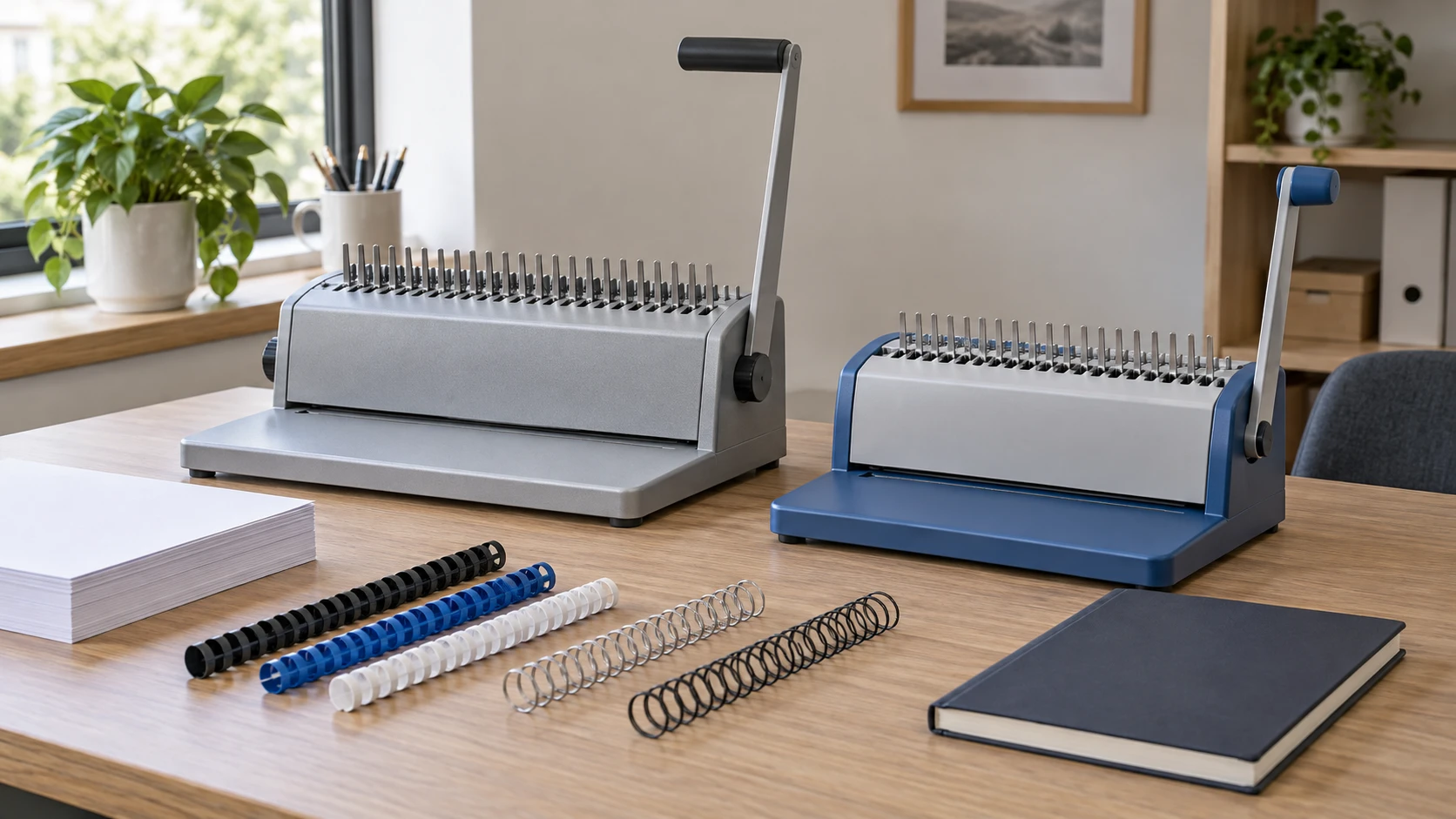
Binding spine compatibility depends on the binding format, the punched-hole arrangement and the particular spine size the machine supports. A large sheet-capacity number does not establish those details. Before ordering a binder or replacement supplies, identify the machine and the intended document, then keep each compatibility question with its own specification.
The two offers here name different binding systems. An Unbranded wire binder describes 34 square holes and 3:1-pitch supplies. An Unbranded listing describing a HOUYEE comb binder names a different hole arrangement and supplies half-inch combs. Their maximum binding figures and included supplies answer separate questions. This guide compares those disclosures without giving a punching, closing or assembly procedure.
Comb versus wire binding starts with the actual format
For comb versus wire binding, begin with the named supply system. The Unbranded wire binder, SKU sku-18648315214, appears under Shop All School Supplies and has UPC 741051382423. Its title names 34 square punch holes and an adjustable side margin. Its description says it works with wire, coil and click binding spines in 3:1 pitch.
Keep the complete supply description. The word coil by itself would drop the stated pitch condition. A pack offered for another binding system is not confirmed compatible merely because its photograph shows a spiral shape. Ask for supplies identified for the actual machine and document format rather than choosing from the appearance alone.
The Unbranded HOUYEE comb-machine offer, SKU sku-18765113988, appears in Binding Supplies, with UPC 714446817961. Its title names 19 holes and a 450-sheet binding capacity. Keep that comb format separate from the other offer's 34-hole, 3:1 account. Neither description establishes that the selected machines share interchangeable supplies.
Keep separate supply enquiries for the wire binder and the comb machine. A wire-spine enquiry needs the wire binder's supported format and size. A comb-spine enquiry needs the actual comb machine and its applicable comb information. Even equal maximum sheet counts would leave those format questions open.
Read pitch without dropping the hole-count question
GBC's own WireBind half-inch spine page explains its 3:1 pitch as three loops per inch. That provides a useful definition of the pitch label. The GBC page also names 32 holes for its own spine. Its product details do not certify compatibility with either selected machine or turn every 3:1 spine into the same finished length and hole count.
In the selected wire-binder offer, retain the title's 34-square-hole statement alongside the 3:1 supply wording. Identify the intended spine and document format when requesting a match. A shared pitch label alone would leave other dimensions or configuration details unanswered. This guide does not prescribe a way to alter a spine or modify a punched document to make it fit.
For the comb offer, the description gives a concrete document distinction: its adjustable guide accommodates Letter documents with 19 holes and A5 documents with 15 holes. Those are different stated arrangements within the same machine account. A buyer looking at a pre-punched document should establish its actual format and hole arrangement rather than relying only on the machine title's 19-hole figure.
Do not invent a comb-pitch specification from the hole count. The description used here does not supply one. Keep the actual Letter and A5 statements available when asking for a matching supply. An answer about a different document size needs its own applicable information.
Punch capacity and binding capacity describe different limits
For punch capacity and binding capacity, the wire offer states up to 12 sheets punched and up to 120 sheets bound. Those figures describe different operations. A document within the stated binding maximum does not become a permitted one-stack punching load. The description does not identify the paper weight behind those two sheet figures.
The comb offer is more specific about some materials. It describes punching 10–12 sheets of 20-pound printing paper, two sheets of 230g cover or textured paper described as up to 85 pounds, or one sheet of 5–12 mil PVC cover at a time. Keep each quantity with its stated material rather than carrying the printing-paper figure across to covers.
Its title's 450-sheet binding figure is likewise separate from the punching quantities. This article supplies no operating sequence for handling a large document. Confirm the applicable instructions, material requirements and supply size for the exact job before choosing equipment around a maximum number.
A hypothetical 90-sheet printing project can help frame an enquiry without establishing a complete fit result. Ninety is below the wire offer's stated 120-sheet binding maximum, but that arithmetic does not supply the intended paper basis, covers or required spine size. It also does not change the stated 12-sheet punching figure. Ask about those missing conditions separately.
Keep page numbers separate from the sheet count
A hypothetical document with 80 numbered pages could use 40 printed sheets when both sides are used, or 80 printed sheets when only one side is used, before adding covers. Those are different proposed document arrangements. The number on the last page does not tell you which arrangement was chosen. Record the actual intended sheets rather than copying the numbered-page total into a field labeled sheets.
Keep cover quantities and materials visible beside that count. The selected descriptions do not supply a universal rule for including every cover in a headline sheet limit. Ask how the actual document and its covers relate to the specific spine being considered. No page-to-sheet arithmetic establishes the finished thickness, and this example supplies no printing or punching procedure.
An already-punched document needs its own match
If the paper already has holes, identify the arrangement actually present before choosing a new machine or supply. A statement that the pages are A5 does not establish how many holes they have or which binding system made them. Keep any known original machine or supply reference with the document. The comb offer's A5 fifteen-hole statement describes that machine's account; it does not identify every A5 document as the same arrangement.
The supplied combs do not establish the headline maximum
The comb-machine kit contains one machine and a 50-pack of black half-inch comb spines. Its description explicitly gives those included combs a 61–90-sheet binding capacity. It also clarifies that the listed size is half an inch, not two inches. Preserve that supplied size when comparing what arrives with the machine.
For a hypothetical 100-sheet document, the included combs' 90-sheet upper figure is below the proposed count. The machine title's 450-sheet maximum does not turn those particular supplied combs into a confirmed choice for 100 sheets. You would still need the correct separately identified supply and the machine's applicable specifications for that job.
Even a proposed count inside 61–90 leaves relevant conditions to confirm, including the intended materials and covers. The selected text does not give every condition behind the supplied-comb capacity. A numerical comparison is useful for finding an obvious unanswered supply question; it is not a completed binding test.
The wire offer enumerates 100 wire binding rings, two spiral binding rings and two click spiral binding rings, all in 3:1 pitch. Keep the types and quantities distinct. That inventory does not enumerate the size of every supplied item or prove that every document up to the machine maximum has its required spine in the box.
Keep the document size and spine size separate
The wire description gives supported wire-spine sizes from three-sixteenths to nine-sixteenths of an inch. Those are spine-size statements, separate from its Letter, A4 and A5 paper-format account. A larger spine-size number does not describe a wider sheet of paper or establish a different pitch.
The comb offer's half-inch supplied-spine size belongs with its own comb format and capacity statement. Do not transfer it to the wire binder merely because half an inch lies numerically between three-sixteenths and nine-sixteenths. Matching a spine-size number cannot establish that a different binding system fits the machine.
Put the paper format, counted sheets and intended cover material in the same project record before choosing supplies. If it is already punched, preserve what you can establish about the hole arrangement. A supply answer that concerns only the machine's largest possible book leaves that actual document question open.
Resolve finishing-material questions before carrying a limit across
The actual laminating project and finishing-tool budget guide separates Fellowes Ion 95 pouch wording from United LT13's trimming and corner-rounding features. It also keeps starter-material quantity distinct from machine capability. That is directly useful if a booklet plan includes a laminated cover: establish the finished material and applicable instructions before assuming the binder's stated PVC-cover limit covers it.
The year-end photo-caption guide keeps the actual Dahle and WESTCOTT trimmers' paper limits separate from a group's choice of photographs and words. Its WESTCOTT account identifies 20-pound paper in one capacity statement and retains conflicting title-field wording. Use the same care here: a quantity without its material basis cannot certify the paper or cover in another finishing tool.
Neither guide supplies a compatibility approval for these binders. Their actual examples identify the information to keep with a paper-finishing decision. A booklet can remain a proposed project while a cover or supplied-spine question is resolved, without turning a broad feature name into a tested result.
Keep an equipment order attached to the confirmed supply
If you are considering a binder through republeq.com and prefer crypto such as USDT, first establish the exact machine and the supplies your document requires. Mentioning USDT here does not establish acceptance for a particular order. Read the payment methods actually presented at checkout and any applicable conditions before selecting an available option you understand. If USDT is absent, leave it out of that purchase plan. A payment preference cannot turn a comb into a confirmed wire-machine supply, change a pitch or expand an included spine's stated capacity. Keep the selected machine reference with the enquiry, including the actual package information. The wire offer enumerates several 3:1 supply types, while the comb offer describes half-inch combs with a separate 61–90-sheet account. Ask which specific supply will accompany the order rather than treating a maximum machine figure as an inventory. Confirm the actual delivery information if the proposed booklet is wanted for a particular event. Read the applicable return terms before deciding on the selected package. An unresolved paper-format or cover question stays unresolved even when a preferred payment method is offered. If another person will choose the supplies, give them the exact product references and the information still needed. A similar spine photograph does not establish the same format, pitch or supported size. Retain any supplier answer with the actual selected order so it can be checked if the document changes. Buying a machine does not demonstrate that the proposed materials have been bound successfully. Choosing USDT, using another available method or making no purchase leaves the compatibility questions tied to the same document and equipment.
Finish with a supply answer for the actual document
A useful binding spine compatibility decision identifies the machine, binding format, applicable hole arrangement and specific supply. It keeps the proposed document's materials beside the capacity statement being used. The supplied combs or rings should have their own confirmed role rather than inherit the machine's maximum automatically.
Return to the actual booklet when any part of the order changes. A different cover, sheet count or paper format may change a particular requirement. Keep the question specific enough that the answer identifies the supply you would actually buy.