Crypto Commerce
Auusda 14.1-inch laptop vs Gateway i5
The Auusda 14.1-inch laptop and Gateway i5 notebook present a choice between two different configurations in the same stated screen size. Auusda describes Windows 11 Pro, a Celeron N5095/N5105 processor, 8GB RAM and a 512GB SSD. Gateway describes Windows 10 Home, a Core i5-1135G7, 16GB RAM and a 512GB SSD. Auusda deserves consideration if its confirmed configuration meets your needs and Windows 11 Pro is a requirement. Gateway deserves closer attention if your software calls for its stated hardware, subject to confirming the installed operating system.
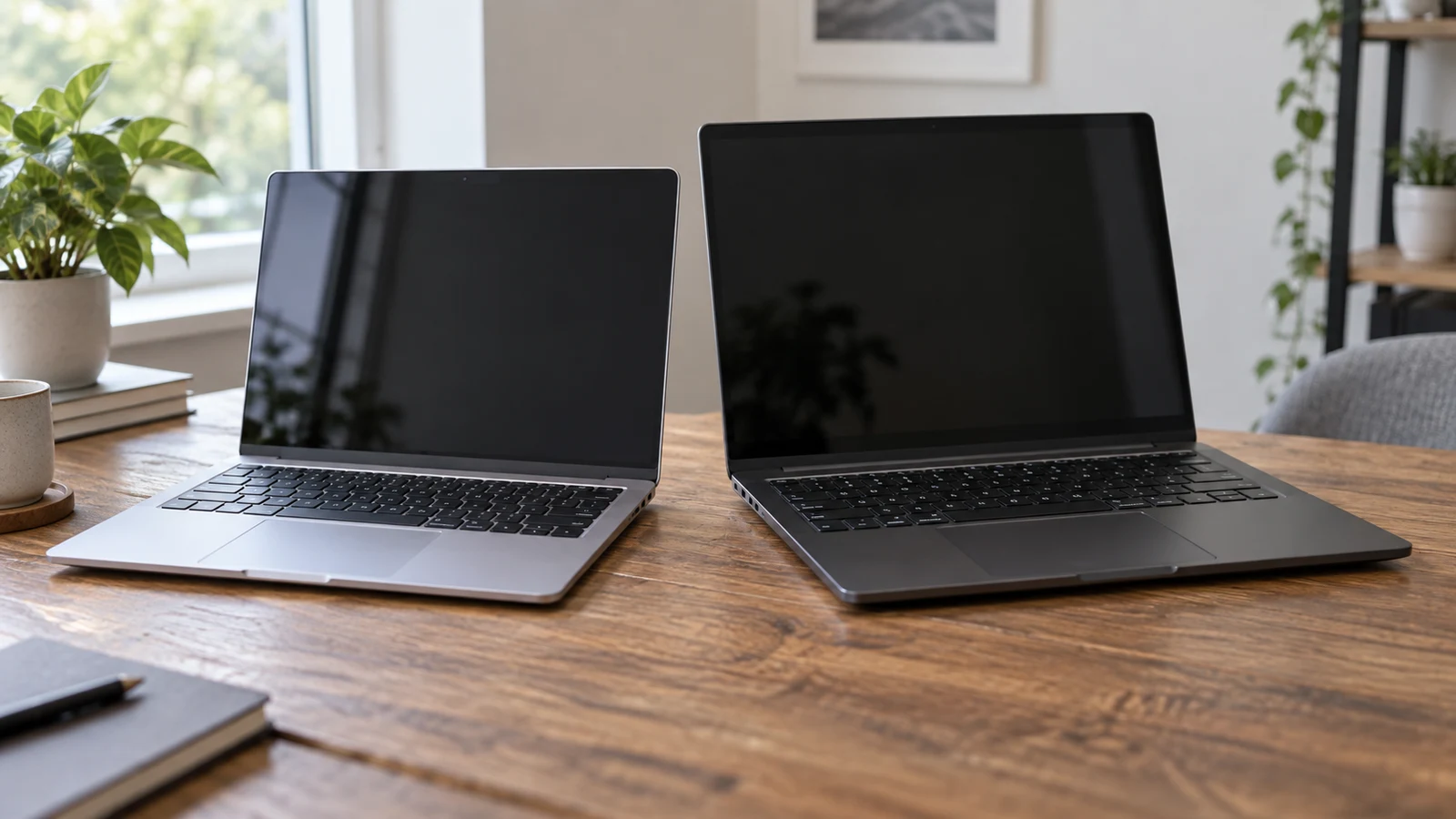
The Auusda 14.1-inch laptop and Gateway i5 notebook present a choice between two different configurations in the same stated screen size. Auusda describes Windows 11 Pro, a Celeron N5095/N5105 processor, 8GB RAM and a 512GB SSD. Gateway describes Windows 10 Home, a Core i5-1135G7, 16GB RAM and a 512GB SSD. Auusda deserves consideration if its confirmed configuration meets your needs and Windows 11 Pro is a requirement. Gateway deserves closer attention if your software calls for its stated hardware, subject to confirming the installed operating system.
Neither description establishes how your own work will perform. The useful distinction is that Auusda leaves the processor choice unresolved, while Gateway names one processor but includes dated Windows upgrade language. Those are different uncertainties, and either could affect a purchase. Before choosing, resolve the uncertainty that matters to your intended use instead of treating the product names as complete specifications.
This comparison concerns the configurations described on these two product pages. It does not establish a winner for gaming, editing, battery endurance or application speed. It also does not assume that every variant sold under either brand has the same equipment. You can use the stated differences to narrow the choice, then confirm the few details that could change your decision.
Gateway Computer Alternative: The Windows And Processor Tradeoff
The Auusda 14.1-inch laptop description identifies Windows 11 Pro and a four-core Intel Celeron N5095/N5105 processor, with a stated speed of up to 2.90 GHz. The slash between the processor names needs clarification. It does not tell you which processor the selected unit contains, and it should not be read as a promise that you can choose either one.
Ask the seller to identify the processor fitted to the variant you intend to buy. Keep the reply associated with that variant so a general answer about the product family does not settle the wrong question. If your software documentation names specific supported processors, the precise model matters more than the description's general positioning as a home or student computer.
Gateway's description names an Intel Core i5-1135G7 processor with a stated 2.40 GHz frequency and an upper figure of 4.20 GHz. It also identifies Intel Iris Xe Graphics. These are stated components, not measured results from this comparison. The clock figures alone do not establish how much faster one notebook would complete a task, and the graphics name does not prove that a particular game or creative application will run as you expect.
The operating-system distinction deserves equal attention. Auusda lists Windows 11 Pro; Gateway lists Windows 10 Home. Gateway's description also contains Windows 11 upgrade wording referring to a rollout in 2021 and 2022. That historical wording does not establish the software currently installed on a unit offered for sale. Ask for the current installed edition and version before treating an upgrade as part of your purchase plan.
If you need a particular Windows edition for work, obtain the requirement from the person responsible for your organization's devices. A product description naming Pro does not establish that the computer will be accepted by an employer or support its complete setup. Likewise, do not dismiss or accept Gateway based on the older operating-system wording without resolving what will actually arrive.
Gateway Computer Alternative: When Each Configuration Deserves A Closer Look
Consider a buyer whose workplace specifically requires Windows 11 Pro. Auusda's stated edition makes it relevant, but the buyer still needs confirmation of the processor and the workplace's other requirements. Gateway's named i5 processor would not settle that operating-system question. In this situation, buying the more appealing processor specification first could leave an unresolved software requirement afterward.
A different buyer may already have software documentation calling for 16GB RAM and identifying acceptable graphics hardware. Gateway's description provides 16GB RAM and a named graphics component to investigate. Auusda's supplied description states 8GB RAM and does not identify its graphics hardware. That does not establish that Gateway is compatible, but it gives this buyer more directly relevant specifications to compare with the software's requirements.
For the second configuration, the Gateway computer alternative provides the product details discussed here. Focus on the requirements that would rule a machine out. If your application needs something neither description establishes, keep that item unresolved. There is no need to turn an incomplete comparison into a confident recommendation.
For job applications, coursework or home administration, describe the actual activity before judging either notebook. Preparing documents in one application is a different buying brief from keeping a live meeting, several browser pages and specialist software open together. These examples do not establish either laptop's performance. They help you ask for relevant evidence instead of accepting a broad claim that a computer is suitable for students or everyday work.
Compare Computer Memory And Storage Without Adding Them Together: These Two Configurations
Auusda's description specifies 8GB RAM and a 512GB SSD, while Gateway's specifies 16GB RAM and a 512GB SSD. For this choice, the practical point is the different stated RAM configuration alongside the same stated drive capacity. Neither description supplies a comparative workload test. Avoid turning those specifications into a promised number of browser tabs, a rendering time or a guarantee that either machine will remain responsive during your busiest session.
The Auusda 14.1-inch laptop description should also take priority over clues embedded in its web address. That address contains a reference to 16GB, but the supplied product description states 8GB RAM. Do not assume the address establishes a different configuration. Ask the seller to confirm the memory installed in the selected unit and retain that answer with the order details.
If the capacity labels themselves need explanation, Compare computer memory and storage without adding them together covers that separate question. Here, the purchase decision is whether the stated configuration satisfies your intended workload. Neither supplied description establishes a RAM upgrade path, so do not choose Auusda on the assumption that you can later change its memory to match Gateway's stated configuration.
The matching SSD capacity also leaves some questions unanswered. Neither description establishes how much usable free space the delivered computer will show after setup, nor does either identify a drive model in the supplied text. If your work involves a substantial local collection of files, check the space you need against the delivered configuration. Avoid treating the capacity label as a description of every storage characteristic.
Gateway Computer Alternative: Equipment That Could Affect Daily Use
Both descriptions list a 14.1-inch IPS display with 1920 x 1080 resolution. That shared specification gives you less reason to choose between them on screen size alone. It does not establish equal brightness, color accuracy or viewing comfort. If you expect to read dense documents for long periods, seek a demonstration of text at your preferred size rather than assuming that the same resolution produces an identical experience.
Auusda explicitly lists a physical webcam privacy switch. Gateway lists a 1.0 MP front-facing camera and a fingerprint scanner identified with Windows Hello. These address different preferences. A buyer who wants a physical camera control has a stated Auusda feature to investigate; a buyer interested in fingerprint sign-in has a stated Gateway feature. The descriptions do not establish that each computer includes the other one's feature.
For wireless connections, Auusda lists Bluetooth 5.0 and dual-band Wi-Fi at 2.4G/5G. Gateway's supplied description lists Bluetooth 5.1 but does not specify its Wi-Fi equipment. If wireless networking is essential to your setup, ask for Gateway's exact specification. Missing detail is a reason to seek clarification, not evidence that a capability is absent or permission to infer it from the notebook category.
Gateway also lists an HDMI output, USB Type-C, USB 3.0 and USB 3.1 connections, plus a Micro SD slot described as supporting up to 512GB. Auusda's supplied description does not provide a physical port inventory. Someone who routinely uses a wired accessory should obtain that inventory before choosing Auusda. For Gateway, confirm the capabilities required by the accessory instead of assuming that a listed connector guarantees every function.
In particular, the presence of USB Type-C does not establish a charging or docking arrangement in this description. If you want to reuse a dock or power supply, ask about the exact combination. The same caution applies to a monitor setup: a named output is useful information, but the supplied text does not establish every supported display configuration. Resolve only the connections you intend to use rather than creating an unnecessary accessory checklist.
Gateway's stated dimensions are 13.1 by 8.75 by 0.75 inches, with a stated weight of 4.0 pounds. Auusda is described as lightweight, but its supplied description does not give a numerical weight or chassis dimensions. You therefore cannot establish which is lighter from these descriptions. If you carry a laptop to interviews, classes or work, obtain Auusda's measurements before comparing bag fit and carrying weight.
Gateway advertises battery life of up to 10 hours. Treat that as the description's upper claim, not an expectation established for your routine. Auusda's supplied description gives no runtime figure, and this comparison includes no battery testing. If working away from a socket is central to your purchase, seek information relevant to that use and confirm the power adapter supplied with the exact unit.
The Gateway description includes Microsoft 365 Personal for 15 months by email delivery. Keep that advertised inclusion separate from the hardware decision and confirm the current package before assigning it value. Auusda's supplied description does not establish an equivalent subscription. Neither a software inclusion nor dated upgrade wording should fill a gap in your understanding of the computer's installed operating system.
Before ordering, request a concise confirmation covering the selected model's processor, installed RAM and Windows edition. Add any unresolved item that would prevent you using the machine, such as a needed port or the supplied power adapter. Check current support and return terms without assuming that a configuration mismatch, unwanted software or disappointing performance automatically qualifies for a particular remedy.
Choose the Auusda 14.1-inch laptop if its confirmed configuration meets your needs and its stated Windows 11 Pro installation or physical webcam switch answers a specific preference. Give Gateway closer consideration when its stated i5 processor, 16GB RAM or documented connections address requirements Auusda has not established. For a laptop intended for a new role or training course, use the employer's or course provider's device requirements to settle the remaining questions before committing to either model.