Product Compatibility & Accessories
Automatic fly-tying bobbin compatibility: keep your vise
Separate the equipment you want to keep from a proposed tool, its named spare parts and the instructions that apply to the intended arrangement.
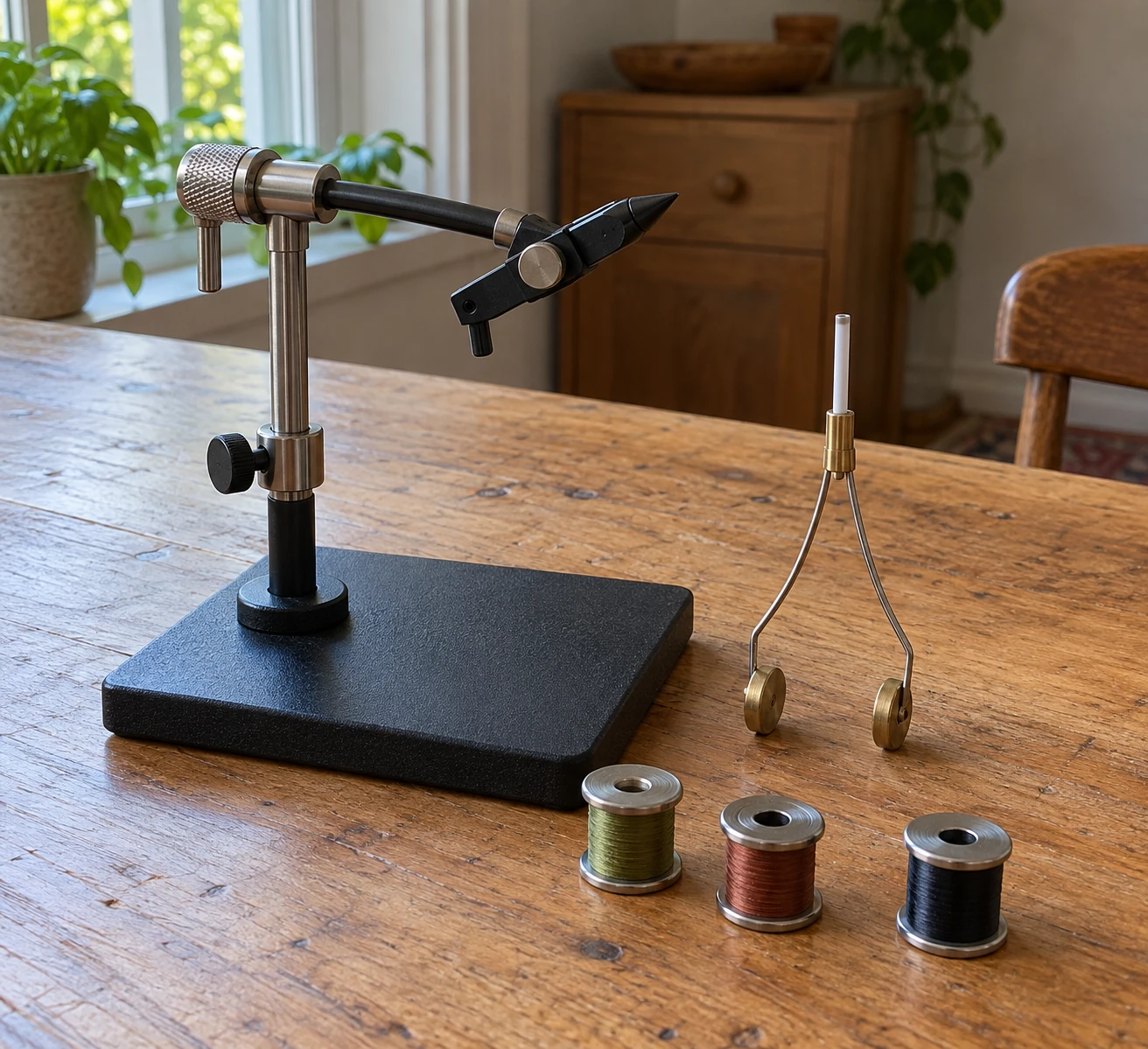
Automatic fly-tying bobbin compatibility involves several separate questions: keeping a familiar vise, choosing a thread holder, and obtaining the supplies that holder requires. A yes to the first question does not settle the others. This guide separates those decisions before comparing two actual packages.
Someone adding a tool to an established tying table has a different shopping problem from someone starting with an empty one. Begin with what you intend to keep. You can then examine the proposed addition without accidentally turning a bobbin purchase into a replacement for your whole collection. Neither product discussed here has been physically tested for this article.
Name the tool and the spool separately
In his Global FlyFisher account of bobbin holders, fly tier Martin Joergensen distinguishes the thread spool from the tool that holds it. He notes that people also call the holder a bobbin. His explanation describes the familiar holder with two legs and a tube, while documenting other constructions and mechanisms.
That vocabulary matters in an enquiry. “I need another bobbin” can leave the seller unsure whether you mean a spare thread spool or a complete tool. Name the actual product and the part you need. A photograph of your existing equipment can accompany the question, but ask the recipient to identify the part before ordering from the reply.
Orvis's tool guide describes a vise as holding the hook, a bobbin as holding and feeding thread, and a whip finisher as making the finishing knot. These are separate jobs. A package containing several tying tools should be assessed by its stated contents, without treating one included tool as a substitute for another.
For your own shopping notes, use the names printed in the selected offer. If a maker uses bobbin where another source says bobbin holder, retain the maker's wording alongside your explanation. That keeps a later question about a spare part attached to the actual item you are considering.
Using a Norvise bobbin with another vise
Norvise says its automatic bobbin can be used with another brand of vise. Keep Norvise bobbin with another vise as that stated arrangement.
Ask separately about the complete tool and its spare parts before requesting advice about compatibility.
If the question concerns an arrangement you already own, include its identity and the intended addition. If you cannot identify an item, say so. A useful answer can acknowledge an unresolved part reference; it need not manufacture a match from a similar-looking photograph. Keep that answer with the corresponding item, especially if you enquire about several offers at once.
The bobbin kit supplies its own named parts
The Norvise bobbin kit lists an automatic bobbin with a ceramic tube, four machined aluminum spools including the fitted one, a spooling arbor and instructions.
Compare an order against that selected offer, rather than against a remembered picture from another page. When asking what is supplied, distinguish an included component from an optional purchase. If the answer changes which package you want, return to the actual offer before placing the order.
A practical buying note can have two columns: “already owned” and “proposed purchase.” Put each actual item in one column, using its identifiable name. Leave an unknown component as unknown. This is a way to describe your own enquiry, not a claim that everything in either column forms a working combination.
Keep Norvise replacement spools with the named bobbin
The maker identifies Norvise replacement spools for its bobbin, also supplied in its kit. It advises against overfilling.
Joergensen's holder survey also describes the Norlander tool as using specially designed spools, with thread transferred onto them. He discusses other holders with different constructions. Those comparisons supply background; they do not identify the unlabelled spool in your drawer or establish permission to modify the tool.
Before adding spare supplies, decide what the extra purchase is meant to answer. Are you replacing a missing item, preparing another thread choice, or buying a second complete tool? Those are different order requests. State the intended request and seek the relevant product information, without assuming that a larger quantity answers an unidentified fit question.
A collection of tools answers a different starting need
The figatia five-piece fly-tying tool set lists a vise, luminous tying thread, a bobbin holder, a knot finisher and a bobbin threader. Its product photographs show those components, including a separate thread spool. The listing does not name an automatic rewind mechanism or identify the pictured spool as a Norvise part.
Orvis also identifies a bodkin for picking fibers, clearing a hook eye and applying head cement, and a hair stacker for aligning hair tips. Those descriptions can help you name a job when asking what a collection supplies.
Read that collection against the items you actually need. A beginner can ask which jobs the listed tools address and which instructions accompany them. Someone retaining an established collection can identify the particular missing item. The package's piece count does not answer either buyer's questions on its own.
A seller's answer should remain attached to the offer that prompted it. If you later select the other package, carry over your questions and obtain the applicable answers. Do not silently carry over an assurance about one identified item as though it described every product sharing the catalog category.
In his separate article about threading a bobbin, Joergensen explains that the thread and tube affect how readily threading works. He warns that a metal threader can scratch an unlined metal tube, while a narrow ceramic-lined passage can restrict a threader loop. This is a reason to ask about the actual tool combination, without recommending a threading method for either selected product. Inclusion of a threader alone does not resolve its use with another holder.
One worked example: an addition to an existing table
Consider Gemma, an invented buyer who wants to keep her current vise while investigating an automatic bobbin. She first names the intended addition, then checks what its kit supplies. She records her remaining question about an unidentified spare spool separately. This leaves her with a clear enquiry instead of a proposed order full of guesses.
Her decision now has three distinct parts. The vise is equipment she intends to retain. The new tool is the purchase she is investigating. The unidentified spare is an unresolved accessory question. She can ask about each without claiming to have assembled or tested anything. The fictional example establishes no model-specific fit.
Gemma would use a different request if she were buying for someone else. She could ask the recipient which actual tool or part they wanted before choosing an offer. A surprise gift is a poor reason to invent an accessory identity. An enquiry can remain open until the intended user provides enough information to make the choice.
Include the learning question in the purchase
In a separate March 2020 article on Norvise's site, ambassador Brian Davenport describes learning the automatic bobbin within his Norvise setup. He discusses thread tension and thread retracting back through the tube. His account gives the purchase a learning context; the vise and thread-post directions belong to the setup he describes.
Obtain the instructions applicable to the actual item and arrangement. When something remains unclear, identify the passage and ask the maker about it. Avoid converting a product photograph into an operating procedure or borrowing a setup direction from a different combination. Keeping familiar equipment can still leave a new tool to learn.
Ask for help at the level of the unanswered question. “Which instructions apply to this item?” needs a different response from “Which replacement part is this?” Keeping those requests separate makes the eventual answer easier to use. It also makes a missing answer visible before you plan a project around the proposed purchase.
Davenport also describes returning to the demonstration after initially missing a detail about his vise rotation. That is his experience with the Norvise system, rather than a direction to rotate another maker's equipment. It shows why a demonstration should be read in its stated setup: a useful learning example can contain instructions that belong to more equipment than the single item you intend to buy.
The word bobbin changes with the craft
The sewing-machine feature guide discusses Brother XM3700 winding wording and Singer 4432 bobbin placement and visibility. Its subjects belong to those machines. It supplies no part approval for a fly-tying holder.
The punch-needle cloth compatibility guide keeps fiber, needle and fabric together and distinguishes tool-specific threading routes. Its threaders and yarn recommendations describe that craft's combinations, without establishing an accessory match for either offer here.
Use those distinctions when describing a replacement to a shop. Include the activity, the actual tool name and the intended part. A familiar word from another hobby can explain how you arrived at the question, but the answer still needs to identify the equipment you are asking about.
Review the order before choosing payment
If you decide to investigate either offer at republeq.com and prefer cryptocurrency, begin with the exact package you intend to order. Read the current selected offer before deciding whether its listed contents answer your enquiry. Confirm the selected offer and resolve any accessory question before choosing a payment method. If the current checkout presents crypto as an option, read the live instructions for that order rather than relying on a previous transaction. Where USDT appears among those options, the token name alone does not establish which network or receiving route the store currently accepts. This article supplies no wallet address, transfer destination or promise that an earlier payment arrangement remains available. Ask through the store's current support channel if an instruction is unclear, and obtain an answer before sending funds. Keep the product discussion attached to the order while you review payment. A completed transfer would not establish that an unidentified spool fits a Norvise bobbin, and a payment preference would not add a vise or thread to a package that does not list it. If you change the selected product, review the order information again before proceeding. Retain the confirmation the store provides and check that the intended purchase has been accepted; a wallet record alone does not answer every order question. You may also decide to leave the purchase for later while learning more about the tool. Neither the choice of USDT nor another available method supplies operating instructions or resolves a missing part reference. Finish those questions with the actual product information and relevant maker before planning work around the purchase.
Automatic fly-tying bobbin compatibility starts with identifiable equipment and a precise intended addition. Keep the actual package, spare-part question and applicable instructions attached to that decision when asking the seller or maker for an answer.