Educational & Explainer Articles
Sewing machine feature labels: free arms and buttonholes
Read sewing machine feature labels for free arms, buttonholes, stitches and bobbins. Keep each claim with the actual Brother XM3700 or Singer 4432 offer.
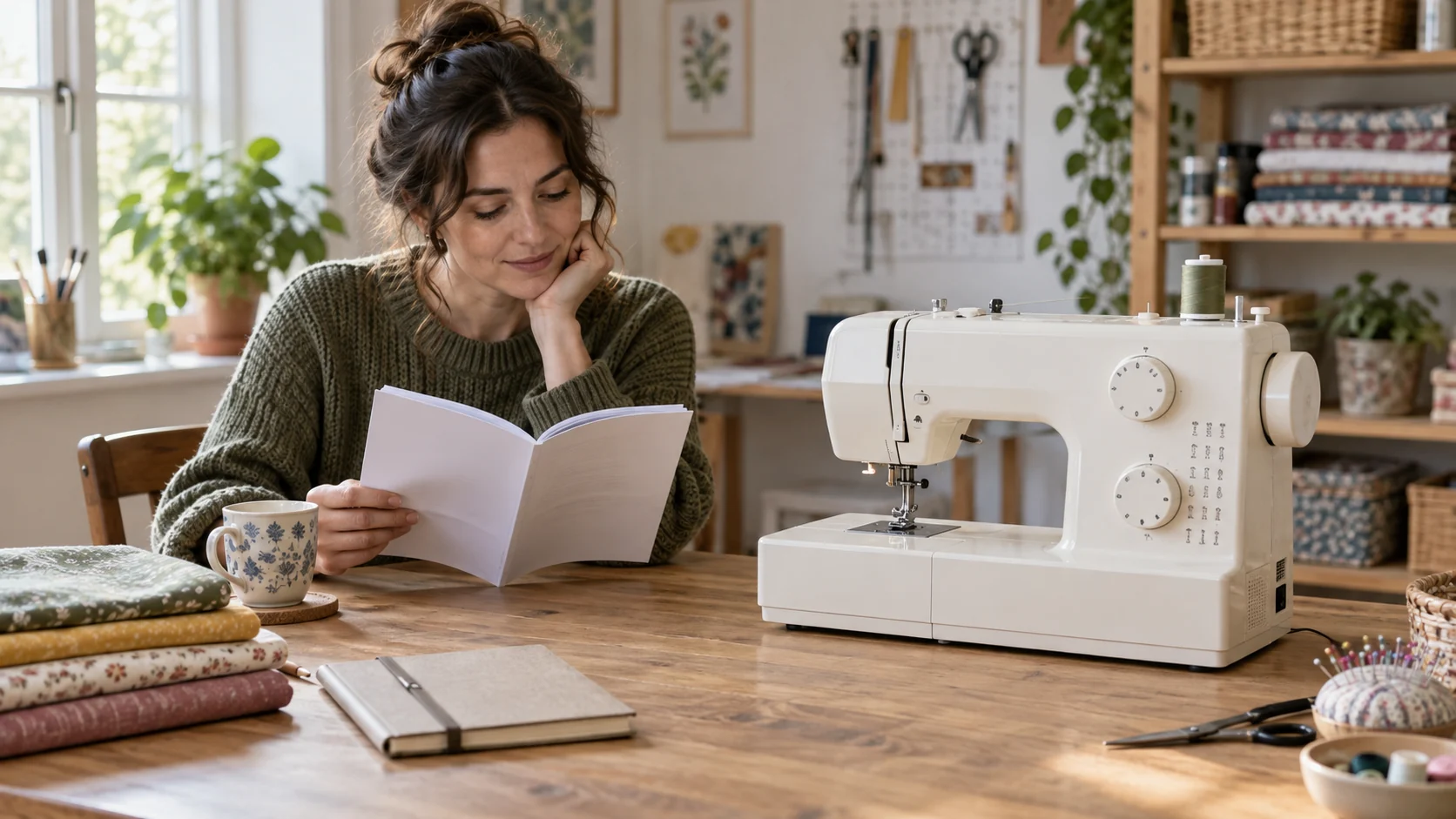
Sewing machine feature labels describe several parts of a possible project. A free arm concerns the shape of the machine’s work area, a buttonhole feature concerns a named sewing task, and a stitch count describes a different kind of choice. Ask which feature addresses the project you have in mind, then look for its model-specific description.
The Brother XM3700 bundle and Singer Heavy Duty 4432 provide two actual examples. Their descriptions give different levels of detail about the terms. This article supplies no threading, needle-changing, machine-control or sewing instructions. A garment project still needs its own applicable material information and the exact machine’s instructions before anyone begins work.
Read the machine name before the feature list
The Brother XM3700 sewing-machine bundle title names 74 stitch functions, a free arm, LED light and a 12-color sewing-thread kit, with two items in the bundle wording. Its complete short description names stitching and quilting, describes bobbin winding as easy, and states one-step, auto-sized buttonholes. The description does not provide a complete stitch table or explain how its function count is assembled.
The Singer Heavy Duty 4432 mechanical sewing machine description gives more detail about individual features. It names 32 built-in stitches, adjustable stitch length and width, three needle positions, a free arm and a fully automatic one-step buttonhole. Those entries belong to this model. Keep an unanswered Brother detail open instead of borrowing Singer’s longer account to complete it.
Brother’s actual catalog category is Brother Embroidery Machines. That placement does not establish an embroidery function absent from the supplied feature account. Singer’s category names Singer Heavy Duty Sewing Machines. A category helps locate an offer; it does not supply the stitch table, supported materials or operating procedure missing from that offer’s description.
Free-arm sewing and the shape of the work area
For free-arm sewing and the shape of the work area, Singer’s description gives a concrete example. It identifies a narrow arm in connection with sleeves and pant legs and calls the surrounding removable compartment an accessory tray. The label concerns the machine’s physical arrangement; it supplies no stitch count or sewing-speed result.
The shape of your intended garment helps identify the clearance you need to ask about. A narrow section of clothing and a broad, flat piece present different handling questions. Singer’s text gives no measurement establishing that your particular sleeve or trouser leg fits over its arm. Obtain the dimensions or an applicable demonstration for the actual item instead of turning the named use into a universal fit claim.
The Brother title also says free arm. Its short description leaves the arm’s dimensions and surrounding components unexplained. Think of the label as a starting point for understanding the work area: the garment section has a physical shape, and the machine has a physical shape it must meet. A sleeve opening does not become larger because a machine has more decorative stitches. Stitch variety and clearance remain separate even when both appear in the same product title.
One-step buttonholes describe a feature, not a complete method
Both descriptions use one-step buttonhole wording. Brother says auto-sized; Singer says fully automatic and names buttonholes on garments such as pants, shirts and jackets. Ask separately about preparation, supported dimensions and material conditions for the buttonhole you want to make. Those details are missing here.
The presence of a buttonhole feature also differs from the contents of the accessory package. Singer lists a buttonhole foot among its included accessories. Brother’s short description and bundle title do not provide an equally complete accessory inventory here. A shared feature name cannot establish that every foot, needle or other item required for a project is supplied in both offers.
A buttonhole can be central to a garment even when its other stitching is simple. That is why a useful feature explanation names the task instead of counting it only as another option. The two listings both name the task, with different qualifying words: Brother emphasizes automatic sizing and Singer emphasizes automatic operation. Their wording leaves preparation and project-specific dimensions unexplained, so the labels alone do not describe the whole job.
Stitch choices and stitch adjustments
When reading stitch choices and stitch adjustments, keep Singer’s stated 32 built-in stitches separate from its adjustable length and width. The description groups its stitches as essential, stretch and decorative. It does not provide an illustrated list of every individual choice in the text here. A buyer who needs a specific stitch should obtain that list for the actual 4432.
The Brother title’s 74 stitch functions use a different label from Singer’s built-in stitches. The short Brother description does not define one function or show whether several functions can relate to one stitch. Do not turn the two numbers into a directly measured variety ranking. The unit and the model-specific definition have to be known before the comparison would answer a useful question.
Singer gives adjustable stitch width with 6 mm wording, adjustable stitch length and three needle positions. A built-in stitch choice, an adjustment and a needle position are separate entries in that account. Selecting a named stitch is a different question from deciding whether its available adjustments meet a planned result. The description supplies no full adjustment table or project setting here. It does not turn three positions into three needles, or 6 mm wording into a complete range.
Bobbin visibility and winding answer different questions
The Brother description calls bobbin winding super easy. Its subject is preparing the bobbin, with convenience emphasized in the wording. It does not describe the bobbin’s position during sewing or show the winding sequence. A beginner reading the product description can recognize that the phrase concerns a different part of the routine from seeing the thread remaining in an installed bobbin. Ease still depends on learning the actual machine’s instructions; the adjective supplies no demonstration.
Singer describes a top drop-in bobbin and transparent bobbin and cover. Its visibility claim concerns seeing the remaining thread. That does not guarantee that a user will never run out during a project. Keep the physical visibility feature separate from the absolute result in the marketing language. No trial here establishes how reliably a user notices a low-thread condition.
Brother emphasizes winding; Singer names placement and visibility. Reading the subjects of those phrases prevents a false choice between them: a winding claim does not tell you that thread is visible while sewing, and a transparent cover does not explain winding. Singer’s accessory account names Class 15 transparent bobbins. The short Brother entry supplies no matching part specification. The common word bobbin leaves those product-specific differences intact.
Accessories are named parts with their own roles
Singer’s list names general-purpose, zipper, buttonhole and button-sewing feet, an edge or quilting guide, needles and bobbins. It also names spool caps and an auxiliary spool pin, a screwdriver, seam ripper and lint brush, a soft dust cover and a foot control with power cord. This is the stated accessory account, without a separate count for every item or a confirmation of the parcel selected at checkout.
The accessory names also distinguish the machine from attachments used with it. Singer lists a zipper foot and a buttonhole foot separately from its general-purpose foot. Their names point to particular tasks, while the machine’s stitch entries describe another part of the equipment. Neither kind of list is a lesson in performing the task. The pack of needles has no complete material-specific specification here, and the soft dust cover is not described as a rigid carrying case.
Brother’s title names its thread kit as part of a two-item bundle. The twelve colors concern the accompanying thread selection. They describe a different part of the package from the machine’s 74 stitch functions. A color assortment may be of interest to someone planning visible stitching, but the title gives no thread lengths or specifications to match to that project. Its color count therefore cannot describe how much sewing the included supply will support.
A material claim still needs the actual project
The Singer description uses heavy-duty and powerful-motor language and discusses both delicate materials and heavier fabric. It also names an extra-high presser-foot lifter and a metal frame with a stainless-steel bedplate. Those construction and feature statements do not establish a complete approved-fabric list or demonstrate performance on your actual layers, seams and thread.
Consider the different questions raised by a sleeve, a buttonhole and a decorative line on one hypothetical garment. The sleeve makes work-area shape relevant. The buttonhole makes that named function relevant. The decorative line makes the actual stitch choices relevant. All three may occur in one project while requiring different features. The example explains the terms; it supplies no permission or settings for sewing an actual garment.
The garment-care planning guide uses the Veeboto washer and Rowenta Perfect Steam Pro to distinguish washing, dewatering and finishing roles. Its actual equipment discussion shows why a named appliance function leaves separate garment decisions open. For a sewing project, keep later garment care separate from sewing-machine features; a free arm or metal frame cannot establish a washing, drying or pressing treatment.
The Newbealer NB318A and Singer ESP260T finishing guide asks how hanging garments and broad flat sections differ for the intended finishing task. That physical-shape discussion can follow a garment project, but the ESP260T is a steam press, not the 4432 sewing machine. Its heated plate, steam figures and garment-care considerations supply no sewing setting or free-arm measurement.
Keep payment and feature questions separate
If you are considering either sewing-machine offer through republeq.com and prefer crypto such as USDT, confirm the exact model and package before selecting a payment method. Read the methods actually offered for that order at checkout and any applicable conditions. A guide’s reference to USDT does not establish acceptance, and a product category does not settle the order’s payment options. If the preferred method is unavailable, leave it out of the purchase plan. Keep the feature questions attached to the machine you are actually considering: Brother’s title supplies a function count and thread-kit wording while its short description leaves several details open; Singer’s longer account supplies specific features and accessories without testing your project. Ask for the stitch information, material requirements and package inventory you need before choosing an order. Payment preference cannot resolve a missing model-specific answer or establish that an included needle, bobbin or thread suits the garment. Confirm the actual condition, applicable return terms and current warranty coverage for the selected offer. A long warranty heading should not replace its separate coverage conditions or establish service for every future problem. Keep any delivery estimate separate from a planned sewing session so the project does not depend on an unconfirmed arrival. If you change the machine or bundle, revisit the questions affected by that change instead of carrying over answers about the previous offer. Save a purchase confirmation with the equipment record, and keep the project’s unresolved questions visible. A USDT transaction, another available payment method or a decision to postpone the purchase provides no additional sewing instruction. The next useful answer is the one that resolves the actual feature or material requirement.
A hypothetical shirt project brings the terms together
Imagine reading the two offers for a hypothetical shirt project that includes a narrow sleeve section and a buttonhole. Singer’s description gives a physical example for the arm, names its one-step buttonhole and separates stitch selection from length and width. Brother names free arm and auto-sized buttonholes but leaves the explanatory detail sparse. You can recognize the same general subjects in both descriptions without imagining that the machines have identical clearances or controls.
Use sewing machine feature labels to understand which part of the intended work a feature addresses. The free arm concerns the work-area shape; the buttonhole entry names a task; a stitch label and its adjustments describe choices within stitching. Bobbin winding and visibility concern different activities around the thread supply. A useful product explanation connects those terms to the project while leaving the exact method to the applicable machine instructions.
Conceptual editorial cover for sewing machine feature labels, with one complete generic machine and a reader consulting a booklet; no exact retail model, stitch inventory or operating method is depicted.