Kitchen & Appliances
Air fryer liner cost: count usable sheets before buying bulk
Count the sheets you can actually use from each liner pack before comparing their current checkout cost per liner.
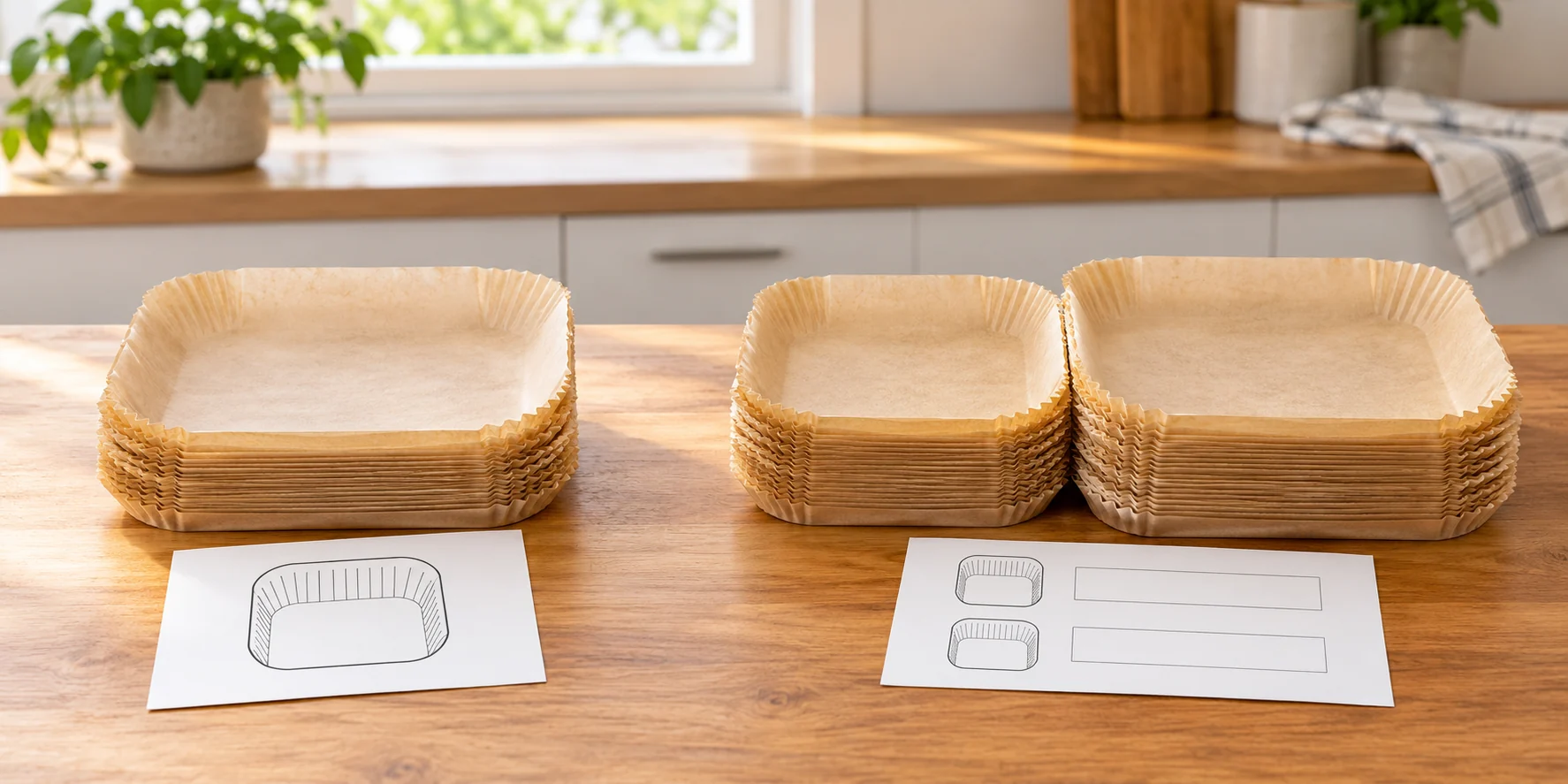
A box of air fryer liners can look inexpensive when the front shows a large piece count. That number is only useful after you know which sheets fit the basket you own and whether its maker permits the liner. Air fryer liner cost is easier to compare when you divide the current checkout amount by the sheets you could actually use. A mixed-size pack makes that denominator especially important: two sizes in one order do not become twice as many useful sheets for a household with one basket.
This guide uses two current square parchment liner offers to build a worksheet, without quoting either price or promising savings. One listing divides 400 sheets between two sizes; the other lists 100 sheets of one size. Your usable count may be lower than the label count. Confirm appliance instructions, liner dimensions, delivery terms and live checkout before deciding. Keep a rejected size out of the cost calculation even if it arrives in the same box.
Count the sheets offered in each size
The current Hyjoy mixed-size square liner listing states 400 pieces total: 200 described as eight-inch liners for 5-8 quart fryers and 200 described as nine-inch liners for 8-12 quart units. Its page gives different top and bottom widths for the two sizes. The one-image gallery shows separate stacks marked 200 pieces each. These are seller descriptions, not a fit test for your appliance. If you can use only the smaller size, the working count is at most 200, even though the order contains 400.
The current SKYSONIC square liner listing states a 100-piece pack of 7.9-inch parchment inserts. Its single gallery image shows a square liner stack beside cooking-chart graphics. The image does not independently count the sheets or establish that the chart is included. Treat 100 as the listed quantity to verify when the order arrives. The stated size may look close to Hyjoy's smaller size, but shape, base dimensions and basket permissions still need their own check.
Write the offers in separate rows. Give each row columns for listed total, size groups, sheets in each group, stated dimensions, selected product variation and evidence you have for fit. For Hyjoy, begin with two groups of 200 rather than one group of 400. For SKYSONIC, begin with one group of 100. Keep “unverified” in the usable-count column until you have checked your actual basket and instructions. The worksheet is a buying aid, not proof of what will be delivered.
Do not combine sheets just because both sellers use the word square. Side walls and top widths can differ while the printed base size looks similar. A sheet that folds into a prohibited opening or catches as the drawer closes may be unusable even when its label names the same quart range as your appliance. Count a size only after the exact candidate and the appliance pass the checks for your intended use. If neither does, the useful count for this comparison is zero and a cost-per-use division would be meaningless.
Establish fit before doing the arithmetic
The air fryer liner fit guide explains the separate basket-measurement and maker-instruction decision. It asks you to identify the appliance model, measure the working basket floor and check the normal path of the drawer. Use that work before assigning a usable count here. A quart label on a liner package does not establish its fit in a particular basket, and this cost worksheet cannot replace the appliance manual.
If you have one air fryer, record its model from the appliance and the parts normally used for cooking. Check whether the maker allows a parchment insert, where it may sit, and any requirements for preheating, airflow or food holding it in place. Check the liner offer's own directions as well. Do not rely on a staged product photograph to resolve a conflict between instructions. A liner that appears to fit the cool basket may still be unsuitable for the way the appliance must be operated.
Measure the basket you use rather than its outer housing. Note the usable base in both directions, corner shape and the height available before the drawer meets the appliance. If a plate or rack normally stays in the basket, measure with it in the required position. Then compare the seller's base, top and side-wall dimensions where available. Ask the seller for missing measurements. A nominal 7.9-inch or eight-inch label cannot tell you how a folded wall will behave at the rim.
For a household with two different baskets, make two worksheet columns. You might be able to allocate Hyjoy's 200 smaller sheets to one basket and 200 larger sheets to another, but only if each size independently passes the fit and instruction checks. Do not count both groups simply because the household owns two appliances. If the larger appliance never permits liners, those 200 sheets remain unusable for that planned job. If the two baskets share one acceptable size, assess each pack against actual consumption instead of assuming a variety pack is automatically efficient.
The material matters as a permission question. The wax paper and parchment guide distinguishes wrapping without heat from a later heated cooking task. These two offers describe parchment air fryer liners, but that shared material term does not certify them for every appliance or recipe. Use the exact liner instructions and your appliance manual. Do not substitute ordinary wax paper or an unlabeled sheet because it looks similar in a drawer.
Calculate cost per usable sheet at checkout
Once a size passes the relevant checks, copy the current final amount for that exact offer into the worksheet. Include the amount you would actually pay for the selected quantity and delivery route, including any applicable shipping and tax shown at checkout. Do not use an old screenshot, a price from a different pack, or a unit price printed in another article. A saved guide cannot know the current basket total, promotion or stock status. If checkout shows a changed variation, update the count and dimensions before calculating.
For each offer, divide its current final amount by the number of sheets you expect to use. The result is a cost per usable sheet for your specific plan, not a general product ranking. If a 400-sheet mixed pack gives you only 200 compatible sheets, use 200 as the denominator. If both groups pass for two baskets and you will use both, 400 may be a reasonable denominator. If the 100-sheet single-size pack passes, use 100. Do not perform the division when compatibility is unresolved.
The comparison can change without either listing changing price. Suppose a household initially expects to use both Hyjoy sizes, then discovers that its second basket cannot accept the larger one. Its denominator falls from a possible 400 to a possible 200. The same checkout total is spread over fewer useful sheets. This is why a pack with more pieces need not have the lower effective unit cost. No numeric example is needed: the worksheet reveals which assumption changes the answer.
If you buy for a group, state whose baskets and instructions were checked. Do not treat one person's fit result as permission for all participants. A shared order may reduce repeated delivery charges, but it also creates a risk that some recipients receive a size they cannot use. Record the number of confirmed recipients for each size and allocate the sheet groups accordingly. Compare the combined live checkout amount only after the intended allocation has actual owners.
A lower calculated unit cost is not automatically the better purchase. A pack may occupy space for a long time, or its second size may sit unused after your cooking pattern changes. Decide how many meals or cooking sessions you plan to use a liner for under the maker's instructions, without assuming every session needs one. Estimate a sensible supply period and note where the package will be stored. If you have no confirmed use for most of a large pack, the extra pieces do not become savings merely because they lower a nominal per-sheet figure.
Set a reorder point that fits actual use
After trying a permitted and compatible liner, count how often you choose to use one. Keep a short tally over ordinary cooking sessions rather than extrapolating from a special event. If you use liners only for certain foods or cleanup jobs, the pack may last much longer than a simple daily-use estimate suggests. A household that cooks in two baskets should track the sizes separately. This gives you a practical reorder point instead of a shelf full of one size while the other runs out.
Check the return and delivery terms before making a large order. An unopened extra size may or may not be returnable under the terms shown for the current product and location. Do not build expected refund value into the cost worksheet unless you have the applicable terms and can meet them. Package condition, opened materials and delivery timing can matter. If the listing is uncertain about the split count, ask for an exact answer before paying rather than hoping a return will fix the mismatch.
Use one small first order or a seller answer to resolve an important unknown when possible. The point is to learn the exact fit and delivered form before accumulating supply. If the only current offer is a large pack, keep the uncertainty visible in your decision: the worksheet can show a potential cost per usable sheet and a separate “fit not yet verified” note. It should not quietly turn a guess into a count. The product's listed heat and nonstick claims remain seller statements until you have appropriate product-specific evidence.
When the order arrives, compare its label and physical contents with the selected offer. Count the size groups, inspect for obvious damage and keep the package identification. Do a cool, unpowered placement check only if the appliance instructions permit it. Use the liner during cooking only as directed by both makers. One successful use in one basket does not certify a different model, a different liner size or every cooking mode. Record a mismatch before ordering a larger replacement pack.
Keep pack-count and performance claims separate
Both product pages include seller language about cleanup, resistance to oil or water and cooking convenience. Those statements do not supply a measured side-by-side performance test. Do not add a cleaning-time saving to the cost worksheet without your own relevant evidence, and do not assume a liner extends appliance life. A unit-cost calculation can use the listed count and current checkout amount while leaving durability and cleanup benefits unproven. That keeps the financial comparison tied to information you can check.
The gallery images are useful for physical identity, but they have limits. Hyjoy's image clearly separates the two printed size groups; SKYSONIC's image shows a stack and a chart. Neither gallery proves the delivered count, exact fit, food safety or final price. If the listing text and a variation selector disagree, stop and resolve the discrepancy. Do not let the most prominent picture decide which size is in your cart. Save the exact selected variation and order record with your worksheet.
Storage has a cost in space and attention even when you do not assign it a specific figure. Keep dry paper liners in their original package or another arrangement the seller recommends, away from a place where they may be confused with other kitchen sheets. Label the two size groups separately if a mixed pack arrives in similar-looking stacks. Before using an older leftover, check that its source and current instructions are still clear. An unlabeled loose sheet should not enter an appliance on visual resemblance alone.
If you decide to share or give away the size you cannot use, do not count those sheets as a personal saving unless there is a real recipient and the item's terms permit the transfer you intend. Provide the package identification and instructions with any transferred pieces. Someone else's basket may have different dimensions and restrictions. The worksheet can mark those sheets as allocated to another owner, but should not count them twice in both households' useful totals.
Recheck the exact basket before payment
A Republeq checkout may present cryptocurrency as a payment route, but this guide does not establish whether it is offered for either liner pack in your current basket. Treat product fit and payment as separate decisions. Confirm the product URLs, selected variation, size split, quantity, shipping destination and total before choosing any route. If cryptocurrency appears, use only the asset, network, address, amount and time limit displayed for that specific checkout. A network remembered from another order is not a substitute for the current instructions.
Read the sending wallet's network and fee details against the live order. Do not infer that a familiar token name means the same network. If the cart changes after you copied payment instructions, return to the current checkout and check whether the amount or order reference changed. A wrong network or stale address can make payment difficult to reconcile. Keep the order reference and transaction identifier. If the wallet shows a transfer while the order remains unconfirmed, ask the seller or payment service to reconcile that first attempt before sending another transfer.
A second transfer can create duplicate payment without resolving the first. A payment confirmation does not verify the liner count, basket fit or seller performance claims. Likewise, a sheet that fits a cool basket does not prove the checkout accepted funds. Keep these observations in separate records. The live total used in your cost-per-usable-sheet calculation should be the amount relevant to the actual order, including charges shown at the time, rather than a guessed price from a product card.
If you pay by another route, the same product checks still apply. Copy the exact final basket total and selected quantity before submitting payment. If a delivery or discount term changes, update the worksheet. Do not repeat an uncertain order merely because the page is slow; reconcile its status first. When a receipt arrives, compare its product identity and variation with what you planned. The receipt is evidence of an order, not a test of how the liner behaves in a heated appliance.
The practical decision is to establish an allowed, physical fit and then price only the sheets you have a realistic plan to use. Hyjoy's listed 400 sheets are split between two sizes; SKYSONIC's listed 100 are in one stated size. Your basket, current checkout and intended rate of use determine the comparison. Keep any unknown size, performance claim or payment state out of the “confirmed” column until you have the relevant evidence.