Crypto Commerce
Acuvar 6K camcorder versus Campbell 4K vlogging camera
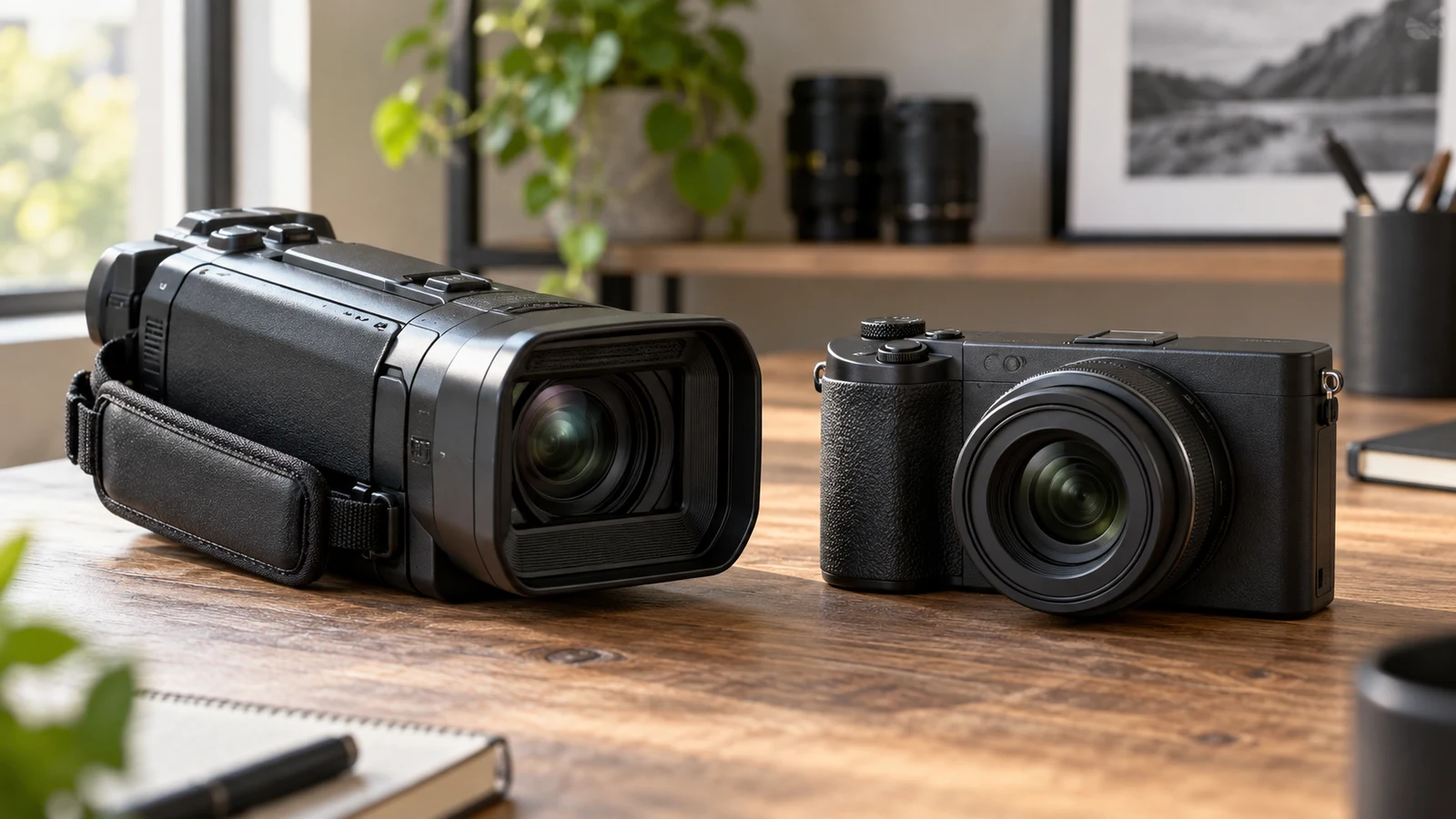
The Acuvar 6K camcorder and Campbell 4K vlogging camera leave a creator with different questions to resolve before buying. Acuvar’s description lists 4K and 6K capture at 60FPS, plus a shotgun microphone, detachable light and included memory card. Campbell’s description names autofocus and stabilization. For someone recording alone, the choice depends on whether Acuvar’s stated recording options and accessories matter more than Campbell’s stated focusing assistance. Neither description establishes which camera produces better finished footage.
The Acuvar 6K camcorder and Campbell 4K vlogging camera leave a creator with different questions to resolve before buying. Acuvar’s description lists 4K and 6K capture at 60FPS, plus a shotgun microphone, detachable light and included memory card. Campbell’s description names autofocus and stabilization. For someone recording alone, the choice depends on whether Acuvar’s stated recording options and accessories matter more than Campbell’s stated focusing assistance. Neither description establishes which camera produces better finished footage.
Acuvar has the more detailed supplied description of its recording bundle. Campbell provides more explicit information about focus and stabilization, but does not specify its video frame rate. These differences support a shortlist, not a measured performance ranking. Before choosing, identify what usually makes your recordings difficult: keeping yourself sharp while speaking, capturing movement at your intended frame rate, recording usable speech, or getting files into your editor without extra work.
For example, imagine recording a solo commentary in which you sometimes lean toward the camera to read a passage. Focus behavior could affect how many takes you keep. If your work instead involves recording energetic performances for later editing, the available frame-rate settings may deserve more attention. Both are reasonable priorities. The descriptions provide different pieces of the answer, and neither tells you how reliably the camera will handle your particular recording situation.
Campbell Camera Alternative: What The Descriptions Establish
The Acuvar 6K camcorder description states support for Ultra HD 4K and 6K capture at 60FPS, along with 64MP still images. It also lists 18X digital zoom and a flip-out screen. Those are affirmative catalog claims, but they do not establish native sensor resolution, recorded image detail or the full menu of selectable modes. Ask for the recording-mode information for the selected unit if a particular resolution and frame-rate combination determines your purchase.
The Campbell camera alternative lists 4K video, 64MP still images and 18X digital zoom. Its description also names autofocus, stabilization, wireless file transfer, SD card support and an included microphone. The exact listed model carries SKU sku-18802713610. Keeping that identifier with your questions helps distinguish this camera from similarly described products. Its description does not specify a frame rate, stabilization method or included memory-card capacity.
Both cameras carry the same stated still-image megapixel count and digital-zoom multiplier, so those shared labels do little to separate them. Avoid treating them as evidence that image quality is equal, either. If photographs will accompany your videos, request original still files from each camera and inspect the details that matter to your work. A creator photographing fabric, for instance, can look at texture and color transitions without assuming that a large megapixel label guarantees either.
Acuvar’s higher resolution label is relevant if you have a reason to use that recording setting. It does not settle the whole comparison. Request original video files, preferably with their recording settings identified, before relying on claims about sharpness or motion. A sample that has already been edited and uploaded introduces additional uncertainty about what the camera originally saved. An original file also gives you something useful to open in your own editing software.
For focus, Campbell’s description gives it a stated capability that Acuvar’s supplied description does not address. That omission does not establish that Acuvar lacks autofocus. It means you should confirm its focusing method before relying on it for unattended recording. With Campbell, ask how focus behaves during video and whether the relevant controls are available while recording. The word autofocus alone does not answer questions about adjustment speed, subject selection or unwanted changes during a take.
Campbell also lists stabilization, without identifying its implementation or performance. If handheld recording is important, request footage made while holding the camera in a way comparable to your intended use. Look for distracting changes in the view and decide whether the result meets your needs. Acuvar’s supplied description does not establish a stabilization capability. Neither camera should receive an assumed advantage based on features attributed to other models from the same brand.
Campbell Camera Alternative: Compare Speech And Editing Work
Acuvar’s package description includes an external shotgun microphone and a detachable 36-bead LED light with three brightness settings. Campbell’s description includes a microphone but does not specify its type. This makes Acuvar’s accessory information more concrete, particularly for someone assembling a first recording setup. It does not prove that its microphone will deliver better speech recordings. The descriptions provide no comparable audio samples or measured performance that would support that conclusion.
For spoken videos, ask for an unprocessed voice sample with the microphone arrangement identified. Listen during pauses as well as speech, and consider whether the recording would need cleanup before publication. Confirm any controls you need, such as recording-level adjustment or audio monitoring, because neither supplied description establishes them. If you already own a microphone, check the actual connection and compatibility requirements separately. The presence of a bundled microphone does not establish compatibility with your existing equipment.
The Acuvar light offers listed brightness choices, but its description does not establish useful lighting distance or how it renders skin tones. Ask to see an example at a distance similar to your recording position. Also confirm how the light attaches and receives power before assuming the bundle works with your preferred arrangement. Campbell’s supplied description does not list a light, so account for your lighting needs separately when comparing what each purchase would cover.
Editing is another place where a higher recording specification can introduce questions. The descriptions do not identify the video codec, bitrate or complete file-format options for either camera. Those omissions prevent a reliable comparison of editing demands from the descriptions alone. Try an original sample in the software and computer you intend to use. Check whether it imports correctly, plays acceptably and exports as expected before making a recording mode central to your plans.
If a sample needs conversion or proxy files before you can edit comfortably, decide whether that extra preparation fits your routine. A creator producing occasional projects may accept steps that would be frustrating for frequent uploads. Keep this assessment specific to the files you actually try; there is no supplied evidence that either camera necessarily requires extra processing. The useful comparison is how each camera’s output fits your editing process, including any preparation you would need to repeat.
Use Camera Battery Planning For Time Away From Charging: Setup Questions
Acuvar’s description includes a rechargeable battery, while Campbell’s specifies a 4500mAh battery. These statements do not establish comparative recording endurance. No comparable runtime figures or test conditions are supplied. Acuvar’s description uses a general claim about long-lasting operation, but that wording should not become a promised recording duration. For either camera, ask about operation in the mode you expect to use and confirm charging requirements before planning a session around an assumed battery life.
Use camera battery planning for time away from charging when evaluating outings where charging access is uncertain. For this comparison, keep the buying question narrow: does the selected package support your intended recording period, and what power accessories would you need? Confirm whether replacement batteries are available and whether your intended power arrangement is supported. Neither supplied description answers those questions, so avoid treating a battery’s inclusion or capacity label as a complete power plan.
Memory is a separate package difference. Acuvar lists an included 64GB SD card, whereas Campbell lists SD card support without stating that a card comes in the box. Do not equate support with inclusion when comparing purchase costs. Confirm the card requirements for your selected recording mode and the contents of the actual variant. This is especially useful if you already own cards and want to know whether you can use them, rather than automatically buying replacements.
The Acuvar 6K camcorder description also lists remote control and wireless file transfer through built-in WiFi, as well as live stream webcam use for Zoom, streaming platforms or online classes. Campbell’s description establishes WiFi file transfer, but does not establish remote camera control or webcam operation. Keep those functions separate. A wireless connection by itself does not answer whether a camera can perform the particular computer or phone task you have in mind.
If webcam use matters, confirm Acuvar’s setup requirements for your computer and intended software. Ask which connection is used, what accessories are necessary and whether any limitations apply to that operating mode. Its recording-resolution claims do not establish its webcam output settings. For wireless transfer on either camera, confirm the supported device and application requirements. Neither description provides enough detail to promise a particular setup procedure or compatibility with every phone or computer.
Physical handling deserves a check before committing to either model. Acuvar lists a flip-out screen, but the descriptions do not provide a complete account of button placement, menu operation or accessory clearance. Ask whether the screen remains usable with the microphone and light attached in your intended arrangement. For both cameras, request the care instructions and supported mounting details if those affect your setup. Do not assume weather resistance, cleaning methods or mounting compatibility from the camera’s appearance.
Campbell Camera Alternative: Make The Purchase Fit Your Work
Acuvar is the more directly documented candidate if your priorities are its stated 60FPS capture options and the specifically listed microphone, light and memory card. Campbell deserves closer consideration if autofocus and stabilization are central to how you record. These are conditional reasons to investigate each model, not guarantees of results. Someone who needs dependable unattended focus should resolve that question before allowing accessory count or a larger resolution label to decide the purchase.
Build your final comparison around the capability you cannot work around easily. If audio is the concern, prioritize a representative speech sample. If editing delays would disrupt your upload schedule, prioritize trying an original file. Where focus behavior determines whether footage is usable, seek a demonstration relevant to your recording style. You do not need to investigate every possible feature equally; concentrate on the uncertainty that could make the selected camera unsuitable for your work.
Before ordering, confirm the selected model and variant, current availability, price and package contents. The supplied catalog information does not establish what your final order total or support terms will be. Read the terms presented for the purchase, including any applicable return conditions, without assuming that a sample-file concern guarantees a return option. If paying with cryptocurrency, check the payment instructions shown for that order. Nothing in this camera comparison establishes a fee, supported network or refund entitlement.
Return to the two product descriptions with your intended recording setup written down, then resolve the question most likely to change your choice. Acuvar’s stated capture options and bundle may suit a creator who wants those specific tools together. Campbell’s stated autofocus and stabilization may better match another creator’s priorities. Choose once the selected camera’s relevant capabilities and package are clear enough for your project, with any remaining uncertainty reflected in what you are willing to spend.