Furniture & Home Organization
13-gallon trash bag budget: choose handles or drawstrings before pack size
Use a bin fit and removal test to choose handled or drawstring 13-gallon bags, then pick a pack size you can use.
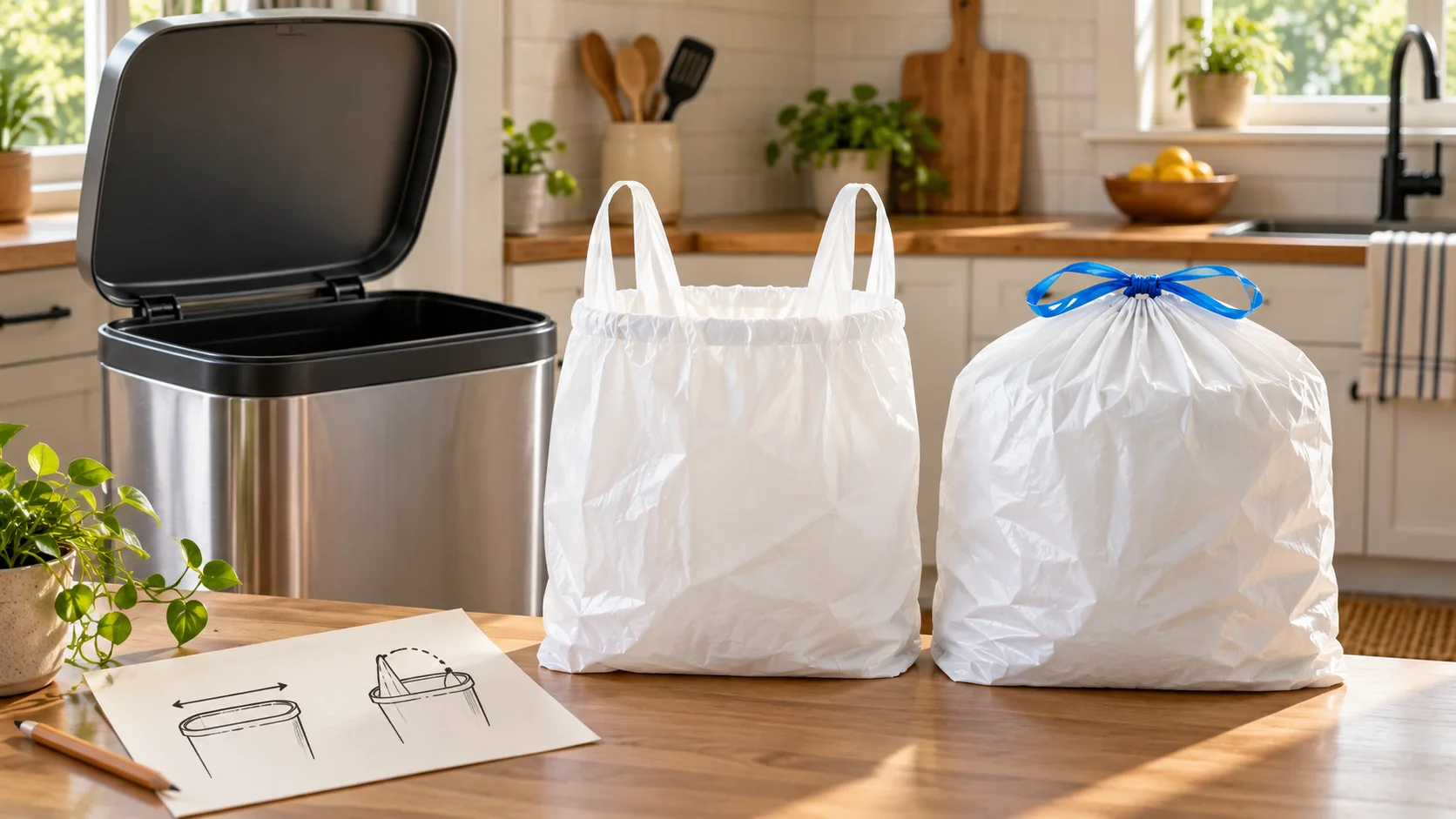
A 13-gallon label tells you the capacity printed on a box. It does not tell you whether the liner stays on your bin rim, whether you can close it comfortably, or whether a full bag will clear the cabinet where the bin sits. Those details matter when you buy a large pack. This 13-gallon trash bag budget starts with the bag-changing job in your kitchen, then looks at how many bags you will use. The two examples are current Republeq listings for a 90-count handled tall-kitchen bag and a 150-count drawstring 13-gallon bag. Their listed counts and closure styles are useful for this exercise; neither listing proves fit in your bin or performance in your kitchen.
Write down the bin problem before comparing boxes
Look at the bin you already use. Is its rim exposed, tucked under a lid, or hidden inside a pull-out cabinet? Does the liner need to fold over the rim to stay put? Is there a notch or retaining ring? Measure the opening and the depth that the bag has to reach. If you have the old box, compare its printed dimensions with the measurements you just took. A matching capacity number alone is too little evidence. Shape, overhang and the space taken by a closure can change how the same nominal capacity behaves on a particular bin.
Then follow one normal bag change. Pull the bag up as you usually do, close it, lift it through the cabinet opening if there is one, and carry it to the collection point. Note the step that causes trouble. A liner that slips while you fill the bin calls for a rim check. A bag that is hard to tie after it is full calls for a closure check. If the cabinet door catches a bulging bag, count that as a clearance problem before buying another box. This is a short household observation, not a test of either Republeq offer.
Handled liner: check where the handles go
The first native listing describes a 90-count pack of 13-gallon tall kitchen bags with handles. Its single gallery image shows a box marked “90 tall kitchen bags with handles” and “13 gal.” The merchant listing calls the brand NOBRAND while the photographed package carries a different logo. Treat the count, capacity and handle form as the visible comparison points; do not infer a manufacturer from the inconsistent brand fields.
On your existing handled bags, find out whether the handles help you with the step that matters. They may give you places to grasp, yet a handle that sits inside a tight cabinet may be awkward to reach. Try pulling an empty liner over the rim and closing the lid. Look for enough overhang to stay in place without stretching the handles across a sharp edge. When you remove a full bag, check whether you can bring the handles together and make the closure you normally use. The article cannot promise that a particular handle design will suit your hand, bin or waste load.
If you already use handled bags and the routine works, write down the pack size you normally finish before it is time to reorder. That gives you a practical stock target. A 90-count box is a count of bags offered, not a promise that every bag will be useful if the size or closure does not fit.
Drawstring liner: check the cinch and the lid
The second native listing describes a 150-pack of 13-gallon drawstring kitchen bags. Its single gallery image also shows “150 trash bags,” “13 gallon” and a drawstring closure. The photographed box carries a logo even though the merchant brand field says Unbranded. We use the count and drawstring form here and leave manufacturer identity unresolved. The listing contains claims about odor and strength; we did not test those claims and do not use them to choose between the packs.
With a drawstring bag already available at home, pull the liner over the bin rim and close the lid. If you tuck the drawstring under the rim, check that you can still find and pull it later. If the bin has a retaining ring, verify that the drawstring does not bunch beneath it. At removal, cinch the bag the way you actually would and lift it through the narrowest point on the route. Notice whether a tied drawstring has enough room to pass the cabinet opening. These checks tell you about your setup; they cannot establish the fit of an unopened online purchase.
A 150-count pack means more bags to store. Before treating that as useful, check the drawer, shelf or cupboard where the box will live. A large box that blocks other supplies or gets split into unlabelled loose rolls can make the household reorder count less reliable. Keep the count on the box or mark it on a storage note.
Make the pack decision after the closure decision
Use a small record with four entries: your bin opening and depth, the closure style that works on the normal removal route, how often you change the bag, and how many spare bags your storage area holds. The first two entries decide whether a pack is eligible for your household. The last two help you choose quantity. If you have not tried one of the closure styles, buy only after checking the return terms and the actual bag dimensions on the current product page or package. Avoid treating an untested 150-count pack as a bargain merely because its count is larger.
You can estimate how long a box will sit in storage without claiming a savings figure. Count the bag changes you made in a typical week, then divide the offered pack count by that weekly use. The result is only a planning estimate. Holidays, guests, sorting habits and missed collection days can change it. If some bags are unusable because they do not fit, use the number you can actually use instead of the printed count. That is a reason to validate fit early, before you commit shelf space to a large supply.
Check the current checkout total, delivery terms and any local tax before doing a money comparison. Listing prices can change; this guide does not quote either current price or declare a winner. If both closures pass your bin and removal test, you can divide each real checkout total by its usable bag count. Keep the same currency and include the same kinds of delivery cost in both totals. If only one closure works, a lower unit figure on the other box is not a practical saving. For a different kind of usable-count example, the air fryer liner cost guide shows why a large printed count can overstate the units that fit one appliance. That guide addresses liner sizes and appliance instructions; this one addresses a kitchen bin and bag closure.
Check the rim with the lid open and closed
The upper edge of a kitchen bin does two jobs. It holds the liner while you add waste, and it leaves enough bag material free for removal. Put an empty bag of the closure style you already own into the bin. Smooth it into the corners without pulling hard on the top. Fold the edge over the rim as you normally would. Note where the handles or drawstring sit. If they have to be buried under a retaining ring, try lifting the liner back out before deciding that the arrangement is convenient. A neat fit in an empty bin can turn into a difficult removal when the bag is full.
Close the lid several times. Listen and look for an edge that catches. If the bin slides into a cabinet, push it in and pull it out with an empty liner installed. That small test is especially useful when a handle loop projects above the rim or a drawstring gathers at one corner. Mark the location where the lid or cabinet touches the bag. You can then compare the current package dimensions and closure position with that actual clearance. Do not use this check to infer how much weight a bag can carry. The listings do not provide a verified household load test.
If no compatible sample is already in the house, take the bin's measurements and the old package to the shop or compare them with the current online specifications. A return policy can make a small trial less costly than committing to a much larger box, but read the current terms before relying on that option. The 90-count and 150-count products in this guide are examples of different closure forms, not laboratory substitutes for a fit check with your bin.
Watch one full removal, including the carry path
A full bag changes the part of the job that matters. With the liner you currently use, notice whether you first loosen the rim, pull the bag straight up, or tilt the bin. Check how much bag material remains above the contents. If you must hold the mouth closed with one hand while opening a cabinet door with the other, the closure style can affect the routine. Loop handles give two grasping points; a drawstring gathers the opening when pulled. Neither form automatically solves a tight cabinet exit or a narrow hallway.
Walk the normal carry route once. Consider where the bag touches the floor, the bin lid, a cabinet hinge, or a doorway. A path that forces you to turn the bag sideways may make a wide, overfilled bag inconvenient regardless of its nominal 13-gallon capacity. If a household member has trouble reaching or gripping the current closure, let that person try the normal removal with the existing bag before buying a box for everyone. These are local usability observations; they do not turn into a strength, leakage or accessibility certification for either product.
Make the decision in plain terms: “The handle style clears the lid and I can tie it on the way out,” or “The drawstring stays reachable under the rim and closes before I lift.” If neither statement is true for your current examples, a larger pack of either style is premature. Look for dimensions and a closure you can verify with a smaller amount first. The aim is to avoid storing a box whose bag change is troublesome every time.
Separate bag changes from other household waste jobs
A kitchen bin is usually only one collection point. Do not count bathroom, office or outdoor bags as demand for this 13-gallon pack unless those bins take the same liner and closure. In a shared home, ask who changes each bin. One person may leave a bag in place until collection day while another changes it after cooking. A stock estimate based on one person's memory can be off even when both are honest. Count actual changes for a short period, then write the number next to the bin it belongs to.
Keep specialty bags out of the comparison. If you use a different size for yard debris, recycling, sharp packaging or a pet-litter task, those changes do not consume a 13-gallon kitchen liner from this box. The native product pages here identify kitchen trash bags, and the article makes no claim that either is suitable for other waste streams. Follow local collection rules and your own bin's instructions for those uses.
During a trial week, record each kitchen bag change with a tally mark. Add a short reason only when it helps: full, odor concern, cleanup, or collection schedule. The tally is more useful than trying to recall an average month later. Use it to estimate when the current box will run low. Then decide whether the available storage can hold the pack you want. If the count changes seasonally, keep a range rather than presenting one precise finish date.
Read the offer as an offer, not a product test
Both Product pages have one image in their current native galleries. Those images support the visible 90 and 150 bag counts, the shared 13-gallon label, and the different handle or drawstring designs. The merchant pages give a title, description, one offered variant and stock status. That is enough to build a careful buying checklist. It is not enough to prove either bag's tear resistance, odor control, recycled content or lifetime in a particular home. Do not turn marketing words on a box into measured results.
The merchant brand labels also deserve caution. One page uses NOBRAND while its photographed box has a Hippo Sak logo. The other uses Unbranded while its box has a MegaFlex logo. Those are visible differences between the listing fields and images. They do not change the two article examples into confirmed manufacturer comparisons. If the brand matters to you, ask the seller which exact package is being shipped and retain the answer with your order record. For this guide, the comparison remains the closure, capacity and count shown by the current native offers.
Stock and terms can change after an article is written. Open the current product page before ordering, confirm the selected variant and check the package count at checkout. Shipping cost and returns also belong to the live order, not to this static guide. If a listing later changes its image or count, redo the household estimate with the offer you can actually buy. The decision method survives a changing catalog because it starts with your bin and your bag-changing routine.
Keep the reorder note specific
Once you know which closure works, write a short note where you store the spare bags: “13-gallon; handles” or “13-gallon; drawstring,” plus the dimensions from the package that actually fit. Add the date you opened the box and a rough count of bags left when you next shop. A household with a laundry cycle can use a similar reserve note for linens; the bath towel reserve budget guide explains how availability during laundry changes a useful stock count. Here the unit is a disposable bag, so the note is a reorder aid rather than a claim that one box will last for a set number of weeks.
Keep the packaging or a photograph of its dimensions until the next reorder. If a new box arrives with a different closure, do the rim and removal check again. If the merchant title and photographed box disagree about a brand, confirm the exact current offer with the seller before relying on brand-specific features. A successful choice is the one your bin and routine can use, in a quantity you can store and finish.