Crypto Commerce
ZLINE RWDO-SN-24 wine cooler or Ca'Lefort CLF-WS24 for a wine collection
Compare ZLINE RWDO-SN-24 wine cooler by bottle layout, temperature zones, shelf materials, installation clearance, door glass, lighting, and service.
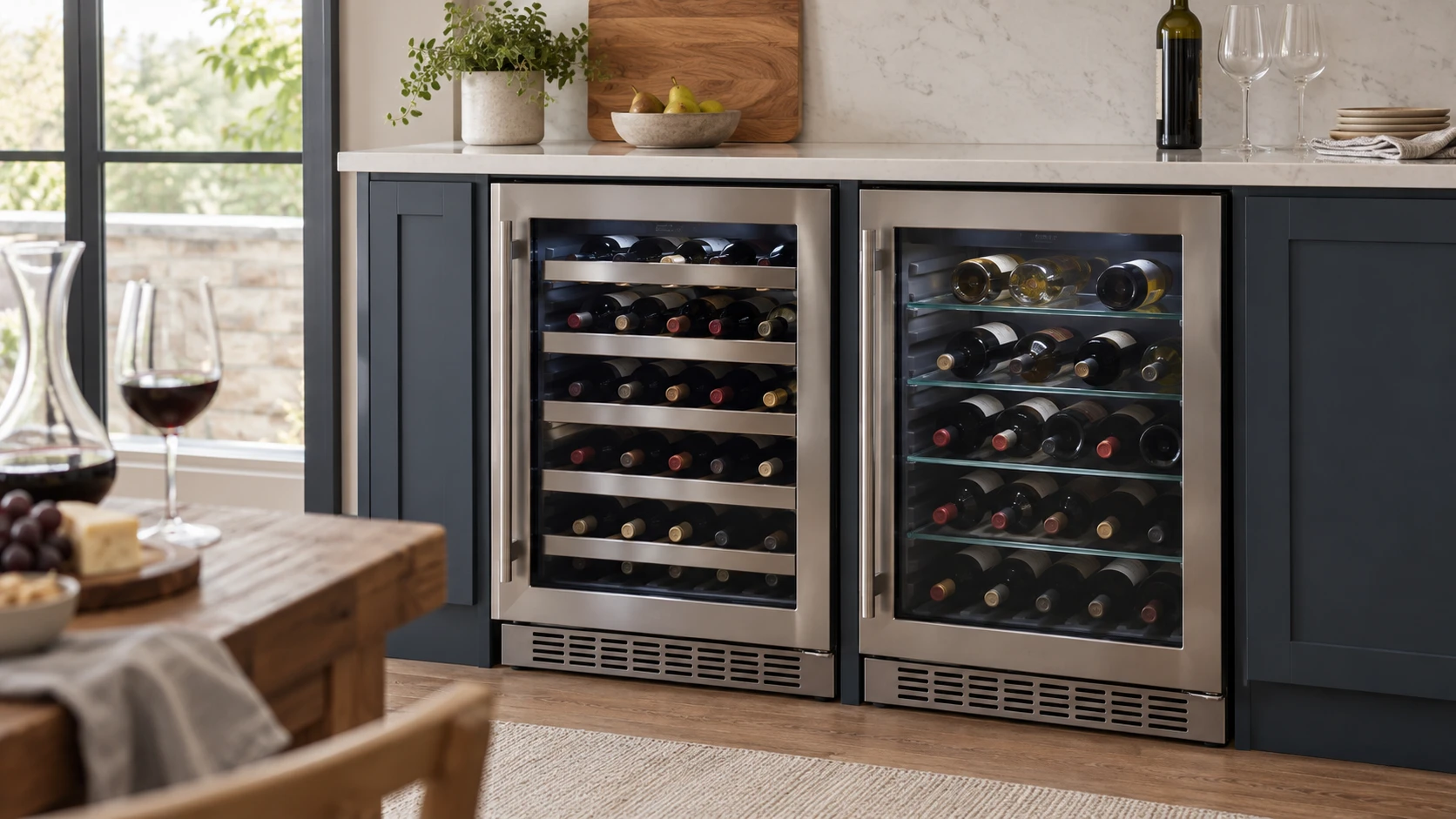
The ZLINE RWDO-SN-24 wine cooler is listed as a 24-inch, 4.8-cubic-foot cabinet for 44 Bordeaux-style bottles across two temperature zones. A published guide on wine refrigerator bottle-fit checks compares other coolers but points to the same question here: will the shelves take the bottles a household owns? The Ca'Lefort CLF-WS24 wine cooler is listed at 5.65 cubic feet and up to 54 bottles. Its saved description gives one 40-to-65-degree-Fahrenheit range, while ZLINE describes two zones adjustable within that span.
Both are nominally 24-inch wine cabinets, yet their shelf materials, bottle assumptions, and installation claims differ. ZLINE uses six full-extension stainless-steel racks; Ca'Lefort describes six height-adjustable tempered-glass shelves. The numbers 44 and 54 cannot be judged without checking bottle shape and shelf arrangement. Measure the proposed opening and sketch the collection first. The result may favor two settings for a smaller collection or more nominal storage positions at one setting.
Count bottles against the shelf design — Ca'Lefort CLF-WS24 wine cooler
ZLINE's stated maximum assumes 44 Bordeaux-style 750-milliliter bottles. Its six stainless-steel racks comprise five full-depth racks and a half-depth bottom rack. The saved row says the racks extend fully, which may help reach bottles at the rear. It does not state how many broad Burgundy or sparkling bottles will fit on each rack. Ask for a model-specific loading diagram and account for the shorter bottom tier. A single unusual bottle can change a row's arrangement even when the cabinet still has open space elsewhere.
Ca'Lefort's 54-bottle title does not explain the bottle shape used for the maximum. Its six reinforced tempered-glass shelves are height-adjustable and each is listed to hold up to eight kilograms. The row says the shelves can accommodate bottles up to three liters or decanters up to 15 centimeters in diameter. Those are useful size claims, but the count with oversized containers will be lower than the standard maximum. Ask how many shelf levels remain when one large decanter is placed inside and whether the shelf weight includes every bottle on it.
The two shelf designs could suit different habits. A full-extension rack may make it easier to see labels behind the front row. A height-adjustable shelf may make space for a tall bottle without removing an entire level, depending on the delivered cabinet's positions. The saved rows do not offer a matched demonstration with the same bottle mix. Take measurements of the tallest and widest bottles, then mark where each will go. Leave enough clearance to lift a bottle out after neighboring positions are filled.
For a collection that changes often, build a working count using the bottles actually owned. Put frequently opened bottles where they can be reached without unloading a shelf. Keep a simple shelf inventory for bottles being aged longer. If the collection has a growing number of unusual formats, check whether the ZLINE half-depth tier or the Ca'Lefort shelf-height options create a better place for them. The advertised maximum is a reference point for that mixed collection.
Decide whether two settings are useful — wine refrigerator bottle-fit checks
ZLINE describes two temperature zones, each adjustable from 40 to 65 degrees Fahrenheit. Its row also mentions a fan-assisted sealed cooling system and automatic defrosting. Confirm the control arrangement and usable shelf space in each zone before assigning bottles to it. If one category of wine occupies most of the collection, the smaller zone may not hold all of it. A two-zone feature helps only when the intended bottle groups fit the compartments that can reach their chosen settings.
Ca'Lefort lists a 40-to-65-degree range and a touch panel that controls power and lighting and shows operating status. The saved excerpt does not identify independently adjustable zones. Plan on one setting unless the current manual establishes otherwise. A single setpoint may be enough for a collection stored together, while someone who wants two simultaneous targets should check whether ZLINE's divided shelf space is practical. Neither row includes a matched loaded-temperature map or a test after a long door opening.
ZLINE also names a Super Cool mode intended to chill beverages quickly. That may be useful after a delivery, but the saved row does not give a measured cooling time or explain how the mode affects both zones. Read the manual before using it around wine intended for longer storage. After either cooler is installed, let it settle according to the maker's directions and check an independent thermometer under a normal load. A setpoint displayed on the panel is not a record of the bottles' temperature over time.
Door openings and new bottles can temporarily change the air temperature. Keep the door closed while checking an inventory and avoid drawing a conclusion from a reading taken immediately after loading a warm case. Record the chosen setting and a later stable reading in each relevant section. That gives the household a baseline if performance changes. The source rows describe the available controls, but neither establishes how the delivered unit will behave in a particular room.
Measure for installation and shelf access — Ca'Lefort CLF-WS24 wine cooler
ZLINE describes zero-clearance construction and ventilation intended to support a flush built-in installation. It also mentions a reversible door with articulating soft-closing hinges. Ca'Lefort says forward ventilation supports built-in use with five centimeters of clearance, or freestanding use. Those are different installation claims; check the current manual and dimensional drawing for each exact model before cutting trim. “Zero clearance” in a listing should be interpreted through the maker's actual vent, electrical, and service requirements.
Neither saved row gives a full exterior dimension set with handle projection. Measure the opening at the floor, counter, and wall, then include the door swing and the room needed to pull a rack or shelf. ZLINE's full-extension racks need a door position that clears their travel. Ca'Lefort's glass shelves may need room to lift or reposition them. An adjacent cabinet handle or wall can prevent access even when the cooler itself slides into the opening.
ZLINE says its DuraSnow exterior is intended to resist sweat and water for indoor or outdoor installation. The saved excerpt does not state an ambient operating range or weather rating. If the planned site is outdoors, obtain the current model-specific installation instructions before relying on the listing's location claim. Ca'Lefort's row does not make an equivalent outdoor claim. A covered patio and a kitchen present different conditions, and a nominally flush fit does not answer how either appliance handles heat or rain.
Reversible hinges can be valuable when the cooler sits at the end of a counter run. Confirm that the delivered ZLINE hinge can be reversed in the intended site and check the final handle clearance. The Ca'Lefort row does not state a reversible-door option. Ask for its hinge orientation before ordering if a wall is close to one side. Make a simple door-swing template and test it with neighboring drawers open. That small exercise can reveal an access problem while the floor plan is still flexible.
Delivery adds one more dimension. Ask for packaged size and weight, since neither saved row supplies a comparable shipping set. Measure doorway turns, stairs, and the final opening. Inspect the door glass and all six shelves or racks before installation. Confirm who handles unpacking and whether the cooler can be placed without damaging a floor or nearby cabinet. Keep enough space to pull it forward if it later needs service.
Compare glass, lighting, and upkeep — Ca'Lefort CLF-WS24 wine cooler
ZLINE lists a glass door, two full-length cool-white LED lights, and a display setting that can keep them on for up to six hours. Ca'Lefort claims Low-E-coated dual-pane glass blocks 99.5 percent of UV and IR radiation, and its LED-backlit touch panel controls interior lighting. These are product-specific claims, not a matched exposure test. If sunlight reaches the planned position, check the current placement guidance and decide whether the light-control options fit how the room is used.
The shelf surfaces also affect cleaning. ZLINE describes stainless steel inside and out, with full-extension steel racks. Ca'Lefort uses reinforced tempered glass shelves. Wipe a spill before it reaches the gasket or a lower bottle, and follow the manual for removing each shelf. A glass shelf may make a spill more visible; a slatted rack may allow it to reach a lower level. Check the actual construction before assuming either maintenance routine is easier.
Ca'Lefort says customers can contact it about quality problems within twelve months of receipt and lists twelve months of product support. The saved ZLINE row does not give comparable warranty terms. Obtain written coverage for both exact models, including parts, labor, and damage on arrival. Save the model and serial number along with delivery photos if the door or rack arrives damaged. The presence of support language in a product excerpt does not replace the full warranty document.
Match the cabinet to the collection — Ca'Lefort CLF-WS24 wine cooler
ZLINE lists 44 Bordeaux-style bottles, six full-extension racks, and two adjustable temperature zones. Ca'Lefort lists 54 bottles, six adjustable glass shelves, and one stated temperature range. ZLINE's flush-installation claim and Ca'Lefort's five-centimeter clearance instruction need to be checked against their current manuals. Compare the bottle plan, room measurements, and desired settings before ordering.
Request the exact loading diagrams and dimensional drawings. Place the widest bottles on a shelf sketch, then confirm that the door opens far enough to use each level. Check the intended zone settings and any outdoor placement requirement with the manufacturer. Once the delivered cabinet is running, measure its temperature with a normal load and retain the shelf plan for future additions to the collection.