Cost & Savings Articles
Wood stamp set cost: floral sets or butterfly units
Compare dated floral-set and butterfly-stamp package prices, actual supplied units and the design your paper project needs before buying a bulk pack.
Wood stamp set cost depends on which designs and complete supply units your project needs. A package containing several floral sets and a package containing individual butterfly stamps are different purchases. Compare the quoted whole packages first, then decide whether either supplies the actual design you want.
On October 15, 2026, the captured Recollections flower-set offer showed USD 66.46, while the captured butterfly-stamp offer showed USD 154.00. The listed difference was USD 87.54. These are dated product amounts for unequal packages. They exclude an unquoted checkout's shipping, taxes and separately required materials, and establish no price per finished print.
Identify the complete package behind each quote
The Recollections GS-321134_2 flower offer describes six sets of five wood-and-rubber stamps, thirty stamps in total. It gives package dimensions of 3 by 3.25 by 1 inches, alongside separate listing-size wording. That package measurement does not establish the size of every individual floral impression.
The Recollections GS-321277 butterfly offer describes a six-pack, with one wood-base and rubber stamp per unit. It states stamp dimensions of 3.25 by 3.75 by 1 inches. Keep those object dimensions distinct from a separately measured printed motif. The two offers name different designs and supply arrangements.
Confirm what selecting one order unit supplies before changing a cart quantity. Six sets, thirty stamps and six individual units name different quantities. A seller confirming the model has not necessarily answered a question about the complete parcel. Keep the selected offer and its described package level together in that enquiry.
Comparing wood stamp package prices begins with the design
For comparing wood stamp package prices, identify the image you actually want. A person preparing a butterfly-themed card has a different reason for buying from someone building a floral border. A lower product amount is useful when the supplied designs suit the intended work. Keep the required motif in view when deciding whether the lower-priced package suits the project.
Look at the actual design information for each offered item. The flower-set account does not provide individual impression measurements or a complete illustrated inventory here. If a project depends on a particular flower shape or an exact printed width, ask for that information before treating the set as suitable.
The butterfly account likewise does not establish how its printed image will sit beside your own wording. Its stated overall stamp dimensions include the physical object described. Obtain appropriate actual motif information or an applicable proof when print size matters. No impression comparison has been performed between these offers for this article.
Choose the motif you want the finished piece to show. You may simply prefer one motif and be willing to pay the current complete cost for it. Describe that as your preference. It does not need an invented claim that the dearer stamp is more durable, gives a clearer result or will make more impressions before replacement.
Set the stamp supplies for one project
For stamp supplies for one project, begin with the finished piece you intend to make. Decide which motif belongs on it and whether existing identified supplies already meet that need. A card maker who owns a suitable floral stamp may need only compatible consumables or no new purchase at all.
The stamped-border planning tutorial reserves a readable message area and compares motif positions on scrap paper. Its selected clear-stamp sets require separate blocks. The wood-mounted offers here have their own stated construction; do not copy the clear sets' accessory requirements without checking the actual supplies.
Use a layout to identify the design requirement before buying a larger assortment. A border may call for a repeated element, two accents or more open space. Choosing that arrangement can narrow which actual motif information you need. The layout does not certify ink compatibility, printed dimensions or an untested product's performance.
Also decide whether the work needs several complete working sets or one shared set. People working at different times may be able to use existing supplies in sequence under their applicable instructions. A project requiring simultaneous separate stations has a different supply question. Count the actual arrangements you intend to provide.
Keep surplus sets visible in a small purchase
Imagine an explicitly fictional buyer who wants one suitable floral set for a personal paper project. The listed flower offer still contains six sets. Even if the chosen motifs meet that person's needs, the remaining sets need a purpose or a place to remain. The larger package does not become a single-set purchase through the buyer's intended use.
A different fictional organiser may already have a confirmed need for several complete floral sets. The same package can then answer a different quantity question. Identify which actual activities will receive the sets before treating unused stock as committed. An idea for a possible future project can remain separate from a plan you have decided to supply.
If someone else would like part of the package, agree what they actually want before relying on that arrangement in your budget. Keep any proposed cost sharing separate from the merchant's quote and actual order. A hoped-for contribution is not a discount shown by the seller.
There is also no requirement to distribute a supply simply because the box contains several units. You may choose to retain complete sets for your own established needs. Compare the full purchase amount and storage requirement with the actual future uses you have chosen for the retained sets.
Separate product amount from the supplies still required
The captured USD 87.54 difference compares the two whole product amounts. It does not include ink, suitable paper or other separately required items. Identify those requirements from the actual product and consumable instructions. A wooden base in the description does not establish that ink and paper arrive with the order.
Look at the identified supplies already available for the project. Keep a known compatible item distinct from an anonymous old pad or material whose suitability has not been established. This guide provides no ink substitution, cleaning chemical or physical printing procedure. Resolve the actual combination before counting it as a complete working setup.
Then compare the current basket for the arrangement you intend to buy. If either listed amount has changed, use that current amount for a new purchase decision. The historical comparison remains a record of the captured October 15 offers. A product-price difference does not fix the cost of a later order.
Choose a budget for the actual project and compare it with that complete basket. If it exceeds the amount you intend to spend, consider using suitable existing materials, choosing another documented design or postponing the purchase. The lower displayed product amount helps only when the corresponding supplies serve the intended work.
Compare two concrete reasons for buying
Consider a fictional invitation project whose chosen artwork depends on a butterfly. The buyer has already settled the message and composition, but still needs an identified suitable stamp. A floral set at the lower quoted amount would change that artwork. They can decide to revise the design, seek a suitable alternative or continue checking the butterfly offer. They can compare the cost of retaining the butterfly design with their willingness to choose a different image.
Now consider a fictional shared card-making afternoon where the organisers want several floral elements available at different places. They need to confirm the actual flower inventory and arrange compatible supplies under their instructions. A pack containing repeated complete sets may address that practical requirement. The organiser still needs to establish that those actual motifs and quantities suit the planned activity before treating the package as a saving.
Ask the people making the pieces which part of the plan matters to them. Someone may want one recognisable image, while another enjoys selecting among a few suitable motifs. Those preferences can change which supply arrangement is useful. There is no reason to provide an identical new stamp to every participant if the agreed activity does not require that arrangement.
If you already have suitable materials, a small household layout trial can clarify that preference before another purchase. Use only your identified supplies under their applicable instructions. Discuss whether the intended result actually needs a particular motif or whether another design would be welcome. Such a trial concerns the materials you handled; it is not a performance comparison of the two unhandled retail offers.
Finish that discussion before increasing an order to obtain a lower-looking unit figure. Ask which confirmed project will use the additional supplies before counting them as a saving. A package left unused after the project still cost its complete purchase amount.
A package count does not give a price per usable print
Thirty stamp objects and six stamp objects do not establish the number of usable impressions either package will produce. That would require information about the actual equipment, materials, use and relevant performance. Dividing a product price by an invented lifetime would manufacture a cost result the descriptions do not support.
The bulk crayon package-cost guide keeps Fun Express boxes and Colorations sets attached to their different supply formats. Its crayon counts and amounts do not describe stamps. The useful comparison here is retaining the actual package level before interpreting a product quote.
Nor does a larger number of stamp objects establish a larger variety of designs. Keep the actual inventory question open when variety is the reason for buying. Ask which motifs the offered set contains and whether the pack repeats complete sets. A total count can answer a quantity question while leaving the design question unresolved.
Read the current return terms before choosing a bulk pack
Republeq's Returns and Exchanges Policy distinguishes payment methods. It states that cryptocurrency purchases cannot be returned for a refund, while exchanges have conditions including timing, original unused condition and required purchase evidence. Applicable non-crypto returns or exchanges have their own conditions and exclusions. Read the current terms for the actual purchase before relying on a return as your fallback.
The policy also gives a separate seven-day contact period for defective, damaged or incorrectly shipped items. Check the received product identity and described quantity against the order before dividing a package for several people. Follow the seller's current instructions for a specific discrepancy; this article promises no particular return outcome.
Buy the supply arrangement you have actually chosen
Settle the motif requirement, the number of complete units you intend to use and the separately required materials before paying. Keep any unanswered impression-size or inventory question visible. The product amounts can support a purchasing comparison without resolving those physical supply questions on their own.
Return to wood stamp set cost with the actual dated offers: USD 66.46 for the described floral package and USD 154.00 for the described butterfly package. Choose from the current complete cost and the supplies your project needs. Include any quantity you would leave unused when deciding whether the complete purchase is worth making for this project.
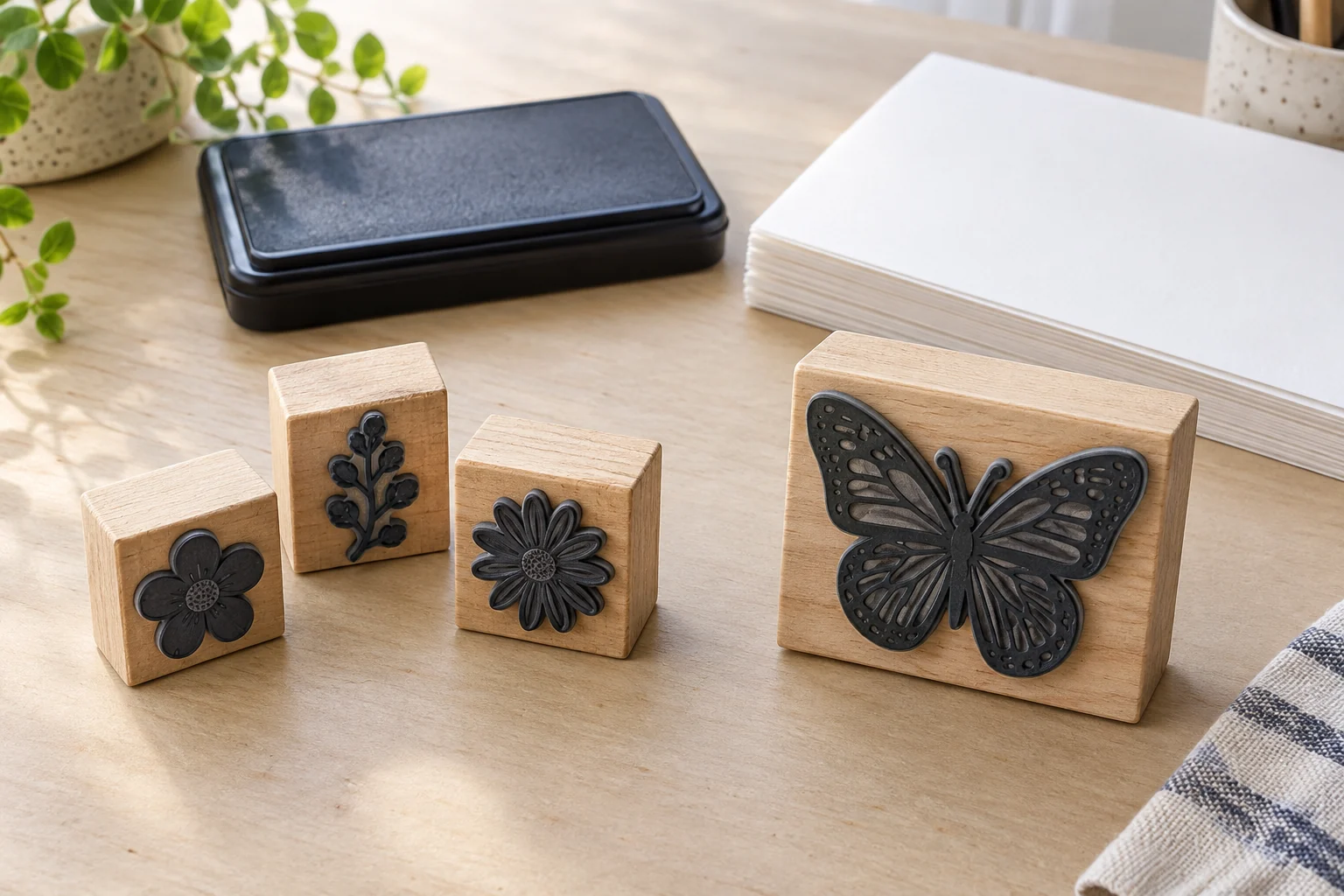
Conceptual wood stamp set cost cover with generic inactive mounted stamps and plain supplies; exact retail models, package counts and tested impressions are not shown.