Lifestyle & Inspiration
Winter reading room ideas: leave space for the heater
A fictional reader considers a portable heater without making the evening depend on a purchase. Preserve the appliance questions and the room you already enjoy.
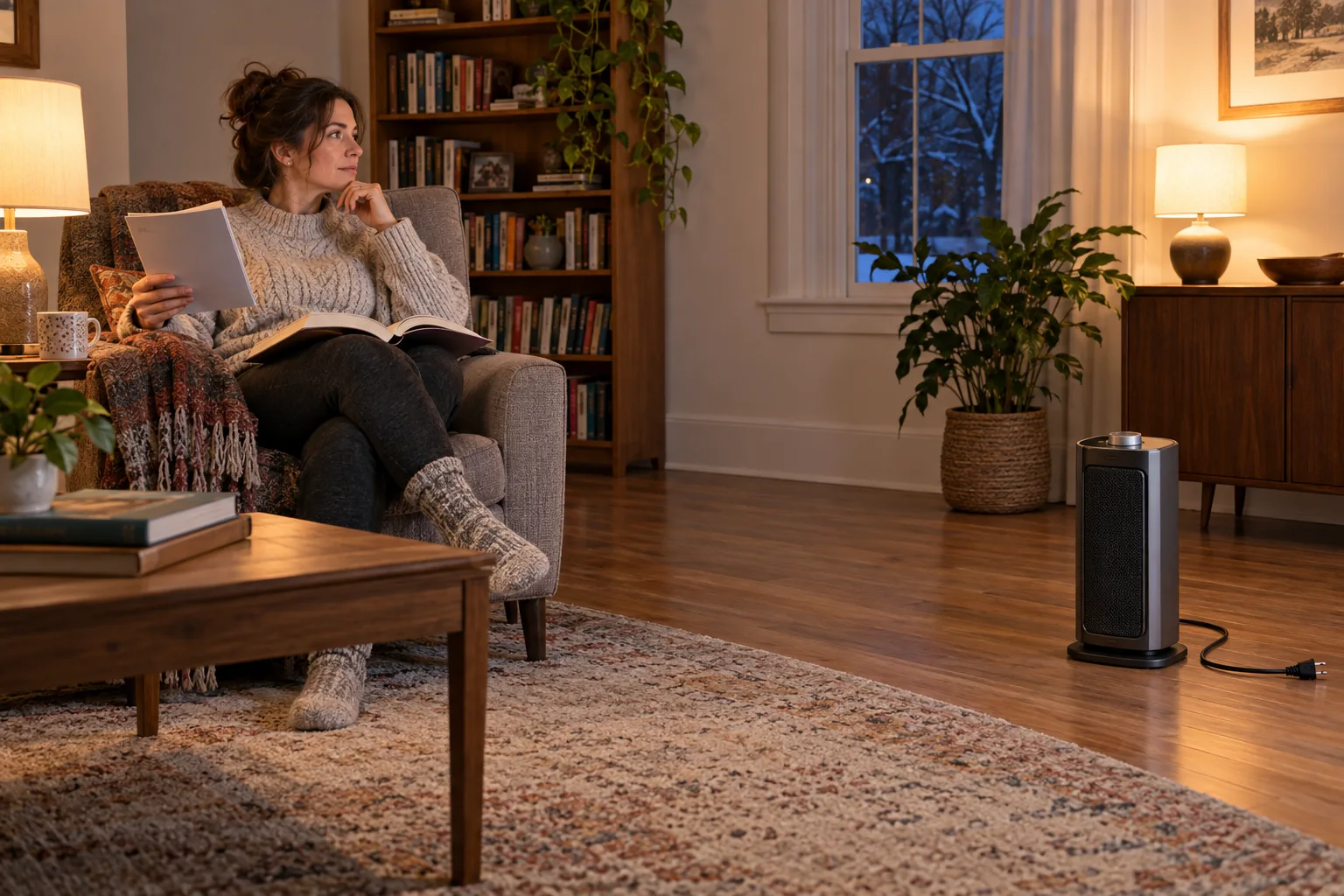
The reading chair usually comes first in a room photograph. For these Winter reading room ideas, start with the part of the room the photograph leaves out: where you enter, what gets moved after dinner, and what happens when you put the book down. A portable heater is another appliance to accommodate in that ordinary room. A corner can look inviting while being an impractical place to spend the evening.
Picture an imagined reader, Maya, who has a comfortable chair in the living room and wants to use it on winter evenings. She already owns the book and has a lamp she likes. Her proposed purchase is a portable electric heater. Her aim is modest: see whether that appliance can belong in the room without turning every reading visit into a furniture-moving project. This is a fictional planning example, with no tested room arrangement or heating result.
A winter reading corner begins with the room you already use
Maya draws the chair, the door and the other furniture on a rough sketch. She adds the items that tend to arrive later: a shopping bag dropped beside the sofa, the laundry waiting to go upstairs, and the little table someone brings over for a puzzle. These belong in her description of the room even though they rarely appear together in a decorating photograph. She wants an arrangement that makes sense on a normal Tuesday.
For your own winter reading corner, describe the activity before choosing its appearance. Perhaps you want to sit down with a long novel after washing up. Perhaps you prefer a magazine while someone else watches television. Choose which existing seat you would actually use for that activity. Moving an unfamiliar chair into an attractive corner creates another question to answer; you can begin with the seat you already enjoy.
Write down what makes that particular seat appealing. It might be the view through an interior doorway, the way the lamp falls on the page, or simply having a familiar place to return to. Keep your description personal. Another reader's ideal corner may include an entirely different view. Maya chooses the chair facing the room because she likes being able to look up from the book without feeling tucked behind the sofa.
Give a portable heater its own place in the plan
Before adding the appliance, Maya compares two versions of the evening in writing. In the first, she uses the living-room chair after dinner and keeps the book within the activity of that room. In the second, she reads in the study she normally associates with work. She dislikes the second idea because she wants a change from her working day. That reason gives the living-room proposal a purpose beyond filling a spare patch of floor.
You can make the same comparison without borrowing her preference. Name another place you could read, then say why you would choose this one instead. If the answer is that the existing room already gives you what you want, pause before adding an appliance to the project. If something specific is missing, describe that question plainly. The exercise can leave you with a smaller purchase decision or with no new purchase at all.
The U.S. Fire Administration advises placing portable space heaters on a solid, flat surface at least three feet from anything that can burn. It also says to inspect for damaged cords or plugs and connect directly to a wall outlet, without an extension cord or power strip. Use those boundaries alongside the instructions for the exact appliance. Its overall size is not its required clearance. A remote, small case or appealing product photograph does not establish a suitable position in your room.
Maya consequently leaves the heater's proposed location unresolved until she has the applicable instructions. She marks that question on her sketch instead of drawing an appliance into the first remaining gap. The shopping decision stays separate from choosing a paint colour or cushion. If the room cannot accommodate the actual heater as instructed, she can keep the reading chair and change the proposed purchase. Her evening with the book does not depend on completing this arrangement.
A useful sketch can contain an unanswered question. Give that question a specific name, such as the instructions needed for the exact offered model. You then know what would allow the plan to advance. An unlabeled rectangle in a room drawing can otherwise acquire more authority than it deserves. Maya keeps her drawing with the product reference so that a later answer can be checked against the appliance she was considering.
Two heater offers to investigate without guessing their controls
The Vornado VMHI300 heater offer describes a metal whole-room model with a digital thermostat, remote and 1500-watt output. It limits the stated voltage, certification and warranty account to U.S. use. Its product photograph shows rotary controls, creating a detail to clarify against the text before selecting the applicable instructions. Keep this exact offer attached to that inquiry. The description and photograph do not establish a verified control layout or an approved position beside a reading chair.
The Lasko Ellipse CD12950 heater offer describes a ceramic model with touch controls, remote, auto-dimming display and an auto-off timer. The offer's colour details say Silver, while its title and photograph use Black. Confirm the supplied version if appearance matters to the room. The named controls are information about this offer, rather than a prediction of its sound, comfort or performance during your reading session. Neither the colour discrepancy nor an attractive image should be quietly resolved by assumption.
Maya has not selected either heater in this example. She puts her outstanding questions in one message for each exact offer, keeping a copy with the product reference. This prevents a familiar feature name from settling a different question. Liking the look of an appliance and knowing which appliance is being supplied are both legitimate concerns. They can lead to different answers, including postponing the purchase while continuing to enjoy the room as it stands.
Let the reading session have an ordinary beginning
Choose a starting point you recognise from your evening. Maya imagines sitting down after the dinner things are put away. That gives the reading visit a place among activities she already does. She does not set herself a new daily reading challenge or promise to finish a particular number of pages. Some evenings she may choose a different activity altogether. The chair remains part of the living room on those nights.
Consider what you want to bring to the seat. A book and its bookmark might be enough. If you usually make notes, decide where the notebook belongs when you stop writing. If you switch between a magazine and a novel, choose which one you want today. These small choices concern how you like to read. They need not become an elaborate preparation routine or a reason to buy several new accessories.
The first version of Maya's idea includes a trolley of books beside the chair. Looking again, she realises that she usually wants one book at a time. She returns the trolley to its original job and chooses a place for the current book elsewhere in the room. That is her preference in the fictional example, rather than a rule about how much reading material anyone should own. Your own corner may serve a different kind of reading.
Keep room boundaries separate from heater choices
If a temporary visual boundary is part of your idea, the fold-away reading corner guide considers which view a room divider changes, how shared access remains available and where the screen goes afterward. It concerns the screen's own purpose and handling. It does not approve a heater beside that screen. Read the two furniture and appliance decisions separately, with the actual instructions governing each item.
Maya decides she likes seeing the rest of the room and leaves a screen out of her own plan. She also keeps the existing wall decoration rather than designing a new display around the appliance. This gives her a smaller decision to make. She can reconsider the room's appearance after she has answered the product questions. A proposed heater does not oblige her to redecorate the entire room in order to make the idea feel complete.
End an occupied reading session when you leave it
The Texas Department of Insurance advises turning space heaters off before leaving the room or going to bed. It warns against placing them in hallways or routes where children or pets may pass, and says not to run their cords beneath rugs or carpets. Apply that advice with the exact manufacturer's instructions. An automatic timer or a claimed protective feature does not replace your attention to where the appliance is used and when you leave it.
For Maya, an interruption is therefore allowed to end the reading visit. She may resume the same chapter later, or she may discover that the evening has become something else. She leaves herself a bookmark rather than treating the interruption as a failed plan. The room arrangement is intended to support a choice she enjoys; it does not need a daily completion record. An unfinished chapter can wait without requiring a new arrangement.
Think about how you want to find the room next time. You might prefer the book returned to a shelf, or kept in a place you have chosen for current reading. Maya puts hers with the books she already owns. She wants the next visit to begin with choosing whether to read, rather than clearing away evidence of the previous evening. That preference shapes her routine more than a photograph of the finished corner would.
Leave thermostat research to the exact control question
For a different purchase question, the space heater modes and thermostat guide separates mode names, temperature targets and timer descriptions in two other offers. It explains why a list of labels needs its own documentation. Those other products' specifications do not transfer to the Vornado or Lasko listings here. Use that guide when you need to frame a precise control question, while keeping this room idea focused on the reading activity.
After considering the plan, Maya keeps the chair and waits for the product answers. On a later evening she may choose another seat, or decide that the living room already suits her without the proposed addition. Your own plan can remain equally open. Keep the part of these Winter reading room ideas that suits the reading you enjoy, and let an unresolved appliance question remain unresolved until the exact offer and its instructions supply an answer.