Educational & Explainer Articles
Wind-vane direction: what a north wind means
Understand why a north wind comes from the north. Use original direction examples and read actual Mermaid and Squirrel weathervane descriptions.
Wind-vane direction is read using the direction the wind comes from. A north wind travels from the north towards the south. If you are thinking about where the moving air is going, keep that destination separate from the weather name. Begin by separating those two questions: its source direction and its direction of travel.
This explanation uses invented places and supplied directions to make the words clear. It does not report a reading from a real weathervane. The Good Directions Mermaid and SWEN Squirrel offers below provide actual decorative product examples, without a test of either instrument, a mounting procedure or a forecast. Their animal figures do not change the weather term's meaning.
North wind meaning begins with the source direction
North wind meaning follows the National Weather Service glossary's definition of wind direction: the true direction from which the wind blows at a location. Its example describes air moving from north to south as a north wind. The name keeps the source direction. South describes the direction of travel in that example, without becoming the wind's name.
Imagine an invented courtyard with an orchard to its north and a garage to its south. Suppose the example explicitly tells you that air is moving from the orchard across the courtyard towards the garage. Under those supplied conditions, the air arrives from the north. You would describe it as a north wind, even though the garage lies along its southward route.
The orchard and garage are imaginary landmarks used to explain a direction already supplied. Their real-world shapes, heights and effect on airflow are outside this example. You have not measured conditions between buildings by naming two places. The example simply gives north and south concrete endpoints so you can see which one contributes the wind's name.
Reverse the travel and the wind name changes
Keep the same fictional courtyard but reverse the supplied movement. Air now travels from the garage towards the orchard. It arrives at the courtyard from the south, so this is a south wind. The orchard has not moved. The changed name follows the changed source direction, rather than a different label for the same journey.
Try the same reasoning with east and west. Suppose an invented lane runs between a greenhouse on its east side and a gate on its west side. If the supplied movement goes from the greenhouse towards the gate, the wind comes from the east. An east wind therefore moves westward in this example. The word east names its starting direction.
If the supplied movement instead goes from the gate towards the greenhouse, its source is west and the name is west wind. You do not need a new naming rule for that reversal. Ask the same question about the source end of the described movement. Keep the directions attached to the imaginary places while checking your answer.
The words north wind and northward describe different things. Northward describes travel towards the north. A north wind, under the weather convention being explained, comes from the north. Replacing one phrase with the other changes which end of the movement you are describing. Write the full sentence when those short labels become confusing.
Compound direction names still describe one source side
Consider a different invented layout, with a studio to the northeast of a central square and a well to its southwest. The example supplies movement from the studio across the square towards the well. Its source direction is northeast, so northeast is the wind name. Southwest describes travel in this particular example. The earlier orchard and garage are not part of this new layout.
The compound word northeast names one direction between north and east. It does not describe two separate winds or a sequence that first arrives from north and later from east. Read the word as a complete directional label. If someone gives you northeast without saying whether they mean a source or a destination, ask them to state the movement in a sentence.
Now replace the supplied source direction with southeast while retaining the same convention. The source has changed, even though both names contain east. Northeast and southeast should not be shortened to the same word simply because that part is shared. This is reasoning about the supplied direction names, without a report that wind changed around a real building or that a decorative vane resolved that change.
Keep the compass direction when the observer turns
In another imagined discussion, two people stand on opposite sides of the courtyard. One describes the supplied movement as going to the left and the other calls it movement to the right. Those personal descriptions depend on how they face the scene. The source direction in the example remains the north side, so the wind name stays north.
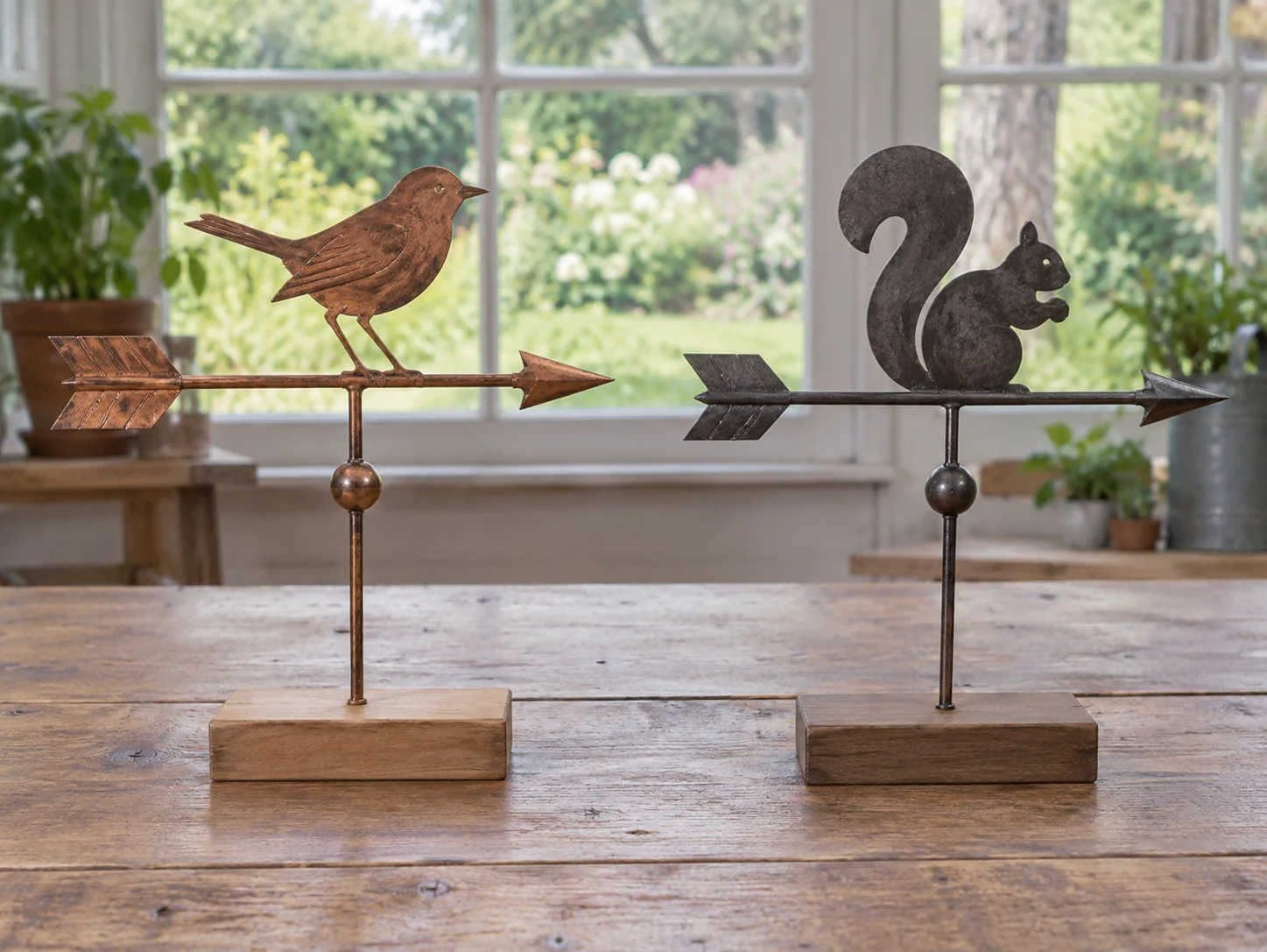
Use that distinction when considering a photograph of decorative equipment. An arrow pointing towards the right edge of a photograph gives an image-relative direction. Without knowing its directional reference, the word right does not identify north, east, south or west. A picture of a weathervane on a table therefore supplies no established wind direction merely because its arrow is visible.
The magnetic compass explanation distinguishes a needle's magnetic response from geographic north and explains declination. That is a separate instrument question. It supplies no alignment or installation instructions for either decorative weathervane here. A direction label needs its actual reference before you can use it to interpret an indication.
Wind direction and speed answer different questions
Wind direction and speed describe different parts of an account of moving air. Direction gives the source side; speed describes how fast the air moves. A supplied north wind can be described without a numerical speed. The word north supplies no speed value, even if someone associates particular weather with that direction.
For a simple invented comparison, imagine two reports that both say north wind. One supplies a speed and the other supplies no speed information. They agree about the named source direction, but the second report leaves the rate of movement open. The shared word north cannot fill that missing number or establish that the two speeds are equal.
Now imagine two reports that give an equal speed but different source directions. The matching speed does not make their directions match. These examples hold the supplied information separate so you can see what each label answers. They are not observations from either selected product or a claim that a particular courtyard experienced those conditions.
The weather-station readings guide develops the wider distinction among quantities, update intervals, totals and forecasts. Its AcuRite examples name separate speed and direction channels. This article concentrates on the meaning of the direction word, without importing those stations' displays, refresh intervals or specifications into a passive decorative vane.
Read the actual Mermaid offer as its own product
The Good Directions 1978P Little Mermaid offer identifies a pure-copper weathervane in Bronze. Its actual catalog title includes model 1978P and SKU 428088422. The description lists rooftops, garages, cupolas and gazebos as suitable contexts. It does not give an assembly sequence, an alignment method or a measured direction-accuracy specification here.
Good Directions says the style has been offered for over thirty-five years. That is the manufacturer's history claim as reported by the retailer, rather than a test of how an individual item turns. The decorative subject and stated material can help identify the selected offer. They do not document an installed reading at a particular house.
The brief description also leaves package inventory open. A named weathervane and a list of possible locations do not establish which mounting components are included. Obtain the applicable product instructions and confirmed contents if those affect a purchase. This explanation of direction words supplies no permission to choose an arbitrary roof position or substitute a mounting arrangement.
Keep the SWEN design and listed styles distinct
The SWEN Squirrel weathervane offer identifies model 1050 - 8908305, SKU 434304530 and a handmade squirrel design. Its description names steel and calls the color Coppervien. The same account lists Other for color and Garden Mount for size. Retain those actual terms without changing the steel construction into a copper-material claim.
Roof, garden, flat and side styles are listed in that description. Their appearance together does not confirm that every style or every associated mounting component is supplied in one order. Confirm which actual arrangement is being offered if that matters to your intended location. The label Garden Mount is a source-listed option term, without a numerical size measurement provided here.
Both selected pages place their products in Weathervanes. That category identifies the kind of decorative equipment being offered. It does not certify directional accuracy or show the items in operation. Neither the mermaid nor squirrel design changes which direction contributes the weather name. Keep appearance preferences separate from the information needed to assess an actual installation.
A direction name describes its stated occasion
Return to the invented courtyard. Suppose the first supplied account says air comes from the orchard to the north, and a second account from another occasion says it comes from the garage to the south. Those are different directional statements. Knowing the first name does not establish which one applies to a later moment. Read the occasion that accompanies the statement.
A remembered direction also leaves future weather open. A north wind is a directional description, without a promised temperature, rainfall amount or length of time until the next change. This article provides no current local observation or forecast. Use appropriate current weather information for an actual weather question instead of asking a decorative product description to answer it.
When somebody shares a direction, ask what the statement refers to if that is unclear. It may describe an observation, a forecast or a purely hypothetical example like the courtyard above. Those contexts give the words different jobs. Keep the statement's basis and time reference with it when discussing an actual observation or forecast.
Use a complete sentence to check the direction word
If a short wind name seems ambiguous, expand it into an ordinary sentence about where the air comes from. In the supplied orchard example, the complete thought is that air comes from the north side and travels towards the south side. The weather name keeps north. That wording preserves both ends of the described movement without confusing source and destination.
For a real item, consult the instructions for its indicator, reference and installed arrangement. The word convention alone cannot establish whether a particular product has been correctly aligned or what an unlabelled photograph represents. Understanding wind-vane direction begins with the named source side; interpreting an actual instrument requires the information applicable to that instrument.