Educational & Explainer Articles
How a magnetic compass works: field alignment and true north
Understand a compass needle’s magnetic alignment, true north and changing declination through USGS explanations, with actual pocket and kit offers kept distinct.
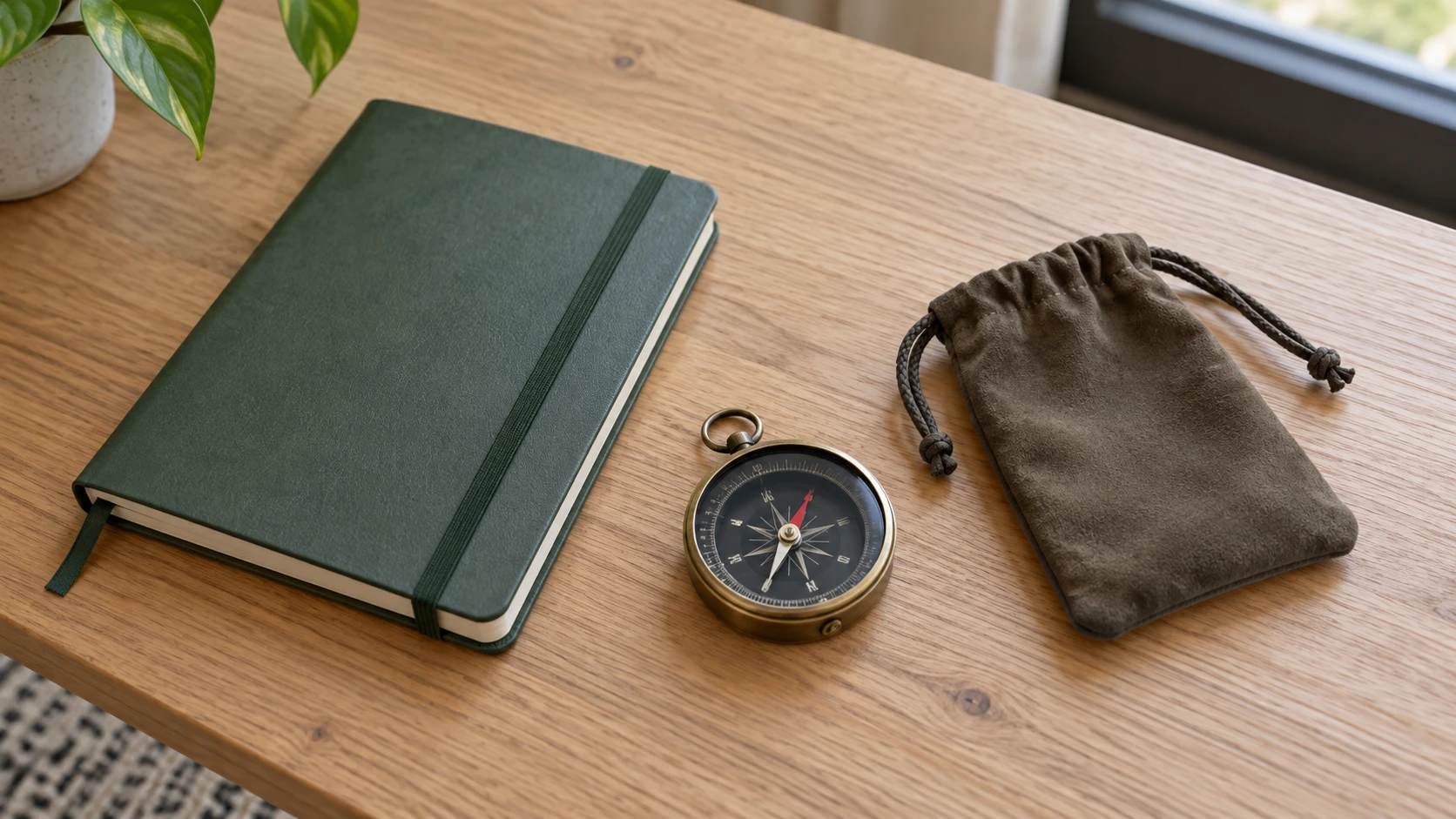
How a magnetic compass works begins with its needle: a small magnet able to pivot and align with a magnetic field. That preferred direction raises a question when reading its north label: is the needle's direction the same as geographic north?
The U.S. Geological Survey's How does a compass work? transcript explains the magnetic mechanism. Its What is declination? FAQ explains why the direction can differ from true north and why that difference changes with place and time. Together, those accounts help distinguish a magnetic response from a geographic reference.
Magnetic compass needle alignment follows a field
For magnetic compass needle alignment, the USGS describes a freely pivoting magnet. When the needle experiences a magnetic field, it moves toward a preferred alignment with that field. The source includes both the Earth's magnetic field and the field of a nearby magnet in that explanation.
The needle's north end is one end of the small magnet. Its south end points in the opposite direction. Calling an end north-seeking describes its general directional tendency in the Earth's field; the letter on a dial is a reference for interpreting the direction the instrument indicates.
A printed direction mark and a movable needle therefore have different roles. The mark belongs to the instrument's scale or faceplate, while the needle supplies the magnetic response. Seeing an N on the face does not, by itself, explain the needle's current relationship to geographic north.
The mechanism concerns the field experienced by the needle. It does not need to identify a destination, recognise a town name or know which place the owner wants to reach. Those are different information questions from a small magnet's preferred alignment.
Magnetic north and true north name different references
For magnetic north and true north, retain the geographic reference separately from the compass direction. The USGS FAQ says that at most places on the Earth's surface, a compass does not point exactly toward geographic north. It calls that angular deviation magnetic declination.
True north refers to geographic north. The needle's magnetic direction is established through the field at the instrument's location. These references can differ while remaining useful descriptions of their respective things. A compass being called a north-pointing instrument does not erase the distinction between them.
The USGS transcript describes the north end as pointing in the general direction of the geographic north pole. The word general matters alongside the FAQ's more specific account of declination. Read the two statements together: the broad tendency and the local angular difference describe different levels of the explanation.
The needle's magnetic direction can differ from geographic north. Equally, the existence of declination cannot certify that an individual instrument is functioning correctly. The scientific reference difference and an actual product assessment remain separate questions.
Declination describes an angle at a place and time
An angle describes the difference between directions. In the USGS FAQ, declination connects the compass direction with true north at a location. The FAQ expressly says that it varies with both geographic location and time. A remembered value therefore needs its location and date to retain its meaning.
Imagine a fictional discussion between two adults comparing notes from different places. One person remembers that magnetic and geographic north differed where they were. The other recalls a different relationship elsewhere. Those accounts need not contradict each other merely because the local angles differ.
The same point applies to notes from different dates. A value associated with one occasion is a statement about that occasion. Copying its number without the place and date removes information that the USGS account says affects the quantity. This article supplies no current local declination value for either person.
A map's printed declination retains its reference date
The USGS FAQ says the collar of its topographic maps shows declination at the centre of the map for the year the map was made. Both qualifications matter: the figure belongs to a stated position and year. It is not simply a timeless characteristic of the paper map.
A reader might remember the number printed beside an older map's north information while forgetting its date. The label and date belong together when interpreting what that figure represents. The FAQ also identifies NOAA's calculator as a way to estimate declination for a longitude, latitude and specified date.
The printed figure and the needle refer to different conditions. One is information printed or estimated for stated conditions; the other is a needle responding to the field it experiences. Recognising those roles helps explain why a number on a map is different from a property of a retail compass.
The Earth's field is more complex than a perfect north arrow
The FAQ explains declination through the complexity of the geomagnetic field. It says that the field is not perfectly symmetrical, includes non-dipolar ingredients and has a dipole not perfectly aligned with the Earth's rotational axis. A simple picture of one universal geographic north arrow misses those qualifications.
The source gives a striking limit to the usual account. At very high latitudes, a compass can even point south. At a geomagnetic pole, a compass held horizontally would have no preferred horizontal direction. Those statements concern the field geometry, rather than a promise about how either selected compass will behave in a particular person's hands.
The FAQ separately describes what the north-pointing end would do if held on its side at the geomagnetic poles: downward at the north geomagnetic pole and upward at the south. This illustrates the difference between the full magnetic field and a simple horizontal direction. It is an explanation, not an experiment or operating method proposed here.
Read together, those two descriptions show why horizontal direction and the full magnetic field should be kept separate. The FAQ's up-and-down account still describes a magnetic response at a pole. A lack of preferred horizontal direction therefore does not mean the field itself is absent.
Local interference can change the field the needle experiences
The USGS transcript identifies local interference as another influence on compass direction. Its examples include a nearby electrical system and local magnetisation in the Earth's crust, particularly near large igneous or volcanic rock deposits. The explanation keeps the actual experienced field central to the needle's response.
This is a different question from a remembered regional declination value. A dated reference about magnetic direction does not establish every local influence around an instrument. Nor does the presence of a possible influence prove that it caused a particular observation. A claim about an actual reading needs the actual conditions identified.
If a fictional observer reports that a needle direction differed between two occasions, several pieces of context remain relevant: where and when the observations occurred and what conditions surrounded them. The report alone is insufficient to name one cause. Keep the observed difference available for an appropriate model-specific enquiry.
The Brunton pocket offer names its own physical features
The Brunton F-5031 Teton Topo pocket compass identifies SKU 224514836 and UPC 080078917752. Its description names Multicolor, Unisex Camping Gear, a faceplate with vintage cardinal points and a lift-arm needle. Those are the actual offer's terms, separate from the USGS's general mechanism explanation.
The swivel lid is described as showing the compass or a mirror usable for signalling. The same account names pocket-watch styling, an engravable lid and a scratch-resistant milled aluminium body. These are retail features and claims. They provide no signalling method, physical durability test or directional accuracy measurement here.
Lift-arm is the retailer's feature name. Its short description does not explain the arm's operating sequence or how the needle is released. The general magnetic explanation leaves those model-specific control details with the applicable Brunton instructions.
The Lifefficient kit includes more than a compass
The Lifefficient Products Land Nav Kit identifies Black Camping Gear, SKU 839759826 and UPC 860002886527. It names one military aluminium lensatic compass with a glow-in-the-dark rim, one military protractor with 1:25000 and 1:50000 scales, one matte-black nonreflective Ranger Beads pace counter and one permanent black map marker.
The description lists military land-navigation training and several courses or packing lists as intended contexts. Those names do not independently establish course acceptance, qualification or performance. The protractor scales describe a different item from the compass needle, and the pace counter is another supplied component with its own purpose.
Keep a general mechanism separate from another device's feature list
The actual NAVA F60 and Zellix field-record guide names an electronic compass among the F60's features while keeping its saved records and export questions separate. It does not establish how a compass reading appears in a shared file. That feature list provides no operating instructions or reference-setting confirmation for these pocket and kit offers.
The actual magnifying-glass mechanism guide distinguishes a lens's virtual-image explanation from a guaranteed reading result with an individual product. Here, the equivalent distinction is between the magnetic explanation and an actual compass assessment. Its optical details remain with the magnifiers.
Keep a compass order attached to its actual information
If you are considering a compass through republeq.com and prefer crypto such as USDT, begin with the exact offer and the information needed for your purpose. The Brunton F-5031 account describes its pocket form and lid features, while the Lifefficient Products offer describes a kit with four named component kinds. A preferred payment choice cannot establish directional accuracy, an applicable operating method or acceptance by a named training course. Read the payment options actually presented at checkout for the selected transaction and their applicable conditions. USDT appearing in this guide supplies no confirmation that it is available for that order. Leave an absent or unclear option unresolved. The scientific explanation of a needle's magnetic response does not depend on purchasing either selected item. Review the actual delivery information and applicable return terms before placing an order around a planned activity. This paragraph promises no arrival date or particular remedy. If another person is helping choose equipment, share the complete product reference and the questions that remain. A reply about the Brunton lid does not describe the kit's lensatic compass or add its other components to the pocket offer. Keep any eventual confirmation with the order it identifies. This discussion provides no wallet instructions, token-transfer sequence or network selection. A remembered cryptocurrency transaction cannot settle current payment or delivery conditions for a different purchase. Choosing USDT, another available method or no purchase leaves the actual equipment decision with the information applicable to that item. Retain the distinction between a general physical explanation, the selected product description and the conditions of the transaction instead of treating one answer as confirmation of all three.
Read the north label with the reference it describes
How a magnetic compass works is clearer when the needle, field and geographic reference retain their separate roles. The needle responds to a field; declination describes the angular difference from true north at a place and time. Read the actual product's information for its controls and performance rather than turning that general mechanism into a navigation result.
Conceptual how a magnetic compass works cover with a whole generic inactive pocket compass and ordinary belongings; no exact retail model, field diagram, bearing or navigation result is demonstrated.